Completing the DVLA online transfer takes only a few minutes, and the confirmation is immediate, but only if you’ve got the correct log book and keep the yellow V5C section. With 42.3 million licensed vehicles in the UK at the end of 2025 and 2.617 million first registrations in the same year, this is a constant stream of keeper changes, not a rare admin chore (vehicle licensing statistics 2025).
Table of Contents
- Choosing the Right Buyer Before You Accept an Offer
- Understanding the V5C and What You Must Keep
- Completing the DVLA Online Transfer Correctly
- Handling Problems When the V5C Is Missing or Incorrect
- Collection Day Checklist and Final Proof of Sale
Choosing the Right Buyer Before You Accept an Offer
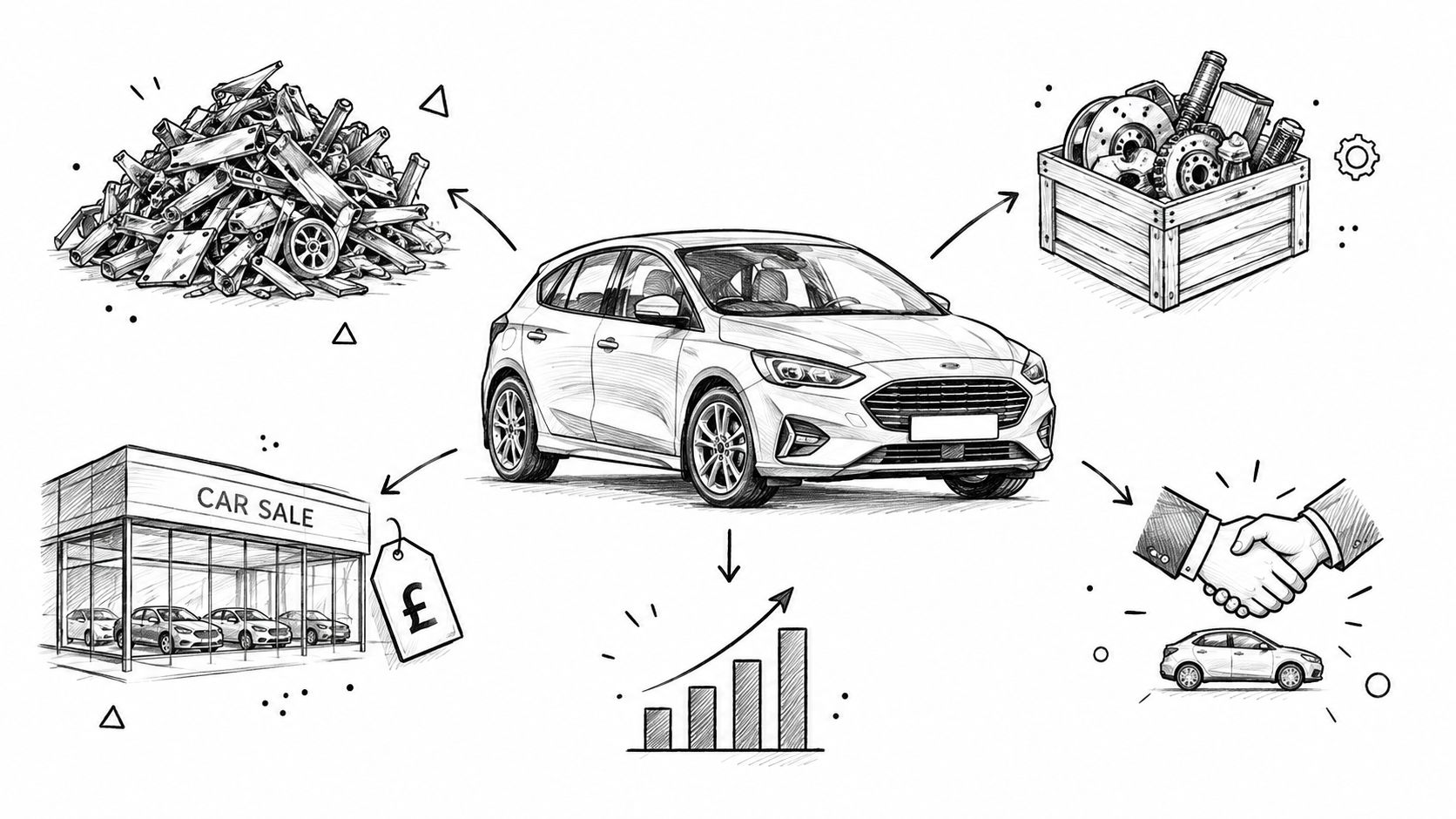
The first mistake people make with sell my car online DVLA searches is treating every offer as the same. It isn’t. A roadworthy car going to a trader, a damaged car going to dismantling, and a write-off going through an insurer route all need different paperwork and different proof that the keeper change has happened.
Ask what the buyer intends to do with the car
If the buyer says they’ll resell it, you’re dealing with a transfer of keeper. If they’re taking it apart or sending it for destruction, you need an authorised disposal route and the right DVLA outcome. That distinction matters because a sloppy handover can leave you tied to tax, notices, or liability long after the car has gone.
Practical rule: never accept a quote until you know whether the vehicle is being reused, dismantled, or destroyed.
For scrap or end-of-life cars, check the buyer is an Authorised Treatment Facility and not just someone claiming they can tow it away. The same discipline applies to paperwork: just as how automotive teams handle eSignatures shows, every handover should leave a verifiable record, so insist on written confirmation of collection and valuation.
Match the paperwork to the transaction
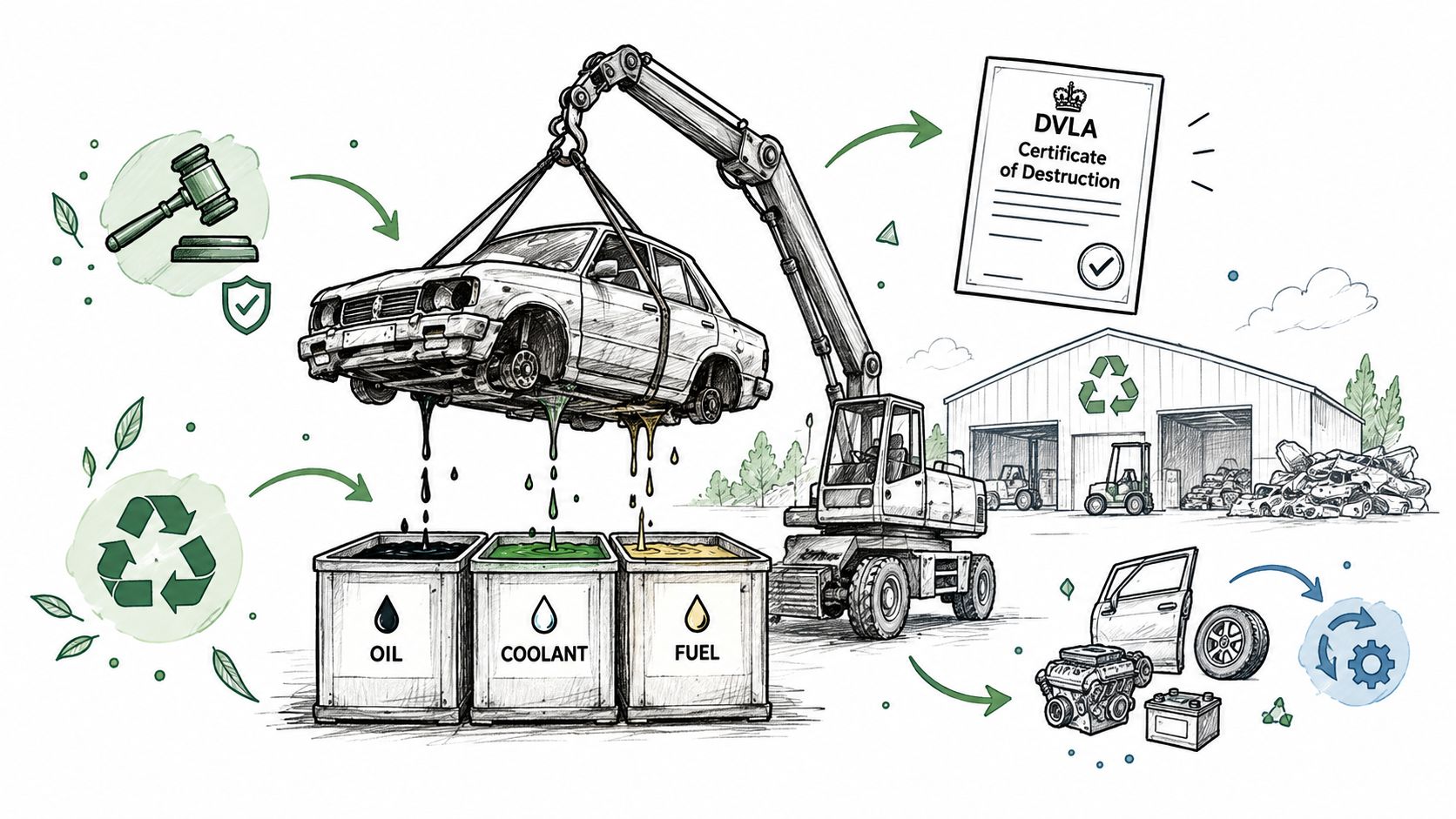
A trader sale should end with keeper transfer evidence. An ATF disposal should end with an official Certificate of Destruction. GOV.UK says scrapped cars must receive that certificate, and that is the document that proves the vehicle has entered the regulated disposal route.
A buyer who knows what they are doing will answer straight. Ask these three things before you accept the offer:
- Will the car be resold or dismantled? The answer tells you which DVLA route applies.
- Are you an ATF, and can you issue a CoD? If the answer is vague, walk away.
- Will I get written confirmation of collection and valuation? If they will not put it in writing, do not rely on the conversation.
For a clean transaction, keep the process simple, direct, and documented. The buyer’s intended outcome decides the paperwork, not the headline price.
Understanding the V5C and What You Must Keep
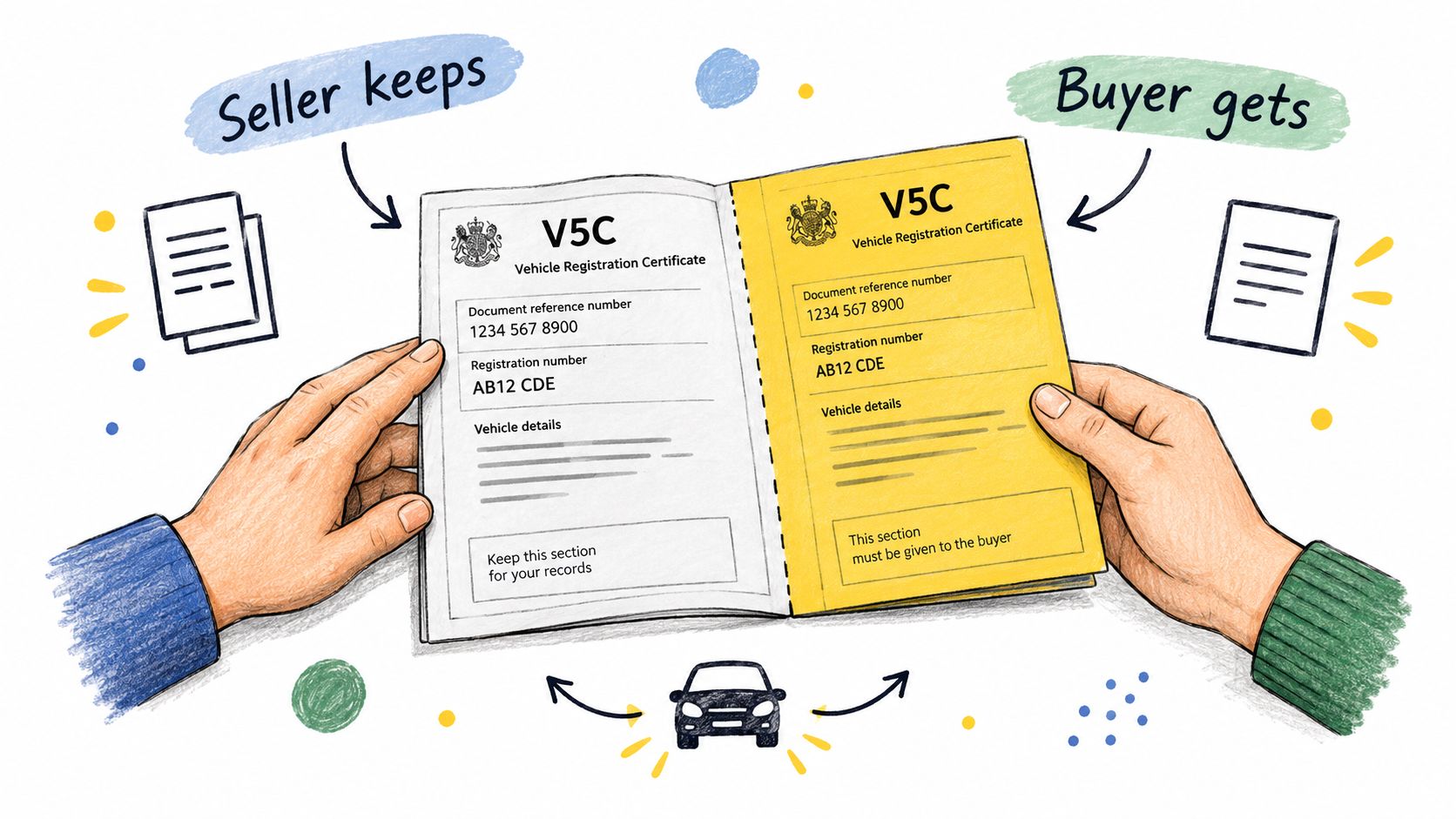
The V5C is where sellers make avoidable mistakes. They hand over too much, keep too little, or post the wrong part, then act surprised when DVLA still shows them as the keeper. If you are selling to a motor trader or using the online route, the yellow section is the part that matters.
Keep the yellow section, not the whole problem
The yellow “sell, transfer or part-exchange to the motor trade” section is your fallback record. Keep it when the car is collected, because it is the evidence you need if the online transfer does not go through. GOV.UK’s guidance for motor trade sales says the seller should complete that yellow section and send the perforated section to DVLA when using the postal route, while giving the rest of the V5C to the trader (selling the vehicle).
Hand over the whole log book and you lose the document reference number the online transfer needs. Then you are stuck with the slower postal route and more room for delay. Keep the wrong slip and you have no clean record of what was passed over.
Keep the yellow section on collection day. If you lose it, you have made your fallback route harder.
Scrapping uses a different end point
If the car is going to an ATF, the paperwork changes again. GOV.UK says you should give the V5C to the ATF while keeping that yellow section, then notify DVLA that the vehicle went to an ATF. The ATF must then generate the official Certificate of Destruction through DVLA’s online system. If that certificate does not arrive, the disposal is not finished.
If the V5C is missing, an ATF can still issue a CoD, but expect extra checks. That is the exception, not a reason to be casual with the paperwork. One old log book, one missing slip, or one careless handover is enough to create pointless follow-up work.
Completing the DVLA Online Transfer Correctly
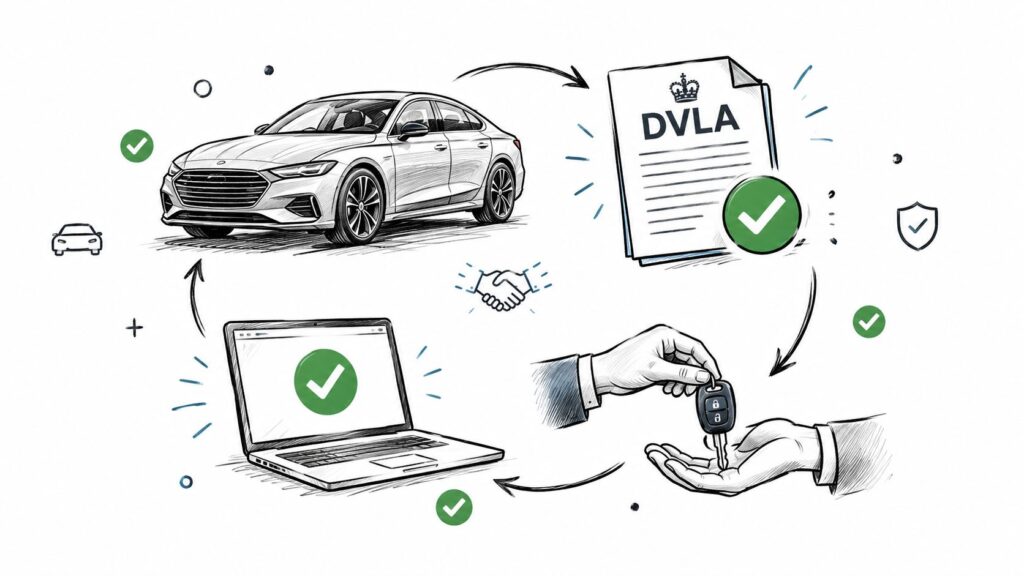
Do the online transfer the moment the car is handed over. That is the control point. Once the keys change hands, you should already have the V5C document reference number ready, because leaving it until later is how people mistype details, lose the confirmation, or assume the job is done when it isn’t.
Use the document reference, then check the confirmation
Enter the buyer’s details exactly as they should appear, submit the notification, and keep the confirmation that appears on screen or arrives by email. DVLA says the online notification normally gives immediate confirmation that you are no longer the registered keeper, and the service takes only a few minutes (sell a vehicle).
Read that confirmation properly. It should show the transfer has been accepted and give you the date and the new keeper details. If those details are wrong, fix the problem at once. A buyer’s receipt, a bank transfer, or a collection photo helps as backup, but none of them replace the DVLA record.
Keep tax refund timing separate
The tax refund follows its own process. DVLA says any refund for unused full months is usually paid within 3 to 5 working days after the record changes (motorists receive millions of pounds in automatic refunds for vehicle tax). That money is not your proof of transfer. Check the keeper update first, then wait for the refund.
If you want a plain reminder of the sequence, This DVLA notification guide lays it out clearly. The habit that saves hassle is simple, submit the transfer straight away, save the confirmation, and keep it with the rest of your sale paperwork.
Required: if the confirmation email is missing, check immediately before the handover ends. Guessing later is how sellers get dragged into DVLA problems they could have avoided.
Handling Problems When the V5C Is Missing or Incorrect
A missing or out-of-date V5C changes the process completely. The online service can’t be used without one, so this is the point where sellers waste time trying the wrong route instead of using the correct fallback. If the log book isn’t available, go straight to a written notification.
Use the postal fallback when the online route is blocked
DVLA says a sale without a V5C needs a written notification with the seller’s details, the registration number, make and model, exact sale date, and the buyer or motor trader’s details (sold, bought vehicle). That’s the proper route for inherited cars, paperwork that never arrived, or log books that still show the wrong keeper details. Trying to force the online process when you don’t have the right document just creates delay.
If the V5C needs replacing, form V62 is the route. It can’t be done digitally, and it may involve a fee. That’s not the glamorous option, but it’s the right one when the paperwork is wrong.
Don’t confuse a sale with scrap disposal
A vehicle sold to a trader is one thing. A vehicle going to an ATF is another. Those two routes get mixed up all the time, especially with non-runners and MOT failures, and that’s how people end up sending the wrong notification or keeping the wrong proof.
A recent case I’ve seen play out in real life is a customer with an old-version V5C who couldn’t complete the online transfer. Their agent called DVLA on the customer’s behalf and got it resolved. That’s the right response, not panic and not guesswork.
Use the written fallback if the document isn’t right, and use the ATF route if the car is being dismantled. Anything else is just making your own problem bigger.
Collection Day Checklist and Final Proof of Sale
Collection day is where the sale either gets cleaned up or gets messy. If you want to avoid future emails, letters, and needless chasing, treat handover as a controlled exchange, not a casual goodbye at the driveway.
Keep the proof in the right order
Start with the vehicle itself. Photograph the car, the keys, and the mileage before it leaves. Record who collected it, the agreed condition, and the payment evidence, then check that the paperwork matches the kind of transaction you’ve made.
For a reusable car, the keeper transfer is the finish line. For an end-of-life car, the Certificate of Destruction is the finish line. Don’t accept a collection note, a text message, or a cash confirmation as a substitute for the actual DVLA outcome.
Here’s the order I’d use every time:
- Photo the vehicle and keys: capture the car exactly as handed over.
- Keep the yellow V5C section: that’s your fallback if the online process stalls.
- Save the payment proof: keep the receipt or bank confirmation with the sale record.
- Check the DVLA confirmation: don’t assume it worked, verify it.
- Store the CoD if the car was scrapped: that’s the regulated end point for disposal.
Use the handover as the verification point
That’s where the hidden risk sits. Once the keys are gone, you can’t fix sloppy paperwork by memory. You need the DVLA confirmation, or the CoD, or both, depending on what kind of sale you made. If the paperwork isn’t in place, you’re still carrying the risk.
The practical rule is blunt: no proof, no closure. If the buyer hasn’t triggered the correct DVLA outcome, keep chasing until they do. The car leaving your drive is not the same thing as the keeper record changing.
If the transfer isn’t confirmed, the job isn’t finished.
Scrap A Vehicle handles online valuations, collection, DVLA paperwork, and official Certificates of Destruction for end-of-life vehicles, which makes it a fit for sellers who want the handover done properly the first time. If you’re dealing with a damaged car, a non-runner, or a roadworthy vehicle you want to move on without paperwork chaos, visit Scrap A Vehicle and check the route that matches your car.