Most advice on end of life vehicle disposal gets one thing wrong. It treats an old car like a lump of metal with a price tag, when the law treats it as hazardous waste first, and scrap only after the right people have depolluted it properly. If you hand it to the wrong yard, you haven’t finished the job, you’ve just shifted the risk.
That matters because the core issue is not how fast a truck arrives. It’s whether the vehicle enters a documented chain of custody, reaches an Authorised Treatment Facility with the right permit, and comes out of that process with the proper evidence to close the DVLA record and protect you from future liability. A car that has failed its MOT, been damaged in a collision, or sat unused for months can still hold value, but only if it’s handled lawfully and dismantled in a controlled way.
Table of Contents
- The Legal Reality of Scrapping a Car in the UK
- Understanding the DVLA Certificate of Destruction
- The Depollution Process and Environmental Standards
- Choosing the Right Disposal Route for Your Vehicle
- How Scrap A Vehicle Simplifies the ELV Process
- Preparing Your Vehicle and Paperwork for Collection
- Common Questions About End of Life Vehicle Disposal
The Legal Reality of Scrapping a Car in the UK
A collection van turning up does not make the disposal lawful. In the UK, an end-of-life vehicle remains hazardous waste in England and Wales, and special waste in Scotland, until the fluids and harmful components have been removed at a permitted site. That classification is about what the vehicle contains, fuel, oils, brake fluid, coolant, refrigerants, batteries, and similar materials, so the car still needs controlled handling before anyone can treat it as ordinary scrap. UK end-of-life vehicle guidance
Why a scrap quote is not the same as legal disposal
A quote tells you the price, not the compliance. A lawful route starts with the facility, and that facility needs the right environmental permit or waste-management licence. Until depollution is complete, the vehicle still needs regulated treatment, whether the collector calls it scrap or says it is going for parts.
Practical rule: if the yard cannot prove it is an ATF, do not treat the handover as finished.
Check two things before booking collection. First, confirm the business appears on the ATF public register. Second, ask for the permit number and make sure it matches the site taking the vehicle. That short check filters out a lot of weak operators before your keys leave your hand.
The UK system is built around traceable deregistration, depollution, dismantling, reuse, recycling and controlled disposal of the remainder. Vehicles are also expected to meet recovery and recycling targets, which shape how a lawful facility works from arrival to final treatment. UK end-of-life vehicle guidance
Why unauthorised collection creates risk
An unauthorised “cash for cars” operator may be quick, but speed does not remove environmental risk or DVLA exposure. If the vehicle is dismantled outside the proper framework, the former keeper can be left without proof of lawful destruction or proper transfer. That is where problems start, because the law does not care that the car looked worthless on the driveway.
The right question is who accepts responsibility for depollution, paperwork and final treatment. If the answer is vague, the disposal route is weak.
Understanding the DVLA Certificate of Destruction
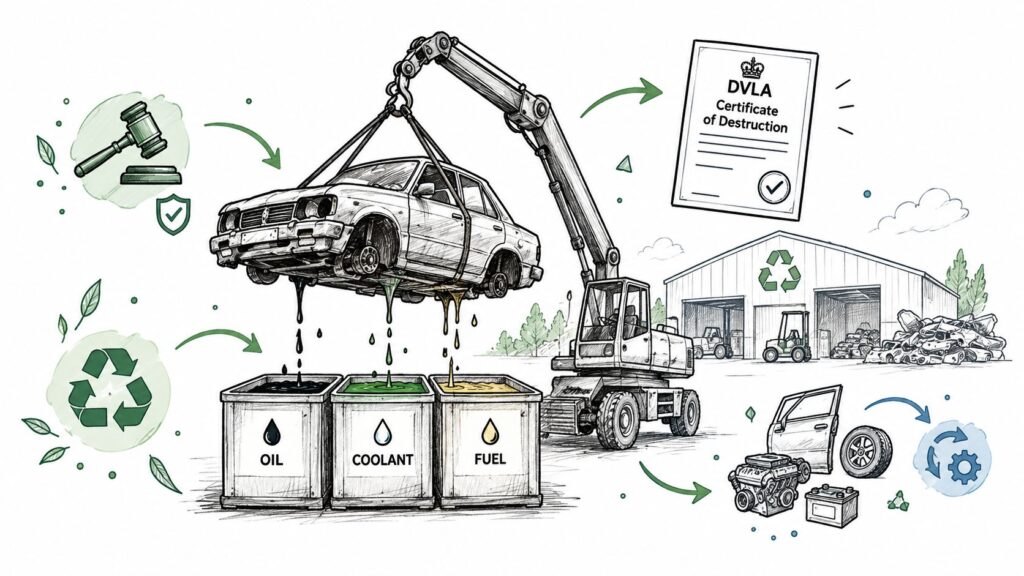
The Certificate of Destruction, or CoD, is the document that closes the legal record on a vehicle disposal. For covered passenger cars and light goods vehicles under 3.5 tonnes, an ATF must issue it through the DVLA system. The CoD confirms the vehicle has been accepted for destruction and lets the DVLA record be updated so the former keeper is no longer tied to it.
What a CoD proves and when an ATF must issue it
A CoD is formal proof that the vehicle has entered the regulated destruction process. It is the point at which the paperwork matches the handover, so your liability trail is cut off properly. A verbal promise from the collector does not do that.
If you are given only a handwritten receipt or a text message, that is not the same thing. A genuine CoD comes through the authorised route and is the document worth asking for before you hand over the keys. For a clear explanation of how it fits into the process, see this guide to the Certificate of Destruction.
What to ask before the driver leaves
Before you release the car, confirm the receiving site is an ATF and ask how the CoD will be issued. If the vehicle qualifies, the process should be handled as part of the handover, not left hanging afterwards. Keep your own record of the registration, date, collection details and any payment confirmation.
The paperwork matters as much as the tow truck.
That is the cleanest way to handle disposal. The vehicle may be gone, but your legal protection depends on the paper trail being complete.
The Depollution Process and Environmental Standards
At a permitted ATF, the car moves through three gated stages, preparation, fluid and hazardous-item removal, then airbag neutralisation, with separate storage and handling controls. That is the point where an MOT failure, crash damage, or long-standing mechanical fault stops being a simple “scrap car” and becomes a controlled treatment job. Fuel, oils, brake fluid, coolant, refrigerants, batteries, airbags and mercury-containing components all have to be taken out properly. Depolluting end-of-life vehicles guidance
The order of operations matters
UK guidance sets the sequence. Removed fluids must go into suitable storage quickly, fuel extraction needs intrinsically safe equipment, and the depollution area must be ventilated and protected against ignition risks.
That is why a back yard, a normal farm store, or a casual dismantler’s yard is not an acceptable substitute. Until the hazardous materials are removed, the ELV is hazardous waste. After that point, it is treated as non-hazardous waste.
Why “recycled” can mean very different things
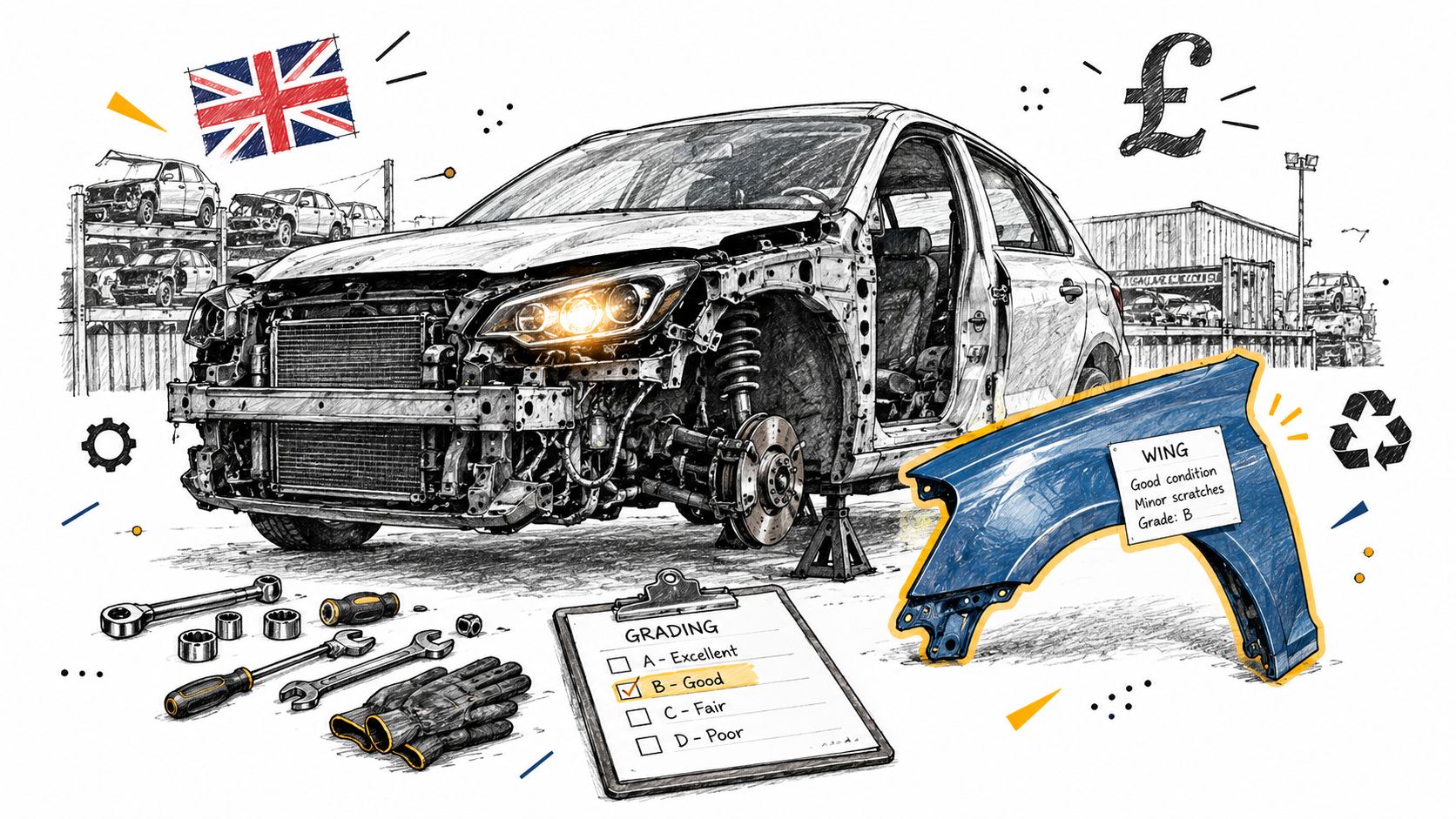
A lot of people use “recycled” to mean crushed and sold as metal. That is too vague. Under the regulated process, reusable parts are removed first where possible, then the remaining shell moves on to shredding and separation, where ferrous and non-ferrous metals are recovered and residue is sent for further recovery or disposal. The treatment chain is built to keep hazardous material out of the environment and to recover more value than basic metal weight. UK ELV treatment guidance
That is the trade-off. A lawful ATF treats the vehicle as a set of recoverable streams. An unauthorised yard often treats it as one lump of scrap. Those outcomes are not the same, and the difference shows up in compliance, environmental handling and the value that can still be recovered.
Choosing the Right Disposal Route for Your Vehicle
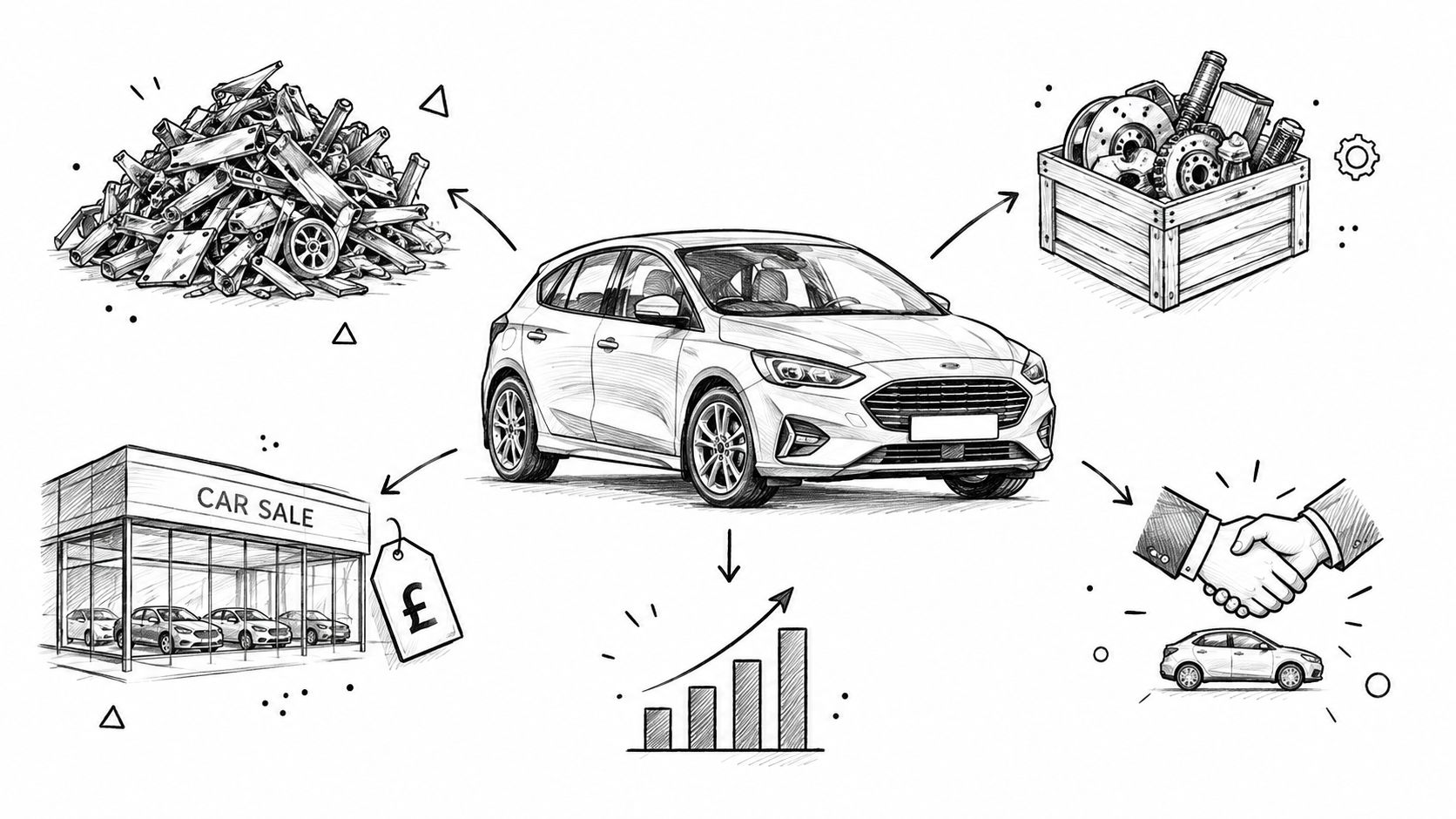
A damaged car is not automatically a scrap car. The right route depends on what is left in it, whether the shell can still be repaired, and whether there are saleable parts worth recovering. In practice, the highest return often comes from the option that preserves value legally, not the one that just gets the vehicle collected fastest.
Compare the main options
| Vehicle Condition | Best Disposal Route | Key Legal Requirement |
|---|---|---|
| Severely damaged, stripped, or truly beyond recovery | Scrapping through an ATF | The vehicle must be depolluted and, where applicable, a CoD issued |
| Broken but with saleable parts | Salvage or dismantling through a compliant buyer | Hand over only to a permitted operator and keep proof of transfer |
| Structurally repairable with worthwhile market demand | Repair or salvage sale | Any buyer must understand the vehicle’s condition and legal status |
| Untaxed, uninsured, or MOT-invalid but kept off-road | SORN and private storage | It must stay off public roads and be stored appropriately |
Where salvage beats scrap weight
Salvage makes sense when the vehicle still has reusable components or a repairable shell. UK salvage categories separate scrap or recycle outcomes, vehicles suitable for breaking, and structurally repairable vehicles. That distinction matters because a car can be uneconomical for a private repair and still hold parts that a buyer can remove and reuse safely. UK salvage and ELV guidance
The UK generates around 2 million waste vehicles each year, so the system is designed to recover more than bare metal. If the car is only worth its scrap weight, an ATF is usually the cleanest route. If the parts still have real demand, a salvage buyer may pay more than a basic scrap quote, and the gap can be meaningful.
Don’t ignore the off-road option
A failed-MOT vehicle does not have to be sent straight for disposal if you plan to keep it for a while. If it is untaxed, uninsured, or MOT-invalid and stays off public roads, it needs a Statutory Off Road Notification (SORN) and private land storage.
Leaving it parked without proper control creates abandonment risk. Abandoned vehicles are still a real issue, with 99,095 reported in 2024, up 18% from 84,299 in 2023. Keep the vehicle traceable, keep it off the highway, and choose the route that matches its real condition, not just its weight in metal.
How Scrap A Vehicle Simplifies the ELV Process
Compliance gets messy when an owner has to compare salvage buyers, ATF registers, collection dates and paperwork by themselves. Scrap A Vehicle sits in the middle of that process by taking vehicle details, offering an online valuation, arranging collection through licensed treatment routes and handling the destruction paperwork where applicable. It also buys damaged, non-running and roadworthy vehicles, which matters because not every car belongs in the same disposal bucket.
What that looks like in practice
A practical service model in this space should do three things well. First, it should separate scrap-only value from salvage value when the car still contains usable parts. Second, it should arrange collection without pushing the owner into an unlicensed handover. Third, it should keep the admin moving so the keeper doesn’t end up chasing updates later.
That’s the point of using a service that works through licensed ATFs and issues the official DVLA documentation. The value is not just in moving the car off the drive, it’s in closing the legal loop properly.
Where the owner still needs to stay alert
Even with a handled collection, the owner should still check the basics. The vehicle details need to match, the collection should be traceable, and the paperwork should reflect the actual disposal route. If the car is repairable or has meaningful parts value, a specialist buyer network can produce a better result than a generic scrap-only quote.
A good disposal route is one that can explain where the car is going, what happens to it, and which document proves it.
That standard keeps the process honest. It also stops owners from being trapped by a shiny collection promise that never produces the right outcome.
Preparing Your Vehicle and Paperwork for Collection
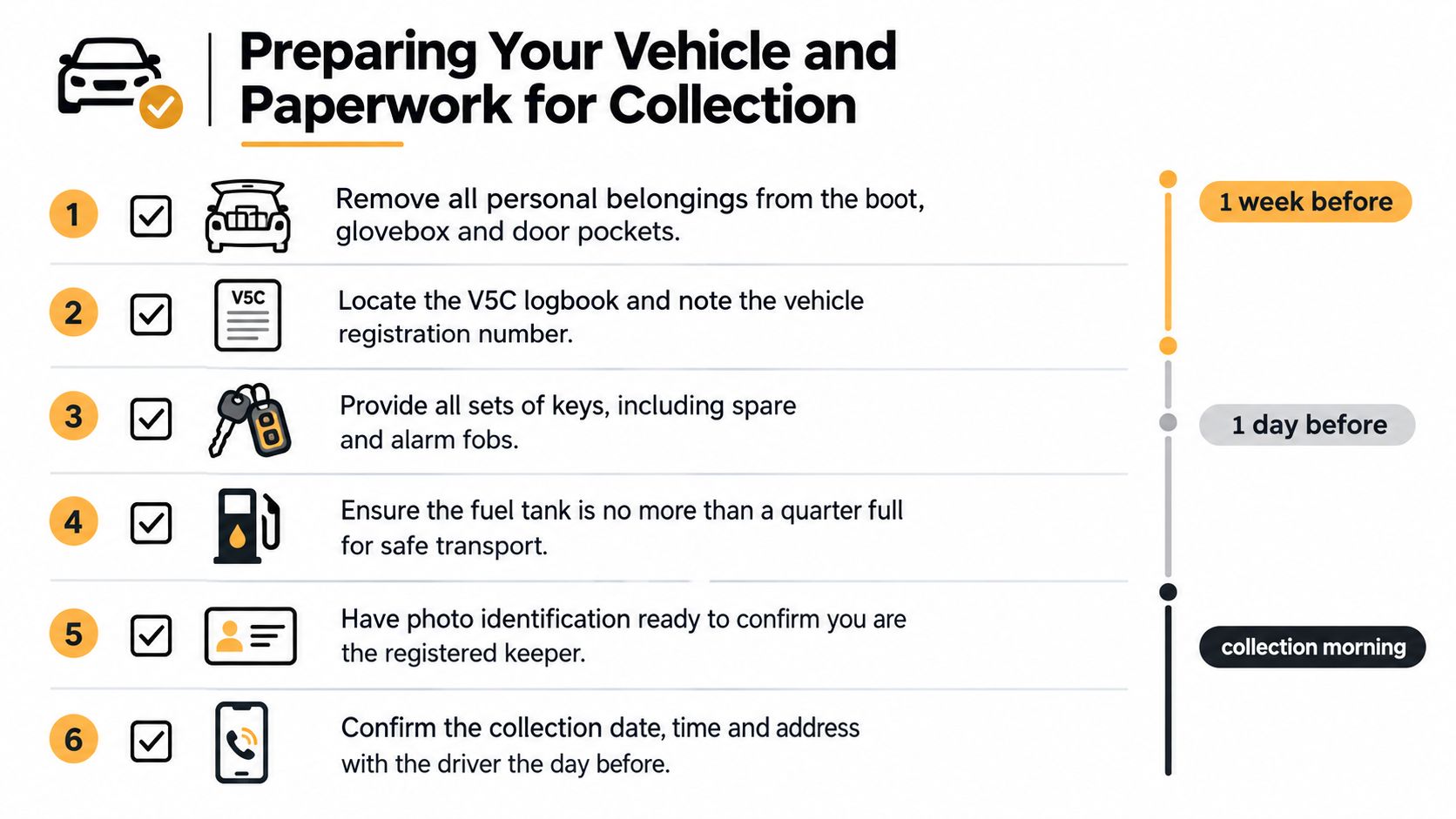
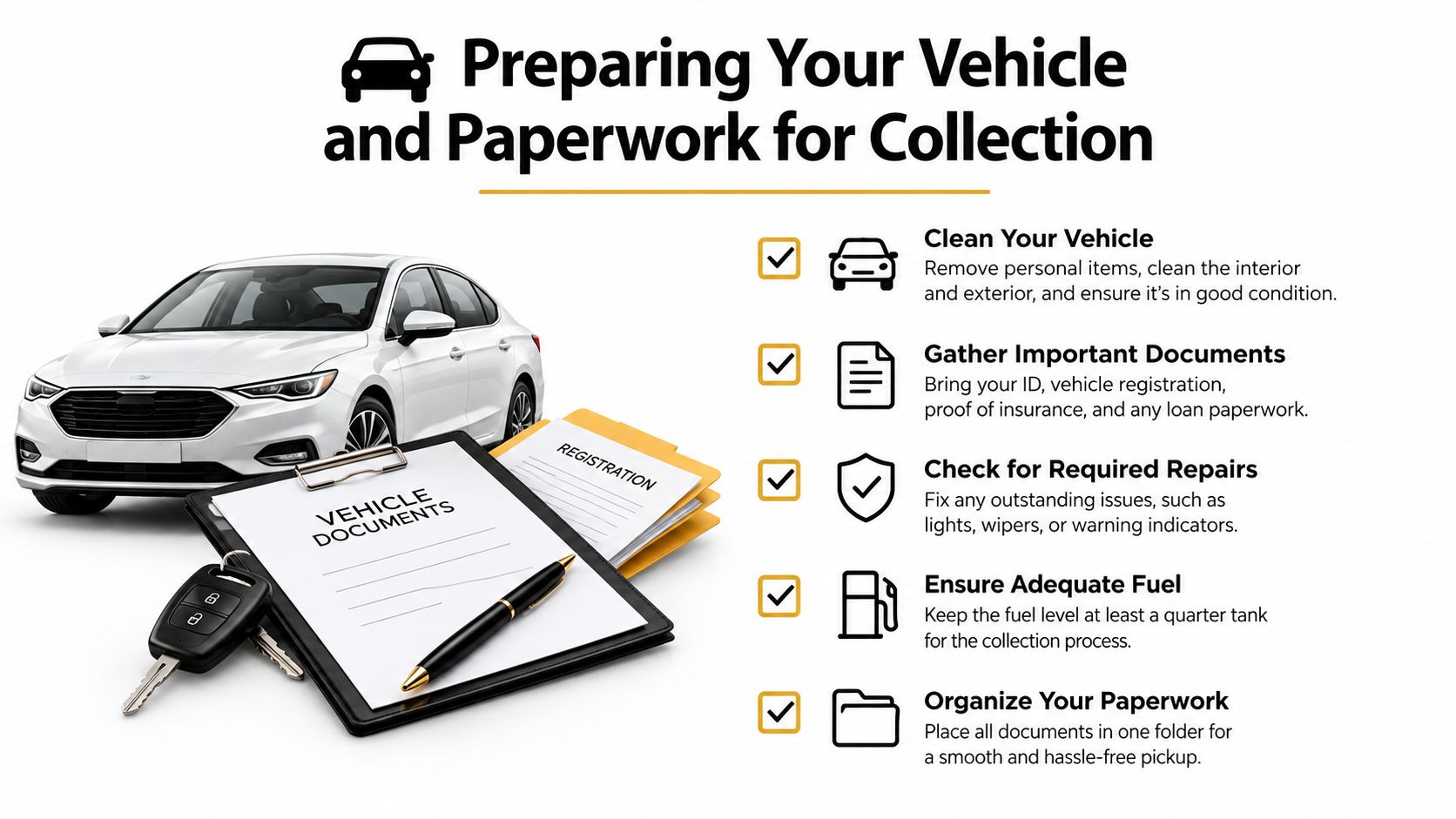
Preparation saves time, and it also avoids friction on collection day. Start by clearing the car out properly. Personal items get left in gloveboxes, boot liners and door pockets all the time, and once the vehicle has gone, recovering them can be awkward or impossible.
Keep the handover simple
Have the V5C logbook ready if you still hold it, and note the registration number in advance. If you want to retain the plates, sort that out before the vehicle leaves. Make sure the car is accessible to the recovery truck, because blocked gates, soft ground or narrow access points can slow the collection and create avoidable delays.
- Clear the cabin and boot: remove valuables, documents, tools and anything loose.
- Have the registration to hand: keep the vehicle number and any collection reference visible.
- Prepare the keys: include spares and alarm fobs if you still have them.
- Check access: the truck needs a safe way in and out.
- Confirm the collection slot: agree the day, time and address before the driver arrives.
What to do if the paperwork is missing
A missing logbook doesn’t automatically stop disposal, but it does mean the buyer should explain how they’ll manage the handover and update process. The same is true if keys are lost. Be upfront about it, because a compliant buyer can work around that, but only if they know the situation before collection.
The safest rule is simple. Don’t improvise on the driveway. Sort the details first, then release the car once you know the paperwork trail is in hand.
Common Questions About End of Life Vehicle Disposal
A private owner usually has the same handful of worries. The most common one is whether a car that can’t be driven can still be collected from private land. Yes, it often can, provided the collector is set up to handle the vehicle safely and the disposal route is compliant. The core issue is not whether the car moves, but whether the receiving facility is authorised and the handover is documented.
Another frequent question is finance. If there’s outstanding finance on the vehicle, the owner should deal with the finance company first, because the right to dispose of the car may not sit cleanly with the keeper alone. A disposal service can’t fix ownership disputes after the fact, and a quick collection won’t protect someone from a contract issue.
Scenario based answers that matter
A householder sometimes asks whether they need a hazardous-waste consignment note to move the vehicle from home to an ATF. UK guidance says householders generally do not need one when arranging transport from home to an ATF. That removes one barrier, but it doesn’t remove the need to use the right facility. When a motor vehicle is waste
Another common case is the car that’s still on private land but no longer wanted. If it isn’t going back on public roads, the owner should think carefully about storage, SORN status, and whether the vehicle is being kept lawfully. A car left in the wrong place for too long can drift from “temporary off-road storage” into an abandonment problem.
Keep the distinction clear, scrap is a disposal process, not just a tow.
That distinction protects you. It also helps you spot when a buyer is trying to blur legal treatment into a casual collection service.
For a straightforward, compliant route through collection, valuation and disposal, Scrap A Vehicle can handle end-of-life, damaged and roadworthy vehicles through licensed treatment facilities, with the paperwork and collection arranged in one process. If you want to avoid guesswork and keep the disposal trail clean, visit Scrap A Vehicle and start with a proper valuation before you hand the keys over.