Quality-tested green parts from UK Authorised Treatment Facilities are typically priced at about 20% of OEM RRP, so they can cut repair costs materially. The catch is that availability is component-specific, not generic, so the cheapest part is rarely the fastest one to source.
If you’ve just been quoted too much for a headlamp, wing mirror, or bumper, you’re probably deciding whether to repair, replace, or write the car off. In the UK, salvage car parts sit at the point where cost, fitment, and speed all collide, and the right answer depends on which part you need, how common your car is, and how quickly you need the job done.
Table of Contents
- Why the UK Has So Many Salvage Parts Available
- What Green Parts Are and How They Are Harvested
- Salvage Parts Versus New OEM Pricing
- Using a Parts Finder Tool the Right Way
- Why the Cheapest Part Is Not Always the Easiest to Find
- Salvage Value Versus Scrap Value for Sellers
- Legal and Safety Checks Before You Buy
- Making Salvage Parts Work for UK Drivers and Sellers
Why the UK Has So Many Salvage Parts Available
A customer rings up about a cracked headlamp and gets a dealer quote that makes the repair look silly. That’s the point where salvage starts to make sense, because the UK has a deep, recurring stream of end-of-life vehicles feeding the used-parts supply chain.
The structural reason is simple, the national fleet is old and the turnover is constant. One recent UK fleet analysis reported 8.67 million licensed cars aged 13 years or older, equal to 25% of the 34.5 million-vehicle fleet, which means lots of owners are keeping cars long enough to need affordable used components rather than fresh OEM parts. The same source notes that around 2 million vehicles become waste each year, with industry references commonly placing end-of-life vehicle arisings at roughly 1.6 to 2 million, so dismantlers are always seeing fresh stock enter the system. Britain’s ageing car parc and end-of-life vehicle supply
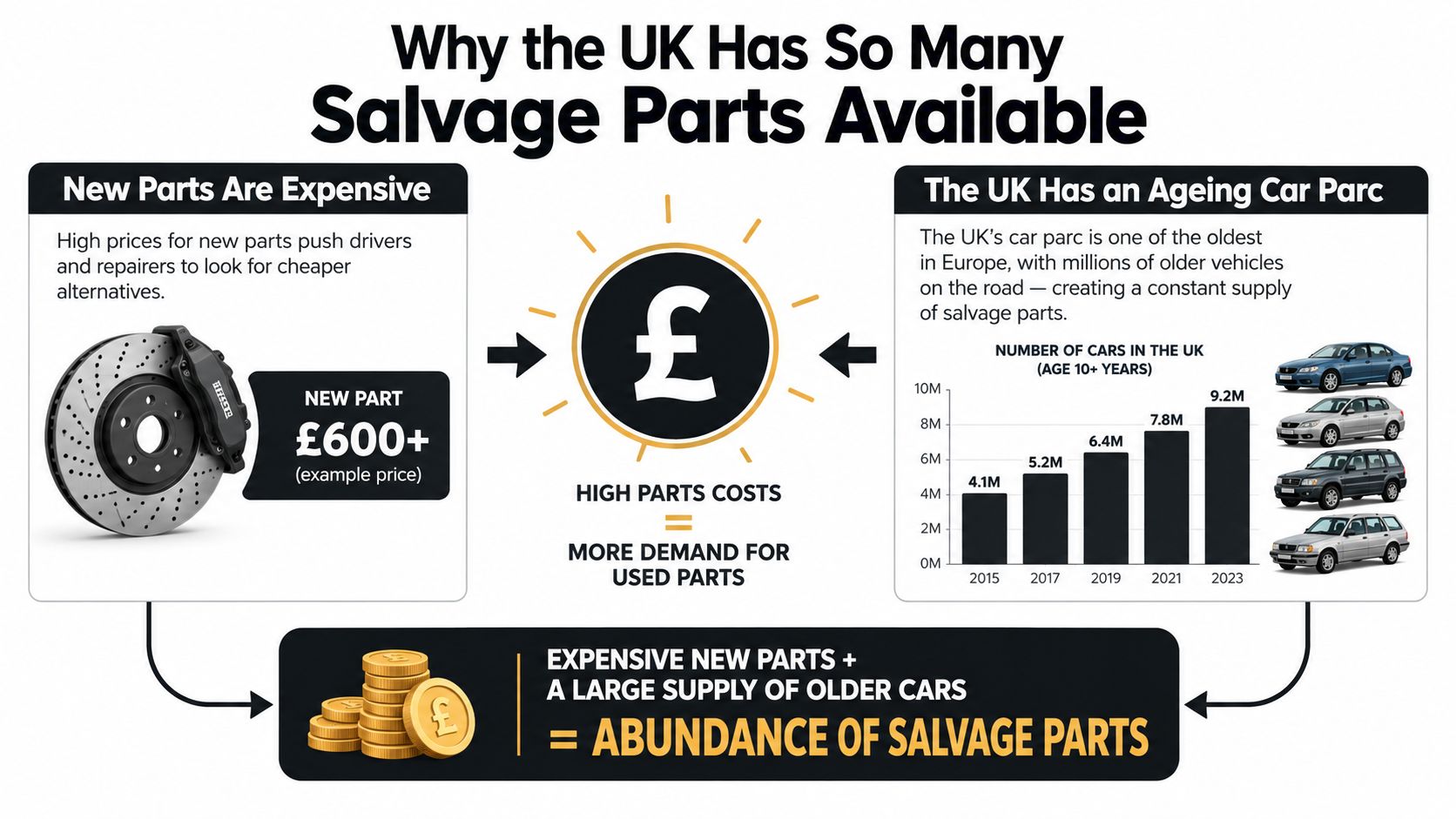
What actually feeds the market
ELV rules matter here because they push vehicles into regulated dismantling rather than casual stripping. Under the UK system, salvage isn’t just “someone breaking cars in a yard”, it’s a managed channel where reusable parts are recovered before the shell is recycled.
Practical rule: a vehicle’s value changes the moment it enters a licensed dismantling network, because reusable parts are worth more than bare metal.
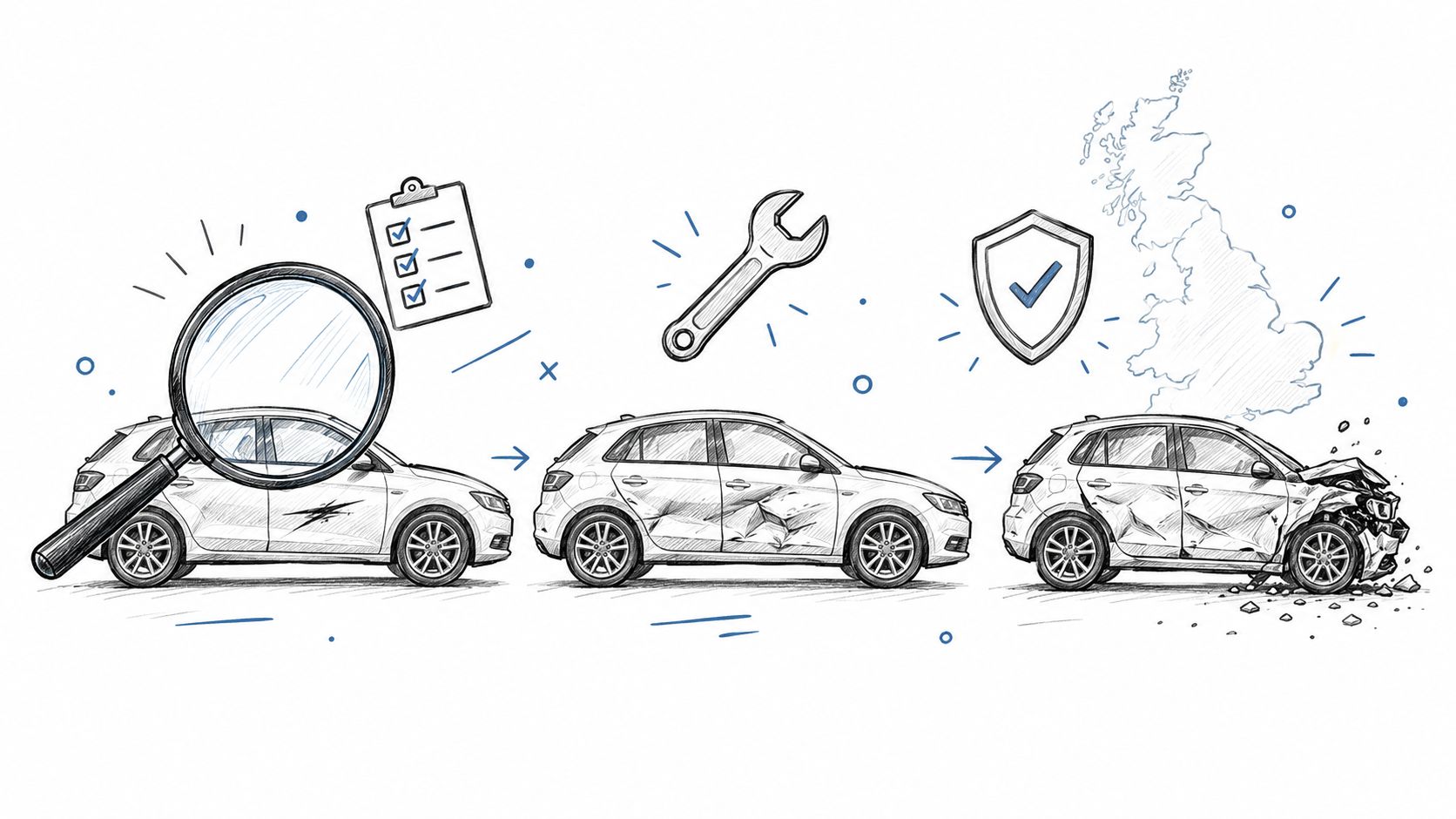
That’s why the categories matter so much. Category A vehicles are crushed only. Category B vehicles are crushed, but parts may have been removed first under controlled conditions. Category C and Category D vehicles are repairable in different ways, and those are the ones that most often create the green-parts supply buyers search for.
The result is structural, not seasonal. Some weeks a part is easy to find, some weeks it isn’t, but that’s driven by model mix and component type, not luck.
What Green Parts Are and How They Are Harvested
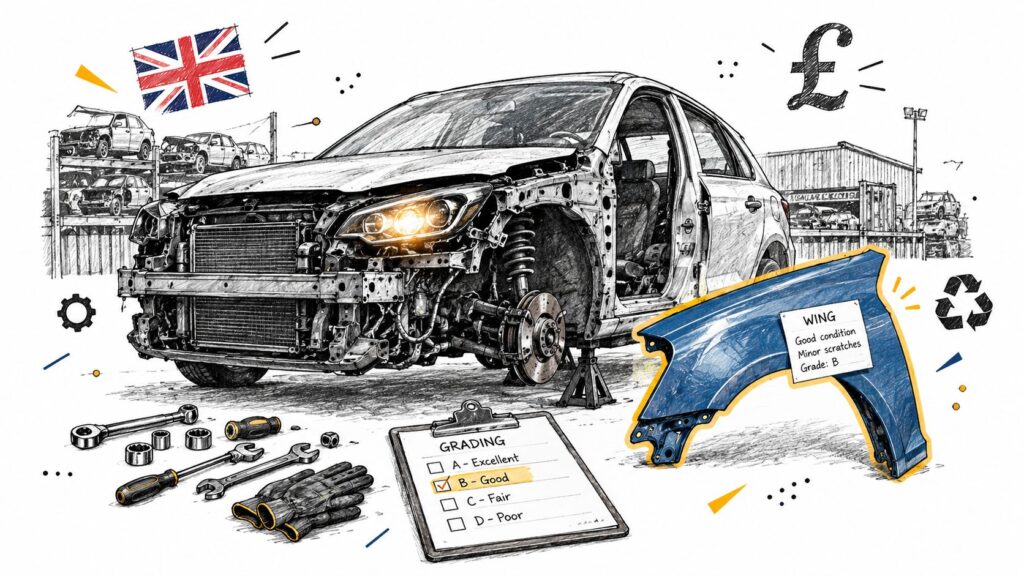
Green parts are recovered components taken from end-of-life vehicles, tested and sold through regulated UK dismantlers. They’re not the same as vague “used parts” advertised casually with no paperwork, because a proper ATF logs what the part is, where it came from, and whether it’s fit to sell.
Think of a good ATF like a library, not a tip. Every part gets catalogued against the donor vehicle, and the record is there so the buyer can trace fitment instead of guessing from a blurry photo. That traceability is what separates a professional green-part purchase from a gamble.
The dismantling path in practice
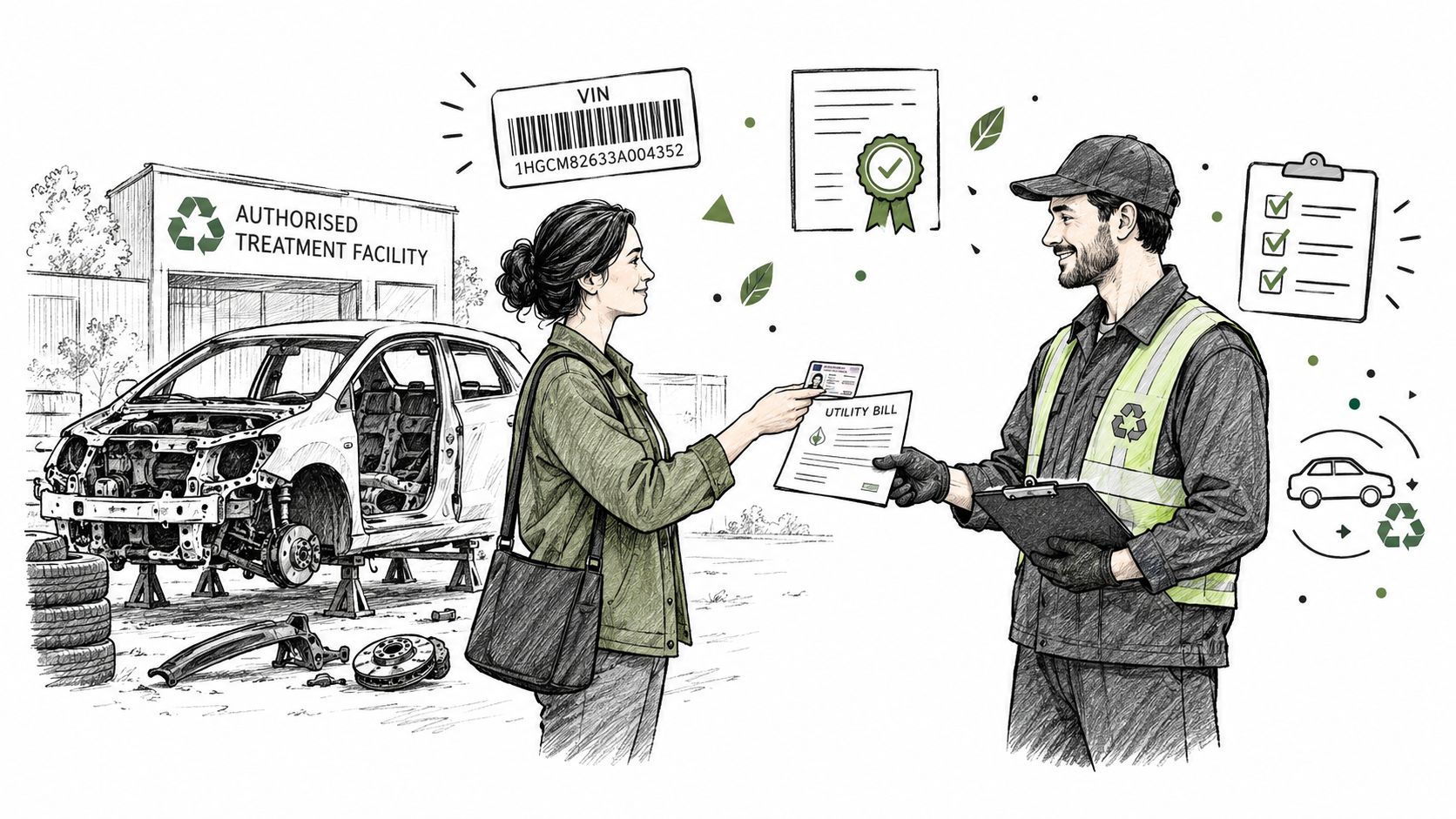
The process starts with collection and DVLA notification, then the vehicle is depolluted so fluids, the battery, tyres, and airbags are handled safely. After that, trained dismantlers remove parts methodically, test what can be tested, grade it, and store it on racking before listing it on a finder platform.
A proper listing should connect the part to the donor car’s registration, mileage, harvest date, and part number, and the buyer should be able to match that information with the failed item on the car. For a plain-English example of how these listings are presented, see this green car parts overview.
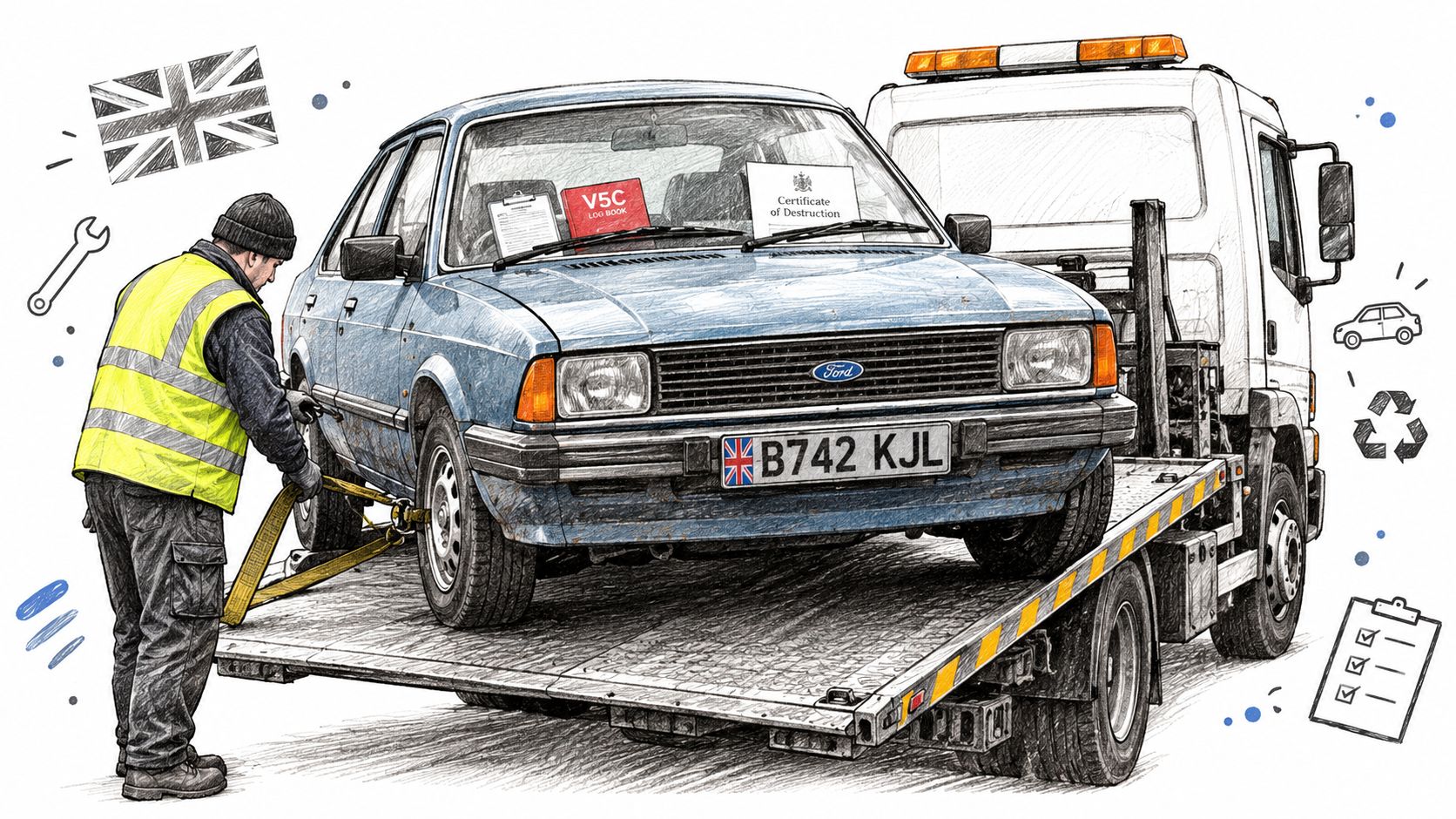
A Certificate of Destruction applies to the vehicle when it leaves the regulated route, but the part itself only carries the warranty the seller chooses to offer.
That point matters because buyers often assume “used” means risky by default. In reality, the risk sits in poor traceability, bad grading, and weak documentation. A well-run dismantler reduces that risk before the part ever reaches the shelf.
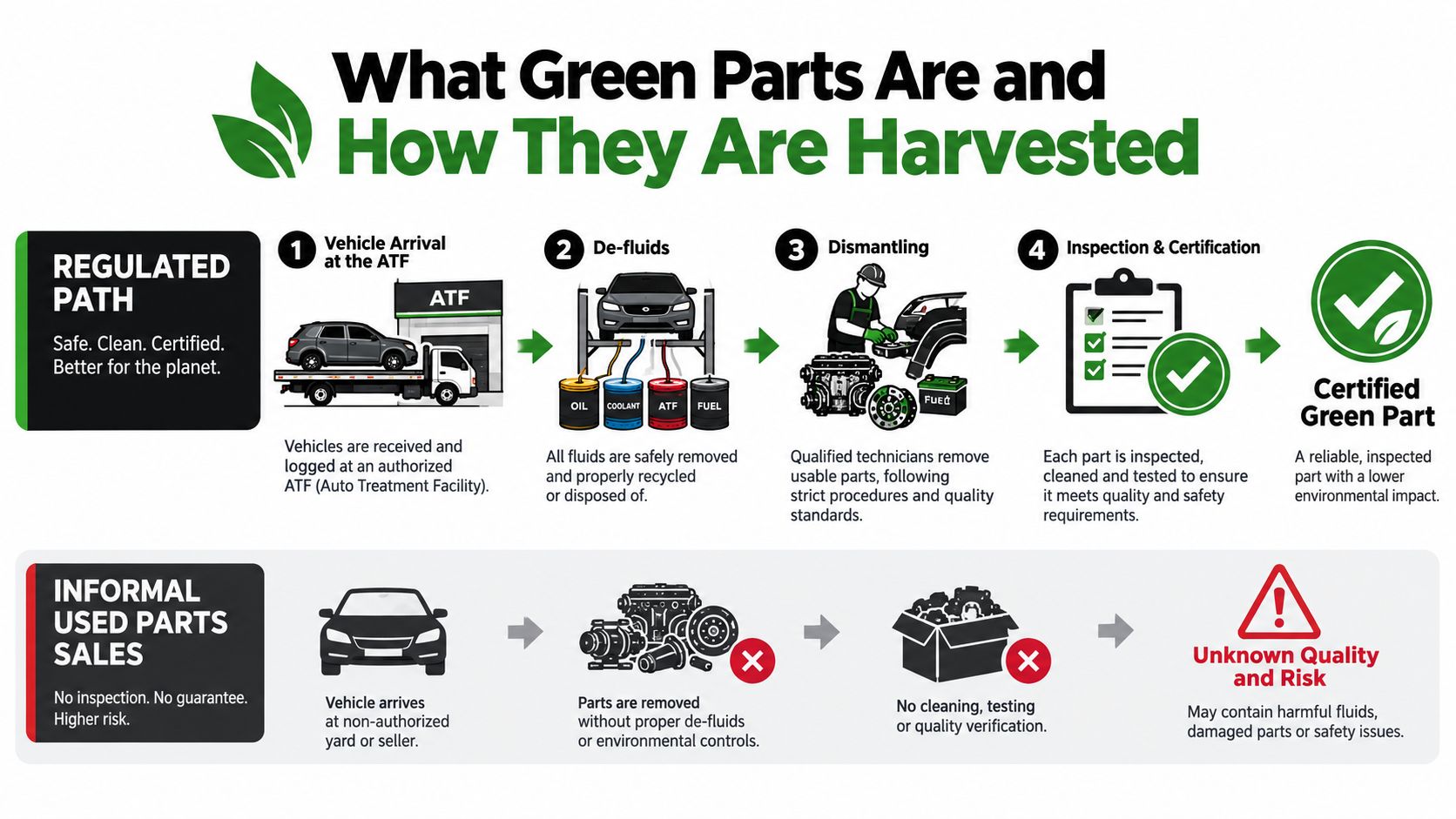
A quick look at the workflow can help:
- Vehicle intake happens first, with the donor recorded and checked.
- Depollution removes hazardous materials and makes the car safe to strip.
- Selective removal targets the parts with real resale value.
- Testing and grading decide whether the component is worth listing.
The important bit is consistency. If the grading is sloppy, the part feels like a back-street sale. If the notes are clear, the buyer can act with much more confidence.
Salvage Parts Versus New OEM Pricing
The price gap is what gets people’s attention first. For many repair jobs, green parts are typically around 20% of OEM RRP, which is why salvage keeps showing up in bodyshops, trade counters, and DIY repairs. That price difference isn’t magic, it’s just depreciation already absorbed once, with testing, storage, and handling added back in.
A good way to think about it is this, you’re paying for the useful life left in a part, not for a second manufacturing cycle. OEM pricing includes the brand-new component, dealer overhead, and the full retail chain. Green parts skip the expensive part of the journey because the part already exists.
Why the gap is bigger on some parts than others
Body panels, mirrors, lamps, and trim are often the easiest wins because they’re simple to inspect and easy to remove. Mechanical items can be cheaper too, but they’re more dependent on donor quality, testing evidence, and whether the yard has enough stock to list them quickly.
The decision is not just “new or used”. It’s OEM quality, aftermarket price, and green-part traceability all in one line. Aftermarket parts can be new and cheaper, but they’re pattern parts, not original factory components. Green parts are original parts, but they’re only worthwhile if the seller can prove fitment and condition.
| Component | OEM RRP | Aftermarket | Green Part (ATF) |
|---|---|---|---|
| Wing mirror | Higher retail price | Lower than OEM, quality varies | About 20% of OEM RRP |
| Headlamp | Higher retail price | Lower than OEM, quality varies | About 20% of OEM RRP |
| Door panel | Higher retail price | Lower than OEM, quality varies | About 20% of OEM RRP |
The market data behind that pricing also shows why availability matters more than most buyers expect. For commonly repaired items, a used part can be cheap, but the cheapest listing isn’t always the one you can get this week.
Using a Parts Finder Tool the Right Way
A parts finder only works if you feed it accurate information. Start with the registration, because the vehicle record does most of the heavy lifting for you and cuts down on the kind of fitment mistakes that cost time and returns.
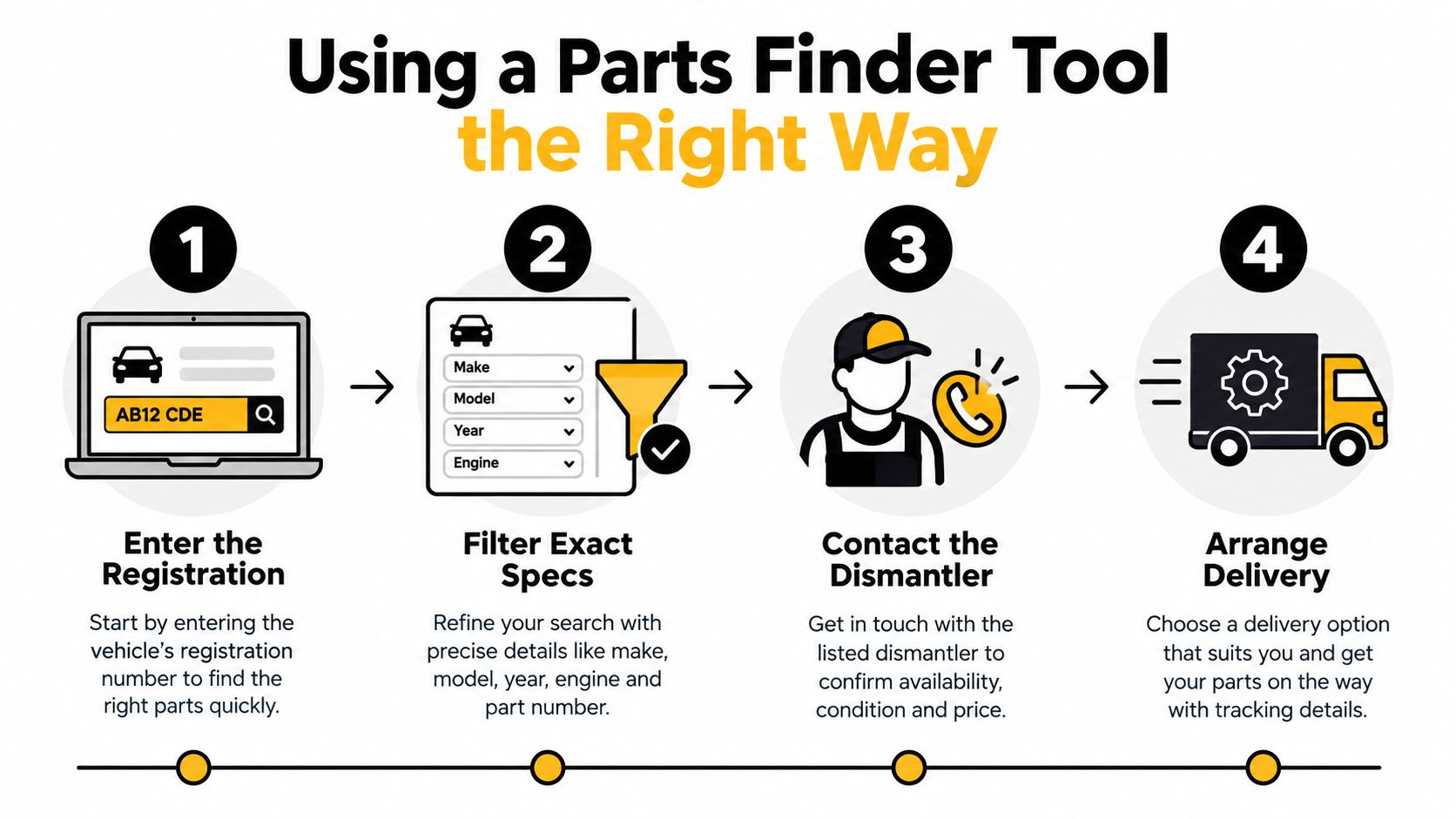
What to check before you pay
First, confirm the exact car details, including trim and build date, because two cars with the same badge can still take different parts. Then match the failed component to the catalogue entry, not just the model name, because part numbers beat assumptions every time.
A proper finder should show grading notes, damage notes, and whether the part has been tested. If the yard has listed mileage or removal details, read them closely. That’s where you spot the difference between a clean, serviceable part and one that has cosmetic damage you can live with, or can’t.
The trade counter workflow usually ends one of three ways, collection from the yard, courier delivery, or a garage drop-off. Each option has a different speed and cost profile, so the “best” choice depends on how urgent the repair is.
If the listing can’t prove fitment, the bargain often becomes a return trip.
The two mistakes that catch first-time buyers most often are simple. They assume every door on the same model is interchangeable, and they ignore build-date restrictions on electrical items. Both errors can be avoided by trusting the finder’s data and checking the part number before money changes hands.
Why the Cheapest Part Is Not Always the Easiest to Find
The usual assumption is that common parts are always easy to get. The trade doesn’t work that neatly, because demand and stock don’t move in the same direction.
Independent UK market intelligence for Q3 2025 found Ford parts made up only 7.2% of inventory while accounting for 44.7% of demand, and engine parts were 2.4% of inventory versus 14.1% of demand. That gap is the reason some cheap-looking parts are the hardest to source quickly. UK used automotive parts market intelligence report Q3 2025
What sells fast and what sits around
Body panels often move quickly because the damage is visible and the fix is straightforward. Engines, ECUs, and gearboxes are a different story, because they’re more valuable when good, but they’re less common in fresh donor stock and harder to verify at speed.
| Component Type | Demand Share | Stock Share | Pricing Pressure |
|---|---|---|---|
| Ford parts | 44.7% | 7.2% | High |
| Engine parts | 14.1% | 2.4% | High |
| Body panels | Not stated | Not stated | Lower when stock appears |
That means the cheapest route is rarely the fastest route, and the fastest route is rarely the cheapest. If you widen the mileage band, accept a different trim colour, or wait for a fresh arrival, your odds improve without overpaying for a rushed match.
A good dismantler knows this and prices around it. A buyer who understands it stops chasing the first cheap listing and starts shopping for a part that can land in time.
Salvage Value Versus Scrap Value for Sellers
The scrap number gets quoted first because it’s simple. In the UK, the average scrap car price was reported as £252 in May 2026, but that figure is the metal value at the gate, not the full value of the vehicle. Average UK scrap car price in May 2026
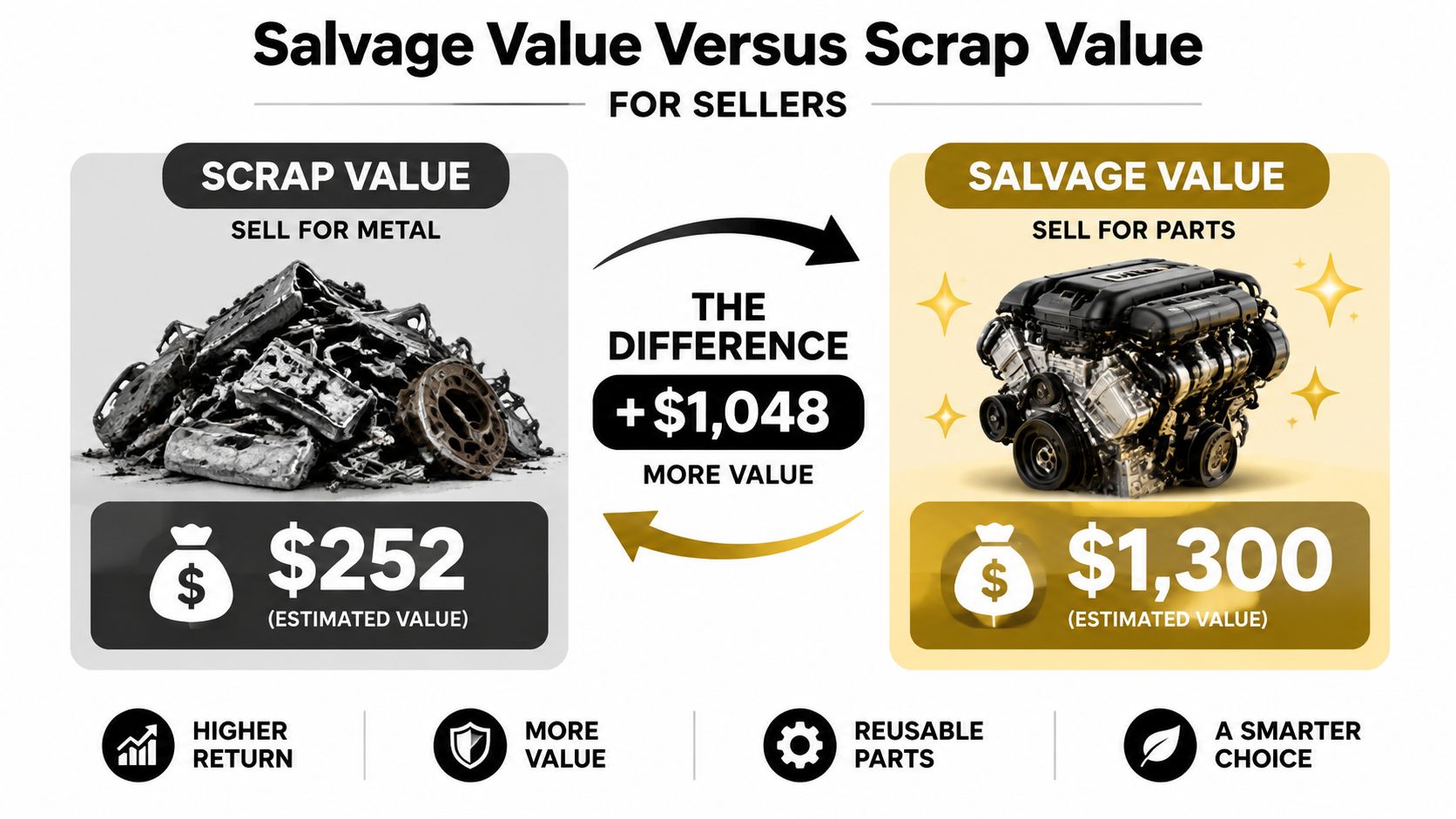
What the scrap figure really means
Scrap price usually covers a drained, depolluted shell weighed in at the yard. That’s fine if the car is badly burnt, structurally collapsed, or missing anything worth salvaging. It’s not the same as what a dismantler can recover when the car still has usable parts.
Panels, lights, interior trim, alloys, and mechanical items can each be sold separately through a parts finder. Once those parts are photographed, graded, and listed properly, the combined recovery can sit well above what the metal alone brings in.
A 2017 family hatchback with front-end damage is a good example of the difference. If the engine, gearbox, rear lights, doors, and interior are intact, the seller is not really dealing with a scrap car, they’re dealing with a parts donor. If the front structure is badly bent but the rest of the car is clean, the salvage route is often more sensible than accepting the first metal-only quote.
Three questions before you sign the collection note: Does the car still have reusable parts? Has anyone checked whether the better items are worth removing? Have you compared a scrap-only offer with a dismantler valuation?
Sometimes scrap really is the right answer. If the car has fire damage, major structural collapse, or missing key components, the shell may be all that’s left. The mistake is treating every write-off as if it belongs in the same lane.
Legal and Safety Checks Before You Buy
A good used part purchase starts with paperwork, not price. If a seller can’t show the donor vehicle trail, the part isn’t automatically bad, but the risk goes up fast.
The five checks that matter
First, confirm the donor vehicle’s provenance and cross-check the chassis number or visible identification on the part where that makes sense, especially on engines, gearboxes, and ECUs, which are the main targets for cloning. Second, review the donor’s MOT history on GOV.UK so you can see mileage and the reason the car failed.
Third, ask for the category grade and don’t accept vague wording. Category A and Category B parts should not be treated as normal resale stock, while Category C and Category D write-offs are the ones that typically feed legitimate used-part recovery. Fourth, inspect the part in situ or from arrival photos, because condition changes when a unit leaves the car.
Fifth, get the return terms and any warranty in writing before you pay. If the seller won’t provide that, move on.
A quick checklist helps keep it practical:
- Provenance first: Match the donor details and the part identity.
- MOT history second: Check the mileage trail and failure pattern.
- Category grade third: Don’t buy from unclear write-off statuses.
- Photo evidence fourth: Ask for the part as removed, not just catalogue text.
- Warranty in writing: Don’t rely on verbal promises.
The safest sellers are the ones who can answer those questions without delay. If they can’t, that usually tells you more than the price tag does.
Making Salvage Parts Work for UK Drivers and Sellers
The same vehicle lives in three markets at once. The buyer sees a repair problem, the dismantler sees a stock opportunity, and the seller sees a vehicle that may be worth more in parts than in metal.
For drivers, the right move is usually to start with the registration, compare a few breakers on price and warranty, and only commit when the donor details support the fitment. If you’re replacing something common, the savings are often obvious. If you’re chasing a niche electronic module, the issue is usually availability, not just price.
For private sellers, the route through an Authorised Treatment Facility can return more than a scrap-only quote because the salvageable parts are harvested before the shell is crushed. For insurers and fleet operators, that same process keeps storage moving and avoids letting repairable value sit around unused. Scrap A Vehicle is one option in this space, since it handles vehicle valuation, ATF processing, and used green-part supply from dismantled cars.
The big takeaway is straightforward. Salvage car parts uk isn’t just a cheap-parts story, and it isn’t just a seller’s story either. It’s a system where parts supply, repair cost, and salvage value all come from the same vehicle, and the right choice depends on which side of that vehicle you’re standing on.
If you’ve got a damaged car, a non-runner, or a repair that’s starting to look uneconomical, take a proper look at the parts and the shell before you accept the first offer. Visit Scrap A Vehicle to check vehicle options, compare what’s salvageable, and see whether your car is worth more through parts, collection, or scrappage.