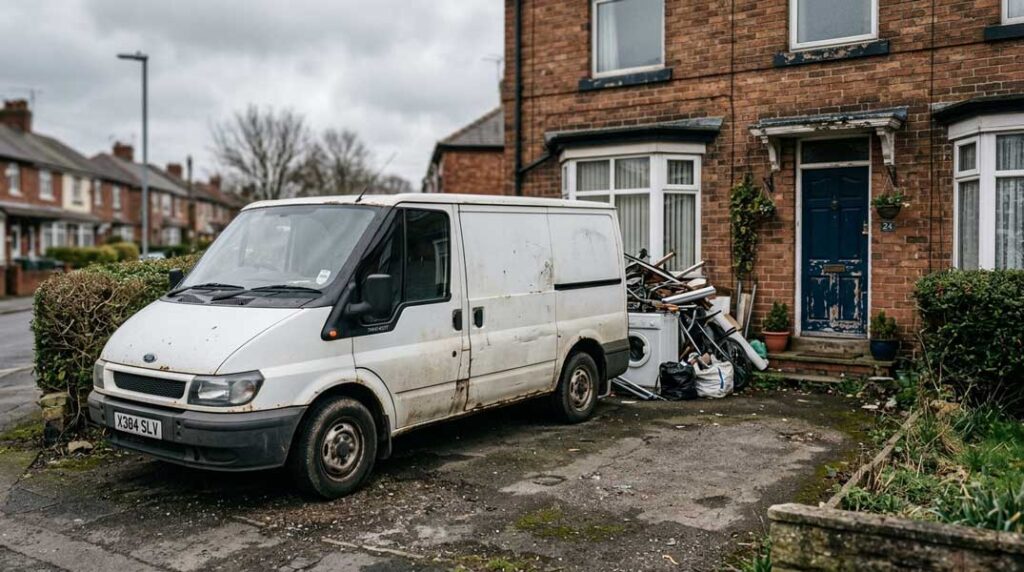
When a work van reaches the end of the road, it can still earn its keep one last time. Vans carry far more metal than the average car, so they tend to be worth more at the scrapyard, and the process is quick once you know the steps. If you’ve decided to scrap my van is the search you keep typing, this guide covers what yours is worth in 2026, what moves the price up or down, and exactly how to turn it into cash without falling foul of the paperwork.
How much is my van worth for scrap?
Most vans in the UK are worth somewhere between £200 and £600 as scrap in 2026, and weight is the single biggest reason for the spread. Scrap metal is priced by the tonne, currently around £130 a tonne on average, and a van simply contains more steel in its body, chassis and engine than a hatchback does. That extra metal feeds straight into a higher baseline figure.
As a rough guide, a small van sits around £200 to £300, a medium van lands in the £300 to £500 bracket, and a large or long-wheelbase van often brings £400 to £600 or more. Those numbers move with the metal market and with your van’s condition, so a quote today might differ from one you got six months ago. The only way to know your figure is to get a valuation against your specific registration.
What affects your van’s scrap price
Five things decide where your van lands in that range, and a couple of them are within your control. Knowing them helps you spot a fair offer from a poor one.
- Size and weight. Heavier vans hold more recyclable metal, so a long-wheelbase Transit beats a compact city van every time.
- The metal market. Steel and aluminium prices shift month to month, and rates often run a little higher in spring and summer.
- Make and model. Popular vans such as the Ford Transit, Mercedes Sprinter and Vauxhall Vivaro fetch more, because their parts are in steady demand.
- Condition and completeness. A van with its engine, catalytic converter and wheels intact is worth more than one that’s been picked over.
- Location and collection. Buyers vary in what they pay and how far they’ll travel, so a local collection agent usually means a cleaner offer.
One tip saves people money again and again. Leave the van whole. Dealers price your van as a complete vehicle, so stripping out the engine, the catalytic converter or the wheels lowers the offer and can make the van harder to collect. On a diesel van the converter is generally worth less than the petrol equivalent, but it still adds value, so it’s better left in place.
Scrap value by van type

It helps to see where your van fits, because the model class tells you most of what you need to know about the likely figure. The brackets below assume a complete van in fair condition.
- Small vans such as the Ford Transit Connect or VW Caddy weigh roughly 1,400 to 1,600kg and usually fetch £200 to £300.
- Medium vans such as the Ford Transit Custom or Vauxhall Vivaro weigh around 1,800 to 2,100kg and typically bring £300 to £500.
- Large and panel vans such as the long-wheelbase Transit, Mercedes Sprinter or VW Crafter come in at 2,500kg and up, so £400 to £600 or more is realistic.
- Minibuses and converted vans vary widely, and a quote against the registration is the only reliable guide.
Specific models follow the same logic. A Ford Transit, being heavy and packed with sought-after parts, tends to sit at the upper end of its weight bracket, and a Vauxhall Vivaro behaves much the same way. Sprinters and Crafters with a sound engine and converter are worth getting a proper quote on, since demand for their parts can push offers above pure metal rates.
How to scrap your van, step by step
Search scrap my van and dozens of buyers appear, so the real skill is knowing the steps and spotting a fair offer. The process itself is refreshingly simple, and you can do most of it from your phone. Here’s how it runs from start to finish.
- Get a free quote by entering your van’s registration and your postcode. You’ll have a figure in seconds.
- Accept the price. A guaranteed quote is locked in from the moment you accept, with no haggling on collection day.
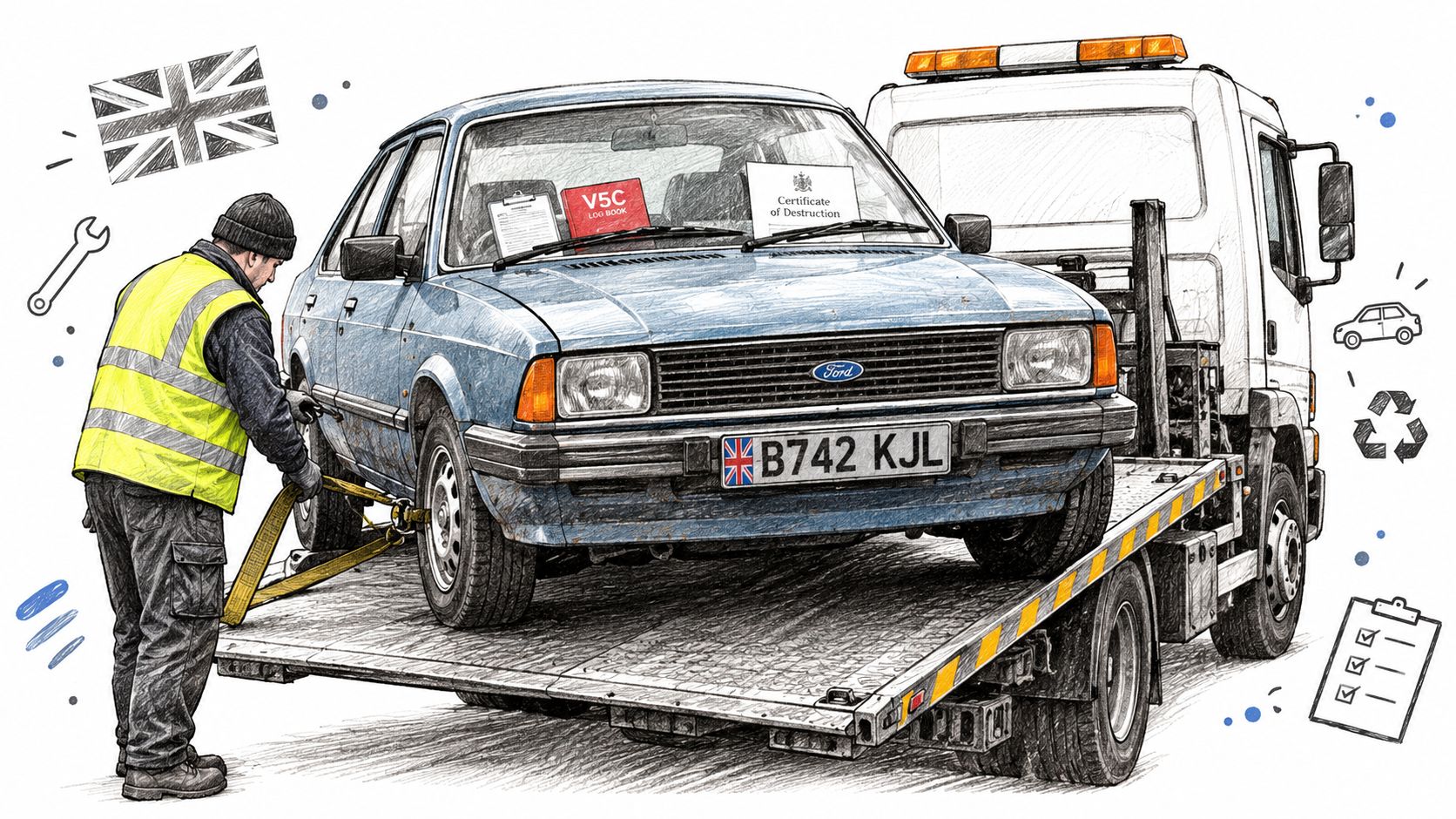
- Book collection. A licensed agent collects the van free of charge, at a time that suits you, anywhere in England, Wales or Scotland.
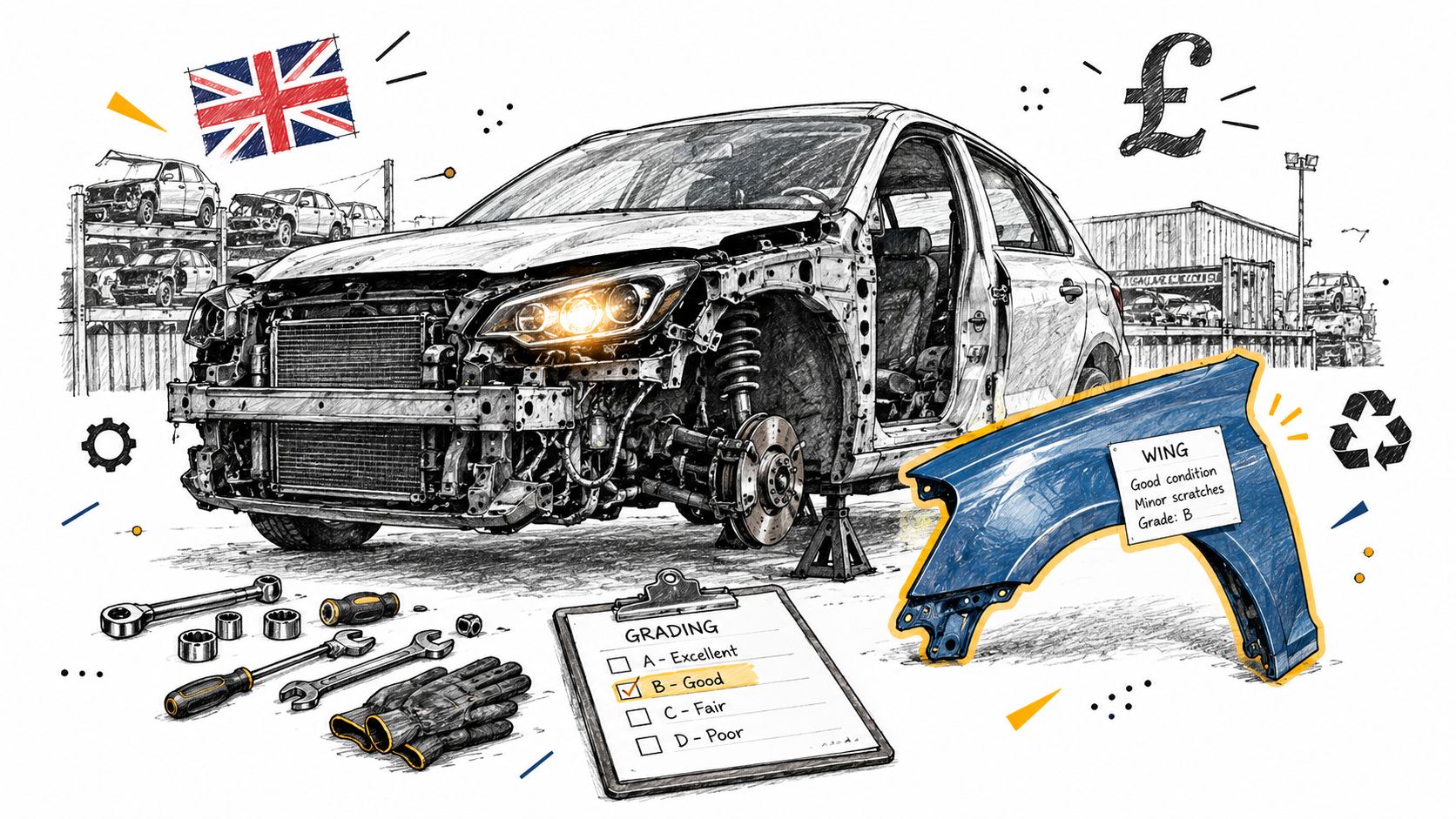
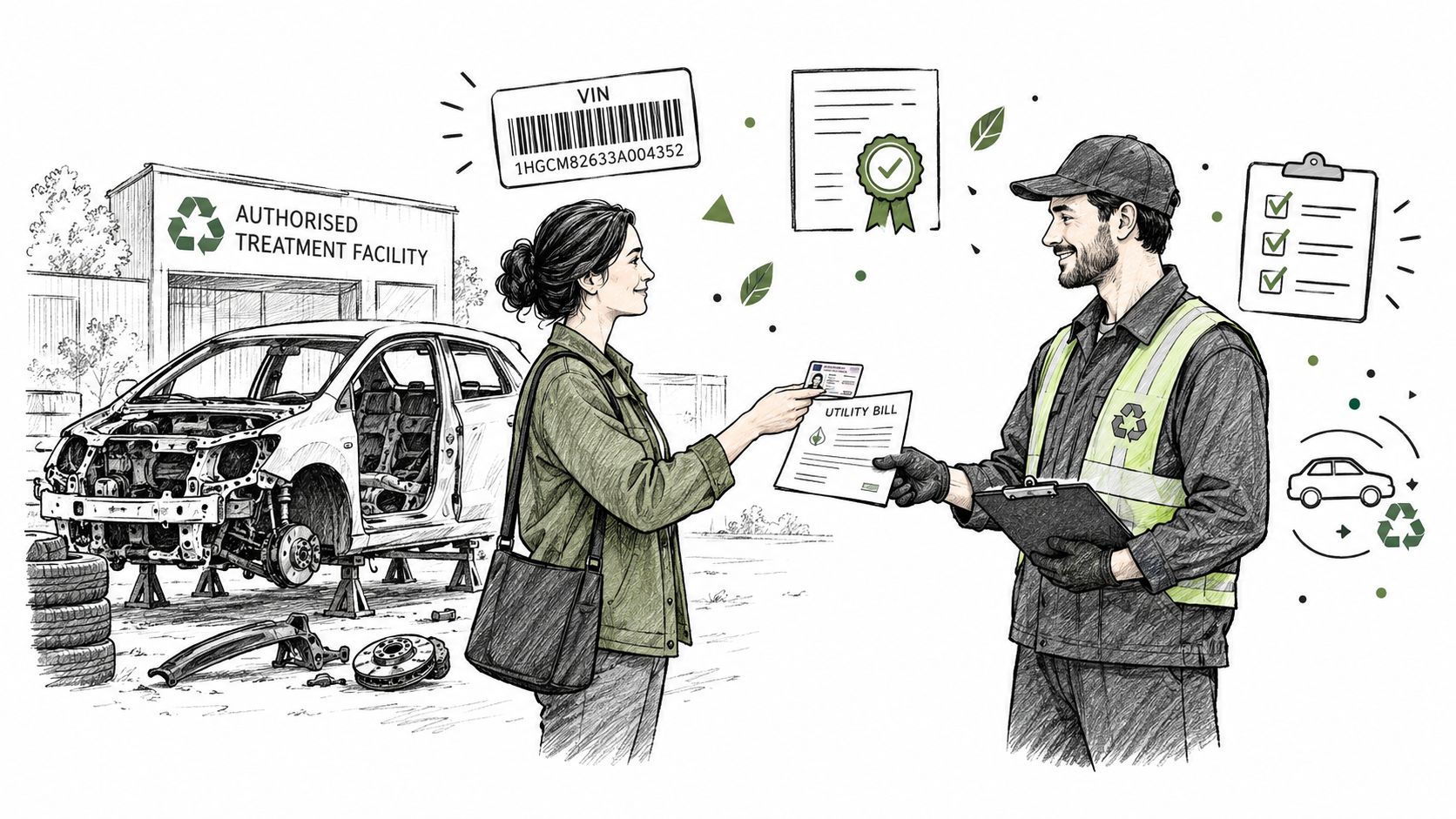
- Hand it over to an Authorised Treatment Facility, which is the only type of site legally allowed to scrap it.
- Get paid. Payment goes straight to your bank account, often the same day the van is collected.
Always check the buyer works with a licensed Authorised Treatment Facility before you hand anything over. You can confirm a site on the GOV.UK find a vehicle scrapyard service, which lists facilities authorised to take end-of-life vehicles. An unlicensed yard can’t issue the paperwork that protects you, which brings us neatly to the next part.
The paperwork: Certificate of Destruction, DVLA and your tax refund
When your van is scrapped at an Authorised Treatment Facility, the facility issues a Certificate of Destruction. That document is your proof the van has been permanently and legally destroyed, and for a van the certificate should reach you within seven days. You keep it rather than sending it to the DVLA, since the facility already updates the record.
You should also tell the DVLA yourself that the van has gone, which you can do online on GOV.UK or by post. Once that’s processed, the van comes off your name, any direct debit for tax is cancelled, and you get a refund for any full months of tax left, usually within six weeks. Our guide on how to notify the DVLA of a scrapped vehicle walks through that step so you’re no longer liable for the van.
Scrapping a van over 3.5 tonnes
Here’s a detail that catches out operators of bigger vehicles. The Certificate of Destruction scheme covers cars and light goods vehicles under 3.5 tonnes, which takes in nearly every standard panel van on the road, from a Caddy up to a Sprinter. Most van owners are firmly inside that bracket.
Vehicles over 3.5 tonnes, such as larger trucks and heavy commercials, fall outside the Certificate of Destruction scheme and follow a separate depollution and recycling route. If your vehicle is over that weight, you still need to use a licensed, permitted facility, but the paperwork differs, so it’s worth confirming the process with the yard before you book. For everyday vans, though, the standard certificate process applies and nothing extra is needed. As a rule of thumb, if your vehicle has a normal van driving-licence category and a gross weight plate under 3,500kg, you’re inside the standard scheme.
Before you scrap: plates, parts and business vans
A few minutes of prep protects your money and your records. Start with the number plate. If your van wears a private or cherished registration you want to keep, you have to take it off before the van is scrapped, because once the Certificate of Destruction is issued the number is lost for good. Our guide on how to retain your number plate when scrapping covers the whole process.
Leave the working parts where they are, as we covered above, and take out only your personal belongings, paperwork and any aftermarket kit like racking or a sat-nav that isn’t part of the van. If you’re scrapping a van that was a VAT-registered business asset, it’s worth a quick word with your accountant about the VAT position, since a business disposal can be treated differently from a private one. Hold off cancelling your insurance until the van has actually been collected.
Should you sell or scrap your van?
Scrap isn’t always the right answer, and it’s worth a moment’s thought before you commit. If your van still runs, holds a valid MOT and the body is sound, it may be worth more sold privately or to a trade buyer than it is as scrap, because a usable van carries resale value on top of its metal. The closer a van is to roadworthy, the more that gap tends to matter.
Once a van becomes a non-runner, fails an expensive MOT, or needs repairs that cost more than the vehicle is worth, scrapping usually comes out ahead. At that stage you’re weighing a repair bill against a guaranteed scrap figure, and for a high-mileage workhorse the sums often point one way. People who search scrap my van have usually reached exactly that point, where the van owes them nothing and the simplest move is to turn it into cash.
There’s also the running cost of hanging on. A van sitting unused still needs tax or a SORN, insurance and somewhere to park, and a slowly rusting body loses scrap value as the metal market shifts. If the van isn’t earning, scrapping it sooner usually protects more of its worth than waiting for a price that may never come.
Older diesel vans face an extra squeeze. Low-emission zones in cities such as London now charge non-compliant vans every day they drive, so an ageing diesel that can’t meet the standard often costs more to keep on the road than it gives back. For a lot of owners, that alone tips the decision firmly towards scrapping.
Scrap your van the easy way
Once the plate is sorted and your belongings are out, scrapping the van is the quick part. You can check what your van is worth for free, lock in an instant online quote, and arrange free collection across England, Wales and Scotland. The price you accept is the price you’re paid, straight to your bank, with no cash changing hands, because paying cash for scrap vehicles has been banned in England and Wales since 2013.
Whether it’s a single tired Transit or the last van in a small fleet, the same simple process applies. If you want to understand the figure behind the offer first, our guide on how much you get for scrapping a vehicle breaks down exactly how the payout is worked out.
Frequently asked questions about scrapping a van
How much is my van worth for scrap?
Most vans are worth between £200 and £600 in 2026, with weight the main factor. A small van such as a Transit Connect tends to fetch £200 to £300, while a large van like a long-wheelbase Transit or Sprinter often brings £400 to £600 or more, depending on the metal market and condition.
Can I get cash for scrapping my van?
You’ll be paid, but not in physical cash. Paying cash for scrap vehicles has been illegal in England and Wales since 2013, so reputable buyers pay by bank transfer instead, often on the same day the van is collected. That paper trail also protects you.
Do I get a Certificate of Destruction for a van?
Yes, as long as the van is under 3.5 tonnes, which covers nearly all standard panel vans. The Authorised Treatment Facility issues the certificate within seven days of scrapping it, and you keep it as proof the van has been legally destroyed.
Do I need to tell the DVLA I’ve scrapped my van?
Yes. Even though the facility updates the record when it issues the Certificate of Destruction, you should notify the DVLA yourself, online or by post. That ends your liability for the van and triggers a refund of any full months of tax remaining.
Can you scrap a van over 3.5 tonnes?
Yes, but it follows a different route. The Certificate of Destruction scheme applies to vehicles under 3.5 tonnes, so heavier commercials go through a separate depollution and recycling process. You still need a licensed facility, so confirm the paperwork with the yard before booking.