Few things put a driver on edge like the thought that the ordinary-looking car behind them might be the police. Unmarked police cars are real, they’re completely legal, and UK forces use them every day to catch speeding, phone use and dangerous driving. The catch is that they’re designed to blend in, so spotting one takes a trained eye, and knowing your rights matters just as much as knowing what to look for.
This guide covers what unmarked police cars are, how to recognise one, whether they carry speed cameras, and exactly what to do if you’re signalled to pull over, including how to tell a genuine officer from the fake “police” stops that occasionally make the news.
What is an unmarked police car?
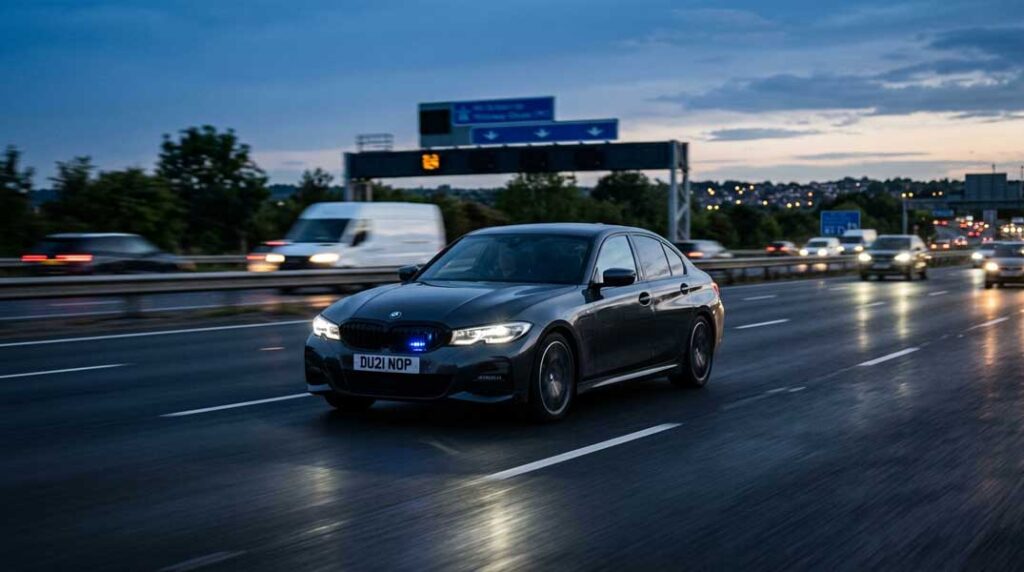
An unmarked police car is a vehicle with no force livery, lightbar or markings, used by officers who need to blend into normal traffic. From the outside it looks like any other car on the road, which is the whole point.
Underneath, though, it’s still a police vehicle. Most are fitted with concealed blue lights behind the grille and rear window, a siren, and (on traffic units) calibrated speed-detection equipment. Forces favour everyday models so drivers can’t change their behaviour the moment a marked car appears.
Are unmarked police cars legal in the UK?
Yes. Unmarked police cars are completely legal in the UK and have been for decades. There’s nothing in law that stops police from using undercover vehicles to catch drivers breaking the rules.
There is one important condition on stopping you, though. Under the rules on being stopped by police, an officer signalling you to pull over must be in uniform for the stop to be lawful. This is set out in section 163 of the Road Traffic Act 1988. A plain-clothes officer in an unmarked car cannot lawfully require you to stop on their own. In practice, that’s why traffic stops from unmarked vehicles are almost always carried out by uniformed officers.
How do you spot an unmarked police car?
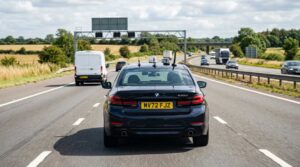
You can often spot an unmarked police car by a handful of giveaways. It’s usually nearly new, spotless, unmodified, and a common make like a BMW, Volvo, Audi or Ford in a plain colour. None of these is proof on its own, but together they point to a covert police vehicle.
Look for these signs:
- Almost new and very clean. Typically under three years old and rarely scruffy.
- Plain, common model. Saloons, estates and SUVs in grey, white, black or silver, rarely anything bright or modified.
- Concealed lights. Flashes of blue from behind the grille, in the windscreen, or the rear parcel shelf.
- Two occupants. Often a driver and an observer, both alert to the traffic around them.
- Steady, deliberate driving. It may sit behind you at a constant distance rather than overtaking.
- Extra aerials. More antennas than a standard car, for radio equipment.
On motorways, forces also run unmarked HGVs. Police have used these “supercabs” since 2015. The high cab lets officers film drivers using phones or not wearing seatbelts, then a marked car further up makes the stop.
Do unmarked police cars have speed cameras?
Yes. Unmarked police cars used for traffic enforcement do carry speed-detection equipment, though not every unmarked car is set up for it. Covert traffic units will typically have a calibrated camera or laser device on board.
Forces have gone further in recent years. Some, including Northamptonshire, have rolled out unmarked speed vans designed to sit at the roadside without the obvious markings that make drivers slow down for a moment and then speed back up. The aim is to catch genuine, sustained speeding rather than the brief dab on the brakes a marked van produces.
Do you have to stop for an unmarked police car?
Yes. If a uniformed officer signals you to stop, you must do so even if the car is unmarked, and failing to stop is itself an offence. The key is that the person signalling you is a constable in uniform.
That said, police guidance recognises that drivers, particularly people driving alone at night, may be unsure whether a car is genuine. You’re expected to acknowledge the signal, not ignore it. Slow down, indicate or put on your hazards to show you’ve seen them, then drive at a normal speed to a well-lit, busy place such as a petrol station before stopping. Courts take that kind of sensible, safety-led response into account.
How can you tell a real unmarked police car from a fake?
To tell a genuine unmarked police car from a fake, look for professional-grade equipment and, if in doubt, verify the officer before you stop somewhere isolated. Fake “police” stops are rare but real, and have been used to target lone drivers on quiet roads.
A few checks help. Genuine police blue lights are bright, high-quality strobes. A slow, weak or rotating light on a dashboard is a warning sign. A genuine plain-clothes officer will still be in uniform and able to show a warrant card. If anything feels wrong, you’re entitled to keep your doors locked, lower the window only slightly, and call 999 to confirm the stop is genuine before getting out or unlocking. The police would far rather you verified than put yourself at risk.
What to do if you’re pulled over by an unmarked police car
If you’re pulled over, stay calm, acknowledge the signal, and stop somewhere safe and public. Keep the engine off once stopped, have your documents ready, and don’t argue at the roadside even if you think the stop is unfair.
If your own car turns out to have a fault that contributed to the stop, or it’s simply reached the end of the road and isn’t worth fixing, it may be time to move it on. Find out what your car is worth with a free, no-obligation valuation, and we offer free collection right across the UK. When you’re ready, get an instant quote and we’ll handle the paperwork for you.
Frequently asked questions about unmarked police cars
What cars do UK police use as unmarked vehicles?
There’s no single model. Forces favour common, capable cars (BMW, Audi, Volvo, Ford and similar), usually in plain colours and under three years old, so they don’t stand out in traffic. On motorways they also use unmarked HGVs to film offences from a height.
Can an unmarked police car pull you over for speeding?
Yes, provided a uniformed officer signals the stop. Traffic-enforcement unmarked cars carry calibrated speed equipment, so they can record speeding and then pull you over. A plain-clothes officer alone cannot lawfully require you to stop.
Do unmarked police cars have to identify themselves?
The car doesn’t need any markings, but the officer must be in uniform to stop you lawfully, and should show a warrant card. If you’re unsure a stop is genuine, you can drive to a safe public place and call 999 to verify before stopping.
Is it illegal to flash other drivers to warn of an unmarked police car?
Flashing your headlights to warn other drivers of any police presence, marked or unmarked, can amount to an offence of obstructing an officer in the course of their duty. It’s best avoided.
What should I do if I think an unmarked car is fake?
Don’t ignore it, but don’t stop in an isolated spot either. Acknowledge the signal with your indicators or hazards, drive at a normal speed to a busy, well-lit location, keep your doors locked, and call 999 to confirm the stop is genuine before getting out.