Your car is sitting on the drive with a crumpled wing, a dead engine, or a fault that’s quietly draining your wallet, and you’re wondering whether it is worth anything at all. The good news is that a damaged car rarely means a worthless one. If you want to sell my damaged car the smart way, the trick is working out which route fits your particular car, then making sure you get a fair price rather than the first low offer that comes along. This guide walks through every option.
Is a damaged or non-running car worth anything?
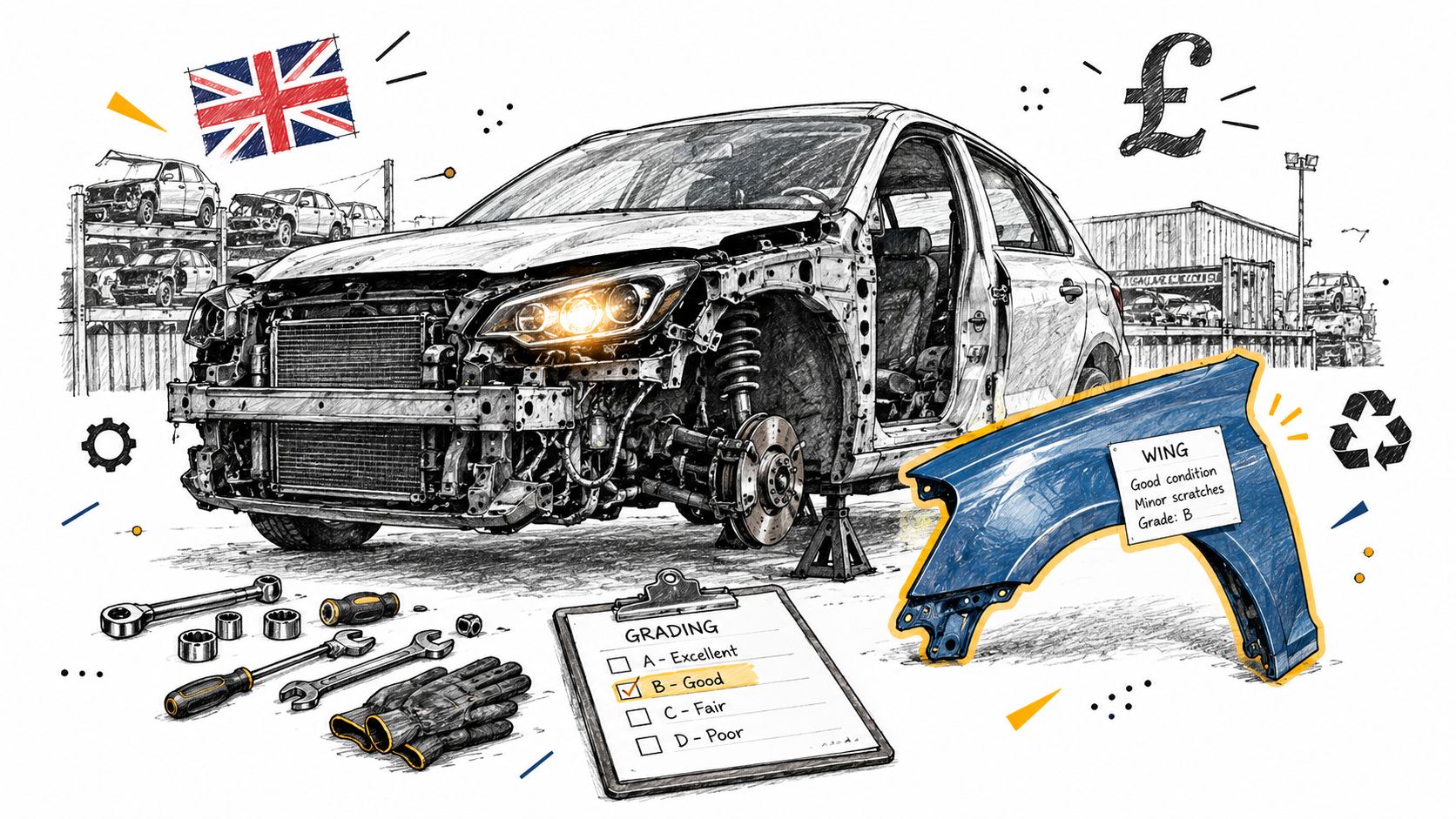
Almost always, yes. A common myth is that a car which will not start is fit only for the tip, yet even a dead one holds value in its metal, its raw materials and its reusable parts. Plenty of buyers want exactly that, whether they are after spares, a repair project, or simply the recyclable weight. The trade attached to broken and unwanted cars is far bigger than most owners expect.
What your car is worth comes down to a few things. Weight matters for scrap, so a heavy 4×4 or estate brings more than a small hatchback. Demand for parts pushes the figure up on popular models, and overall condition plays its part. Even a flood-damaged or fire-damaged car has recoverable metal and the odd usable component. One point many people miss is that, for pure scrap, a complete non-runner with its engine, gearbox and catalytic converter intact is often worth more than a running car that has been stripped of those bits. Completeness counts.
Repair, sell or scrap? Making the call
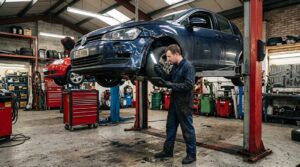
Before you do anything, weigh the repair bill against what the car is actually worth. A useful guide is the 50% rule. If a repair costs more than half the car’s market value, it is usually a red flag, and that holds doubly on an older car with other niggles waiting in the wings. Big jobs like an engine or gearbox replacement rarely pay for themselves unless the car is rare or otherwise excellent.
From there the decision tends to sort itself. Scrapping is the sensible default when a car has truly reached the end, think catastrophic engine failure, serious accident damage, or an MOT failure that costs more to fix than the car is worth. It is fast and gives you a guaranteed price. Selling makes more sense when there is life left, or when the damage is repairable and someone else would happily take it on. One quick sense-check is to compare your best scrap quote against the cheapest similar cars for sale online. Where there is a wide gap, selling is probably worth the extra effort.
How much can I sell my damaged car for?
There is no fixed figure, because it swings with the type of sale, the car itself and the metals market on the day. As a rough starting point for repairable salvage, take the car’s normal market value and knock off somewhere between 20 and 50 per cent, depending on how bad the damage is and which category it carries. A lightly damaged Cat N car keeps most of its worth, while a structural Cat S sits lower because buyers price in the repair.
For a car heading to scrap, the figure rests on weight and current metal prices rather than condition, and a typical end-of-life car lands in the low hundreds. A newer or in-demand car bought for salvage rather than scrap can pay well over a thousand pounds, especially when its parts are sought after. Because metal prices shift week to week and every car is different, the only way to land on a real number is to get a quote on your own vehicle and compare a few offers side by side. Don’t be shy about asking each buyer how they reached their figure.
Your options for selling a damaged car
There is no single right answer, since the best route depends on your car’s condition, its age and how much hassle you are willing to take on. These are the main choices.
- A scrap car service. Best for an end-of-life car. You get a guaranteed price based on weight and parts, free collection, and no need to fix or advertise anything.
- A salvage buyer or salvage auction. Worth considering for a newer or repairable car, which can fetch more than scrap value, sometimes well over a thousand pounds. A salvage auction suits a car that cannot be driven away.
- A private “spares or repair” sale. DIY mechanics, enthusiasts and rebuild specialists often pay above scrap value. The trade-off is time, and buyers tend to negotiate hard once they see the damage in person. If you’re short on time, a service that collects and pays quickly will usually beat the few extra pounds a drawn-out private sale might bring.
- Selling for parts. A popular model with sought-after components can be worth breaking, and a buyer who deals in spares will price it on what’s reusable.
- Part-exchange. Some dealers take a damaged car against a replacement, though offers are usually modest and not every dealer will entertain it. It tends to suit a car that still drives and carries only light damage.
Whichever route appeals, the golden rule is the same. Get a few offers and compare them, because the first quote is rarely the best one.
Selling a non-running car
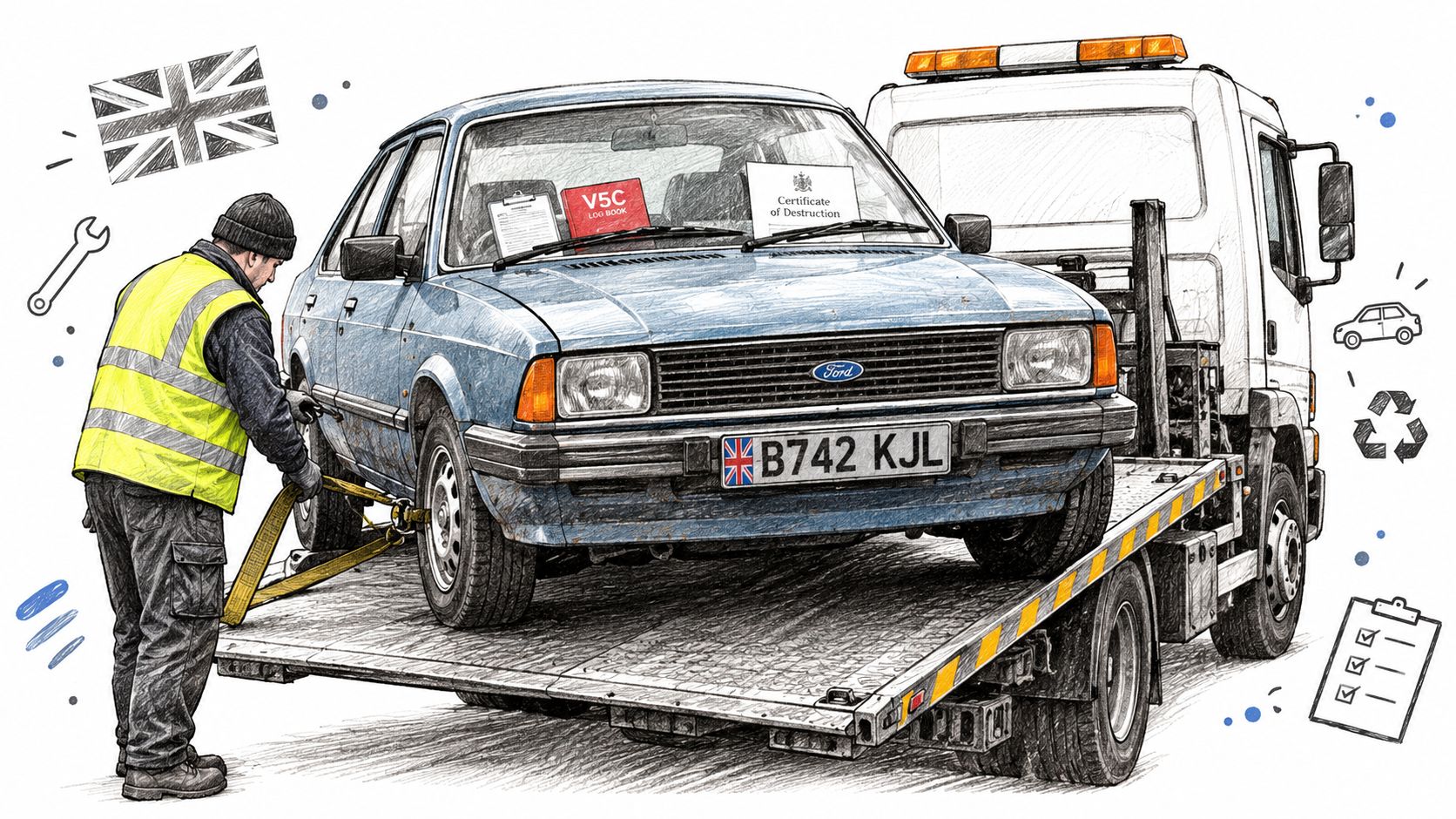
A car that won’t start needs a slightly different approach, mostly because you can’t drive it anywhere. That rules out the school-run buyer, but it does not rule out a sale. Salvage buyers, breakers and scrap services all deal in non-runners as a matter of routine, and many will collect from your driveway at no cost. That collection point is worth weighing, since towing a dead car yourself can quietly eat into anything you save by selling privately.
If you fancy an auction, a salvage auction is a better fit than a traditional one, since the bidders there expect cars that need work or transport. Leave the car complete rather than stripping parts, as a whole vehicle is usually worth more. You will still need the V5C logbook to transfer ownership, and if the car has been parked on a public road with no tax or MOT, make sure it’s declared off the road with a SORN until it goes. Our guide on how to SORN a car covers that step.
Selling a written-off or salvage car
If your car has been through an insurance claim and given a salvage category, the rules tighten up, and they decide what you can legally do with it. The category is the key thing to understand before you sell, since getting it wrong can sink a sale or land you in a dispute later on.
Category A and Category B cars cannot return to the road. A Cat A must be destroyed completely, parts and all, so it is worth only its scrap value. A Cat B has to have its body shell crushed, but the usable parts can still be sold. Category S and Category N cars are different, as both can be repaired and sold on, either before or after the work is done. Cat N, with non-structural damage like cosmetic or electrical faults, is the easiest to sell and holds the most value. Cat S, with structural damage, sits a little lower because buyers factor in the repair.
Two legal points matter here. You must declare the salvage category to any buyer, as hiding it counts as misrepresentation and can land you in trouble. And the car has to be roadworthy, with a valid MOT, before anyone drives it again. If you have already repaired a Cat S or N car, keep the repair invoice, since it reassures the next owner. For the full breakdown of what each label means, see our guide to car write-off categories. One more thing is worth knowing. If your insurer wrote the car off and paid out, they usually keep it, though you can often ask to buy back the salvage and sell or repair it yourself.
How to get a fair price and sell safely
Getting a good price is mostly about doing your homework and staying in control. Start by gathering several quotes so you know the going rate, then treat any figure that towers over the rest with suspicion, since a bait price has a habit of shrinking on collection day. A buyer who explains their offer clearly is usually the one to trust. It’s also smart to have the car’s details and any paperwork ready before you ask, since a buyer who can see the full picture tends to give a firmer, fairer figure.
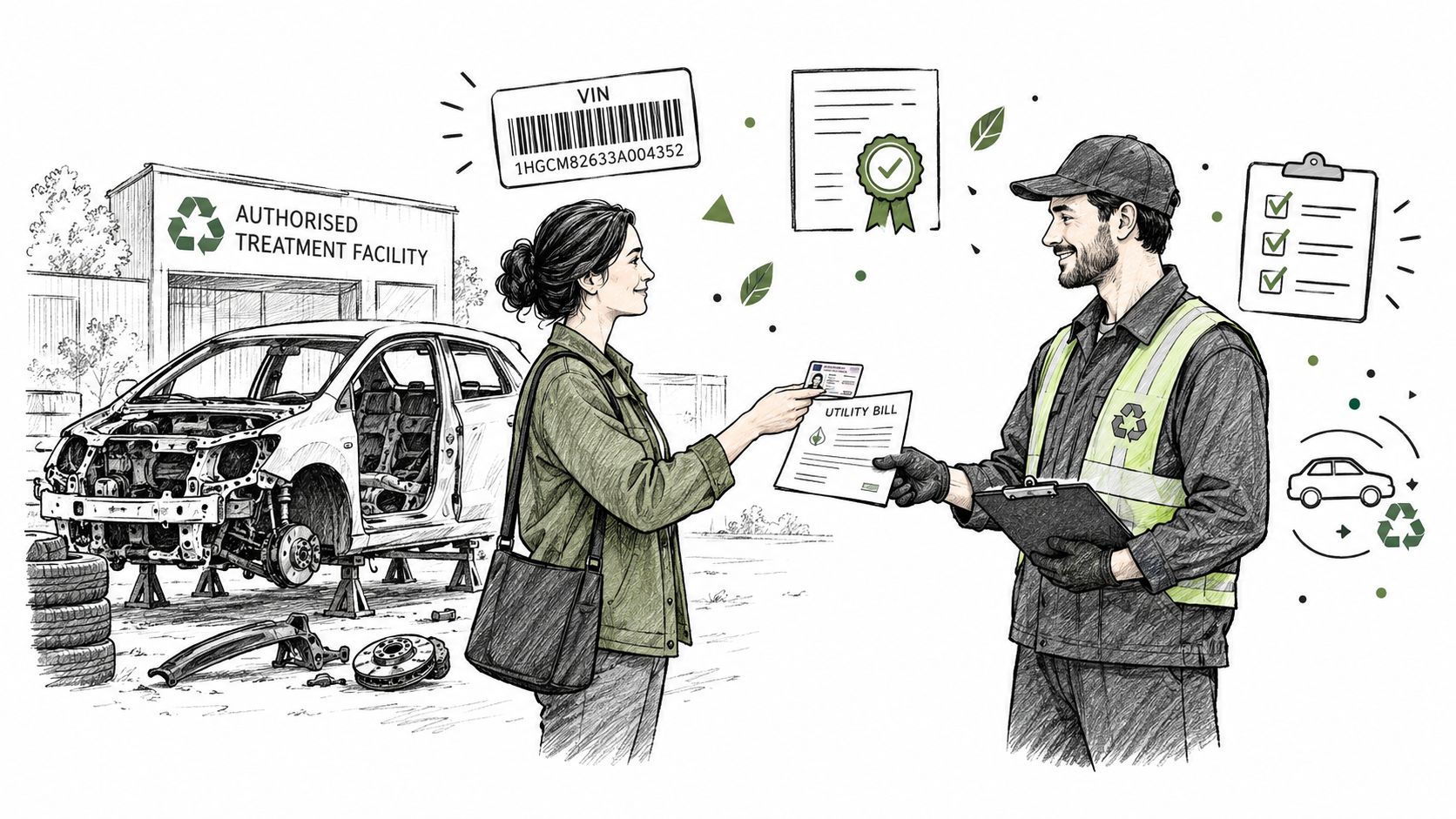
Honesty protects you as much as it protects the buyer. Describe the damage accurately, share a recent diagnostic report if you have one, and never hide a write-off category. On the paperwork side, you will need your V5C to transfer ownership, you must tell the DVLA you have sold or scrapped the car, and you should notify your insurer once the sale is done. If the car is being scrapped, only use a licensed Authorised Treatment Facility and take your Certificate of Destruction as proof. Stick to those basics and you will sidestep both scams and future headaches.
Selling your damaged car the simple way
For a car that has reached the end, or one where the repair bill makes no sense, a scrap car service is usually the cleanest route. You skip the cleaning, the photos, the adverts and the haggling, and you get a guaranteed price with free collection instead. A non-runner or a car with no MOT is no problem, because it is heading for recycling anyway.
When you are ready, you can check what your car is worth in under a minute, get an instant online quote, and book free collection anywhere in England, Wales and Scotland. If the car still has sought-after parts, our used car parts service is another way to capture that value, and our guide on how much you get for scrapping a car explains exactly what shapes the figure. You can confirm any scrapyard is licensed on the GOV.UK scrap your vehicle service, and remember to tell the DVLA you have sold or scrapped the car so you’re no longer liable.
Frequently asked questions about selling a damaged car
Is my damaged or non-running car worth anything?
Almost always, yes. Even a car that won’t start has value in its metal weight, raw materials and reusable parts. Heavier cars and popular models with in-demand parts are worth more, and a complete non-runner often beats a car that has been stripped.
Should I repair my car or scrap it?
Compare the repair bill with the car’s value. As a rule of thumb, if the repair costs more than half what the car is worth, it rarely pays off, especially on an older car. Major engine or gearbox jobs usually tip the balance towards selling or scrapping.
Can I sell a car that doesn’t run?
Yes. Salvage buyers, breakers and scrap services all buy non-runners, and most collect for free. A salvage auction suits a car that can’t be driven, and you should leave it complete and keep the V5C to transfer ownership.
Can I sell a car that’s been written off?
It depends on the category. Cat A and Cat B cars cannot return to the road, with Cat A scrapped entirely and Cat B broken for parts. Cat S and Cat N cars can be repaired and sold, but you must legally declare the category to the buyer.
Do I need an MOT or logbook to sell a damaged car?
You don’t need an MOT to sell a damaged or non-running car for scrap or salvage. You do need the V5C logbook to transfer ownership, and a repaired write-off must have a valid MOT before anyone drives it on the road again.