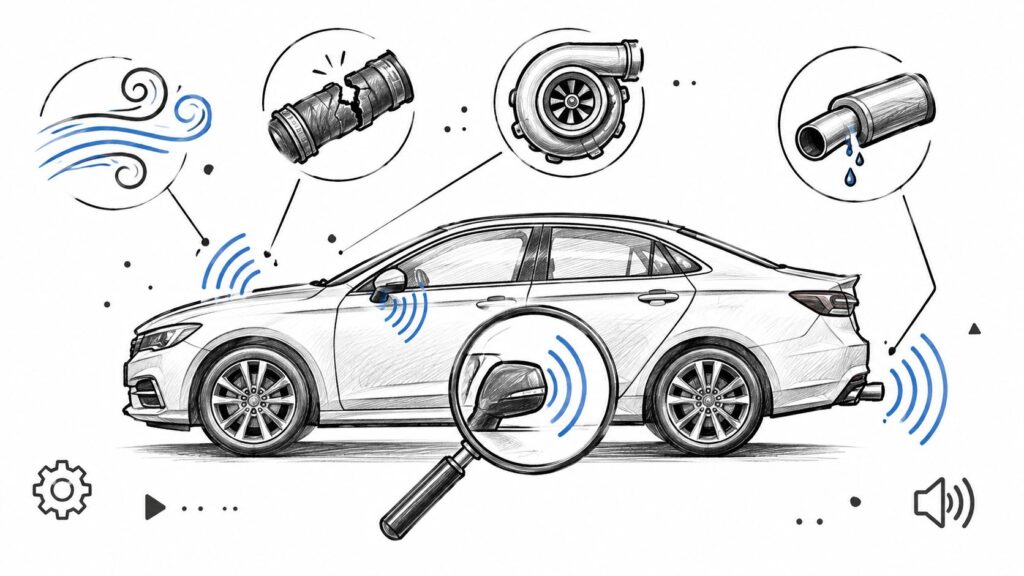
You’ve just heard it, a thin whistle rising with road speed, and now you’re deciding whether to ignore it, book a garage, or pull over. That single sound can come from a door seal, a mirror, an intake leak, a turbo hose, or the exhaust, and the timing matters more than the noise itself. A car whistling noise is best treated as a symptom first, not a diagnosis.
Table of Contents
- Hearing a Whistle While Driving
- Understanding Aerodynamic Whistles in Cars
- How to Diagnose Where the Whistle Comes From
- Intake Leaks, Vacuum Whistles, and Turbo Issues
- Exhaust Whistles and Legal Compliance in the UK
- Making the Right Decision When to Repair or Accept
Hearing a Whistle While Driving
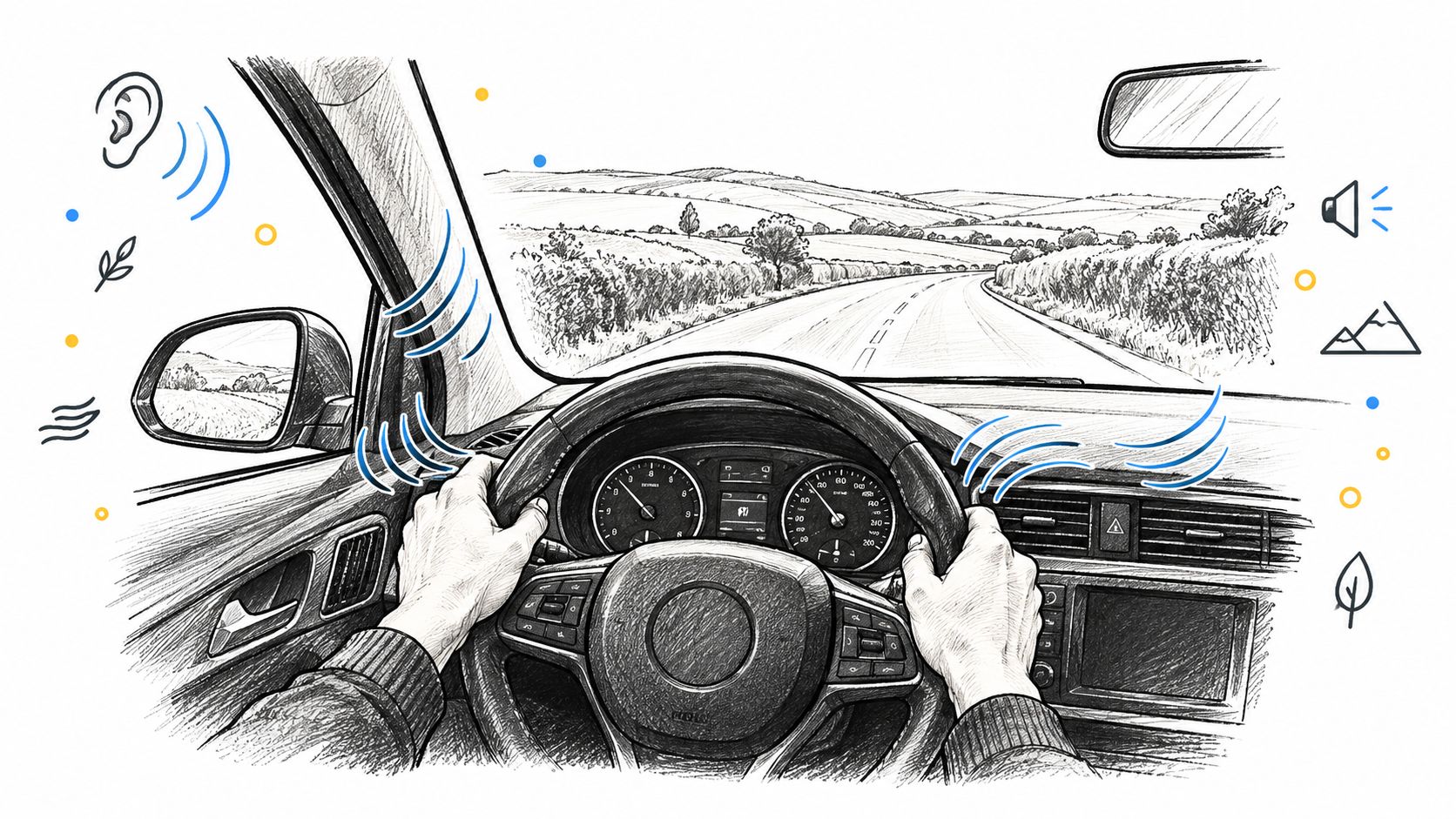
A driver usually notices the whistle in the least convenient moment, on a quiet B-road, in fourth gear, with no music on and the windows shut. The temptation is to assume the worst, especially if the sound is sharp and new. In practice, the first question is simple, does it follow road speed, engine speed, or both?
The first decision is timing
A whistle that appears only when the car is moving often points to airflow around the body. A whistle that rises with revs while the car is stationary or crawling in traffic points more towards the engine bay. That distinction matters because the fix is completely different, a loose mirror cap and a split boost hose need very different treatment.
The UK’s roadside evidence approach backs that up. In the University of Bradford work on the A34, measurements were taken on freely moving traffic, and the sample included 219 light vehicles, 115 medium-heavy vehicles, and 280 heavy vehicles, 614 in total (roadside vehicle noise measurement study). The key lesson is not the count itself, it’s that vehicle noise varies materially, and an unusual whistle can sit outside the normal pattern even when the car still drives.
Practical rule: if the whistle changes with road speed, start with the body, seals, mirrors, trim, and underbody panels before you blame the turbo.
A useful mindset is calm, not passive. Don’t dismiss a new whistling noise, but don’t jump straight to a failed turbo either. The sound may be a harmless aerodynamic annoyance, or it may be the first sign of a repair issue that turns into wind noise, water ingress, or a proper MOT concern.
Understanding Aerodynamic Whistles in Cars
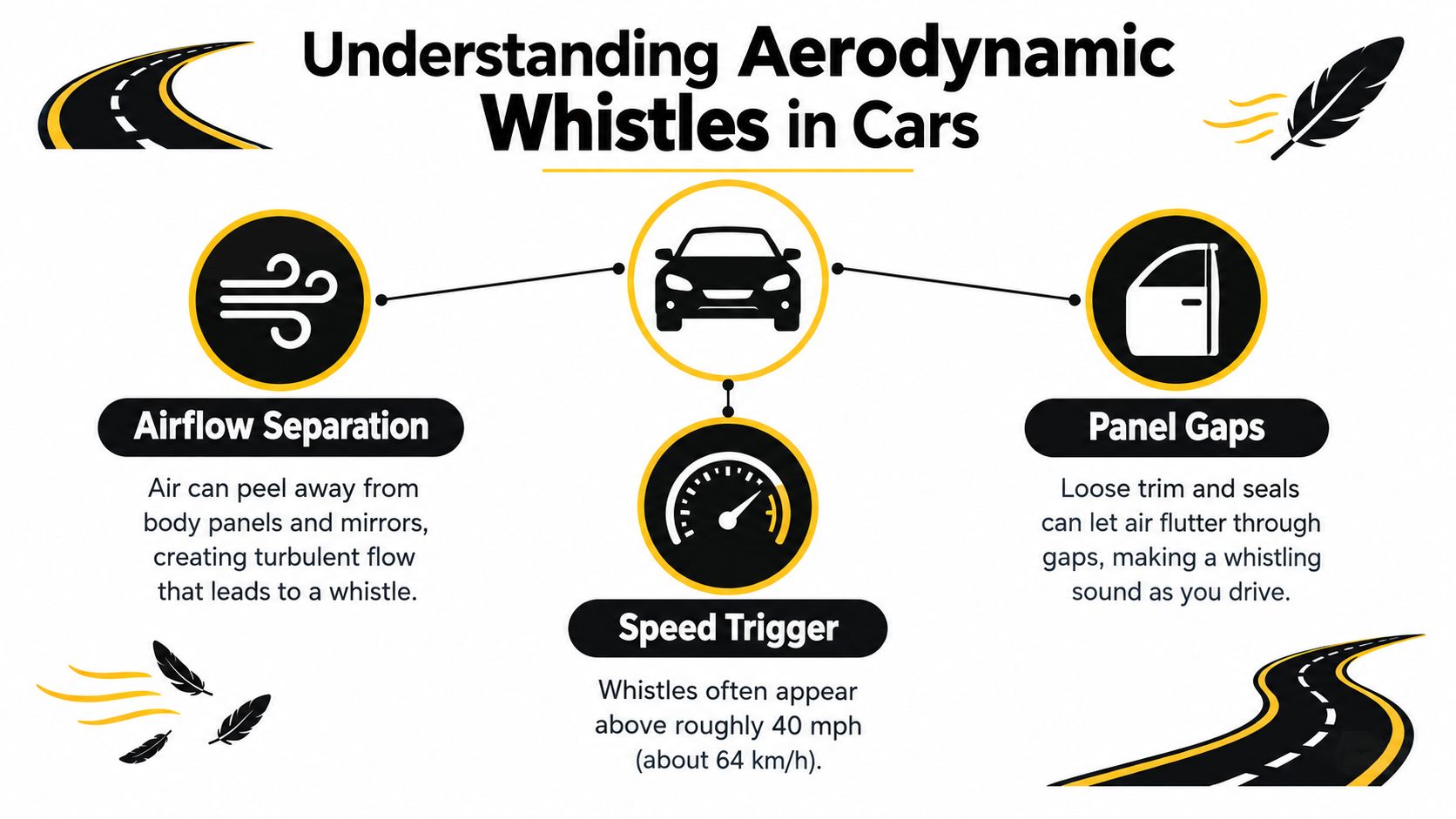
Airflow makes noise when it’s forced through a small gap, over a sharp edge, or around an uneven surface. That’s why a whistle can start at a repeatable speed, then disappear when you alter one detail, like opening a window a fraction or changing the mirror position. It’s the same basic idea as blowing across a bottle, the shape of the gap turns moving air into a tone.
Why speed matters more than revs
Aero whistles usually follow road speed, not throttle position. That’s because the airflow over the body gets faster as the car moves faster, regardless of what the engine is doing in the background. If the sound stays tied to the same speed on the motorway, but doesn’t change much with gear choice, you’re probably listening to air moving around the shell.
UK research on freely moving traffic found that aerodynamic noise becomes more relevant as speed rises, and exposed or poorly shaped structures can add measurable noise above 800 Hz (Bradford study PDF). That’s useful because a whistle in that sort of band often feels very different from a deep exhaust note or a belt squeal. It also explains why a door seal, number-plate surround, roof trim, or mirror housing can be the culprit.
What usually changes the sound
If a whistle gets louder when you crack a window, change crosswinds, or pass a lorry, suspect disturbed airflow around the cabin edge. If it changes when you disturb a mirror, trim strip, or undertray, that points to a local airflow leak. A roof rack, aftermarket accessory, or slightly displaced panel can all create the same irritating tone.
For a deeper dive into sound localisation itself, the mechanics behind how the ear and brain pinpoint a source are explained well in algorithms behind sound localization. That doesn’t fix a car, but it does help explain why a whistle inside the cabin can mislead you about where it’s really coming from.
How to Diagnose Where the Whistle Comes From
Start with the simplest split, road speed or engine speed. Then isolate whether the sound is outside the car, under the bonnet, or from underneath. Don’t start by touching hot parts or spinning components, because a safe diagnosis is about pattern recognition first.
A safe road test sequence
- Road test: note when the whistle appears, at a steady speed, during acceleration, or only on lift-off.
- Window check: crack each window slightly, one at a time, and listen for a change.
- Seal inspection: once parked, feel around the door, mirror, and window edges for obvious leaks or loose trim.
- Category check: decide whether the sound follows airflow, blower speed, or engine load.
The logic behind that sequence is simple. A sound source that stays put in the cabin isn’t necessarily coming from the same place you hear it. If you want a good explanation of why sound can seem to shift position, the ear and brain cues discussed in sound source localisation algorithms are a useful reference.
If the whistle changes with fan speed, think HVAC. If it changes with throttle, think under-bonnet air leaks. If it changes only with road speed, look outside the engine bay first.
What to inspect first
Open the bonnet only after the engine is cool, then listen at a distance. Check accessible hoses, intake ducting, and any obvious split or loose clamp. Under the car, look for a hanging splash shield, displaced undertray, or fresh contact marks on trim.
Don’t tape exterior parts while driving, and don’t put hands near belts, fans, or the turbo area with the engine running. If the noise is clearly under load and is accompanied by poor acceleration, temperature rise, smoke, or a warning light, stop guessing and treat it as a mechanical problem.
Intake Leaks, Vacuum Whistles, and Turbo Issues
A whistle that rises with engine speed belongs in a different bucket from wind noise. The main suspects are intake leaks, vacuum leaks, turbocharger issues, and small exhaust leaks near the front of the engine. They can sound similar from the cabin, but the accompanying symptoms usually separate them.
Compare the common mechanical sources
A smooth turbo whistle under load can be normal on some cars. A new, siren-like whistle is different, especially if it comes with reduced power, smoke, oil use, or a boost warning. That combination points towards an intake hose split, intercooler leak, loose clamp, or turbocharger bearing or compressor problem, which is exactly how the MOT nuisance guidance frames exhaust-noise checks during the emissions test or at around 2,500 rpm or half maximum engine speed (MOT inspection manual).
A whistle at idle or on overrun is more suggestive of a vacuum leak, PCV hose issue, gasket leak, or an exhaust-manifold leak. A small exhaust leak doesn’t always rumble, it can hiss or whistle, especially when the engine is cold or under light load. If fumes enter the cabin, that’s not a minor annoyance, it’s a safety issue and the car should be taken out of use until it’s repaired.
Mechanic’s shortcut: revving in neutral tells you less than many owners think. A boost leak, vacuum leak, or exhaust leak often needs load to show itself properly.
The mistake I see most often is treating every whistle as a dying turbo. That leads owners to panic, when a split hose or loose clamp would have been a much smaller job. The better question is whether the whistle came with a loss of performance, warning lights, smoke, or rising temperature.
Exhaust Whistles and Legal Compliance in the UK
An exhaust whistle can be a symptom of a leak, a damaged silencer, or an illegal modification. UK controls on external vehicle noise go back a long way, the Vehicle Certification Agency records that they began in 1929 with the Motor Cars (Excessive Noise) Regulations, and the type-approval limit for passenger cars has dropped from 82 dB(A) in 1978 to 70 dB(A) under the current framework (Vehicle Certification Agency). The direction of travel is clear, quieter vehicles make unusual whistles more noticeable.
When a whistle becomes a legal problem
Regulation 97 of the Construction and Use Regulations says a vehicle mustn’t be used in a way that causes excessive noise avoidable through reasonable care. The VCA also states that modifying an exhaust so the car is noisier than its approved level is illegal, and the limit for most new passenger cars is scheduled to reach 68 dB(A) by 2026 under the phased rules for the UK market (Vehicle Certification Agency). If the car has been altered, the whistle may be more than an annoyance.
A good comparison point is a known exhaust leak reference, such as header gasket leak warning signs. That kind of issue can create a sharp, engine-speed-related hiss or whistle, and it’s one reason a noise near the manifold should never be waved away as “just a bit louder than usual”.
Why MOT history matters
A whistle on its own isn’t automatically an MOT failure. The test language is about unreasonable exhaust noise and the condition of the exhaust system, not about every high-pitched sound in isolation. If you’re checking whether a car has a pattern of noise-related or repeated test issues, an MOT history check can help you spot the bigger picture without guessing.
Making the Right Decision When to Repair or Accept
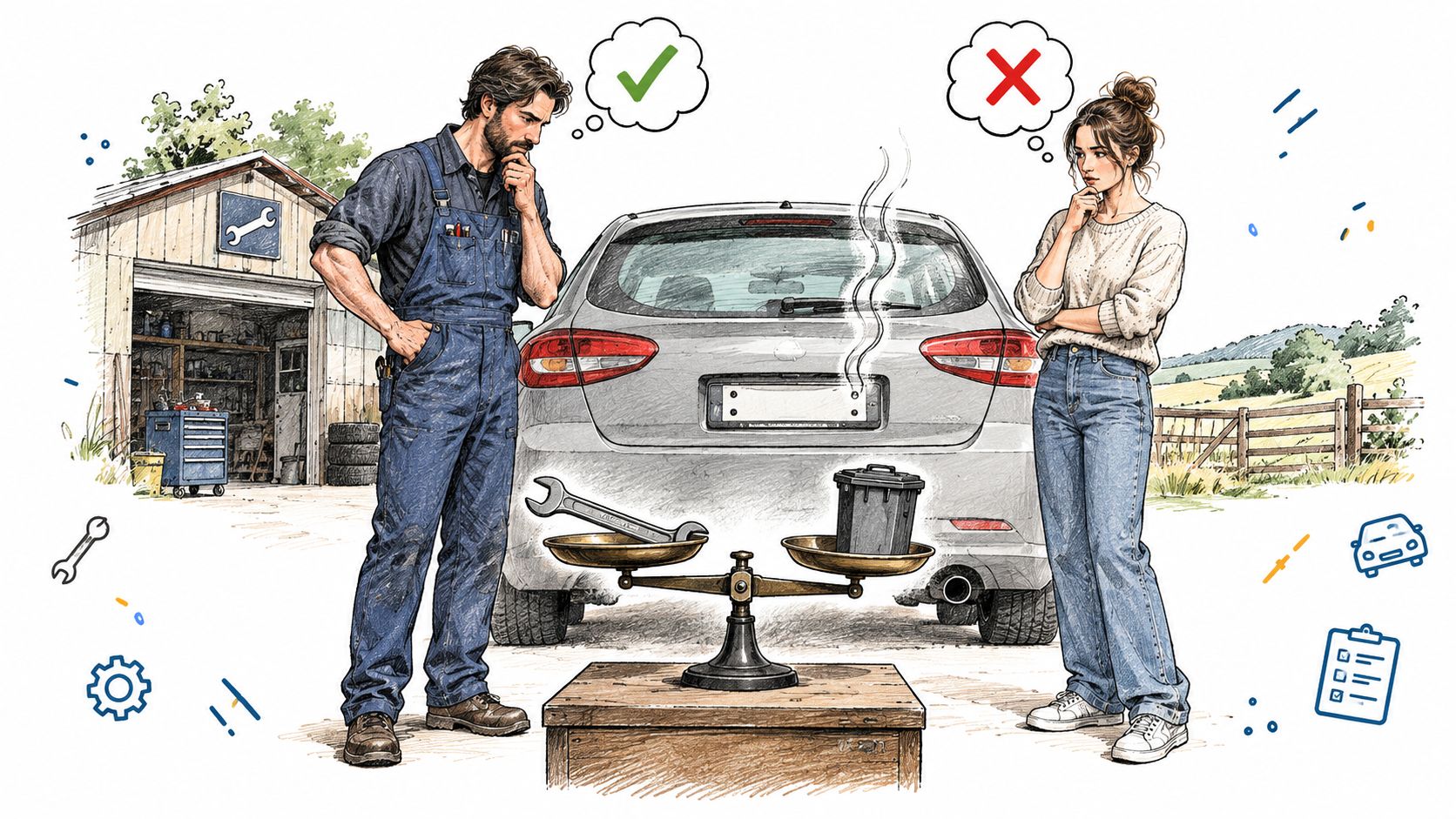
Some whistles are annoying but manageable. A misaligned number-plate surround, a tired door seal, or a slightly loose trim panel can make a car sound cheap without making it unsafe. Other whistles are early warnings, and the clue is usually what happens alongside the noise, not the noise alone.
Use the symptoms to decide
If the whistle is speed-related, start with exterior seals and airflow paths. If it changes with throttle, boost, or engine load, inspect intake and vacuum plumbing, then the exhaust. If it’s paired with smoke, warning lights, poor acceleration, temperature rise, or fumes, don’t keep driving and hoping it settles down.
A practical owner check is straightforward. Listen from outside the car with the bonnet shut, confirm whether the sound changes with speed or revs, and inspect only what’s cool and accessible. That’s enough to separate a harmless wind whistle from a fault that needs a mechanic.
A turbo whistle is not a diagnosis. The same sound can come from a split hose, a leak, a seal issue, or a component that’s starting to fail, and the risk depends on the symptoms that travel with it. If the car is near the end of its life, or the fault keeps returning after repair, the honest decision may be to stop pouring money into it and move it on.
If the whistle has become part of a bigger picture, like failing MOTs, repeated leaks, or a car that’s no longer worth repairing, Scrap A Vehicle can help you move it on legally and quickly. Get a valuation, compare your options, and arrange collection through Scrap A Vehicle when you’re ready to stop chasing the noise and make a clean decision.