You’ve been told your car is a write-off, or you’ve spotted “Cat N” or “Cat S” on a used listing, and you want to know what it really means. The car write-off categories sort damaged vehicles by how badly they’re hurt, from cars that must be crushed to ones that can be repaired and driven again. Here’s what each category means and what it means for you.
What is a car write-off?
In insurance terms, a write-off is a vehicle the insurer decides is a total loss, usually because repairs would cost more than the car is worth or because it’s unsafe to drive. Once that call is made, the car is given a category that sets out what can legally happen to it next.
It does not always take a dramatic crash. On an older car worth only a few hundred pounds, even a damaged bumper or a minor knock can tip the repair bill past the car’s value and trigger a write-off.
What are the car write-off categories?
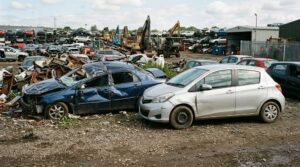
The car write-off categories number four in total, labelled A, B, S and N. The Association of British Insurers set them out in its Salvage Code, and they have applied since October 2017, when they replaced the older Category C and D system.
That change moved the focus away from repair cost alone and onto the type of damage, so safety comes first. If a car’s structure is damaged, it falls into a structural category no matter how cheap the repair looks. Two of the categories mean the car must be scrapped, and two allow a repair and a return to the road.
What does Cat A mean?
At the top of the scale, Cat A means scrap only. The car is so badly damaged that it must be crushed whole, and not a single part may be salvaged or reused, even components that still work.
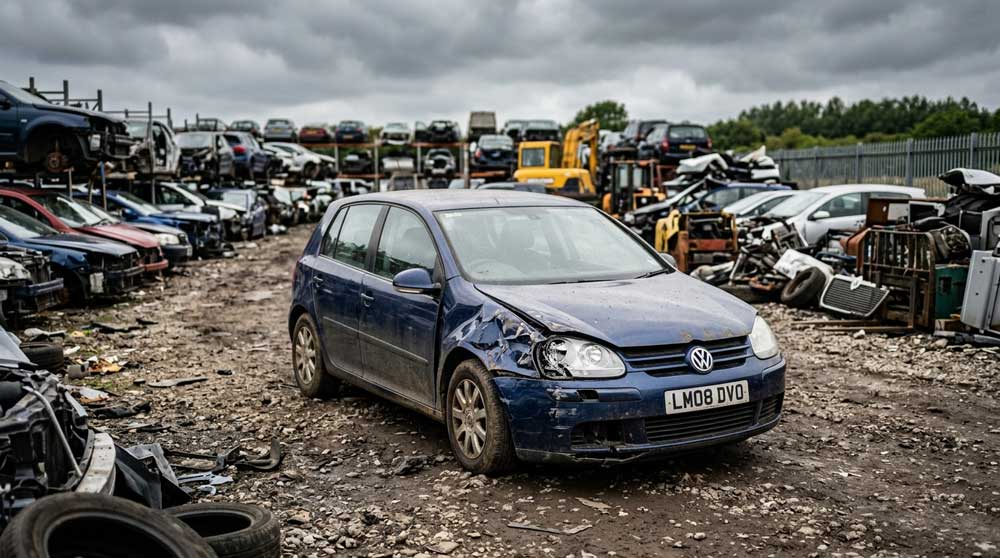
Cars end up as Cat A after catastrophic events such as a major fire, severe flooding or a high-speed crash. You should never see a Cat A car advertised for sale, and if you do, treat it as a serious warning sign. Nothing from a Cat A vehicle is allowed back onto the road.
What does Cat B mean?
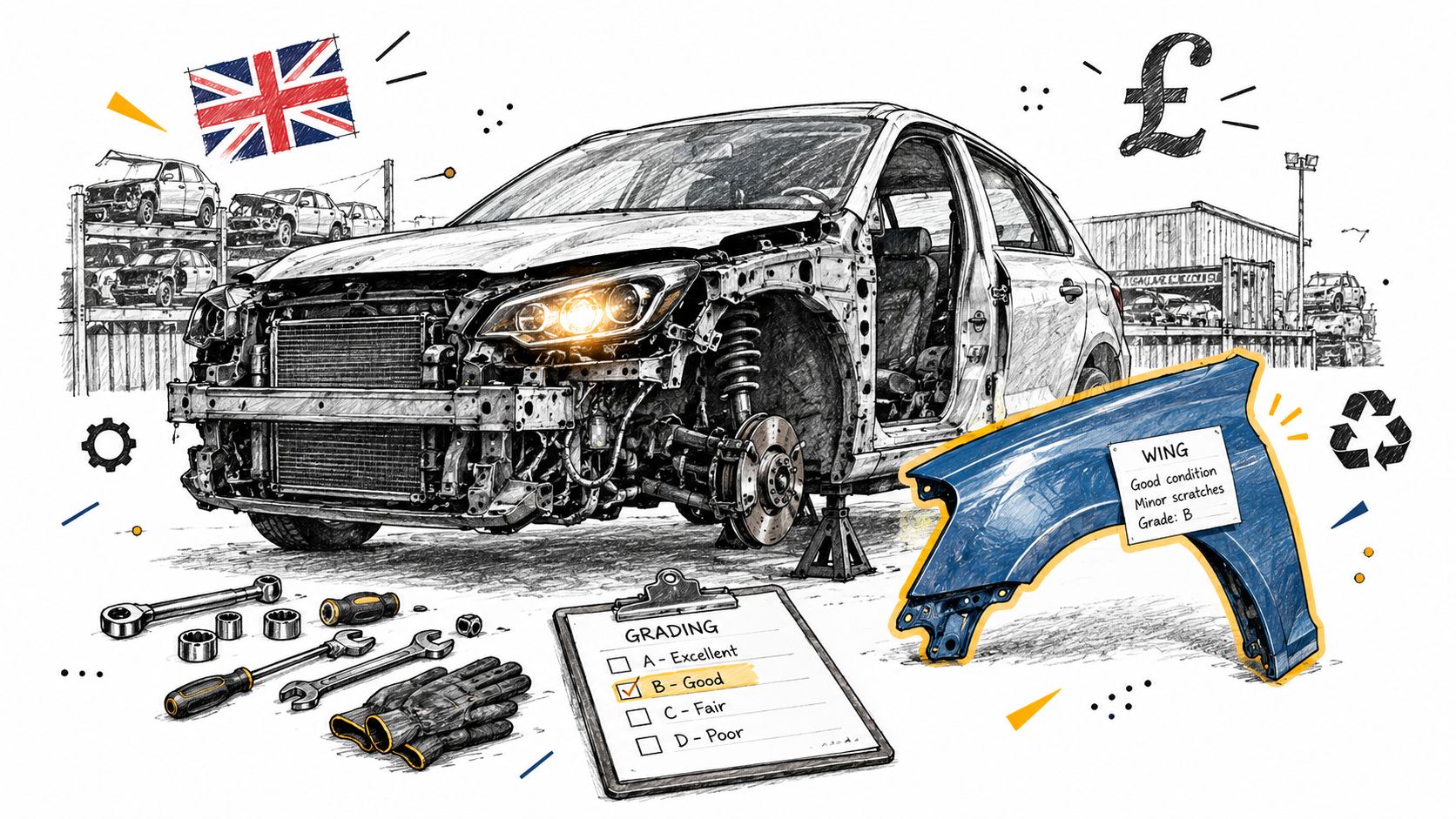
A Cat B write-off has extensive damage that rules out any return to the road, but its parts can still be reused. Useful components such as the engine, gearbox, seats and wheels may be removed and sold on before the rest is destroyed.
The defining rule for Cat B is that the body shell must be crushed and can never be rebuilt into a road car. So while a Cat B donates parts to keep other vehicles going, the vehicle itself is finished.
What does Cat S mean?
A Cat S marker means the car has structural damage that can be repaired. The damage affects the frame of the vehicle, such as a bent or twisted chassis or a collapsed crumple zone, so it is more than cosmetic and needs professional work.
Once it has been properly repaired, a Cat S car can legally return to the road, though it has to be re-registered with the DVLA first. Cat S replaced the old Category C, and you will still see Cat C on the history of some older cars.
What does Cat N mean?
With Cat N, the car has non-structural damage. The frame and structural sections are sound, and the damage is to other areas, which can include cosmetic panels, electrics, or even non-structural items like brakes and steering that still need professional repair.
The Cat N car meaning often confuses people because “non-structural” does not always mean minor. A Cat N car can return to the road without re-registration, but the faults still need fixing properly before it’s safe. Cat N replaced the old Category D, which you may still see on older vehicles.
What about the old Cat C and Cat D?
Before October 2017, the previous labels were Cat C and Cat D. Cat C broadly became Cat S, and Cat D broadly became Cat N, though the old system judged damage mainly on repair cost rather than structural safety.
Older cars written off before the switch keep their original Cat C or Cat D marker on their history, so both systems still show up on vehicle checks today.
Which write-off categories must be scrapped?
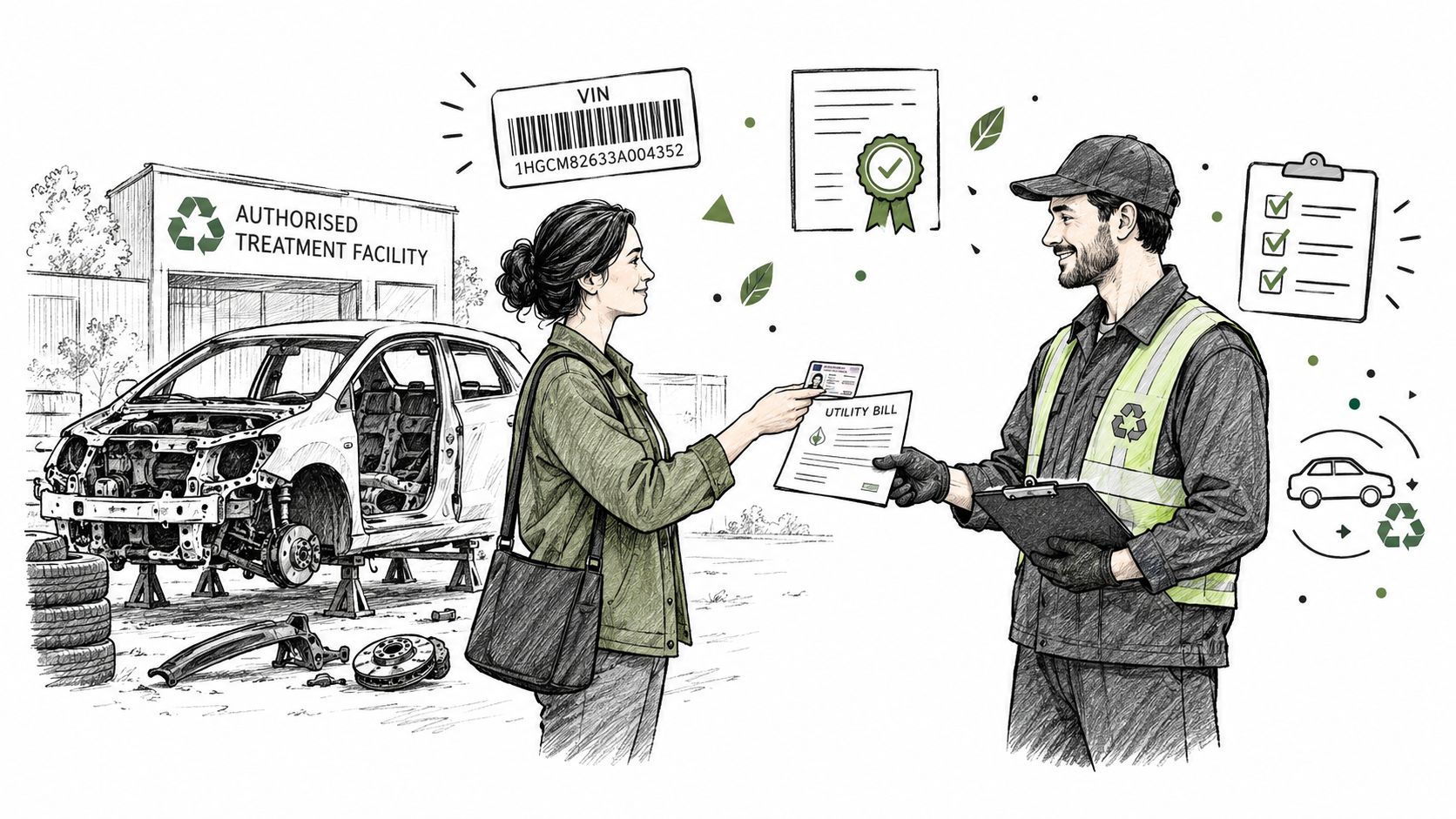
Both Cat A and Cat B vehicles must be scrapped, and there is no choice about it. A Cat A is crushed whole, while a Cat B has its parts removed before the shell is destroyed, and in both cases the insurer arranges this with an Authorised Treatment Facility.
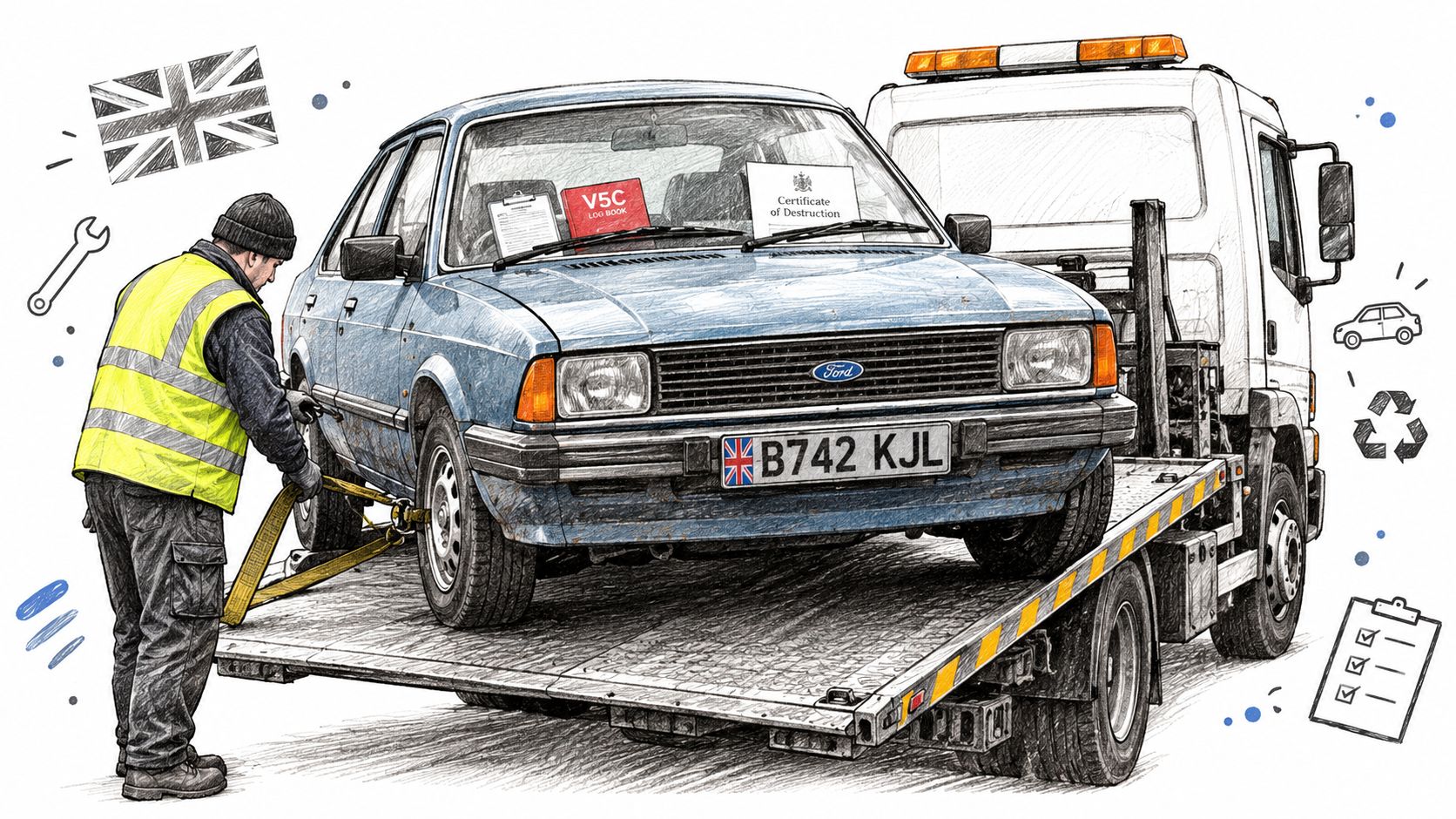
By contrast, Cat S and Cat N cars do not have to be scrapped, but scrapping is often the sensible choice anyway. If the structural or mechanical repairs cost more than the car is worth, or you would rather not run a car with a permanent write-off marker, scrapping turns it into cash instead. You can find out what your car is worth with a free valuation, weigh it against the repair quote, and if scrapping wins we offer free collection and an instant online quote. When you do scrap a written-off car, you also need to tell the DVLA.
How does a write-off affect a car’s value and selling it?
This kind of marker stays on a car’s history permanently and typically cuts the resale value by anywhere from 20 to 50 percent. It shows up on any vehicle history check, so buyers will see it.
If you sell a repaired Cat S or Cat N car, you’re legally required to tell the buyer about its history, and hiding it can invalidate insurance and land you in trouble. For a buyer, a well-repaired Cat N with documented work and a clean MOT can be a genuine bargain, as long as the checks stack up. The categories themselves come from the ABI Salvage Code.
Frequently asked questions about write-off categories
Can you drive a Cat S or Cat N car?
Yes, once it’s been professionally repaired and is roadworthy with a valid MOT and insurance. A Cat S car also has to be re-registered with the DVLA before it goes back on the road, while a Cat N does not.
Is Cat N or Cat S worse?
Cat S is the more serious of the two, because it means structural damage to the car’s frame. Cat N covers non-structural damage, which can still include safety items like brakes or steering but leaves the structure intact.
Can I keep my car if it’s written off?
For Cat S or Cat N, you can often buy it back from your insurer, with your payout reduced by the salvage value, then take on the repairs yourself. For Cat A or Cat B, you have no choice, as the car must be scrapped or broken for parts.
Do write-off categories affect insurance?
They can. Some insurers charge more to cover a repaired Cat S or Cat N car, and a few won’t cover one at all, so it’s worth checking you can insure it before buying. The write-off marker stays on record for the life of the car.
What were Cat C and Cat D?
They were the old write-off categories used before October 2017. Cat C became Cat S and Cat D became Cat N, but cars written off under the old rules keep their original marker, so you’ll still see Cat C and Cat D on used cars today.