A UK car might sell for around £100 to £300 as a non-runner sent to scrap, or around £13,000 to £25,000 as a roadworthy private-sale vehicle, depending entirely on its age, condition, fuel type and selling method. The right answer for your car comes from choosing the right market, not from applying one universal number.
You may be asking because a warning light has appeared, the MOT is approaching, or the car has just stopped fitting your life. Perhaps it still starts every morning but needs tyres and brakes, or perhaps it’s sitting on the drive with a failed MOT and no obvious buyer. In each case, the question is the same: what can I sell my car for?
The answer depends on what a buyer can do with it. A private motorist values transport, a dealer values resale potential, a salvage buyer values usable components, and a recycler values recoverable materials. Your car therefore has several possible prices, rather like a house that might be worth one amount to a family, another to a developer and another to an estate agent.
Table of Contents
- Understanding Your Car’s True Worth
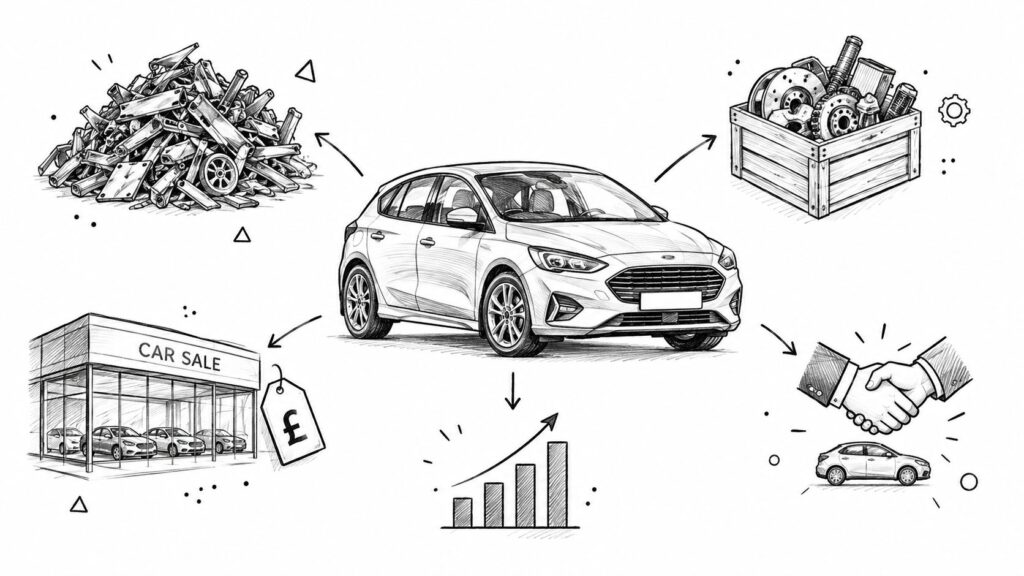
- The Four Paths to Selling Your Car
- How UK Market Data Shapes Car Values
- Factors That Make or Break Your Valuation
- Getting an Accurate Valuation Right Now
- Making the Right Choice for Your Situation
Understanding Your Car’s True Worth
A dashboard warning light can make a perfectly familiar car feel suddenly worthless. You may see a repair estimate, compare it with the vehicle’s age, and assume the only remaining option is the scrapyard. That conclusion can be wrong. A running car with a manageable fault, a repairable MOT failure and a non-runner each attract different buyers.
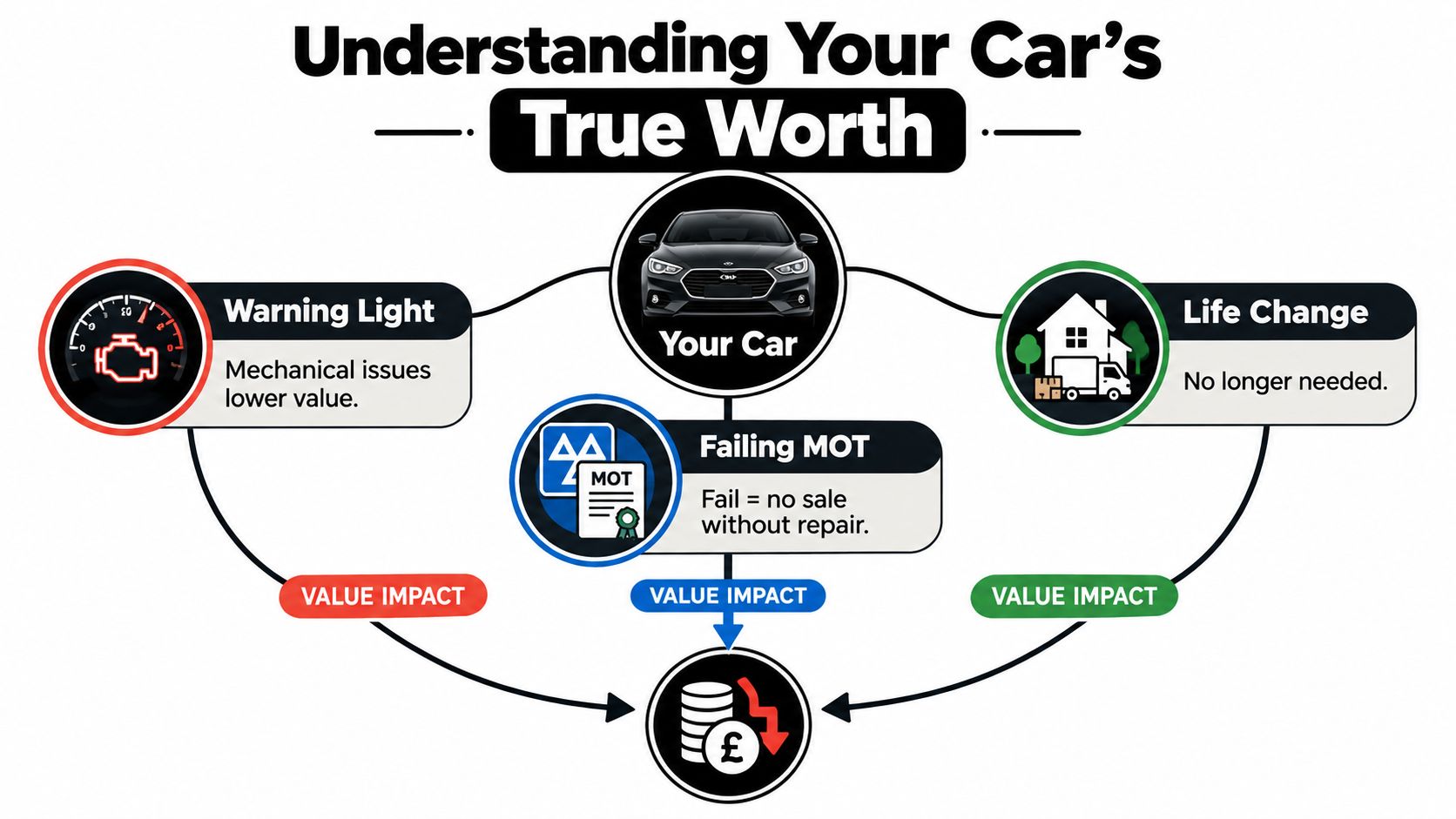
One car, several possible prices
Start with four broad values:
- Scrap value comes from the vehicle’s recyclable materials and parts that can be recovered during dismantling. It suits an end-of-life car with little realistic resale potential.
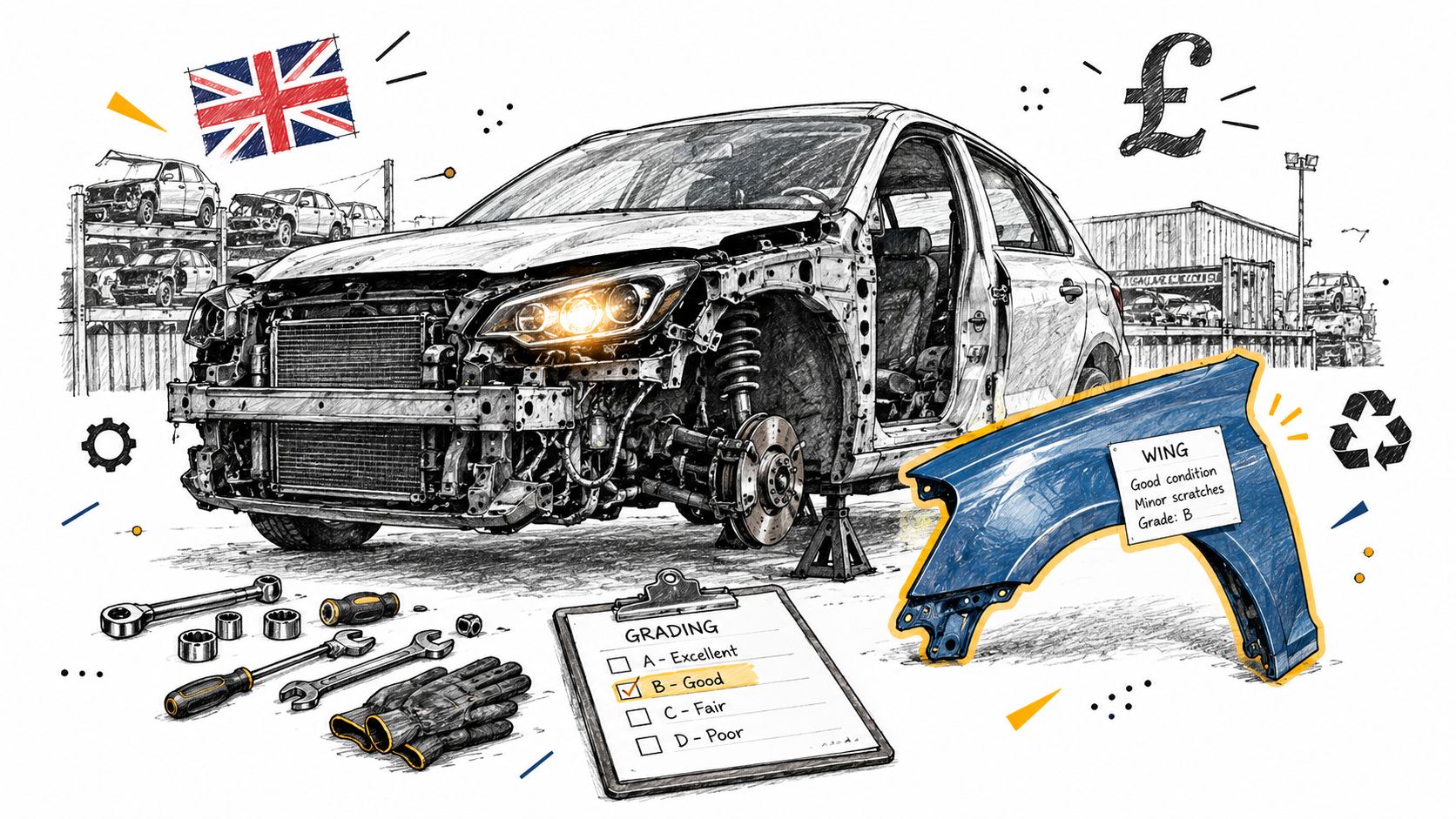
- Salvage value applies when a damaged or non-running vehicle still contains valuable components, such as a usable engine, gearbox, catalytic converter or body panels.
- Trade value is the amount a dealer is prepared to offer for convenience, resale potential and the ability to include the car in a part-exchange deal.
- Private-sale value is usually the highest possible headline price because you’re approaching the eventual driver directly. It also demands more preparation, communication and patience.
A buyer’s offer reflects risk. If the buyer must collect the car, diagnose a fault, complete repairs, advertise it and provide a warranty, those costs come out of the amount offered to you. A clean, roadworthy car with a current MOT carries less uncertainty than a car that cannot be driven or inspected properly.
Practical rule: Ask what the next buyer can realistically do with the car before asking what the car is worth.
For a detailed example of how unusual specification and enthusiast demand can affect a vehicle’s desirability, SwiftJet’s guide to the 1995 Saleen is a useful reminder that age alone doesn’t determine value. A specialist model can sit in a completely different market from an ordinary family hatchback.
Your first valuation should therefore record the registration, mileage, engine and fuel type, MOT result, service history, warning lights, accident damage and whether the car starts and moves under its own power. Those details determine which of the four markets is open to you.
The Four Paths to Selling Your Car
The selling route changes both the price and the amount of work you must do. A recycler can remove a non-runner from your drive quickly, while a private buyer may pay more but expect a test drive, extensive answers and confidence that the car won’t need immediate repairs.
| Selling Path | Expected Return | Timeframe | Best For |
|---|---|---|---|
| Scrap through an Authorised Treatment Facility | Around £100 to £400, depending on the vehicle and current material value | Usually the quickest route | End-of-life cars and uneconomic non-runners |
| Salvage buyer | Above basic scrap value when usable parts or repair potential remain | Fast, subject to collection arrangements | Accident-damaged, repairable or non-running vehicles |
| Dealer trade-in | Below the likely private-sale price, in exchange for convenience | Often arranged alongside another vehicle purchase | Owners prioritising speed and simple administration |
| Private sale | Potentially the highest return, depending on age, condition and demand | Can take longer and requires buyer interaction | Roadworthy cars with a passed MOT and good records |
Scrap and recycling
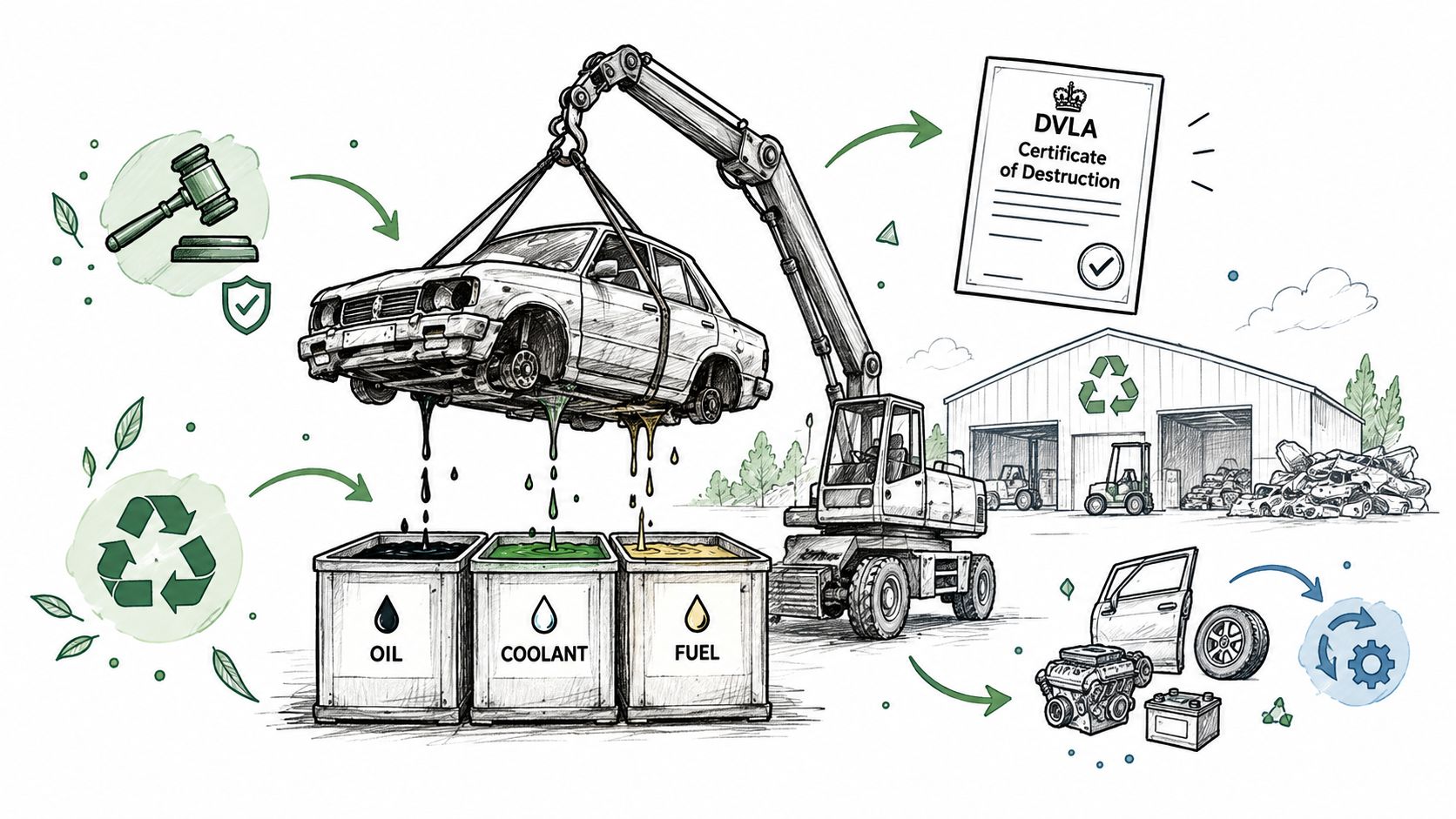
Scrapping makes sense when repair costs, transport difficulties or structural damage outweigh the car’s likely resale value. An Authorised Treatment Facility can depollute and dismantle the vehicle through a regulated process, rather than treating it as ordinary household waste. You should receive the appropriate disposal documentation and keep evidence that the vehicle has left your ownership.
The quoted amount depends on more than the badge on the bonnet. Weight, recyclable material values, catalytic-converter content, location and potentially reusable parts can all affect the offer. A vehicle that looks like scrap to its owner may still have salvageable components.
Salvage purchasing
Salvage buyers look for value that a basic recycler may ignore. A damaged car may have straight panels on one side, an undamaged interior, good wheels or a healthy drivetrain. A failed MOT car may need one repair rather than complete disposal.
Be accurate about the defect. State whether the engine starts, whether the vehicle rolls, whether airbags have deployed and whether the keys and V5C are available. If you’re trying to identify replacement components before deciding whether repair is sensible, a specialist resource such as find genuine used DAF parts illustrates how parts demand can create value beyond metal weight, particularly for commercial vehicles.
Trade-in and private sale
A dealer’s offer includes preparation, warranty risk, overheads and resale margin. It can be attractive when you need a clean handover, but compare the offer with a realistic private-sale figure rather than an optimistic advertisement price.
Private sale gives you control over the advert and negotiation. You’ll need clear photographs, an honest description, service documents and time for enquiries and viewings. For a roadworthy car, compare offers and selling routes using this guide to how to sell a car before choosing convenience over potential return.
How UK Market Data Shapes Car Values
You can type your registration into a valuation tool and get one number in seconds. The problem is that the market does not work with one number. It works more like a set of lanes, where age, fuel type and buyer demand push the same car into very different price ranges.
Auto Trader’s Retail Price Index recorded an average UK used-car retail price of £16,786 in July 2025, based on approximately 800,000 pricing observations across the retail market, with the average unchanged month on month and year on year (Auto Trader’s July 2025 Retail Price Index).
That average is a useful benchmark, but it is still a shop-window figure. If you are selling privately, trading in, or comparing your car with a scrap or salvage route, the key question is not “what is the average used car worth?” but “which slice of the market looks most like mine?”
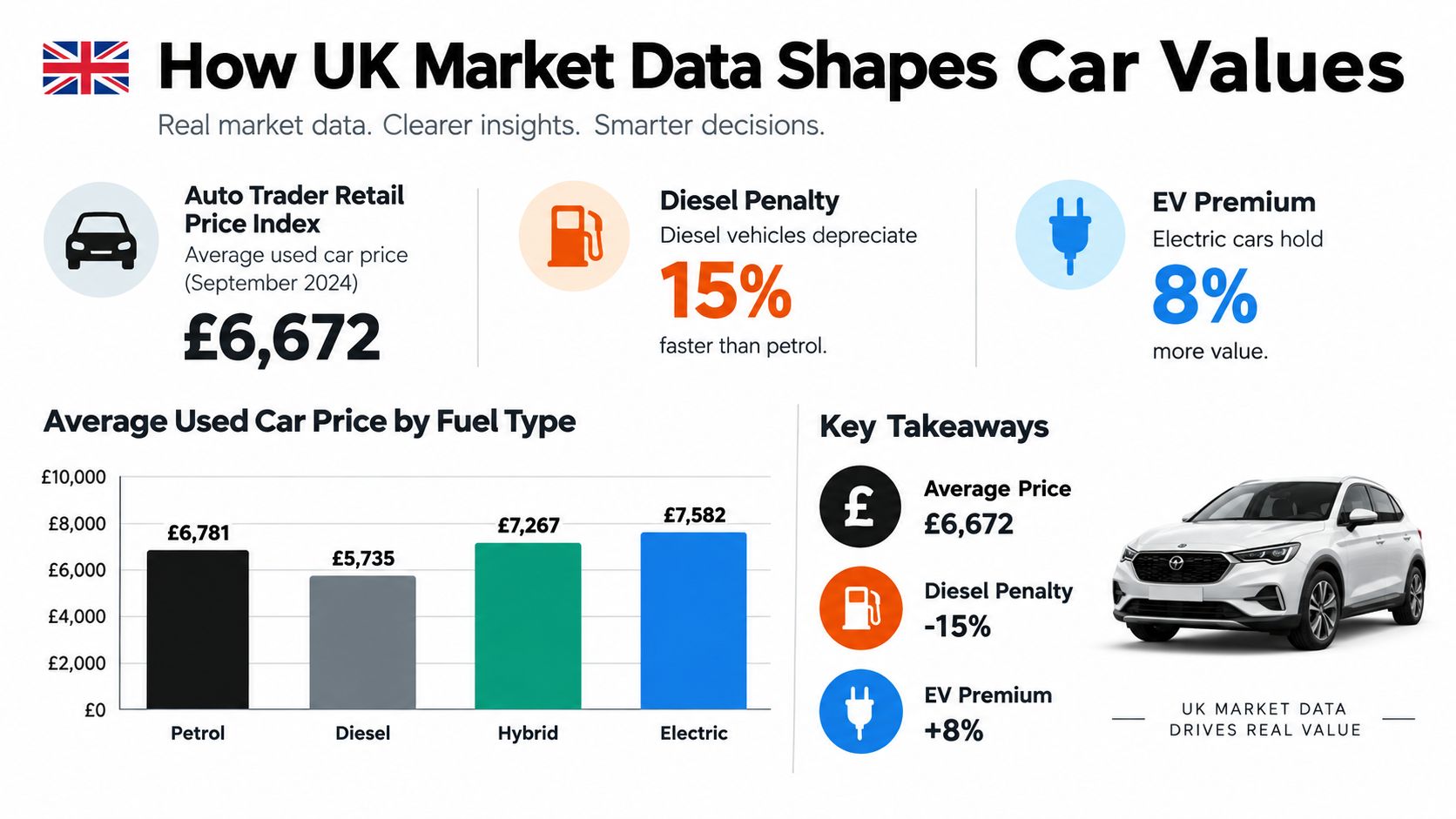
Age creates a wide spread
Age changes the comparison point sharply. Auto Trader’s June 2025 figures show cars aged 1 to 3 years averaged £25,112, cars aged 5 to 10 years averaged £13,541, and cars more than 10 years old averaged £6,561, according to Auto Trader’s Retail Price Index data cited above.
That spread matters because many owners compare their car with the wrong neighbours. A twelve-year-old hatchback with a current MOT should not be judged against nearly new stock on dealer forecourts. It should be judged against other older, usable cars competing for buyers who want affordable transport.
Older stock also held up better than many sellers expect. Vehicles over a decade old rose 4.1% year on year, while cars aged five to ten years rose 1.2%. That helps explain why an older petrol car in honest condition can still attract sensible money instead of dropping straight into scrap-value territory.
Fuel type changes the comparison
Fuel type can shift the picture just as much. Auto Trader reported December 2025 average used values of £14,877 for petrol, £14,025 for diesel and £24,029 for electric vehicles, with used EV values falling 7.4% year on year (Auto Trader’s 2025 used-car market review).
The decision tree becomes clearer here. Stronger older petrol demand can support a private sale or trade-in. EV price pressure can narrow the gap between keeping, trading, and accepting a lower offer, especially if buyers raise questions about battery health, charging speed, warranty cover and service history.
The market itself remained active. The Society of Motor Manufacturers and Traders recorded 7,807,872 UK used-car transactions in 2025, up 2.2% compared with 2024 (SMMT used-car sales data). In a busy market, comparing more than one selling path is usually smarter than accepting the first figure you see.
Factors That Make or Break Your Valuation
Two cars with the same registration can attract very different offers. A buyer wants to know not only what the vehicle is, but also how much uncertainty sits behind it.
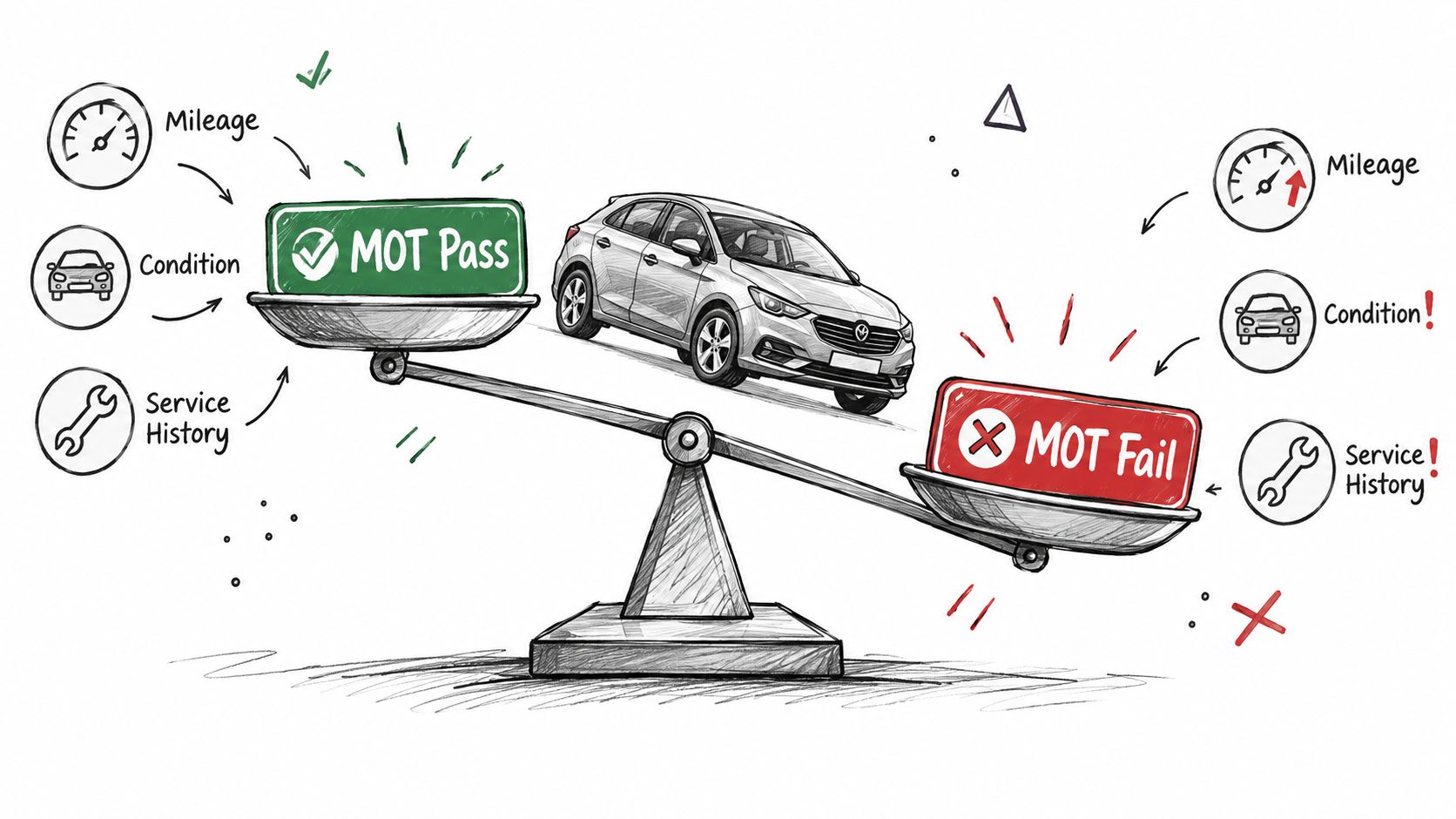
MOT condition comes first
A current MOT opens the door to private buyers who want to drive the car away. An MOT failure doesn’t make the car worthless, but it moves the sale towards repair, salvage or recycling. Read the failure and advisory notes carefully. Worn tyres, brake faults and suspension work may be understandable to a buyer, while a serious structural issue can change the route entirely.
Mileage matters, but it isn’t a standalone verdict. A well-maintained Toyota with high mileage and a complete history may be easier to sell than a neglected premium car with fewer miles. Buyers look for evidence that previous owners dealt with servicing, timing belts, recalls and routine wear.
RAC research reported that 65% of UK drivers incurred an unexpected repair bill in the previous year, with an average bill of £650, while 39% would struggle to pay a £500 bill. Cars over ten years old were particularly exposed, with 74% of owners reporting an unexpected repair cost (RAC repair-cost research).
History and presentation reduce uncertainty
A full service history can reassure a buyer, especially when invoices support the stamps. Gather MOT records, repair receipts, both keys, handbook packs and evidence of recent work. Clean the interior and remove personal items, but don’t spend heavily on cosmetic changes that won’t address a mechanical concern.
Accident damage needs direct disclosure. A car with repaired cosmetic damage may still find a buyer, while a recorded write-off enters a narrower market and may require stronger documentation. Don’t describe a non-runner as “needs a little work” if it cannot start or move.
For an EV, include battery-health evidence and warranty details. For a diesel, explain recent maintenance and use history. Buyers compare like with like, so match your valuation against the same fuel type, age group and condition rather than applying a blanket depreciation rate.
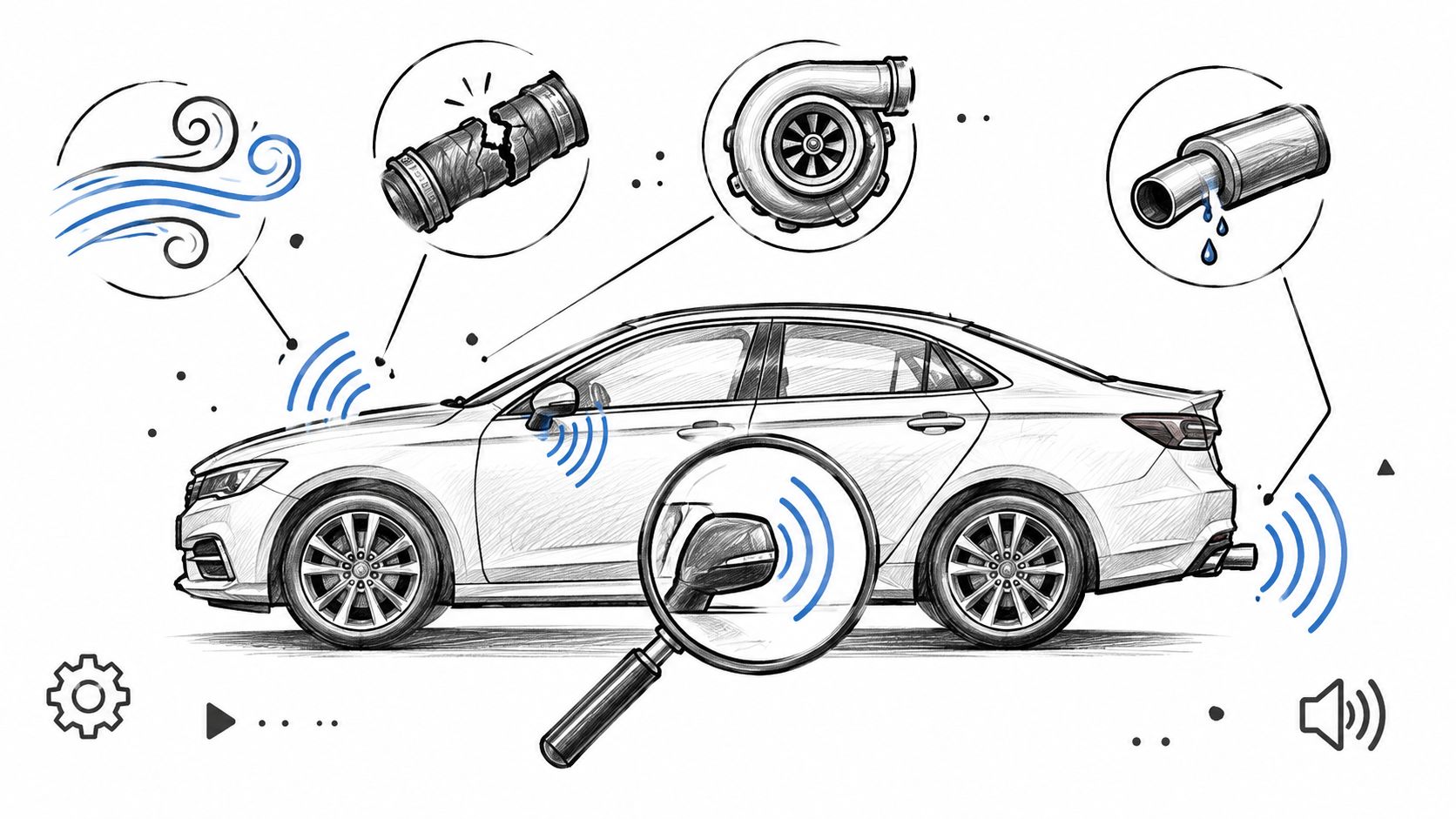
Here’s a visual explanation of how warning lights and MOT outcomes influence the decision:
Getting an Accurate Valuation Right Now
You can get closer to a real selling price in a few minutes, but only if you treat valuation like a route check rather than a single guess. The same car can produce very different numbers depending on whether you compare a retail advert, a dealer bid, a salvage offer or a scrap quote. One shows what sellers hope to get. Another shows what a buyer will pay after factoring in collection, preparation, risk and resale margin.
Start with the facts a buyer can verify straight away: registration, postcode, mileage, MOT status and honest condition. Registration-based tools are useful because they identify the model and specification quickly, but they do not erase the gap between a tidy runner and a non-starter with warning lights on.
Prepare the evidence before requesting offers
A good valuation works like pricing a house. The postcode and floorplan matter, but so do the roof, damp and paperwork. Cars are no different.
- Record the facts. Note the mileage, MOT expiry, warning lights, visible damage, number of keys, service history and whether the car starts, drives and can be collected normally.
- Gather documents. Put the V5C, MOT details, service invoices, finance information if relevant and any repair estimates in one place.
- Clean without overspending. A clean interior and clear photos help a buyer assess the car, but polish will not outweigh a gearbox fault or failed MOT.
- Describe defects plainly. Clear wording reduces last-minute haggling because the buyer arrives with the right expectations.
- Compare net proceeds. Look past the headline number and subtract likely repair spend, transport costs, advertising fees and the value of your time.
If the car is at the end of the roadworthy route, an instant recycling quote can give you a practical floor value using the registration and postcode. Scrap A Vehicle’s vehicle recycling service outlines collection and payment details, which helps when you want a fast comparison against trade, salvage or private-sale options.
Check the paperwork route
Paperwork changes the actual value because it affects how easily the sale can be completed. For a private sale, complete the relevant V5C notification and keep the buyer’s details and payment evidence. For scrap, use an Authorised Treatment Facility and keep the Certificate of Destruction when it is issued.
A paid inspection can make sense if a repairable car has faults that are hard to price. On a low-value non-runner, that extra step may cost more than the extra certainty is worth.
The figure that matters is the amount you keep after the handover is complete.
Making the Right Choice for Your Situation
A simple decision tree usually works better than a single valuation.
If the car runs, has a current MOT and presents well, compare private-sale adverts with dealer offers. If the extra money wouldn’t justify messages, viewings and negotiation, choose the simpler route.
If it has a repairable fault or failed MOT, obtain the repair estimate and compare it with the likely increase in saleability. Spending £650, the average unexpected repair bill reported in the RAC research cited above, may not make sense on an older car if the work still leaves buyers uncertain about its history or future reliability.
A damaged or non-running vehicle belongs in the salvage comparison first. A recycler may offer a faster, more straightforward handover, while a specialist salvage buyer may pay more if valuable parts or repair potential remain. A car with no realistic repair case should be assessed for scrap rather than advertised as though it were roadworthy.
Finally, compare speed, certainty and net return. The highest advertised price isn’t always the best outcome if the car sits on the drive, attracts unreliable enquiries or requires further spending. The best route is the one that matches the vehicle’s actual condition and your priorities.
If you want a fast comparison for a scrap, salvage or roadworthy vehicle, request an online quote from Scrap A Vehicle using the registration and postcode. You can then compare its collection and payment terms with a private-sale or dealer offer before deciding how to sell.