You’ve got a car sitting on the drive after an MOT failure, or perhaps you’ve found an upgrade and need the current vehicle gone without weeks of messages, viewings and uncertain payment. The right answer to how to sell my car depends on the car’s condition and your priority. A roadworthy, desirable vehicle may justify a private advert, while a damaged, non-running or end-of-life car usually needs a buyer who can arrange collection and handle disposal correctly.
The UK market gives sellers a substantial audience. 2,009,318 used cars changed hands in Q2 2026, up 0.7% year on year, while the first half of 2026 reached 4,025,550 transactions, up 0.2% compared with the same period in 2025, according to SMMT used-car sales data. That volume creates opportunity, but it also means buyers can compare condition, mileage, history and price quickly.
You have three practical routes. Sell privately for greater control and potentially stronger pricing, use a dealer or instant buyer for convenience, or choose salvage and ATF collection when the car has failed its MOT, suffered accident damage or reached the end of its useful life. This guide shows how to value the vehicle, prepare the right evidence, avoid payment fraud, complete the DVLA handover and choose the route that fits your situation.
Table of Contents
- Introduction to Selling Your Car in the UK Today
- How to Value and Prepare Your Car to Achieve More
- Choosing the Right Way to Sell Private Dealer or Scrapper
- Paperwork and DVLA Notifications You Must Get Right
- Collection Payment and How to Avoid Common Pitfalls
- Final Checklist to Sell Confidently and Move On
Introduction to Selling Your Car in the UK Today
A failed MOT can make a normal sale feel complicated. You may know the car still has useful components, but private buyers often want a roadworthy vehicle they can drive away. An owner replacing a reliable car faces the opposite problem: the vehicle may attract buyers, but a rushed advert, weak photographs or incomplete paperwork can reduce confidence before anyone makes an offer.
The first decision is whether you’re trying to maximise price or finish the sale quickly. A private listing gives you control over the advert, viewing arrangements and negotiation, but it demands time and careful buyer screening. A dealer or instant buyer reduces administration and can suit a roadworthy car when convenience matters more than squeezing out the highest possible figure. For a non-runner, accident-damaged car or end-of-life vehicle, salvage purchase or an Authorised Treatment Facility, ATF, is often more suitable than a standard listing.
Standard selling advice often assumes a clean, drivable car. That approach doesn’t fit every vehicle. Guidance on selling a used car safely reflects the familiar process of preparation, advertising, test drives and negotiation, but those steps become unsuitable for non-runners, accident-damaged vehicles and cars destined for legal scrappage.
The practical outcome isn’t complicated. Establish what the car is worth, describe its condition, choose a route that matches the vehicle, verify payment before release and notify DVLA immediately after handover. The following steps are designed to help you do that without guessing or exposing yourself to avoidable liability.
How to Value and Prepare Your Car to Achieve More
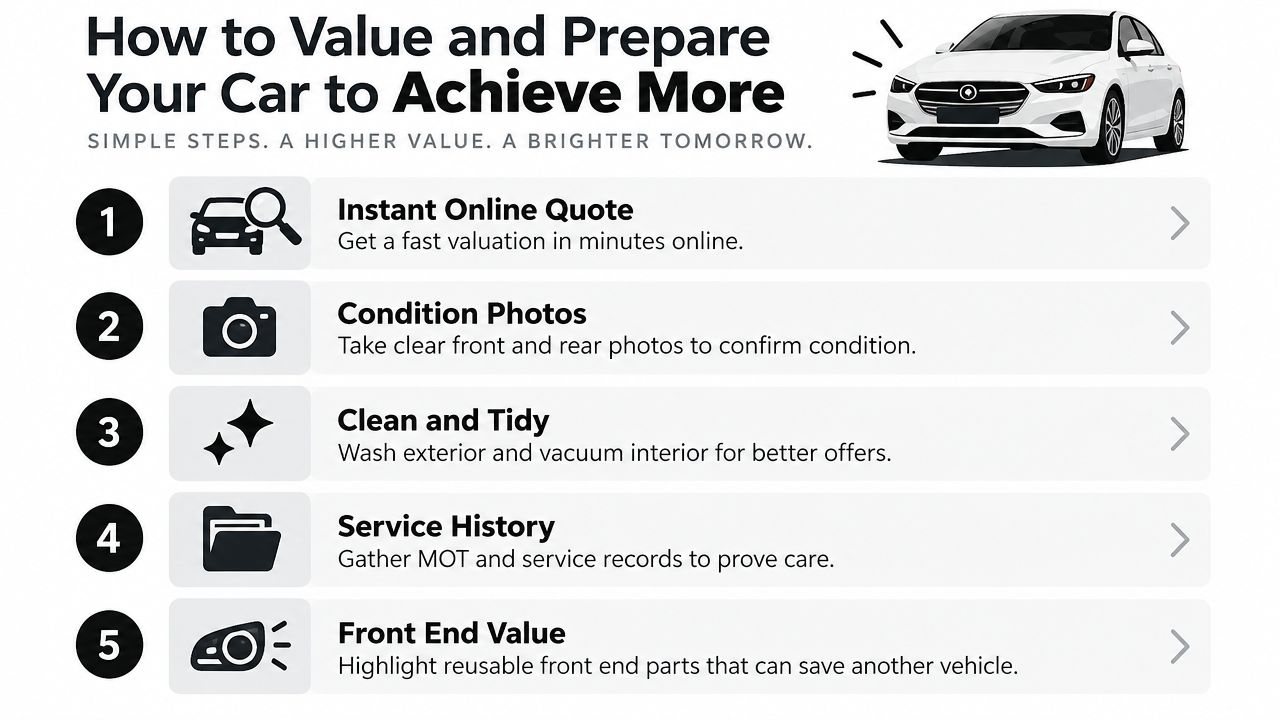
Start with an instant quote, but don’t treat the first figure as the final answer until the car’s condition has been confirmed. Enter the registration and postcode accurately, then gather the details that affect resale, salvage or recycling value, including mileage, MOT status, service history, keys, warning lights and whether the car starts and moves under its own power.
Condition honesty protects the valuation. A vehicle with cosmetic marks is different from one with structural damage, water damage, missing components or a seized engine. If you aren’t sure how to classify damage, don’t select the most favourable option and hope nobody checks it later. Request a callback or speak to the buying team, because a clear description usually creates a smoother collection and avoids a revised offer at the door.
Use the Scrap A Vehicle valuation page to begin the process, then confirm the details with a human reviewer where available. Human review allows the team to check relevant markets, specialist buyers, ATFs and scrapyards rather than judging the vehicle only by its metal content. That can matter when a damaged car still has desirable reusable components.
Practical rule: If you can’t confidently classify the damage, request a callback. You don’t have to complete the process online only, and a conversation can prevent an inaccurate description.
Prepare evidence that buyers can use
Clean the exterior, vacuum the interior and remove personal belongings. Cleaning won’t repair mechanical faults, but it makes the vehicle easier to inspect and helps the buyer understand its genuine condition. Gather the V5C log book, MOT information, service invoices, locking wheel-nut key and spare keys before booking collection.
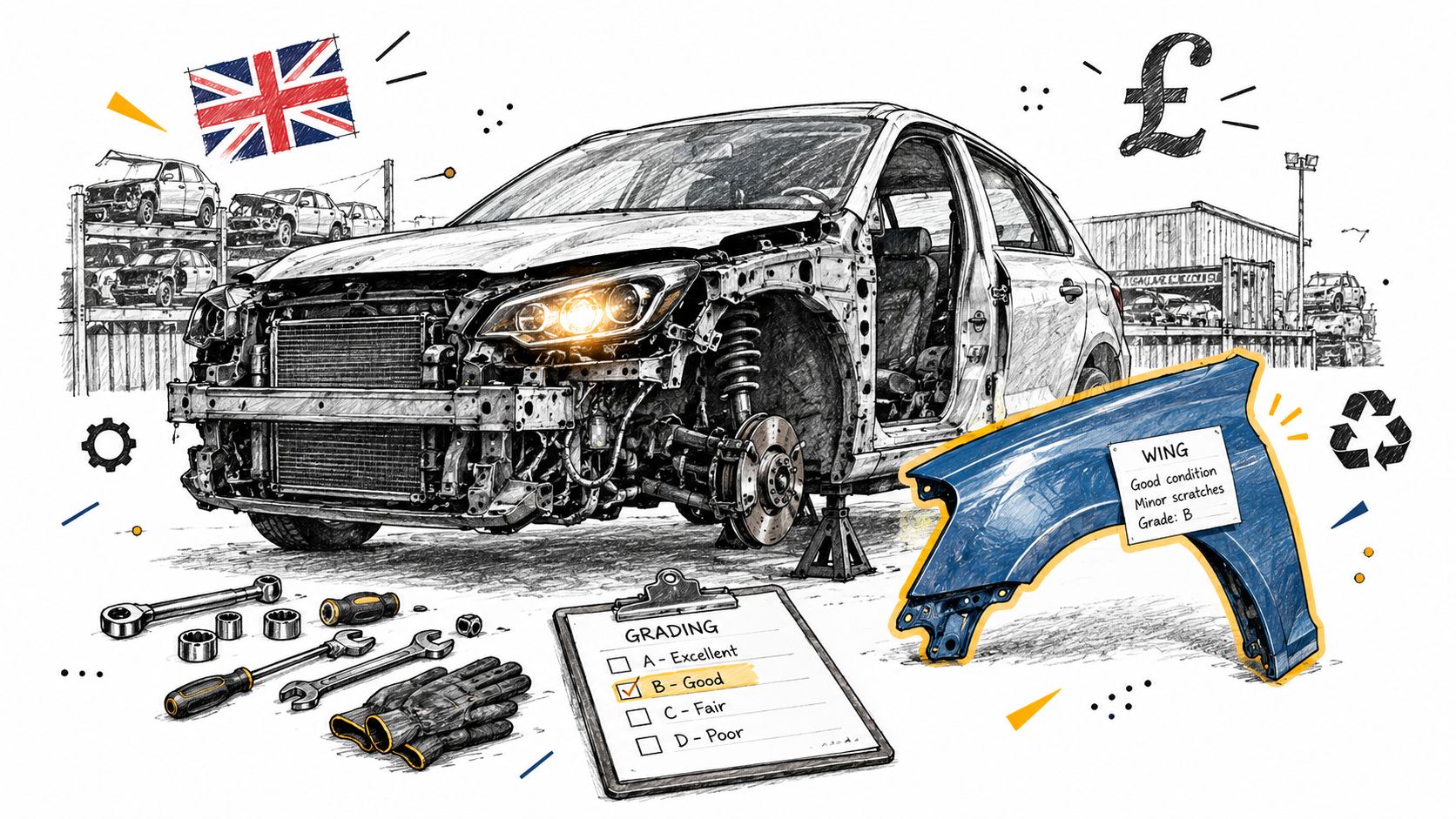
Photos can move an assessment from average to stronger, particularly on damaged cars. Take clear images of the front and rear, then add both sides, the interior, dashboard warning lights, wheels, tyres, odometer and every damaged area. Front-end parts are often valuable for resale because components can help repair another vehicle, while rear components can also attract specialist interest.
A practical preparation list is:
- Confirm the basics: Registration, mileage, MOT status, keys and whether the car runs.
- Photograph the condition: Include clear front and rear views, close-ups of damage and the dashboard.
- Collect documents: Keep the V5C and service or repair records ready.
- Remove belongings: Check the boot, glovebox, door pockets and charging or storage areas.
- Choose your timing: Book collection only after the price and condition are agreed.
For a visual walkthrough of the preparation process, watch this short guide before submitting your details.
Choosing the Right Way to Sell Private Dealer or Scrapper
The best route depends less on the age of the car than on its condition, buyer demand and your tolerance for effort. A clean, roadworthy car with a strong MOT and complete history can work well as a private sale. A vehicle that needs repair may attract a dealer or salvage buyer, while a non-runner or end-of-life car is usually better handled through an ATF collection route.
| Sale Route | Best For | Typical Speed | Effort Level |
|---|---|---|---|
| Private sale | Roadworthy cars with strong buyer appeal | Slower, because you manage enquiries and viewings | High |
| Dealer or instant buyer | Owners prioritising convenience and a straightforward handover | Faster, subject to inspection and agreement | Low to medium |
| ATF, salvage or scrap collection | MOT failures, accident-damaged cars, non-runners and end-of-life vehicles | Fast once condition and collection are confirmed | Low |
Private sale
A private advert can produce the strongest gross offer when the car is desirable and you can present it properly. You’ll need to write an accurate description, answer repeated questions, organise viewings, manage test drives and confirm payment safely. Never allow a buyer to pressure you into releasing the vehicle before cleared funds appear in your own account.
Private selling makes less sense when the car won’t start, has serious damage or requires transport. Advertising a non-runner to ordinary buyers creates friction because most won’t have recovery equipment, repair capacity or a clear use for the vehicle.
Dealer or part-exchange
A dealer or instant buyer removes much of the public-facing work. The trade-off is that the offer may reflect inspection, preparation and resale risk, rather than the price you might advertise privately. This route suits owners who value a controlled handover, especially when replacing the vehicle at the same time.
ATF and salvage
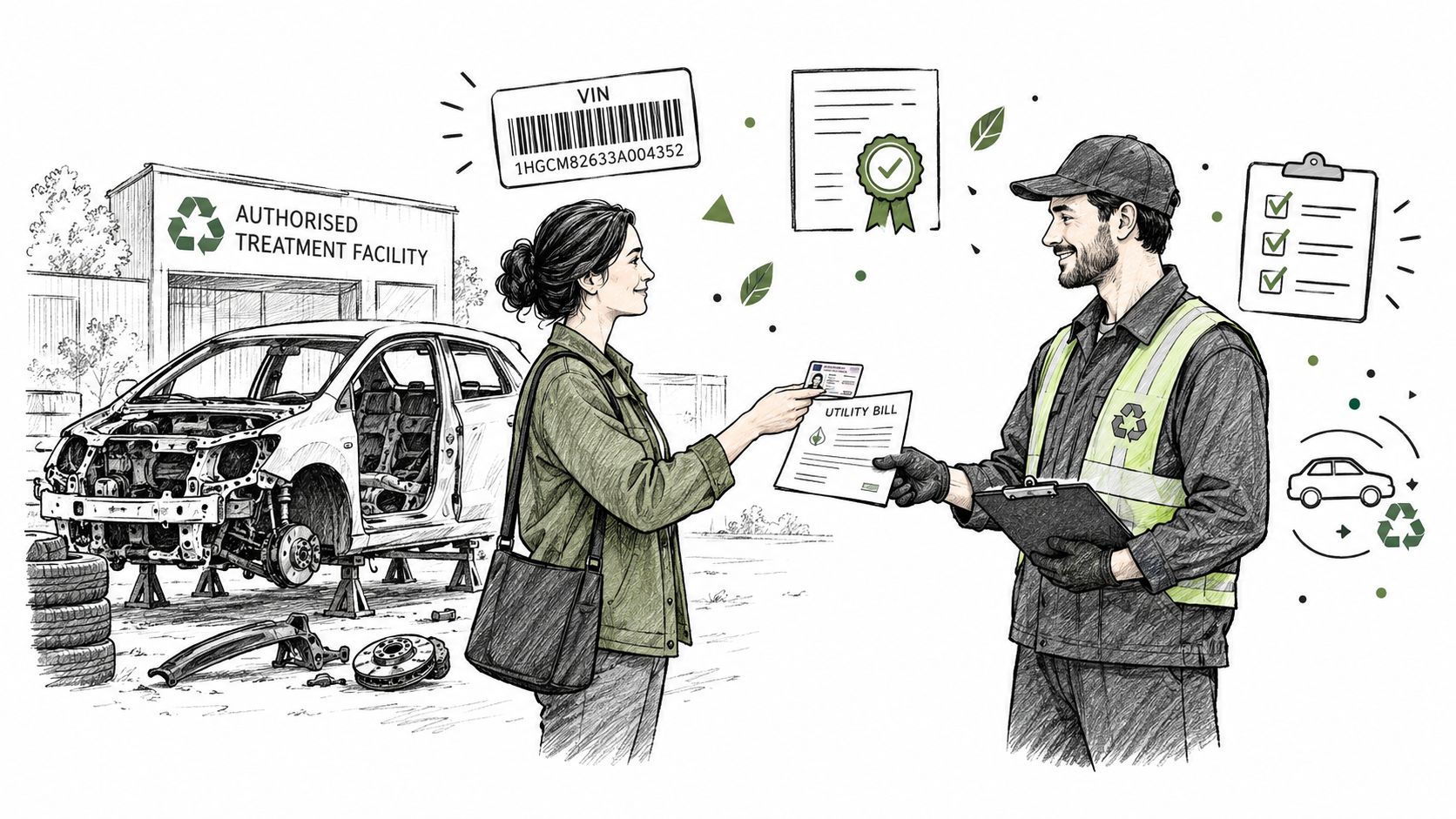
For a damaged or end-of-life car, specialist disposal can be both quicker and more appropriate. An ATF can depollute and dismantle the vehicle through the regulated recycling route, while a salvage buyer may value reusable panels, lights, engines or interior parts. Ask who will collect the car, how payment will be made and what confirmation you’ll receive after disposal.
Paperwork and DVLA Notifications You Must Get Right
The legal handover isn’t complete when the buyer drives away. DVLA requires the registered keeper to report that the vehicle has been sold or transferred, and the notification should happen immediately after handover. The process protects you from future vehicle-related liability and creates a clear record of when responsibility changed.
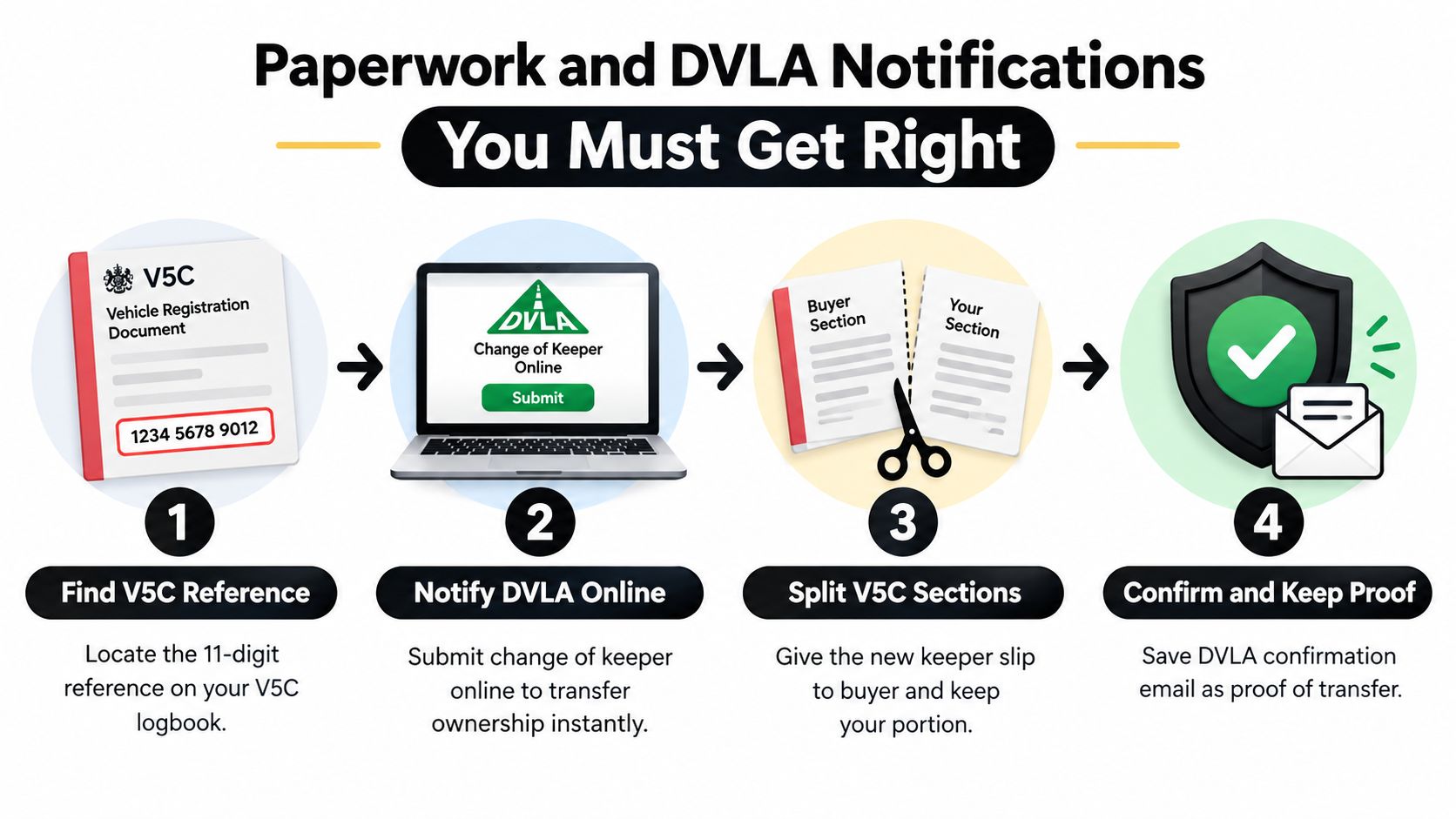
Use the online DVLA service if you have the V5C. You’ll need the 11-digit V5C document reference number, then you’ll state whether the vehicle was sold privately or to a business and enter the new keeper’s full name and address. The DVLA online sale-transfer guidance explains that the database updates immediately and that an email confirmation is sent instantly.
Follow the handover sequence
Give the buyer the correct new-keeper slip from the V5C and retain the seller portion. Don’t hand over the entire log book unless the official process or buyer type requires it. Keep a written record of the registration, sale date, buyer or motor trader details, agreed price and payment confirmation alongside the DVLA email.
The official responsibilities when selling a vehicle confirm that the seller must provide the buyer’s full name and address. Failing to notify DVLA can affect a vehicle tax refund and may leave you exposed to post-sale issues, so treat the notification as part of the sale rather than an optional administration task.
If the V5C is missing
You still have to notify DVLA. Write to Swansea with the vehicle registration number, make and model, the exact date of sale, and the new keeper’s or motor trader’s full name and address. The DVLA sold or bought vehicle guidance sets out this alternative where the log book isn’t available.
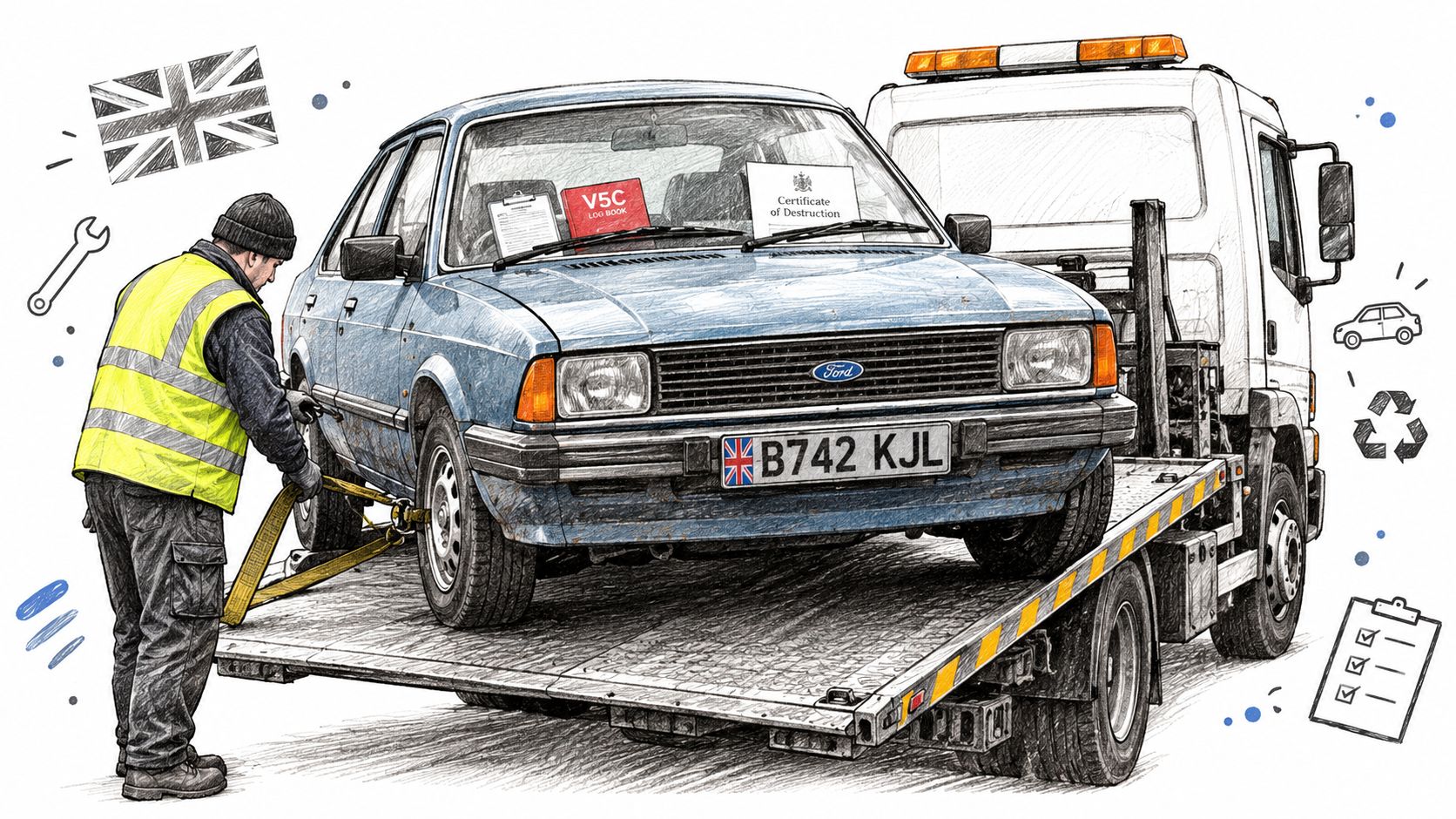
Scrapped vehicles need a separate disposal record. An ATF issues an official Certificate of Destruction, or CoD, when the vehicle reaches end of life. The owner should retain the CoD for 12 months before destroying it, as stated in DVLA’s Certificate of Destruction guidance. For eligible cars, light vans and three-wheelers, the ATF should provide the certificate within seven days of depollution or destruction and notify DVLA electronically, according to Certificate of Destruction information for vehicle owners.
Collection Payment and How to Avoid Common Pitfalls
A fast sale works best when the booking process is simple and the handover terms are clear. The routine used by Scrap A Vehicle is straightforward: get an instant quote, confirm the condition, then schedule your booking. Accurate information at the first stage reduces surprises when the collection driver arrives.
For collection, confirm the agreed price, collection address, vehicle access and whether the car is a runner or non-runner. Ask when payment will be made and whether it will be a bank transfer. Scrap A Vehicle offers free UK collection and Faster Payment on handover, with payment confirmed before the driver leaves, but you should still check that the money is visible in your own bank account before releasing the keys.
Fix the problems that catch out first-time sellers
Damage classification causes avoidable confusion. If you aren’t sure whether a fault is cosmetic, mechanical or structural, request a call back and explain what happened, what still works and whether the car moves. A specialist can guide you through the description instead of relying on an uncertain online selection.
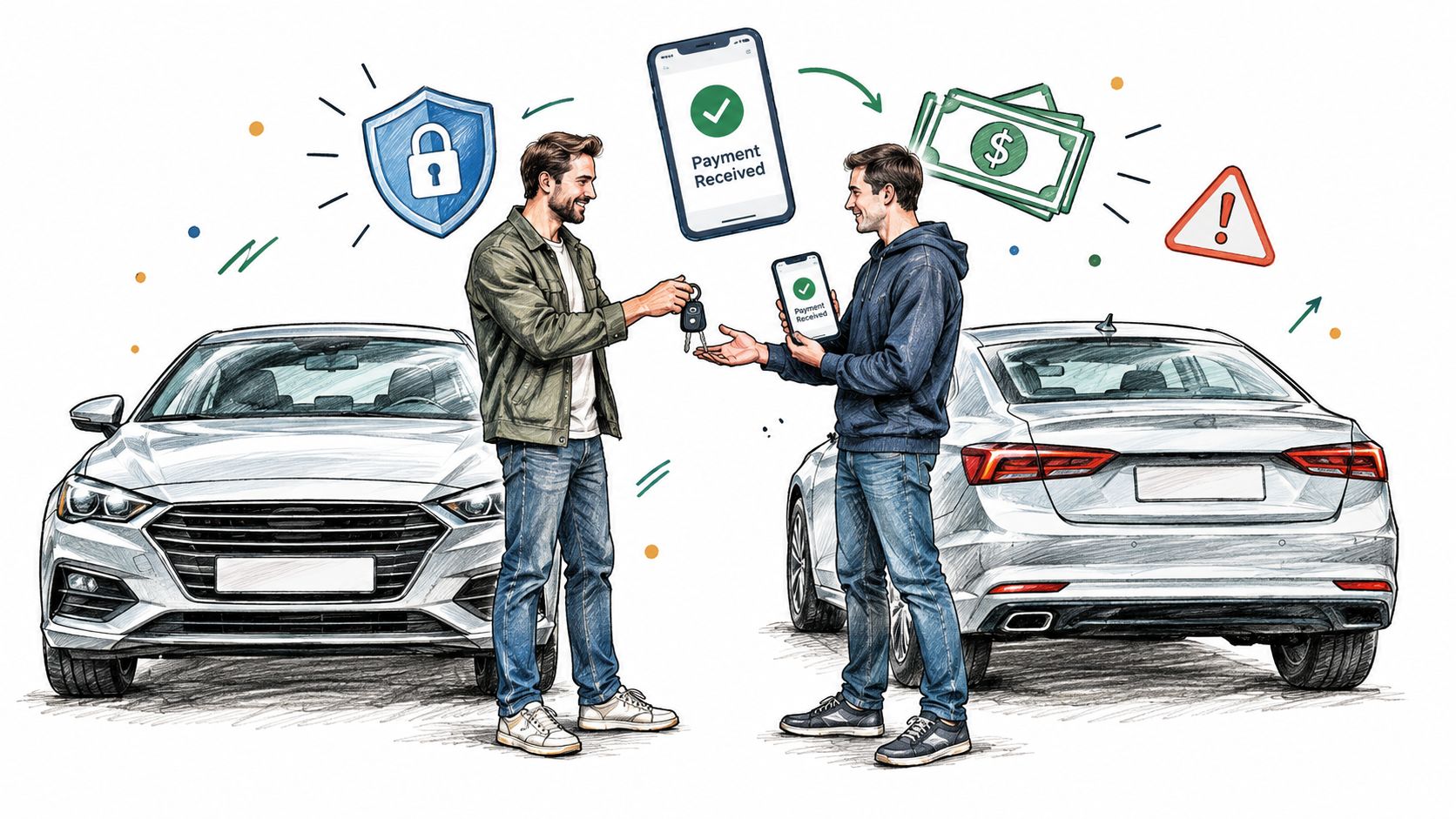
Fraud deserves equal attention. Police warnings reported by the BBC on cloned-car sales say sales have doubled, with red flags including an unusually low price, a missing V5C, no seller identification and pressure to pay cash. Those warnings concern buying as well as selling, but the same behaviours signal a risky transaction when you’re handing over a vehicle.
Use this short safety check:
- Verify identity: Ask for the buyer’s full name and address, and check identification where appropriate.
- Reject pressure: Don’t accept a rushed handover because someone claims another buyer is waiting.
- Confirm cleared funds: Check your own banking app or account, not a screenshot or payment promise.
- Keep the evidence: Save messages, the agreed price, collection details and payment confirmation.
- Release the vehicle last: Keys, documents and access should follow confirmed payment.
Cash can be difficult to verify and payment screenshots can be manipulated. A bank transfer visible in your own account gives you a clearer point at which the transaction is complete.
Final Checklist to Sell Confidently and Move On
Choose the route before you spend time preparing the car. A roadworthy vehicle with good history may suit a private listing or dealer buyer, while a failed-MOT, damaged or non-running vehicle should be assessed for salvage or ATF collection. The quickest route isn’t always the one with the highest advertised price, and the highest offer isn’t useful if the buyer can’t complete safely.
Before handover, check:
- Valuation: You’ve entered the registration, mileage and condition accurately.
- Photos: Front, rear, sides, interior, dashboard and damage are clearly documented.
- Documents: The V5C, service records, keys and relevant repair information are ready.
- Payment: You know the payment method and will verify cleared funds yourself.
- Collection: The address, access arrangements and vehicle status are confirmed.
- DVLA: You have the 11-digit V5C reference or the information needed for written notification.
- Disposal proof: An ATF has explained how and when the Certificate of Destruction will be issued, if applicable.
The DVLA online service updates its database immediately and sends instant email confirmation, provided you use the 11-digit V5C reference. Save that confirmation with your sale records, then remove personal data, keys and belongings from the vehicle.
A phone conversation can be useful when the condition is unusual, the car won’t run or the damage is difficult to describe. You don’t need to guess, accept an unsafe payment method or force an end-of-life vehicle through a private-sale process that doesn’t fit.
Scrap A Vehicle offers instant valuations, free nationwide collection and same-day bank payment for roadworthy, damaged and end-of-life vehicles, with ATF partners handling compliant disposal and Certificates of Destruction where required. If you want a practical route from condition check to secure handover, visit Scrap A Vehicle and request a quote.