You can absolutely scrap a car without a V5C in the UK, as long as you can prove ownership and notify the DVLA yourself. The missing logbook is a paperwork problem, not a dead end, and 1.6–2 million ELVs enter the UK waste stream each year, so this is a routine process for properly run facilities, not an exception Parliamentary report.
You’ve probably got the car sitting there, the collection is looming, and the first thought is, “I can’t find the logbook, so am I stuck?” You’re not stuck. The right move is to treat this as a DVLA notification issue, not a reason to delay disposal, because an ATF can process the vehicle if you can prove it’s yours.
Table of Contents
- Why You Can Still Scrap Your Car Without a V5C
- Acceptable Proof of Ownership Alternatives
- The Critical Role of DVLA Notification
- Should You Replace Your Lost Logbook First
- Avoiding Future Liability and Penalty Charges
Why You Can Still Scrap Your Car Without a V5C
Losing the V5C feels like a bigger problem than it is. If the car is going to an Authorised Treatment Facility, the law does not demand that you physically hand over the logbook before the vehicle can be scrapped, provided you can show you’re the keeper or owner GOV.UK scrapped and written-off vehicles.
That distinction matters. Selling a car privately often turns into a document check, buyer negotiation, and proof-of-title headache. Scrapping is different, because the facility is handling a regulated end-of-life process, not a casual private transfer.
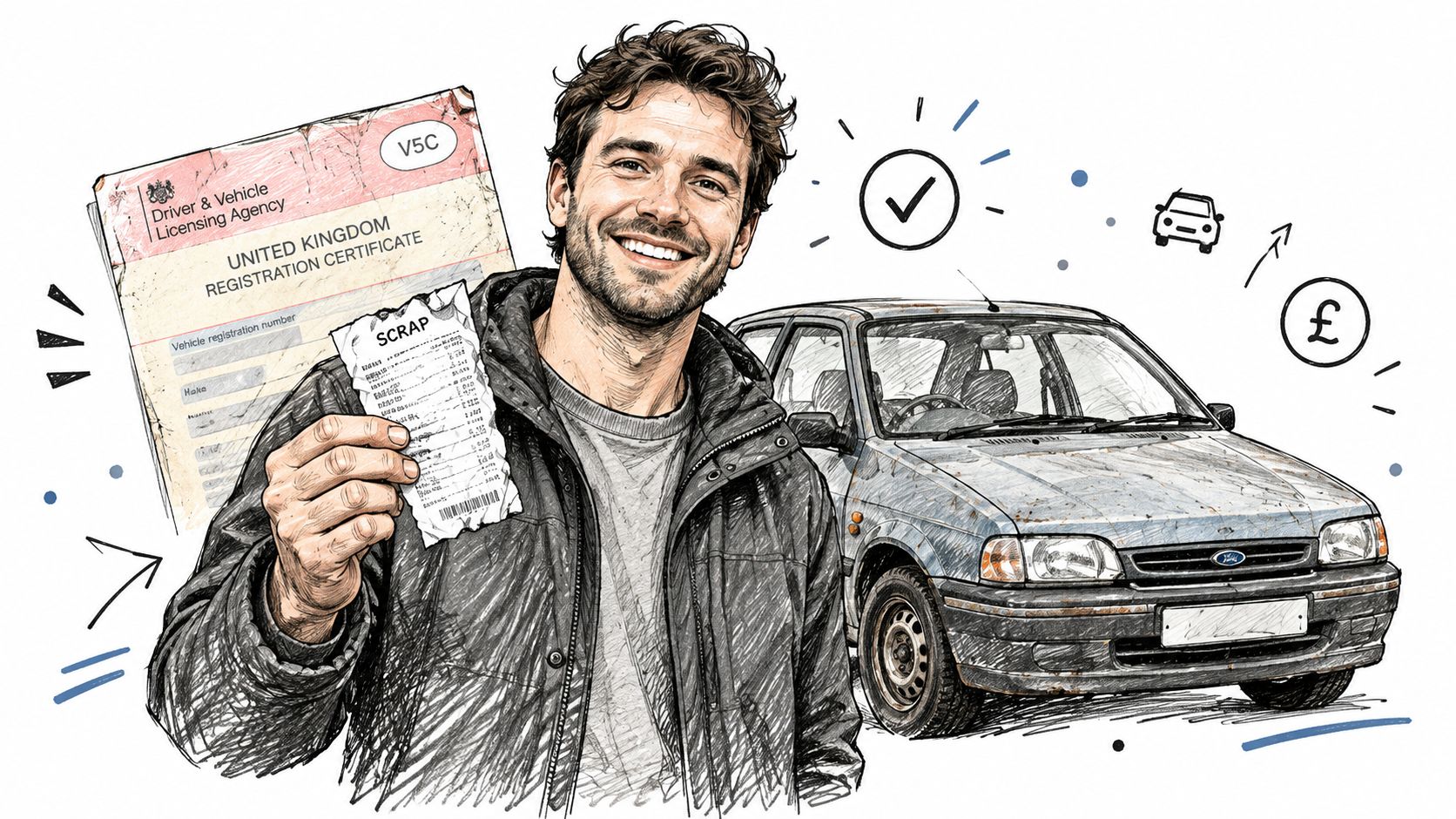
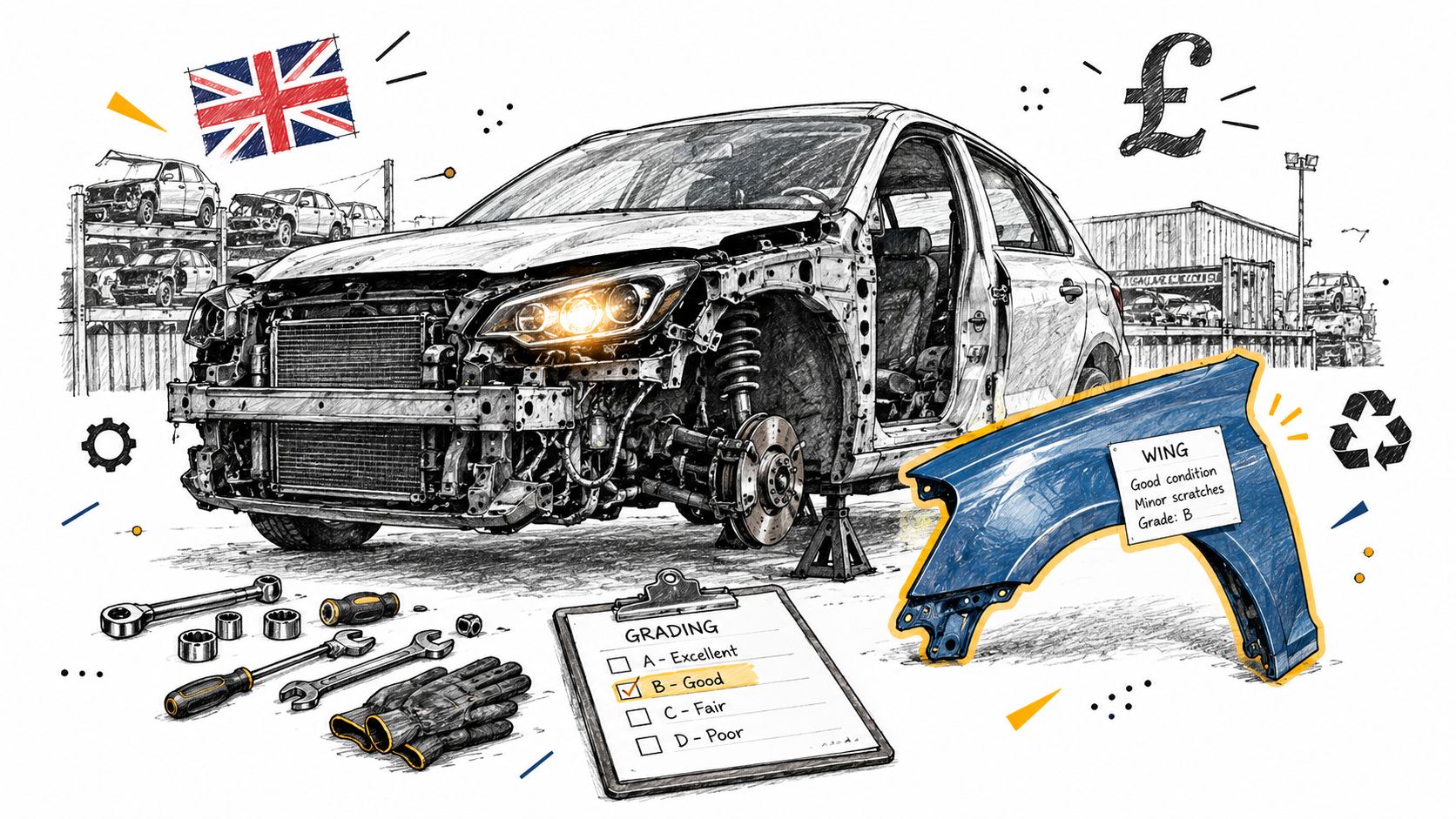
The key point is simple. The V5C helps, but it is not the only way to establish the vehicle’s identity. A licensed ATF can still take the car, check the vehicle details, and complete the lawful disposal route.
A lot of owners panic because they think the missing logbook means the car can’t leave the driveway. That’s wrong. What matters is that the facility can confirm the vehicle, and that you complete the DVLA side correctly so the record is closed.
Practical rule: Don’t waste days hunting for a V5C before you speak to a scrap yard. Check what ownership proof you’ve got, then move straight to a compliant ATF.
Acceptable Proof of Ownership Alternatives
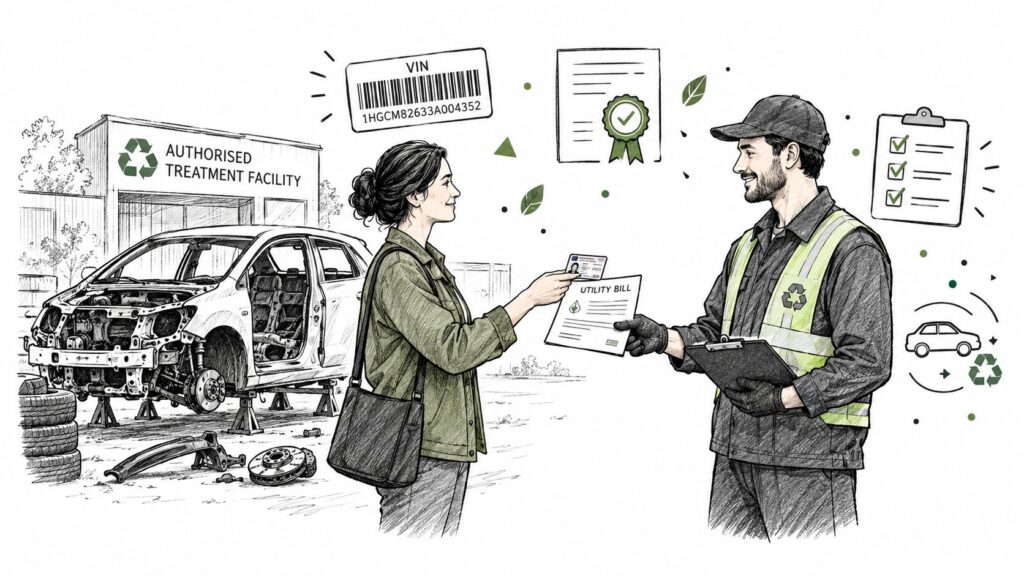
If you’ve misplaced the logbook, stop worrying about the paper and start gathering the evidence that proves the car is yours. In practice, the strongest combination is a driving licence, a passport, and a recent utility bill, because those documents identify you and tie you to a current address.
A receipt of vehicle purchase is also useful if the car was never registered to you in the usual way or if the logbook never arrived. That doesn’t replace DVLA notification, but it does help the ATF satisfy itself that it’s dealing with the right keeper.
Under UK DVLA guidance, a vehicle can be scrapped without a V5C if the owner can still prove ownership to the Authorised Treatment Facility, but the owner must notify DVLA separately GOV.UK scrapped and written-off vehicles. That’s the balance you need to keep in mind. The yard checks identity and vehicle details, then you handle the formal notification.
For a practical document checklist, use this guide as your quick reference point, what documents do I need to scrap my car, and then line up the papers before collection day.
What a sensible ATF will look for
- Photo identification: A driving licence or passport gives the facility a direct identity check.
- Address evidence: A utility bill helps show the keeper details match the vehicle disposal paperwork.
- Purchase proof: A receipt is helpful where ownership history is messy or the V5C never came through.
- Vehicle identity: The registration number and VIN should match what the car shows on site.
Direct advice: If your paperwork is thin, don’t improvise. Call ahead, tell the yard exactly what you’ve got, and let them tell you whether the collection can go ahead.
The point is not to build a legal defence folder. It’s to give the ATF enough confidence to complete the scrappage properly. If the identity trail is clear, the missing logbook won’t block the disposal.
The Critical Role of DVLA Notification
A yard can collect the car, but the DVLA record still needs closing properly. If you leave that step to chance, the keeper record can stay live and cause trouble later GOV.UK certificate of destruction guidance.
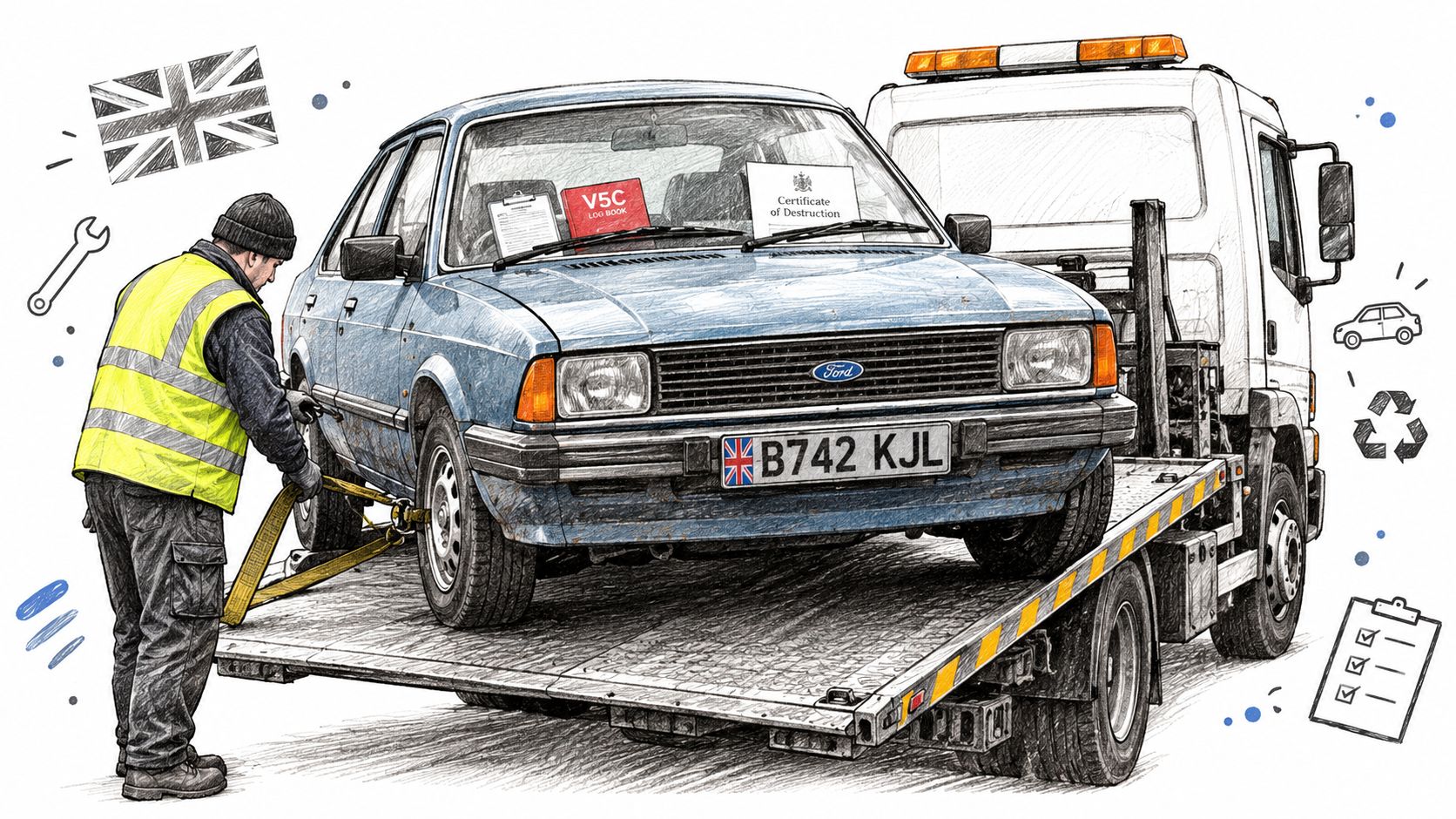
The facility must issue a Certificate of Destruction. That certificate is the formal proof that the vehicle has been destroyed through the correct channel, and GOV.UK guidance makes clear that vehicles must be scrapped through an Authorised Treatment Facility. The CoD is the compliance record that ends the vehicle’s life on paper, so treat it as a required step rather than an optional extra.
Do this yourself, not by assumption
- Scrap the car at an ATF: The vehicle must go through the proper regulated route.
- Keep your disposal evidence: Hold on to the CoD or confirmation provided by the facility.
- Notify DVLA directly: Don’t assume the scrapyard has sorted it just because they took the keys.
- Check the record is closed: If the notification doesn’t go through, you can stay tied to the car.
Liability is the reason this matters. If the DVLA still shows you as the keeper, fines, tax issues, or enforcement notices can still arrive after the car has left your driveway. That is why the paperwork exists, and why a casual handover is not enough.
When the logbook is missing, owners often expect the scrap yard to sort the DVLA side for them. Some yards will help with the process, but the legal duty to notify stays with the keeper. If you want the vehicle record cleared, make sure the post-disposal notification is submitted correctly and confirmed.
The best outcome is boring. Car collected, CoD issued, DVLA notified, no future letters.
Should You Replace Your Lost Logbook First
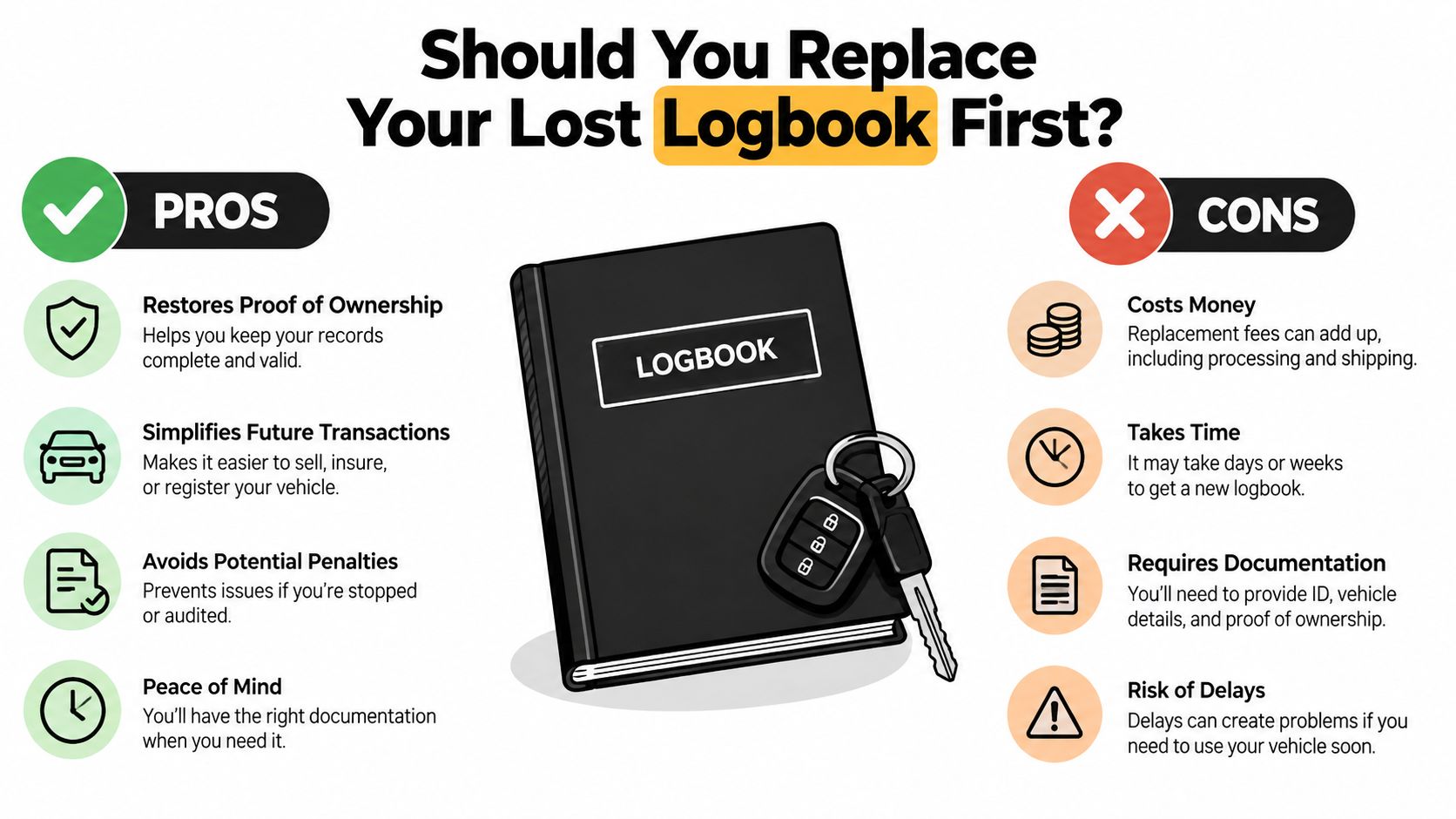
If the car needs to go now, do not waste time chasing a fresh V5C first. An Authorised Treatment Facility can still handle the scrap legally when you can prove ownership, and the job still depends on proper DVLA notification and the facility’s destruction paperwork.
The official replacement route uses form V62, which is available from a Post Office, and the standard fee is £25 GOV.UK V5C replacement guidance. Use that route if you want the logbook back before disposal, or if your keeper history is messy and you want every document settled before collection.
My advice on when to replace it
- Replace it first if you want the cleanest paper trail and you are not in a rush.
- Scrap without it if the car is at end of life and you already have solid proof of ownership.
- Ask the yard first if anything about the keeper record or ID does not line up.
- Use V62 if you have time and want the logbook back before disposal.
The practical point is simple. A professional facility can check the VIN and registration against the vehicle on site before it issues the CoD, so a missing V5C does not usually stop collection. What delays owners is hunting for paperwork they may not need.
If you want a tidy file and can wait, replace the V5C. If the car is ready to leave and your ownership evidence is already in order, scrap it now and deal with the logbook later only if you still want the copy.
Avoiding Future Liability and Penalty Charges
The biggest mistake is leaving loose ends behind. Missing V5C, private plate confusion, and unclear keeper history can all create trouble if you hand the car over too casually, especially where the record on file doesn’t match the physical vehicle GOV.UK written-off vehicle guidance.
If the car has a private number plate, remove and retain the entitlement before it goes. If there’s any SORN history, don’t assume that status solves the disposal paperwork. And if the ownership chain is messy, get that explained before collection rather than after the vehicle has already gone.
Final pre-collection checks
- Remove the private plate first: Keep the entitlement separate from the vehicle.
- Clear your own records: Keep copies of whatever identity and ownership proof you used.
- Confirm the ATF details: Make sure the facility is licensed and can issue the right destruction paperwork.
- Separate plate, car, and keeper history: Don’t let those three things blur together.
A clean disposal is about closing the loop. The car leaves your possession, the ATF processes it, and DVLA is told in a way that ends your liability. If one of those steps is missing, you’ve left yourself exposed.
That’s why I tell owners to sort the paperwork before collection day, not after. A few minutes of checking can save a lot of back-and-forth if a fine, tax notice, or record mismatch shows up later.
If you want the car dealt with properly, Scrap A Vehicle handles compliant vehicle collection, ATF processing, and DVLA paperwork for scrap cars and end-of-life vehicles. Visit Scrap A Vehicle to get the process moving and make sure your scrappage is handled without the future liability that comes from a missing V5C.