You’ve got the MOT failure email, the repair quote feels too high, and now the car is sitting there taking up space. At that point, the legal question matters more than the tidy-up job, because how to scrap a car legally in the UK is about more than handing over the keys. It’s about making sure the vehicle goes through an Authorised Treatment Facility (ATF), the DVLA record is closed properly, and you’re not left carrying liability after the metal has gone.
Table of Contents
- Understanding the Legal Baseline for End of Life Vehicles
- Preparing Your Vehicle and Paperwork for Collection
- Choosing an Authorised Treatment Facility and Avoiding Scams
- The Collection Handover and Environmental Depollution
- Securing Your Certificate of Destruction and DVLA Notification
- Evaluating Salvage and Roadworthy Alternatives to Scrapping
Understanding the Legal Baseline for End of Life Vehicles
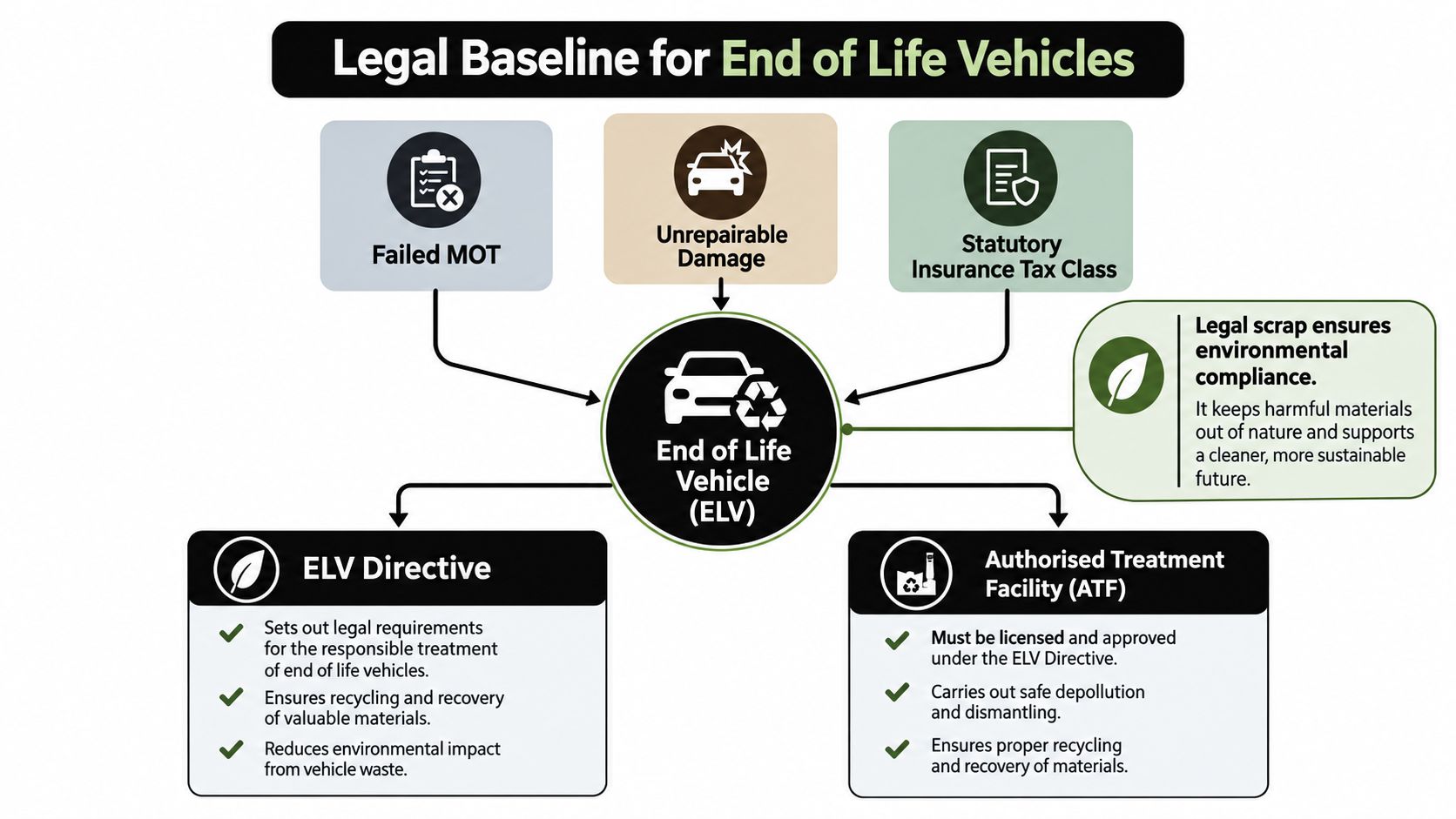
The moment a car is no longer worth repairing, the law starts to matter in a very practical way. In the UK, scrapping a vehicle legally means using an Authorised Treatment Facility, and GOV.UK says it’s illegal to scrap a vehicle anywhere else. That’s not a technicality. It’s the difference between a clean disposal and a vehicle still tied to your name, tax position, and future liability GOV.UK scrapped and written-off vehicles.
Why the ATF is the legal line
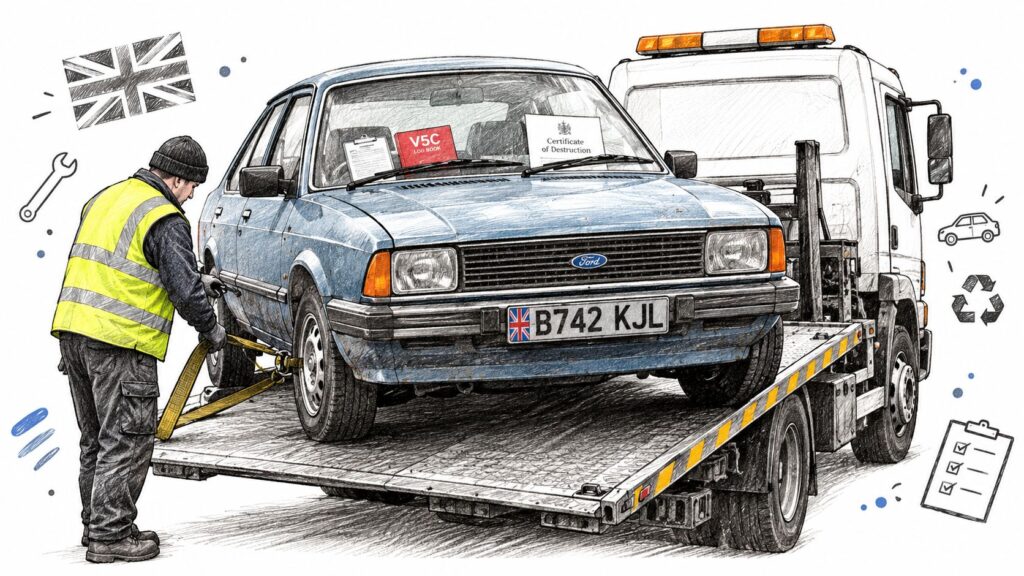
An ATF is the place that can take the vehicle, depollute it, dismantle it, and notify the system properly. GOV.UK says the ATF must issue a Certificate of Destruction within 7 days for cars, light vans, and three-wheeled motor vehicles GOV.UK scrapped and written-off vehicles. That certificate is the legal proof that the vehicle has been destroyed and deregistered.
If you don’t get the CoD, you haven’t fully closed the loop.
the keeper can still remain liable for vehicle tax and some penalties if the paperwork isn’t completed correctly. The last keeper also has to notify DVLA that the vehicle has gone to an ATF, which closes the record in the national registration system and helps prevent later liabilities tied to the registration number GOV.UK scrapped and written-off vehicles.
Why unlicensed buyers are the hidden risk
The biggest mistake I see is people treating every buyer as if they’re the same. They’re not. A buyer who isn’t approved by DVLA, or who can’t issue a CoD, can leave you exposed if the car is later misused, resold unsafely, or just dumped.
There’s also a basic safety issue. End-of-life vehicles are classed as hazardous waste until fully depolluted in England and Wales, and as special waste in Scotland, so handing the car to someone who isn’t set up to handle that stream properly is a compliance problem as well as a disposal problem ELV guidance.
A legal scrap isn’t just about getting rid of metal. It’s about severing the car from your name, your registration, and your future responsibility.
Preparing Your Vehicle and Paperwork for Collection
A smooth collection starts before the recovery truck turns up. If the car is hard to access, full of loose items, or missing key documents, the handover slows down fast. NetRegs says around 2 million vehicles become waste every year in the UK, so the operators handling them are working at serious volume and don’t have time for avoidable delays NetRegs ELVs.
The paperwork that gets checked first
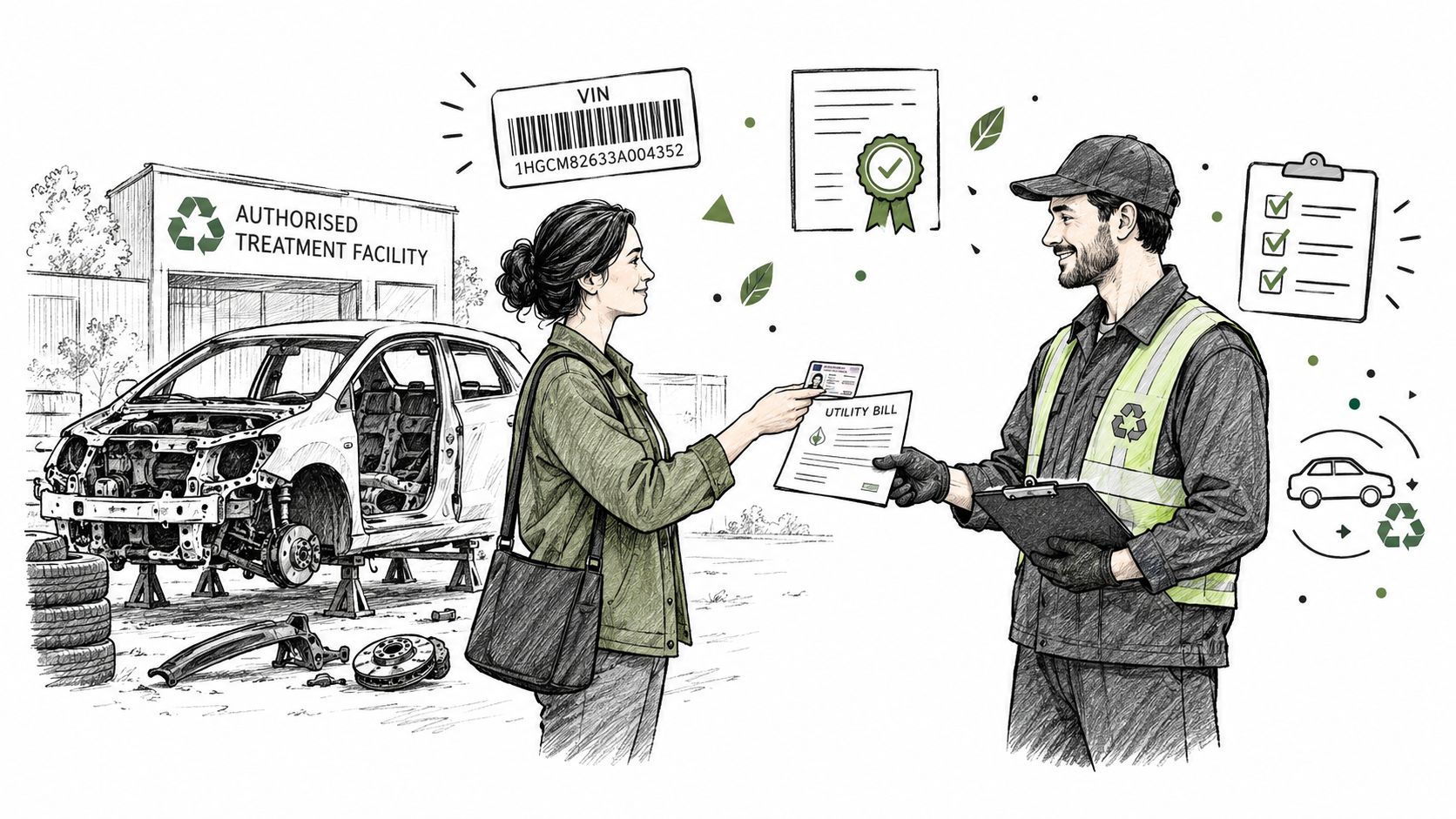
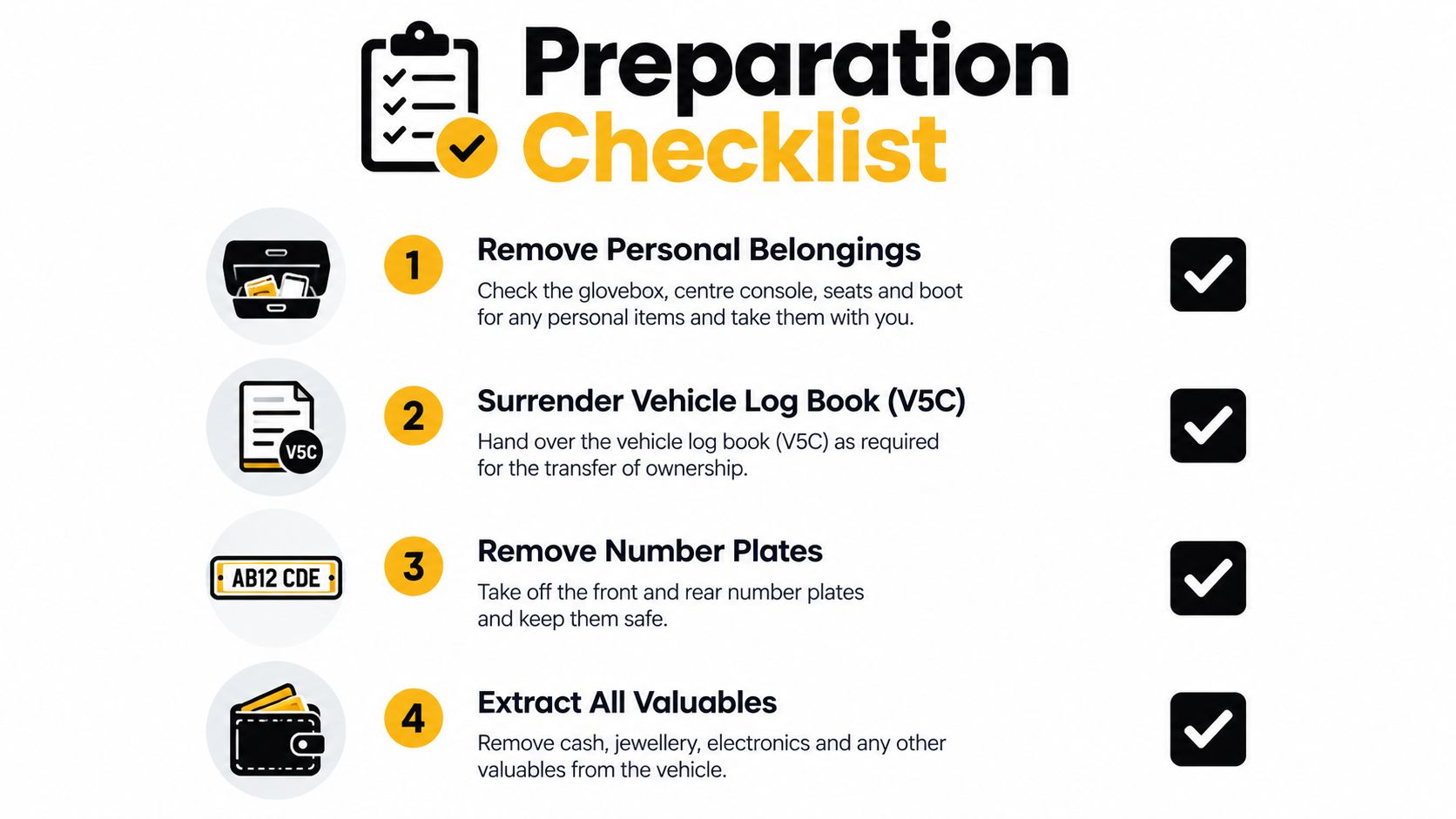
The documents usually needed are the V5C, photo ID, proof of address, and bank details. Those are used to verify identity, complete DVLA notifications, and process payment in a traceable way NetRegs ELVs ELV waste site guidance.
If the V5C is missing, don’t guess your way through it. The important point is that the ATF needs enough information to match the vehicle to the right keeper and send the right notification through the system. A mismatched registration, wrong VIN, or missing identity check is exactly how paperwork errors happen.
The physical check you shouldn’t skip
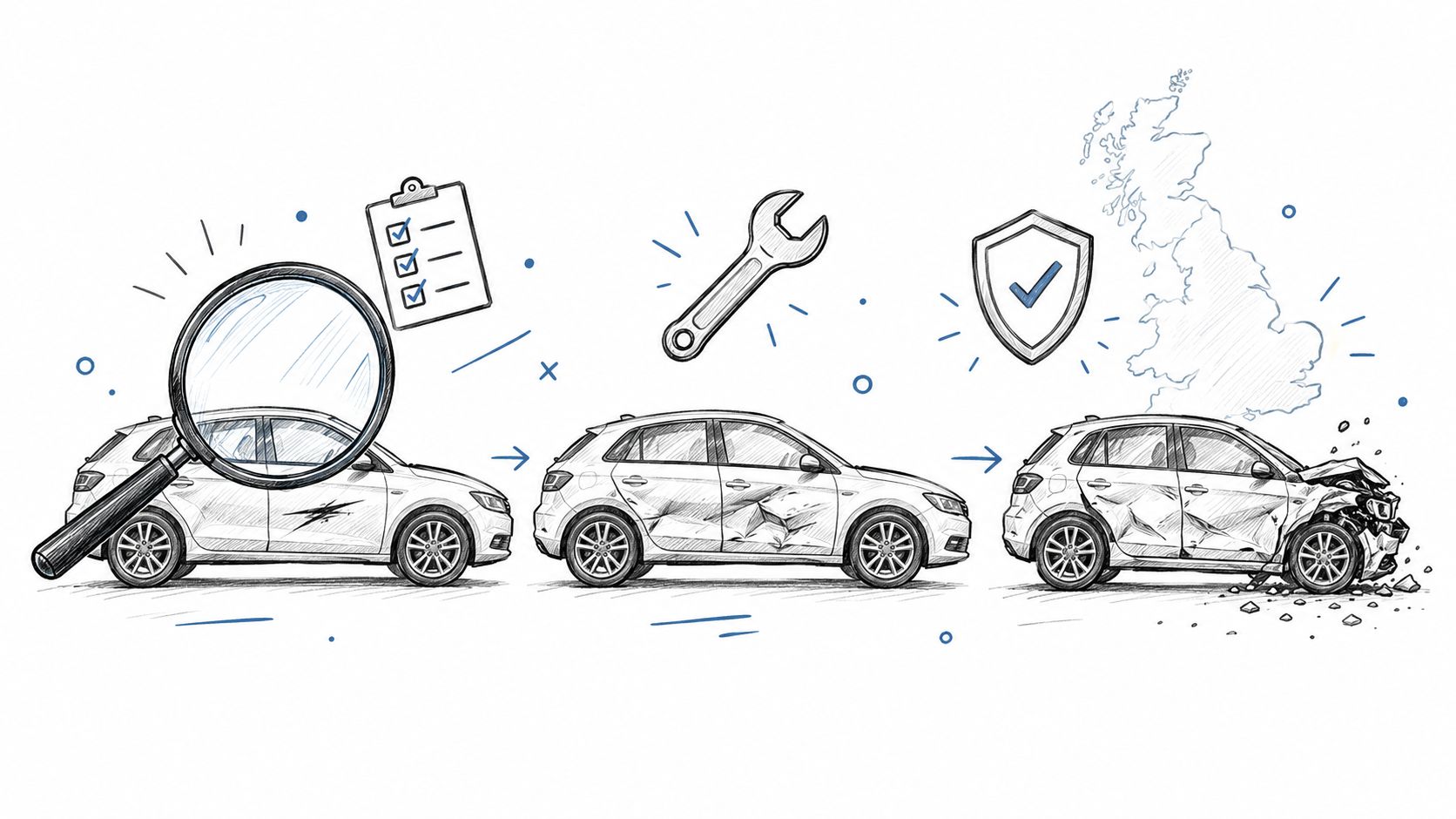
Every vehicle that arrives here gets inspected before recycling, and that’s not just for appearances. Loose waste, chemicals, or pressurised items can create environmental and fire risk. A gas bottle left inside a motorhome, for example, is the kind of thing that can turn a simple collection into a reject.
Practical rule: clear the cabin, boot, glovebox, and any hidden storage space before collection day.
Use this order:
- Remove personal belongings: bags, phones, tools, documents, and child seats can all disappear once a vehicle is treated as waste.
- Check for non-conforming items: gas bottles, aerosols, cleaning chemicals, fuel cans, and anything pressurised need to come out.
- Confirm access: if the tow truck can’t reach the car, tell the collector in advance.
- Keep the handover simple: the fewer surprises on the driveway, the less chance of rejection.
That preparation protects you as much as it helps the operator. The cleaner the handover, the easier it is to move into the legal transfer stage without disputes.
Choosing an Authorised Treatment Facility and Avoiding Scams
The hardest part for many owners is not the paperwork. It is separating a legitimate operator from a smooth-talking middleman. A legal scrap severs the car from your name, your registration, and your future responsibility. You want an ATF that can show it works within the DVLA system and a registered waste carrier where transport rules require it ELV guidance waste carrier and storage rules.
What a legitimate operator should be able to do
A proper operator can explain how the vehicle will be collected, where it is going, and how the disposal is recorded. If they are moving the vehicle or parts and they are not the producer of that waste themselves, UK guidance says they must use a registered waste carrier waste carrier and storage rules.
That traceability matters because end-of-life vehicles are hazardous waste until fully depolluted. If a business cannot describe its handling route clearly, it is probably not set up for compliant disposal.
What should make you walk away
Cash offers are the easiest red flag to spot. UK guidance makes clear that scrap-metal transactions should not be handled in cash, and traceable bank payment is the normal compliant route. A legitimate buyer can pay by bank transfer and leave a record.
I have also seen owners lose a vehicle by selling to someone who promised quick pickup and then moved it on without proper paperwork. The risk is not just the money. The car can later be resold, exported, or fly-tipped with your name still attached.
If they dodge questions about the ATF, the waste carrier status, or the payment trail, do not hand over the keys.
Some operators, including Scrap A Vehicle, position the process around licensed ATFs, bank transfer, and DVLA paperwork handling. That is the standard to look for, whatever company you choose.
The Collection Handover and Environmental Depollution
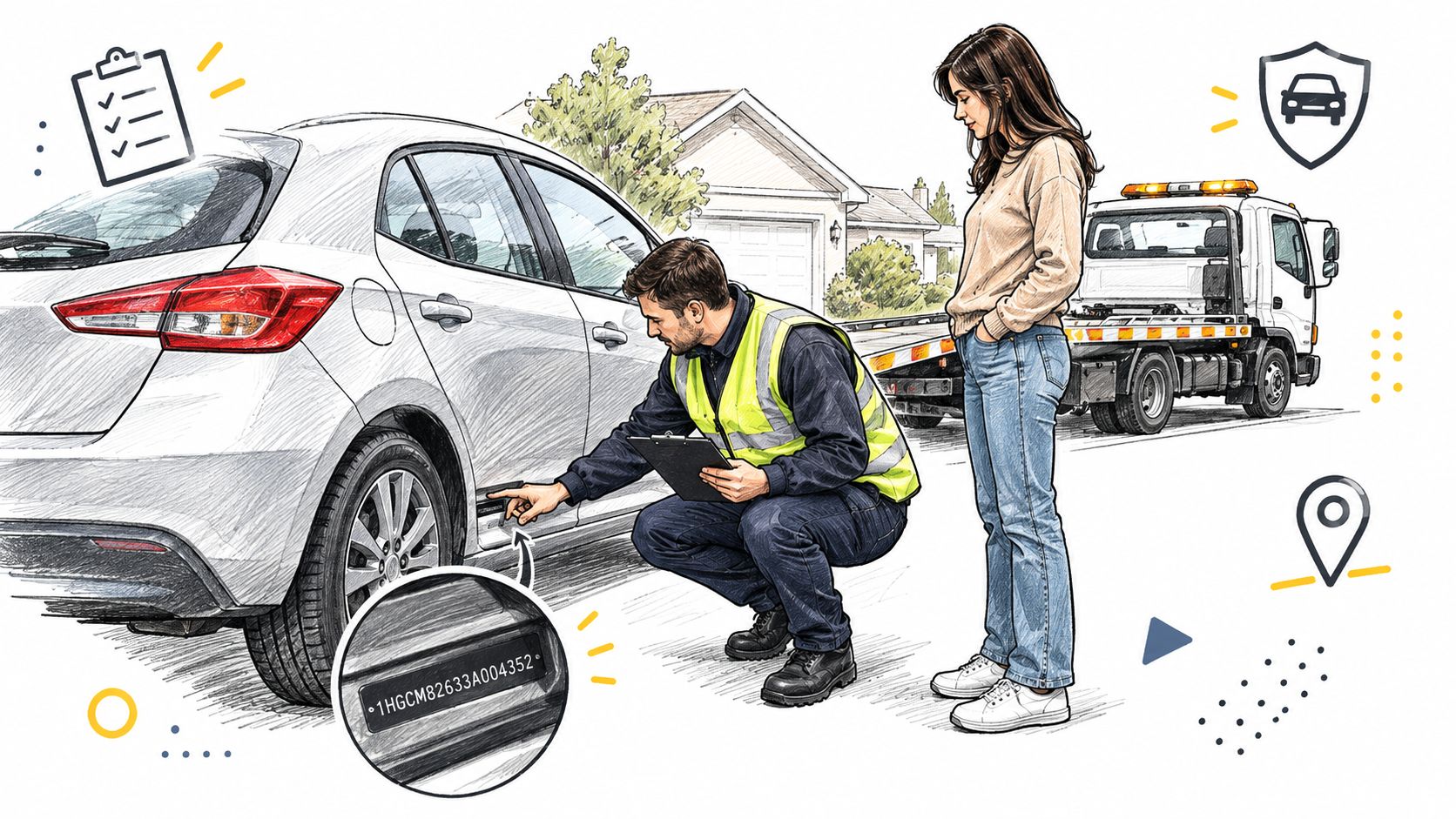
Collection day should feel controlled, not rushed. The driver arrives, checks the vehicle identity, confirms the handover, and makes sure the paperwork matches what’s being collected. That check is there for a reason. If the wrong vehicle is accepted, the wrong keeper could end up tied to the disposal record.
What happens at the curb
The driver checks the VIN and number plate against the vehicle details so the right shell is matched to the right record. Number plates can change, so a mistaken handover can create a compliance problem that follows the keeper, not the collector. Payment should be made by bank transfer before the truck leaves, keeping the transaction traceable.
Practical rule: the vehicle identity and the payment trail should both be clear before the transporter drives away.
The video below shows the sort of inspection flow that protects both sides of the transaction.
What happens once the vehicle gets in
After the handover, the ATF starts depollution. Fluids, batteries, airbags, and other hazardous components are removed before the shell is crushed or dismantled further. Proper disposal enters a documented environmental process that protects staff, neighbours, and the wider waste system. That includes contamination control for soil and water, and safe handling for parts that should never stay in the general scrap stream.
Some loads are refused at collection if they carry extra hazards, especially pressurised vessels or other items that create storage and transport risk. That is where illegal buyers cut corners. They may take the car anyway, then shift the problem elsewhere without meeting the handling rules that apply to licensed facilities.
Understanding how Certificates of Destruction are issued and tracked through the DVLA system helps show why the facility side matters so much. A vehicle that goes through authorised depollution is being processed for traceable disposal, not just moved out of sight.
Securing Your Certificate of Destruction and DVLA Notification
The car may have left your driveway, but the legal job is not finished until the disposal is recorded. The key document is the Certificate of Destruction, or CoD, which shows the vehicle has been legally scrapped and deregistered for the categories that qualify DVLA CoD and NoD service.
How the DVLA closure works
An authorised treatment facility uses the DVLA’s CoD/NoD service to notify the vehicle’s destruction and close the record. For cars, light vans, and three-wheeled motor vehicles, the certificate is usually issued within 7 days. GOV.UK also states that only certain vehicle categories receive a CoD, so the proof of disposal depends on the vehicle type GOV.UK where vehicles can be scrapped.
That matters for van owners and fleet managers. A standard car usually follows a straightforward paperwork route. Different vehicle classes need checking before collection, because the wrong expectation about the certificate can leave gaps in your records.
Why the certificate matters later
Keep the CoD safe. It is the document that shows the vehicle has been destroyed and deregistered, which protects you if a tax, penalty, or liability issue comes up later. Without it, you may have to explain a vehicle you no longer physically possess.
The legal and digital records need to match. The shell is gone, the record is closed, and your responsibility ends only when the paperwork proves it. If an operator says the vehicle is gone but cannot show how the DVLA record was handled, that is not proper scrappage. For a clear example of what the certificate should cover, see this guide to the Certificate of Destruction process.
Evaluating Salvage and Roadworthy Alternatives to Scrapping
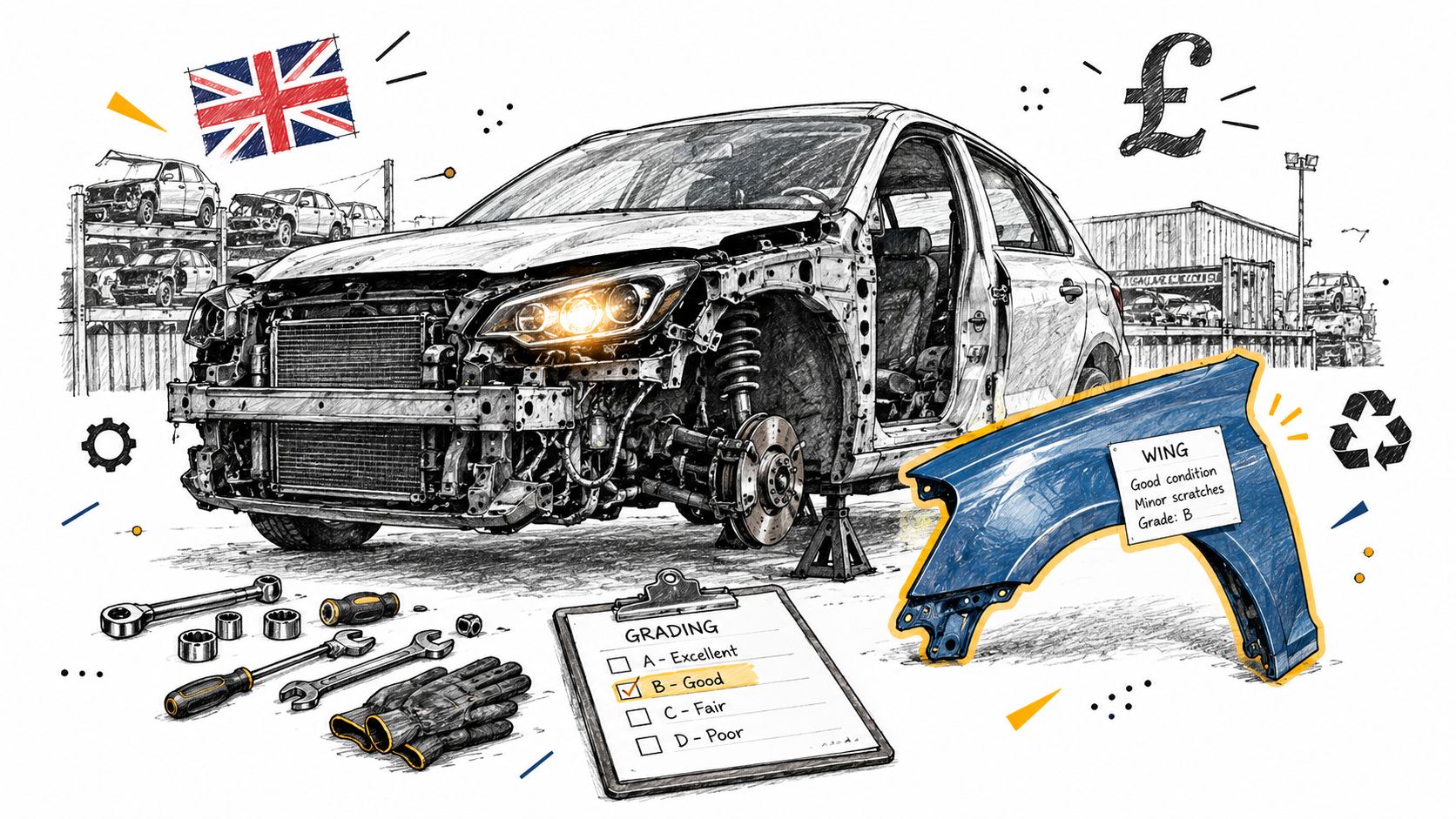
Scrapping is the right answer for some cars, but not all of them. A failed MOT doesn’t automatically mean a vehicle should be crushed for metal value alone. If the car still has usable parts, a salvage buyer or specialist network may return more value than a straight scrap run.
Three paths worth comparing
A roadworthy car can often be sold as a runner. An accident-damaged but repairable vehicle may suit salvage rather than disposal. A car with good components can be parted out, especially where used green parts are in demand.
A quick way to consider it:
| Vehicle condition | Better route | Why it may make sense |
|---|---|---|
| Runs and drives safely | Private sale or specialist purchase | The vehicle still has road use and market value |
| Fails MOT but has good parts | Salvage or parts resale | Usable components can be worth more than the shell |
| End-of-life, heavily damaged, or depollution risk | ATF scrappage | Legal disposal and DVLA closure matter more than resale |
The right choice depends on condition, not sentiment. A classic with desirable parts, a van with a healthy engine, or a cosmetically rough but roadworthy car can all sit outside the simple scrap-only route.
The decision point that saves money and risk
Use scrappage when the vehicle is at end of life and you want the disposal done properly through DVLA and an ATF. Use salvage when the car still has useful commercial value, but make sure the buyer is still operating in a traceable, compliant way. If a company only talks about weight, cash, and quick pickup, you’re probably not hearing the full value story.
The best outcome is usually the one that matches the vehicle’s real condition. That’s how you avoid leaving money on the table while still staying inside the UK disposal rules.
If you want the disposal handled through a licensed route with DVLA paperwork support and traceable payment, visit Scrap A Vehicle and check what it can offer for your car, van, or non-runner. It’s a practical option when you need the vehicle collected, recorded, and removed without leaving legal loose ends behind.