You’ve got an MOT failure, a dented bumper, or a car that still starts but no longer feels worth the hassle. Then you check one valuation site, ask a dealer, and search for scrap quotes, only to get three different numbers that don’t seem to match the same vehicle. That confusion is normal, because Sell My Car Value is not one price, it’s a set of prices based on who’s buying, what they can do with the car, and how quickly they need it.
A roadworthy hatchback can sit in the retail market. A failed-MOT car can still hold salvage value if someone can reuse parts. An end-of-life vehicle can still be worth something through compliant recycling and depollution. Once you see those three lanes clearly, the numbers make sense.
Table of Contents
- Introduction Why Your Car Has More Than One Value
- How Online Car Valuations Are Calculated in the UK
- Scrap Value vs Trade Value vs Private Sale Value
- What Really Moves Your Sell My Car Value Up or Down
- How Scrap A Vehicle Turns Your Details Into an Instant Valuation
- Getting the Best Outcome From Your Valuation
- Your Next Step to a Confident Sale
Introduction Why Your Car Has More Than One Value
A driver can park a car outside, see a warning light, and get three very different reactions on the same day. A quick online quote may look low, a dealer trade figure may feel cautious, and a private-sale asking price can sit much higher. None of those numbers is wrong. They are answering different questions.
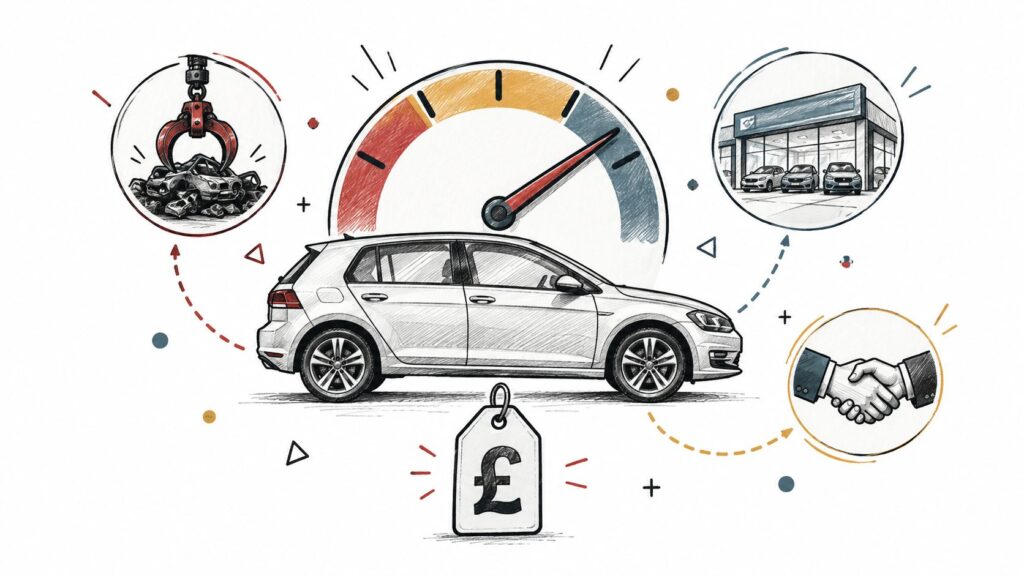
Sell My Car Value changes with the route you choose because each buyer is looking at the car in a different way. One buyer wants a car ready for retail. Another wants margin to cover preparation and resale risk. Another is looking at parts, materials, or compliant disposal. That is why a car can be worth more than scrap through one route, yet closer to recycling value through another.
Practical rule: match the quote to your car’s condition and the way you plan to sell it.
Live market evidence explains the spread. Autotrader’s used-car market report says its pricing view is built from roughly 800,000 daily observations, and it notes that buyer engagement was strong while supply headwinds were still present (Autotrader used-car market report). For a roadworthy car, that means the headline number can shift with current retail demand, just like asking prices in a busy showroom.
A tired or end-of-life vehicle sits in a different lane. DVLA’s 2023 to 2024 annual report says 83% of a vehicle was recycled, above the 70% target set by the European End-of-Life Vehicle framework (DVLA annual report 2023 to 2024). That is why an old car may still have value through reusable parts, depollution, and recycling, even when it no longer makes sense as retail stock.
Once you separate those three prices, the confusing quotes start to make sense. You can read an instant valuation more clearly and see whether retail, salvage, or scrap is the right route for your car.
How Online Car Valuations Are Calculated in the UK
A valuation starts with the market, then the car itself adjusts the figure. That is why two cars with the same badge can land on very different quotes if one is clean, well kept, and in demand, while the other has patchy history or obvious faults.
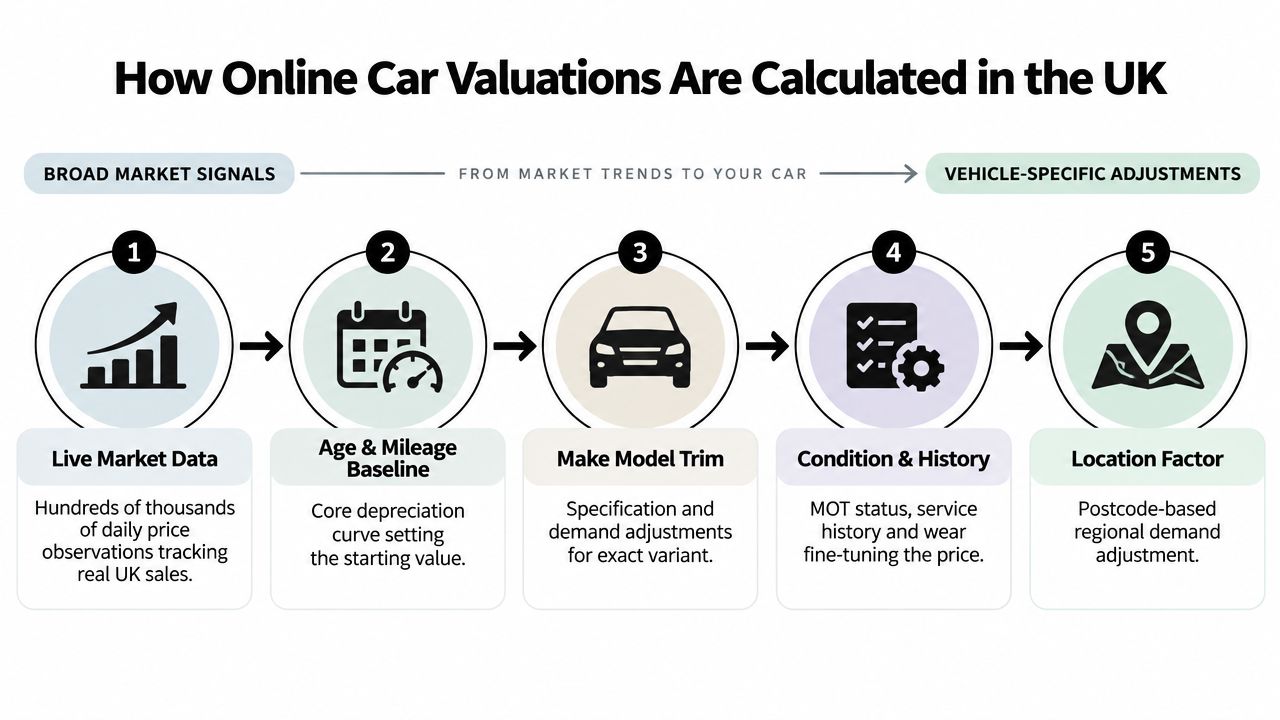
The market snapshot comes first
Online tools begin with current market evidence. Autotrader says its pricing view is built from broad daily observations, so the starting point reflects what buyers are seeing across the UK market, not a stale guide price (Autotrader used-car market report). That matters because a quote is closer to a live shop window than a fixed book value.
Your car’s details then move the number
From there, the calculator weighs the car in front of it. Age and mileage set the base. Make, model, trim, and fuel type can push the figure up or down because some versions are easier to place than others. Condition changes it again, especially if there is body damage, missing history, a failed MOT, or signs the car is not roadworthy.
The logic is simple. A better-presented car usually has more routes open to it, so the quote can stay closer to retail demand. A worn or incomplete car has fewer buyers, so the estimate starts to drift away from showroom pricing.
Sale route changes what the quote means
The same car can sit in three different price bands. A roadworthy vehicle is usually being measured against retail or trade demand. A damaged or non-running car moves closer to salvage value, where parts and recovery matter more than appearance. An end-of-life car sits nearer scrap value, where the usable metal, reusable components, and safe treatment process shape the outcome.
The market sets the baseline, then the car’s condition, spec, and history adjust the final figure.
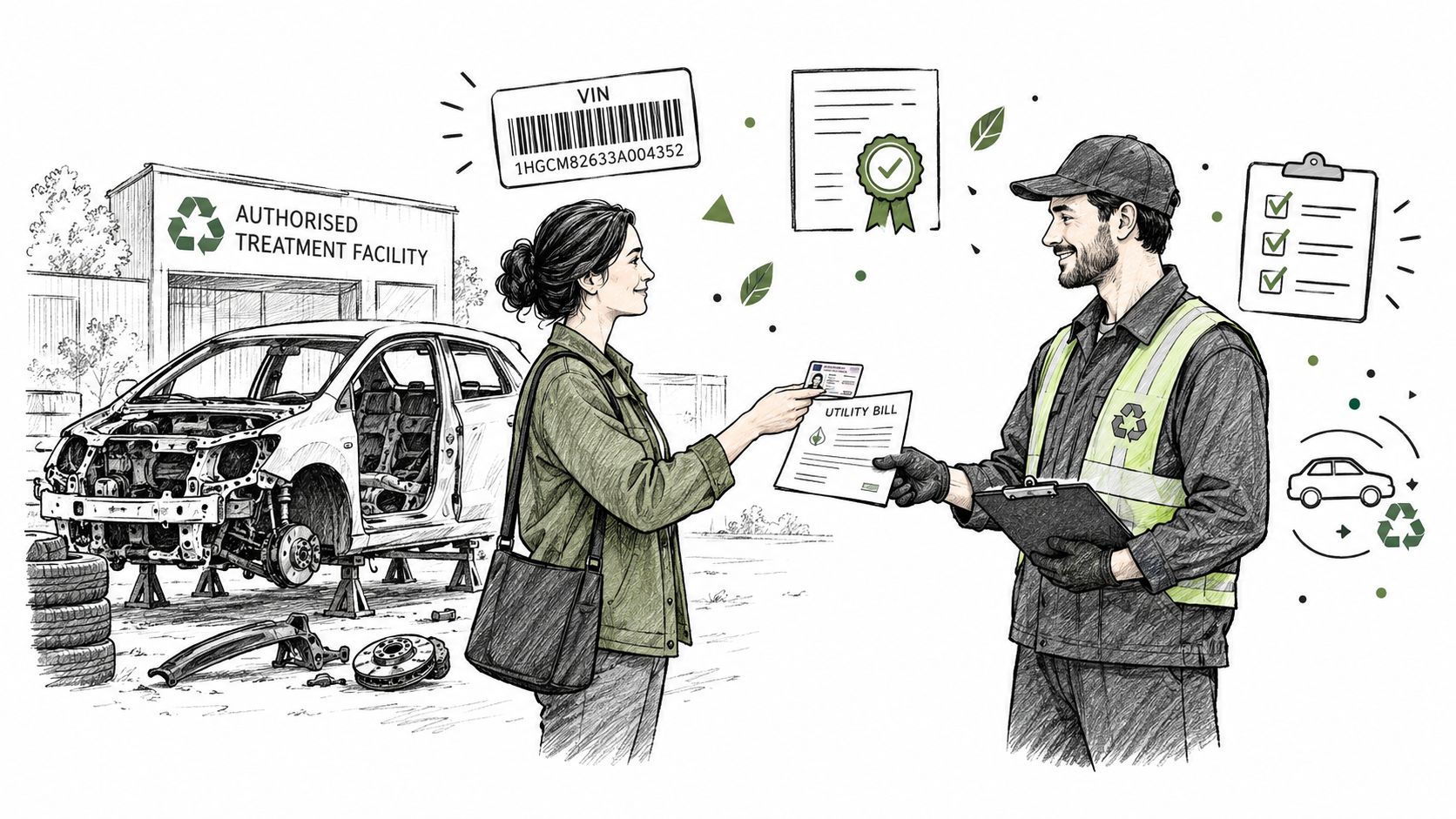
That is also why the paperwork matters. An end-of-life vehicle must go through an Authorised Treatment Facility and be issued a Certificate of Destruction through the DVLA system, so a proper quote for that route reflects regulated disposal as well as any remaining parts value.
Once you separate the route from the car’s condition, the numbers stop feeling random. An instant quote is not one universal answer, it is a route-specific estimate that may point to retail, salvage, or scrap depending on what your car can still do.
Scrap Value vs Trade Value vs Private Sale Value
A car can carry three different prices, and each one answers a different question. Scrap buyers care about what can be recovered safely. Dealers care about resale margin and risk. Private buyers care about what the car is worth to them on the road. Once you separate those views, the figures make more sense.
| Which Sell My Car Value Applies to You | What Drives Price | Best For |
|---|---|---|
| Scrap value | Recoverable materials, depollution, and parts at an Authorised Treatment Facility | End-of-life cars, broken cars, cars with little roadworthy use |
| Trade value | Dealer margin, reconditioning cost, resale risk | Drivers who want a quick sale to a motor trader |
| Private sale value | Retail asking price minus time, hassle, and negotiation | Roadworthy cars with decent presentation and patience from the seller |
Scrap value is the floor, not the whole story
Scrap value usually starts with the metal, then adds anything else that still has use. A car that has reached the end of its life must be depolluted at an Authorised Treatment Facility and processed through the DVLA system, so the quote reflects regulated disposal as well as remaining parts value. That matters because a vehicle may still have wheels, catalytic systems, panels, or other components that are worth more than the shell alone.
Trade and private sale sit higher, but for different reasons
Trade value sits below retail because a dealer has to leave room for preparation, warranty risk, and profit. Private sale can sit above trade because you are selling closer to the asking price seen on a forecourt. Independent UK valuation pages separate those routes clearly and note that private sale is typically only 5 to 15% above trade, while quick-sale valuations sit in their own lower-price category (freeplatecheck valuation guide).
That gap is where many owners get caught. A retail-looking figure can feel like cash in hand, but it is often only the price a buyer hopes to reach in the market, not the amount offered today.
When the car is worth more as parts than as metal
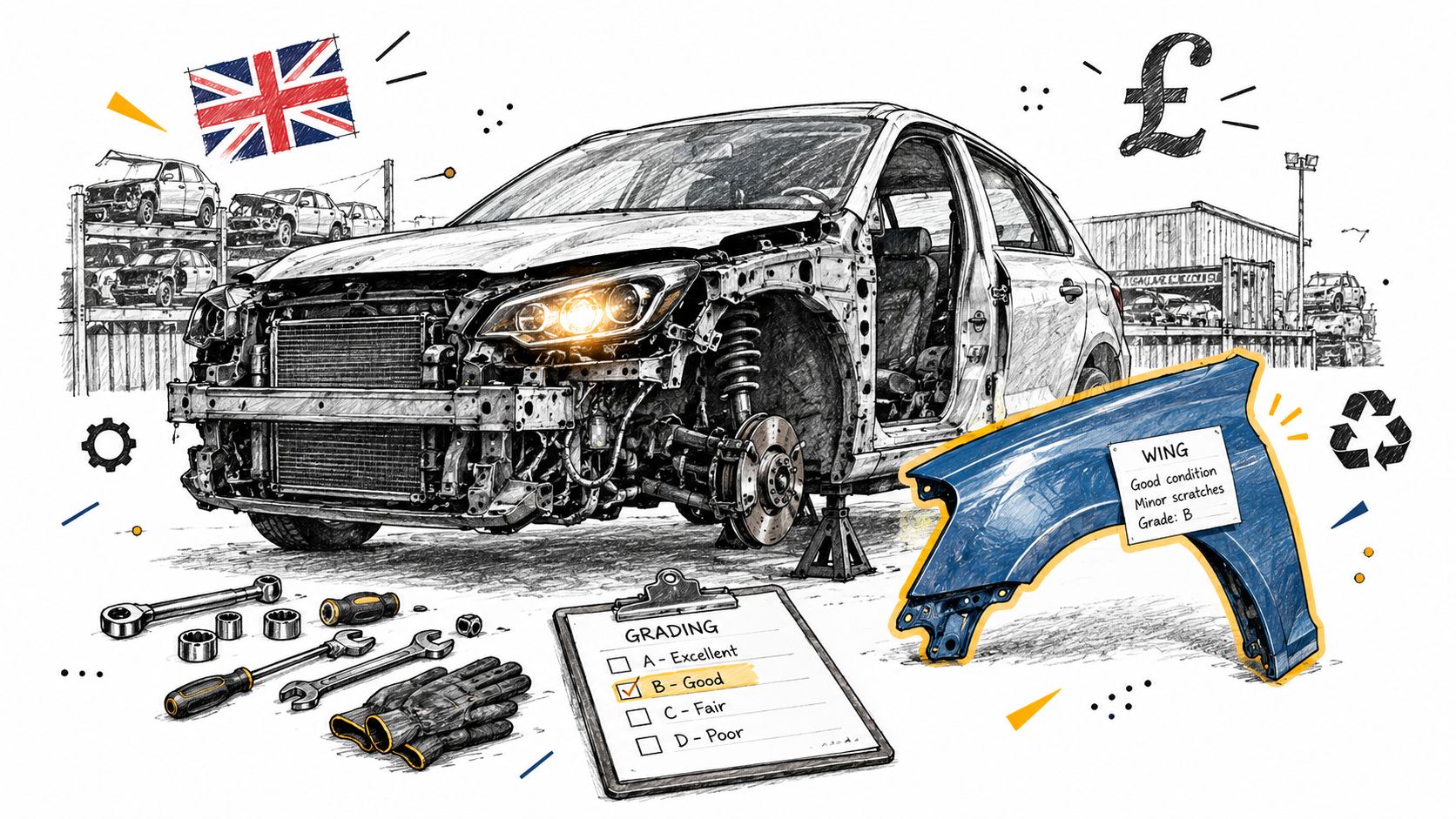
Damaged, MOT-failed, or non-running cars can still beat bare scrap if the parts have demand. A straight weight-only quote misses that completely. A specialist buyer can price the car as salvage rather than just metal, which is why a complete vehicle with reusable parts may achieve more than a simple scrap offer.
What Really Moves Your Sell My Car Value Up or Down
The headline number usually moves for reasons owners can see, but don’t always connect. One car can look similar to another on the outside and still price very differently once timing, history, and sale route are added in. That’s why a careful self-check helps before you request a quote.
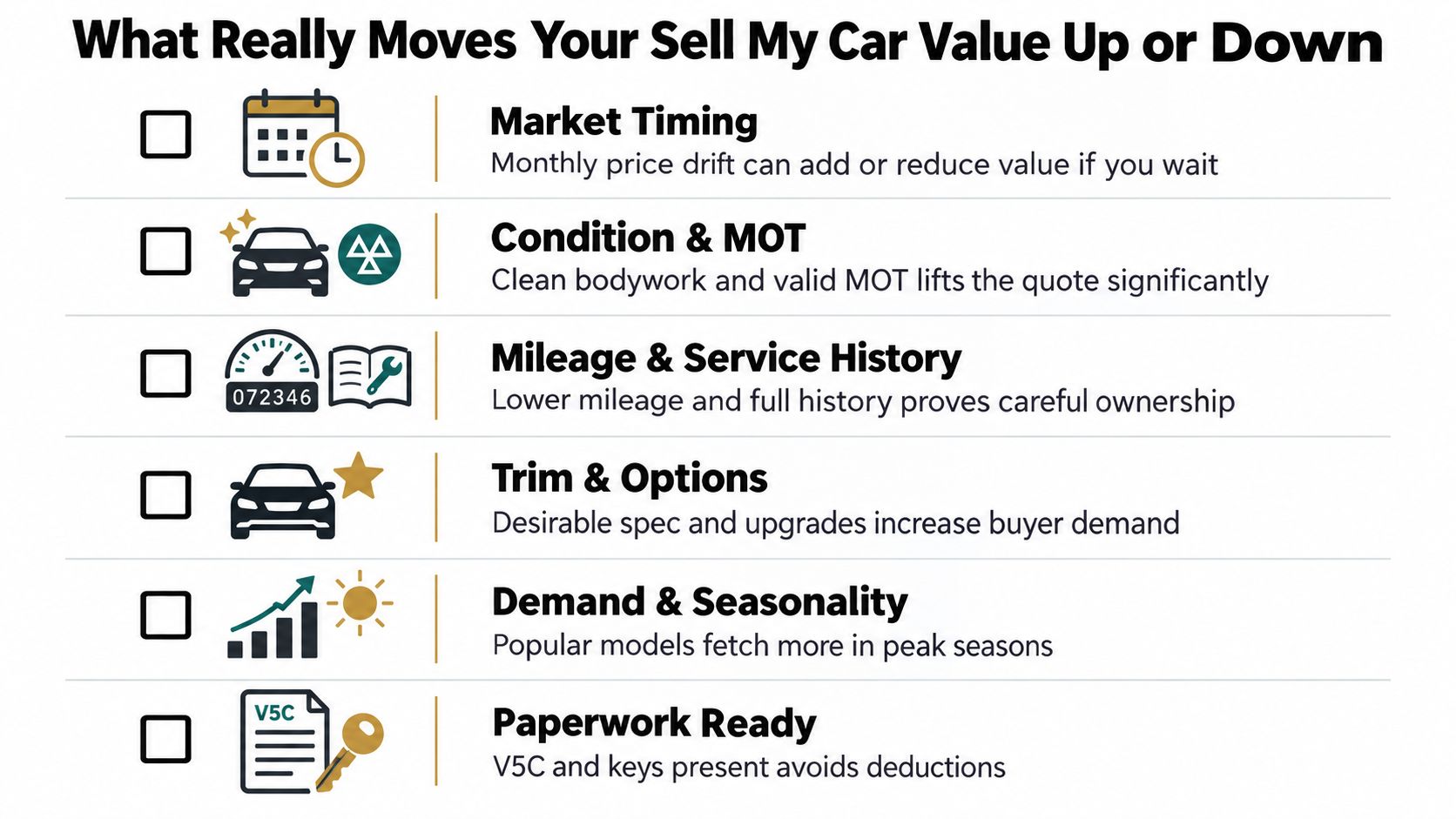
Market timing can nudge the figure more than people expect
Autotrader’s 2026 reporting shows the average used-car price was about £17,294 in January and £17,194 in June, while the second-hand-car CPI fell 0.8% month on month in June and 1.2% year on year (Autotrader Retail Price Index April 2026). On a car sitting around the £17,000 mark, even a modest softening can mean a noticeable difference in the quote you see.
That doesn’t mean you should obsess over the perfect day to sell. It does mean a valuation is a live market read, not a fixed plate. If demand softens, dealer-facing platforms tend to re-price quickly, so waiting can help or hurt depending on the car and the month.
Condition and paperwork matter more than owners think
A valid MOT, clean bodywork, and honest description help the buyer understand what they’re getting. Missing keys, missing documents, or undisclosed damage can trigger deductions because the buyer has to solve those problems after collection. The same car with the same mileage can feel like a safe purchase or a headache, and the quote reflects that difference.
Trim, demand, and salvage potential are not the same thing
A well-specified model with popular options is easier to place in the market. A basic version may still be fine mechanically, but it won’t always attract the same demand. For damaged cars, the usable parts inside the vehicle can matter more than the shell itself, especially if the car is complete and the components still have secondary-market value.
Quick self-check: if you’d struggle to sell the car privately because of damage, warning lights, or failed paperwork, your value is probably being driven more by salvage than by retail demand.
Use this checklist before you ask for a quote
- Check the MOT status: a roadworthy car tends to sit in a different value lane from a non-runner.
- Gather the service history: stamps, invoices, and recent maintenance help the buyer judge how the car’s been kept.
- Count the keys and documents: anything missing can affect confidence and the offer.
- Look at the damage: bumper scuffs and accident damage are not priced the same way.
- Decide how quickly you need it gone: urgency changes the route, and the route changes the price.
How Scrap A Vehicle Turns Your Details Into an Instant Valuation
The cleanest valuations are the ones built from the car’s actual details, not a guessed figure. Scrap A Vehicle starts with the registration and postcode, then uses live market data, condition inputs, and salvage demand to produce an instant quote for roadworthy, damaged, and end-of-life cars. You can see the valuation flow on the vehicle valuation page, where the quote is framed around the vehicle you’ve got, not the one you wish you had.
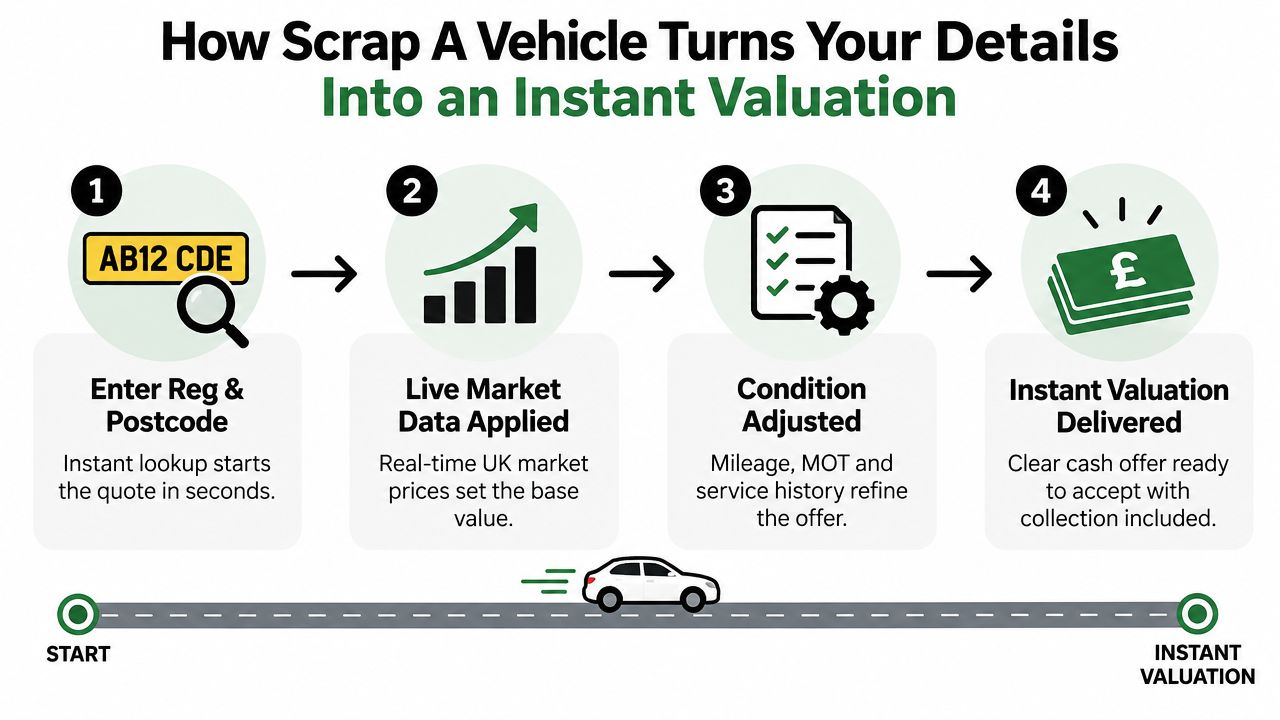
Step by step, the quote gets shaped
First, you enter the reg and postcode. That identifies the vehicle and starts the lookup. Next, live market data sets the base figure, then mileage, MOT status, and service history refine it. The final number is the offer you can accept with collection included.
That sounds simple, but it matters because a car isn’t priced only as metal or only as stock. A network of specialist buyers can sometimes capture salvage or parts value that a plain scrap quote would miss. That’s especially useful where the car is damaged, non-running, or too awkward for a private sale.
What happens after you accept
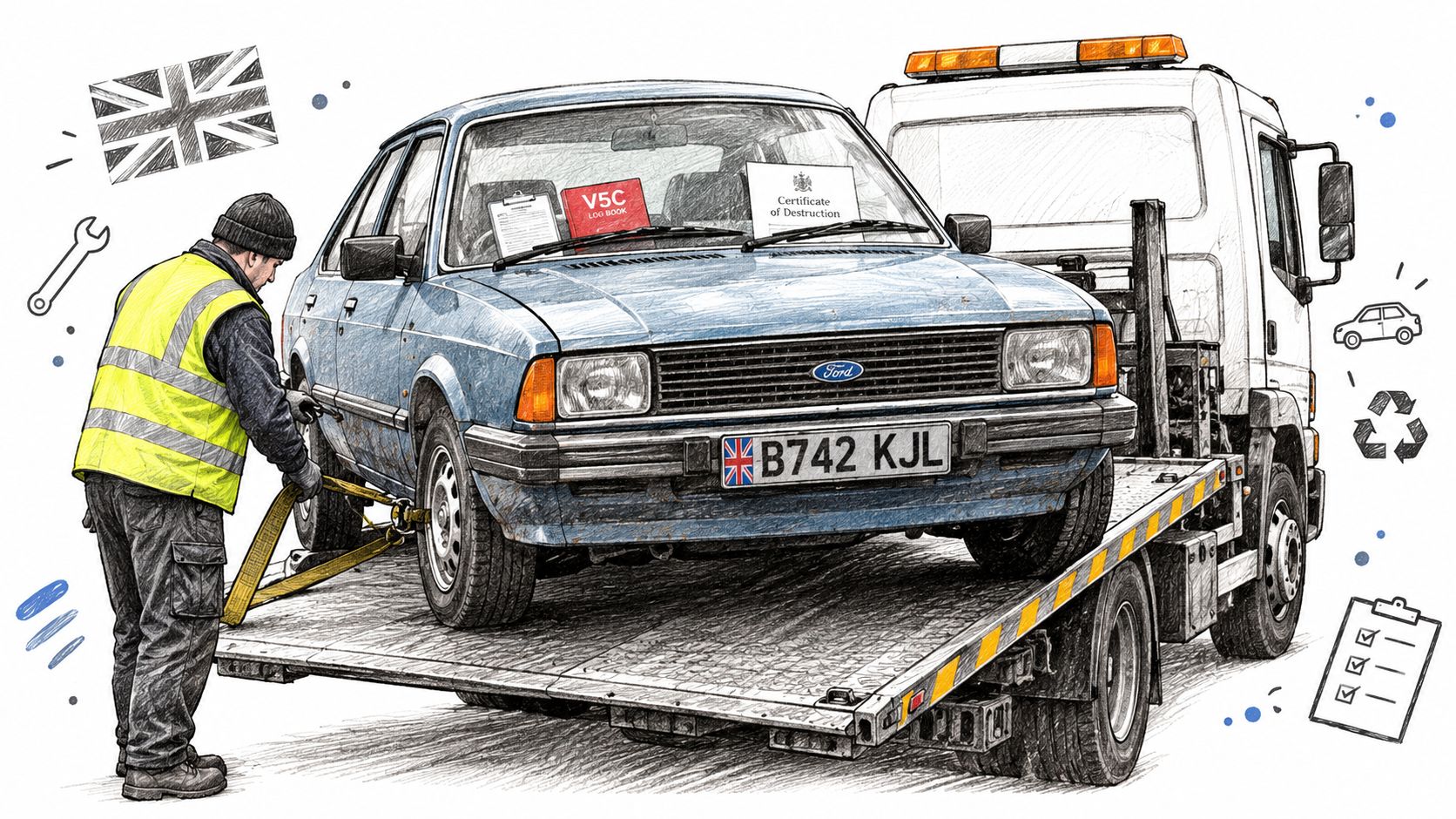
Collection is arranged free across the UK, with timing coordinated through the collection network. The handover is designed to be straightforward, with Faster Payment made on collection and DVLA paperwork handled through the proper route. For end-of-life vehicles, that includes the legal ATF process and the Certificate of Destruction, which closes the keeper’s liability in the DVLA system.
The practical advantage is certainty
A private sale can drag on for weeks with messages, missed viewings, and price haggling. An instant valuation gives you a number you can use right away, and for many owners that certainty is the value. It’s especially useful when the car is sitting outside your house, taking up space, or no longer worth the hassle of repair.
The important point is this. An instant quote is only useful if it matches the sale route you want. A roadworthy car, a salvageable car, and an end-of-life car should not be forced into the same pricing box.
Getting the Best Outcome From Your Valuation
A good quote starts with the right route. A car can have three different prices at the same time: scrap value, salvage value, and retail value. Choose the wrong lane, and the number on screen will look too low, because the buyer is pricing a different job from the one your car can still do.
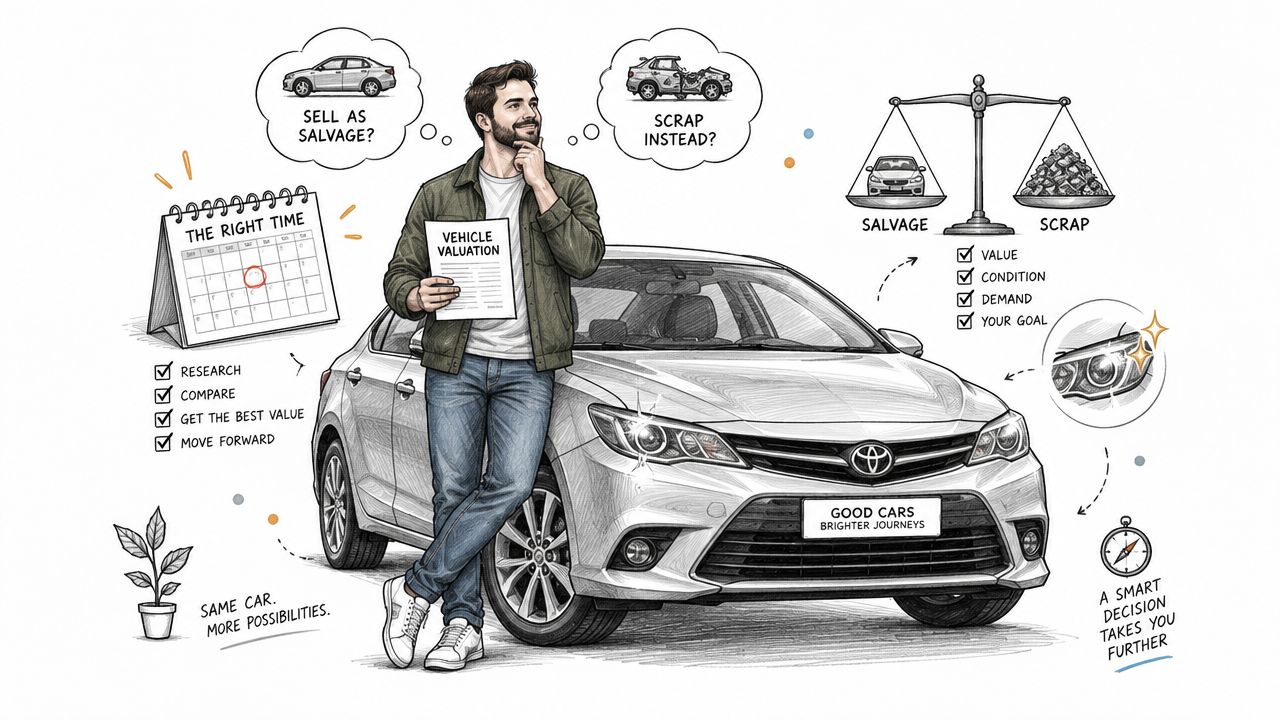
Be honest about what the car can still do
A roadworthy car with tidy bodywork and a clean history sits in the retail or trade category first. A damaged but complete car may still be worth more through salvage, because parts can carry real value even when the car itself is no longer a sensible private sale. An end-of-life car belongs in regulated recycling, where the value comes from its remaining materials and the proper disposal route.
Missing parts, hidden damage, or a description that does not match the car on the driveway usually lead to deductions. Accuracy protects the quote and avoids awkward surprises at collection.
Keep the handover clean
Have the V5C ready and keep the keys together. If the car is at the end of its life, it should go through an Authorised Treatment Facility and finish with a Certificate of Destruction, which is the paper trail that closes the keeper’s responsibility properly. That process matters because it shows the vehicle has been dealt with through the correct route, not just passed on informally.
Compare convenience with effort
A private listing can suit a tidy, desirable car if you have time and patience. A quick-sale route makes more sense when you want the car gone without test drives, haggling, or uncertainty. If the car is damaged, failed, or non-running, the extra effort of listing it yourself can eat into any extra money you hoped to make.
The key question is simple. Which buyer can use the car in the way it still has value? Once you answer that, the quote is easier to judge and the right price route becomes much clearer.
Your Next Step to a Confident Sale
A good Sell My Car Value decision starts with the route, not the headline. Retail, trade, salvage, and scrap all price the same vehicle differently because each buyer is solving a different problem. Once you know where your car sits, you can stop guessing and start comparing like with like.
If your car is roadworthy, benchmark it against live market pricing. If it’s damaged or failed, look closely at salvage potential before settling for a bare metal figure. If it’s at the end of its life, a compliant ATF route gives you a proper handover and removes the paperwork worry.
The simplest next move is to get an instant quote from a service that can read the vehicle’s condition properly, arrange collection, and handle the DVLA side cleanly. Have the registration, postcode, mileage, and a realistic view of the car’s condition ready, then choose the route that fits your situation rather than the one that sounds quickest on paper.
If you want a fast, compliant way to check your car’s value, Scrap A Vehicle can give you an instant quote, arrange collection, and handle the paperwork through the proper UK disposal route. Visit Scrap A Vehicle to see what your car is worth today and decide whether retail, salvage, or scrap is the right fit for it.