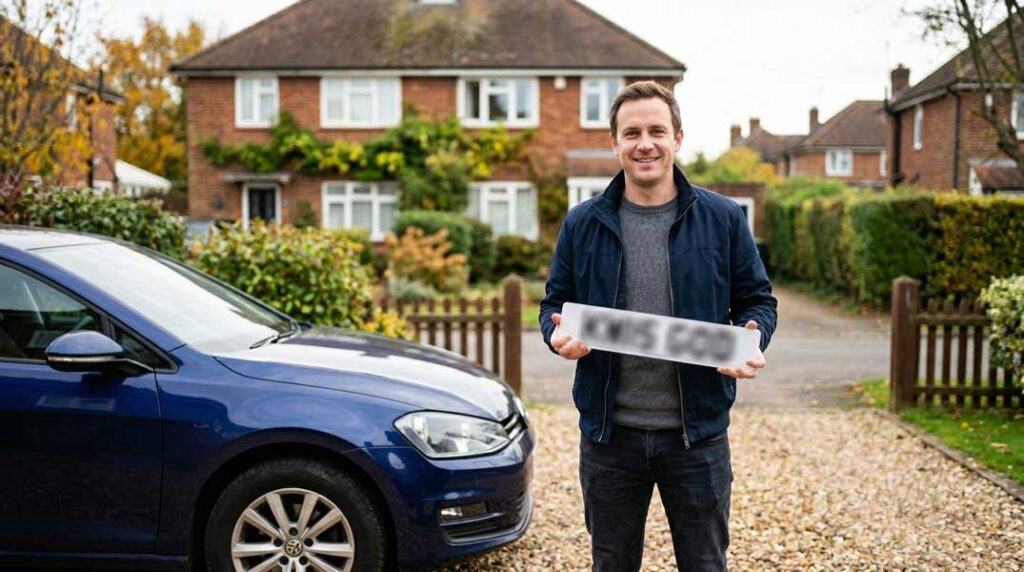
Your car might be heading for the scrapyard, but a private or cherished registration does not have to go with it. If you’ve paid for a personalised plate, or you simply like the number you’ve had for years, you can keep it and move it onto your next car later. The catch is timing. You have to retain your number plate through the DVLA before the car is scrapped, because once the scrapyard reports it destroyed, the registration is cancelled for good. This guide walks through the whole process for 2026: what it costs, the forms, the online route, and the one MOT rule that quietly catches people out.
Can you keep your number plate when you scrap a car?
Yes, you can, as long as you act before the car is scrapped. Retaining a plate means asking the DVLA to take the registration off your vehicle and hold it on a retention document so you can use it again in future. Your old car then receives a plain replacement registration of its own.
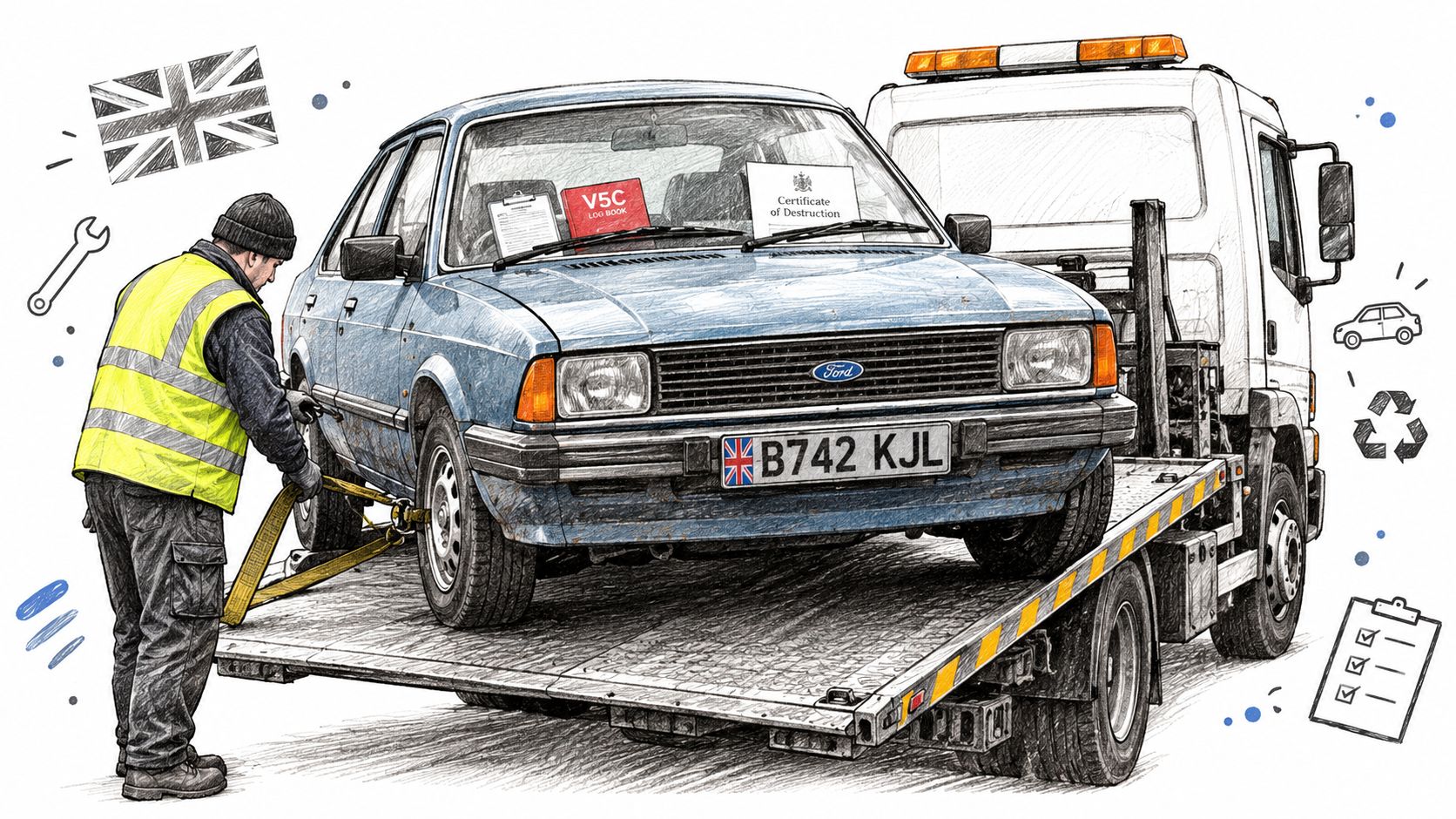
Your deadline is firm, though. When a car is scrapped at an Authorised Treatment Facility, the facility issues a Certificate of Destruction. At that point the DVLA permanently cancels the registration tied to the vehicle. After that the number cannot be recovered, transferred or reused, even if it was a valuable personalised plate. So the rule is simple. Sort the plate first, then scrap the car.
What “retaining” a number plate actually means
Retention is the official DVLA scheme for parking a registration while it is not on a car. You apply to take the number off your current vehicle, and once it goes through, the DVLA issues a V778 retention document in your name. That document is proof that you hold the right to the number, and it lets you assign the plate to another vehicle whenever you’re ready.
At the same time, the DVLA gives your old car a standard age-related registration that matches its year. A 2005 car, for example, might be reassigned something like WX05 ABC. That plain number is what then appears on the new logbook and, later, on the Certificate of Destruction when you scrap the car. Worth knowing up front: registrations that start with “Q” or “NIQ” cannot be retained, as those are issued for vehicles of unconfirmed age or origin.
What you need before you can retain a plate
The DVLA only approves retention when the vehicle and the registration meet every condition, so it is worth checking these before you apply. The requirements are below.
- You must be the registered keeper, and the car must still exist and be registered with the DVLA.
- The vehicle must be registered in Great Britain. Northern Ireland registrations go through a separate system and aren’t covered here.
- The car must be taxed or have a SORN in place. If it has been on a SORN for more than five years, the DVLA may want it taxed first.
- It must be available for inspection if the DVLA asks to see it.
- It needs a valid MOT, which is the part that trips up scrap-car owners. More on that below.
- The registration can’t be a “Q” or “NIQ” number, and the car should not have outstanding finance against it.
If any of these do not stack up, the application can be refused, so a quick check now saves a wasted fee later. If your car is currently on a SORN and you’re unsure how that affects things, our guide on how to SORN a car covers the basics.
How to retain your number plate online
The online route is the quickest and it is the one most people use. You apply through the DVLA’s take a private number off a vehicle service on GOV.UK. You then need the 11-digit document reference number from your V5C logbook plus the registered keeper’s postcode. You pay £80 by debit or credit card.
Once you submit, the DVLA removes the registration from their record and assigns the replacement number to your car. Online applications often clear within a few working days. Your V778 retention document and an updated V5C showing the new registration then follow in the post. These can take up to a few weeks to arrive. You can apply online only if the car is currently taxed and has a valid MOT. If either has lapsed, you need the postal route instead.
How to retain your number plate by post
If you can’t apply online, you use form V317, called “application to keep a vehicle registration number”. Download it from GOV.UK, put an X in the box for Option B (the retain option), and fill in your vehicle’s details on page two so they match the logbook exactly.
Send the completed V317 together with the original V5C logbook, not a photocopy. Add an £80 cheque or postal order made payable to DVLA Swansea. The address is DVLA Personalised Registrations, Swansea, SA99 1DS. Postal applications take longer to process than online ones. The V778 can take four to six weeks to come back, so build that time into your plans. If you want the plate to go straight onto a car you already own rather than onto a retention document, you fill in Option A on the same form instead.
The MOT rule that catches scrap-car owners out
Here is the trap. Plenty of people assume that because the car is going to be scrapped, the MOT status no longer matters. It does. To retain the plate, the car needs a valid MOT at the point you apply, and if the MOT expired even a day before your application, the DVLA can reject it.
That bites hardest on scrap cars, which are often non-runners or have just failed an MOT. The same rule applies to classic cars that are normally MOT-exempt, as they still need a current certificate for a retention. If your car’s MOT has run out, you may need to sort that before you can retain the number, or get advice from the DVLA on your options. You can check the car’s MOT history free on GOV.UK before you apply, which takes a moment and tells you exactly where you stand. The safe move is to retain the plate while the car still qualifies, rather than leaving it until the MOT has lapsed and the car is sitting on the drive waiting for collection.
How long retention lasts and the V778 document
A V778 retention document is valid for ten years from the date it is issued. You can renew it before it expires and hold the number for as long as you want. If you let it lapse without renewing, you risk losing the right to the registration, so it pays to keep an eye on the expiry date. Renewal terms can change, so check the current position on GOV.UK when the time comes.
It also helps to know the V778 isn’t the same as a V750. A V750, or certificate of entitlement, is what the DVLA issues when you buy a brand-new private number that has never been on a car. A V778 is for a number that has already been on a vehicle and is being held for reuse. That is the one you deal with when you take a plate off a car you’re scrapping.
One practical tip. Keep the V778 somewhere safe, and definitely not in the glovebox of the car you’re about to scrap. People have lost cherished numbers simply because the paperwork went off to the scrapyard inside the vehicle. The document is the thing that proves the number is yours, so treat it like the valuable item it is.
Putting your retained plate on your next car
When you’re ready to use the number again, you assign it from the V778 to a vehicle that’s registered in your name. You can do this online through the DVLA’s put a private number on a vehicle service, or by post with a V317. If you are the named holder on the retention document, there is no further fee to assign it, since the £80 you paid to retain it covers that step.
Your receiving car has to meet the same sort of conditions, so it needs to be registered, taxed or SORN, and available to inspect. Once the DVLA approves the assignment, the retention document becomes void. The number then moves to the new car. You then have to display the new plate before you drive, and it is worth telling your insurer about the change of registration so your cover matches your records.
Keeping a plate from a written-off car
That same “act first” principle applies if your car has been written off rather than scrapped, but the timing is tighter because your insurer is often involved. If the insurer settles the claim and takes ownership, the car can be disposed of quickly, and once it’s scrapped the registration is gone. Arrange the retention or transfer before the claim concludes, and tell your insurer at the outset that the car carries a personalised plate.
Whether you can keep the car itself depends on the write-off category, which decides whether the vehicle can ever return to the road. If you are working out where your car stands, our guide to car write-off categories explains what each one means and what you can and can’t do with the vehicle afterwards.
Scrapping your car once the plate is safe
Once your V778 and the new V5C have arrived, the registration is protected and the car is ready to go. Do not book the final collection until those documents are in your hands, and do not cancel the car’s tax or insurance before the retention is confirmed, since the car still needs to qualify while the application is processed. A good rule of thumb is to start the retention at least a couple of weeks before your planned scrap date.
After the plate is off, the rest is simple. You can check what your car is worth for free, get an instant online quote, and arrange free collection across England, Wales and Scotland. The car will be scrapped under its replacement registration, and you can still claim a refund on any full months of tax left. For that last step, our guide on how to notify the DVLA of a scrapped car covers exactly what to do so you’re no longer liable for the vehicle.
Frequently asked questions about retaining a number plate
Can I keep my number plate if I scrap my car?
Yes, but only if you retain it before the car is scrapped. You apply to the DVLA to take the number off the vehicle and hold it on a V778 retention document. Once the scrapyard issues a Certificate of Destruction, the registration is cancelled permanently and can’t be recovered.
How much does it cost to retain a number plate?
It costs £80, and the fee is the same whether you apply online or by post. That payment covers holding the number on a V778 document, and there is no extra charge to assign it to another vehicle later if you’re the named holder.
Does my scrap car need an MOT to retain the plate?
Yes. The car needs a valid MOT when you apply, even if it is a non-runner or a classic that is usually MOT-exempt. If the MOT has expired, the DVLA can reject the application, so it is best to retain the plate while the car still qualifies.
How long does a retained number plate last?
A V778 retention document is valid for ten years from the date of issue and can be renewed before it expires. If you let it lapse without renewing, you risk losing the right to the registration, so keep track of the expiry date.
What if I’ve already scrapped the car without retaining the plate?
Unfortunately, once the Certificate of Destruction has been issued, the registration is permanently cancelled and can’t be brought back, even if it was personalised. It is always worth checking the vehicle’s status, but recovery is not possible once a car is officially scrapped.