You’re standing beside a used car, the seller is waiting, and the bank transfer is ready to send. The car looks right, the V5C is in the glovebox, and the price feels like a bargain. Then, after you’ve paid, a finance company contacts you because the vehicle is still tied to an unpaid agreement.
That risk is avoidable. Learning how to check if a car has outstanding finance means more than typing a registration number into a website. You need a paid vehicle history report, a careful document check, and a seller-verification trail that proves any claimed settlement. If the seller won’t cooperate, walk away.
Table of Contents
- Why Outstanding Finance Matters When Buying a Used Car
- How Common Is Outstanding Finance on UK Used Cars
- Choosing the Right Vehicle History Check Service
- Running the Check Step by Step
- When the Seller Says the Finance Is Cleared
- What to Do If Finance Is Found
Why Outstanding Finance Matters When Buying a Used Car
Outstanding finance means a loan or hire-purchase agreement remains connected to the vehicle. In the UK, the important practical rule is that the debt can follow the car rather than the person who borrowed the money. A buyer can pay the seller in full and still face action from the lender if its interest hasn’t been cleared, as explained in UK guidance on checking vehicle finance.
The danger is greatest with hire purchase, or HP, and personal contract purchase, or PCP. Under those arrangements, the finance company may retain rights over the vehicle until the agreement is settled. A personal loan is different because the borrower normally receives the money and owns the car separately, but you shouldn’t assume the seller used a personal loan because they say they did.
The V5C doesn’t solve this problem. The document records the registered keeper, but the V5C logbook isn’t proof of ownership. A seller can appear on the logbook while a lender still has an interest in the vehicle. The free DVLA vehicle enquiry service also doesn’t reveal whether finance is outstanding, so a DVLA check alone is inadequate.
What can happen after you buy
If the original borrower stops paying, the lender may try to recover the vehicle. You could lose access to the car even though you paid the seller and have a receipt. Recovering your money from the seller can become difficult, particularly if they’ve spent it, moved away, or deliberately concealed the finance.
Practical rule: A clean-looking V5C and a convincing seller don’t replace a finance check.
The problem can also arise when a seller says the final payment has been made but the database hasn’t caught up, or when paperwork has gone missing. A finance check can identify an active marker, but it won’t show the remaining balance. Only the lender can provide the settlement amount, so treat any verbal reassurance as unverified until you see written confirmation.
The cost of getting this wrong is severe: no car, lost money, and a prolonged dispute. Run the check before you hand over a deposit, cash, or bank transfer.
How Common Is Outstanding Finance on UK Used Cars
Outstanding finance is a mainstream used-car risk, not a remote possibility. RAC says around one in five used cars in the UK has outstanding finance, while HPI states that as many as one in three cars has an active finance agreement. RAC’s vehicle history-check data also says 24% of vehicles checked show outstanding finance, as set out in HPI’s UK car finance check guidance.
Those figures don’t produce one universal probability for the car in front of you. They do establish the correct buying attitude: assume finance is possible until a proper report and supporting documents show otherwise.
Private sales deserve the strictest approach. You’re dealing directly with the person who may have borrowed the money, and there’s no established retailer process standing between you and the vehicle’s financial history. Independent dealers can provide useful paperwork, but their stock can still carry an unresolved marker. Main dealers usually have stronger checks and processes, yet “dealer” isn’t a substitute for verifying the specific car.
The report fee is small compared with the purchase risk. Buyers who skip it often do so because they want to save money or avoid offending the seller. That logic fails when the vehicle is later challenged by a lender.
The figures in context
| Sales channel | Approx. share with outstanding finance | Typical buyer risk |
|---|---|---|
| Private sale | Not separated in the verified data | Highest practical exposure because the buyer must verify the seller and settlement |
| Independent dealer | Not separated in the verified data | Moderate exposure, with dealer paperwork still requiring independent checking |
| Main dealer | Not separated in the verified data | Usually stronger controls, but no automatic guarantee |
The verified datasets use different samples and measures, so don’t combine them into a single rate. Their consistent message is enough: a substantial share of second-hand vehicles can have active finance, and a vehicle history check is the sensible control point.
Choosing the Right Vehicle History Check Service
The right service is the one that checks finance databases and gives you a report you can save before purchase. Don’t confuse a free vehicle enquiry with a full history check. The free DVLA service can help confirm basic vehicle details, but it doesn’t reveal outstanding finance.
Commercial providers commonly combine registration-based vehicle data with finance, insurance, theft, write-off, and mileage information. The exact coverage, wording, guarantee, and report depth vary by provider and package. HPI, the AA, RAC, MyCarCheck, AutoCheck, and other established services are familiar options, but you should compare the actual report contents before paying.
The brief for this guide doesn’t verify current single-check prices, package prices, or the precise data feeds and mileage features for each named provider. I won’t invent a price comparison that could mislead you. Use the provider’s own checkout and product description to confirm what the selected report includes.
What to compare before paying
| Provider | Typical cost, single check | Finance data | Write-off data | Mileage check |
|---|---|---|---|---|
| HPI | Check current package price | Confirm the selected report includes finance data | Confirm categories and detail included | Confirm package mileage coverage |
| AA Car Data Check | Check current package price | Confirm finance coverage before purchase | Check listed write-off information | Check whether mileage verification is included |
| RAC Car Passport | Check current package price | Confirm finance section and lender information | Review write-off coverage | Confirm mileage features |
| MyCarCheck | Check current package price | Confirm finance marker coverage | Check report categories | Confirm mileage discrepancy tools |
| AutoCheck | Check current package price | Confirm finance data in the chosen product | Review write-off detail | Confirm mileage coverage |
| GOV.UK MOT history | Free | Doesn’t replace a finance check | Not a full vehicle history report | Useful for MOT and recorded mileage context |
A cheap report may omit useful mileage warnings or provide less detail about write-off categories. Read the product description, not just the headline price. The report should clearly identify whether finance is outstanding, settled, or not recorded, and it should provide enough vehicle information to match the car in front of you.
The sensible buying combination
Run one paid finance and history check before viewing or paying, then use the free GOV.UK MOT history service for additional context. The MOT record can help you compare recorded mileage and inspection history, but it doesn’t establish ownership or prove that finance has been settled.
If a dealer supplies an HPI certificate, ask to see it. Then run your own check using the registration shown on the V5C, and compare the vehicle identification number, registration, report date, and physical car. A report is evidence tied to the details entered at the time. Your own verification reduces the chance of relying on an old or mismatched document.
Running the Check Step by Step
Start with the car, not the seller’s advert. Ask for the registration number before travelling and check that it matches the number on the physical V5C. When you meet, compare the VIN on the vehicle with the VIN recorded on the paperwork and report.
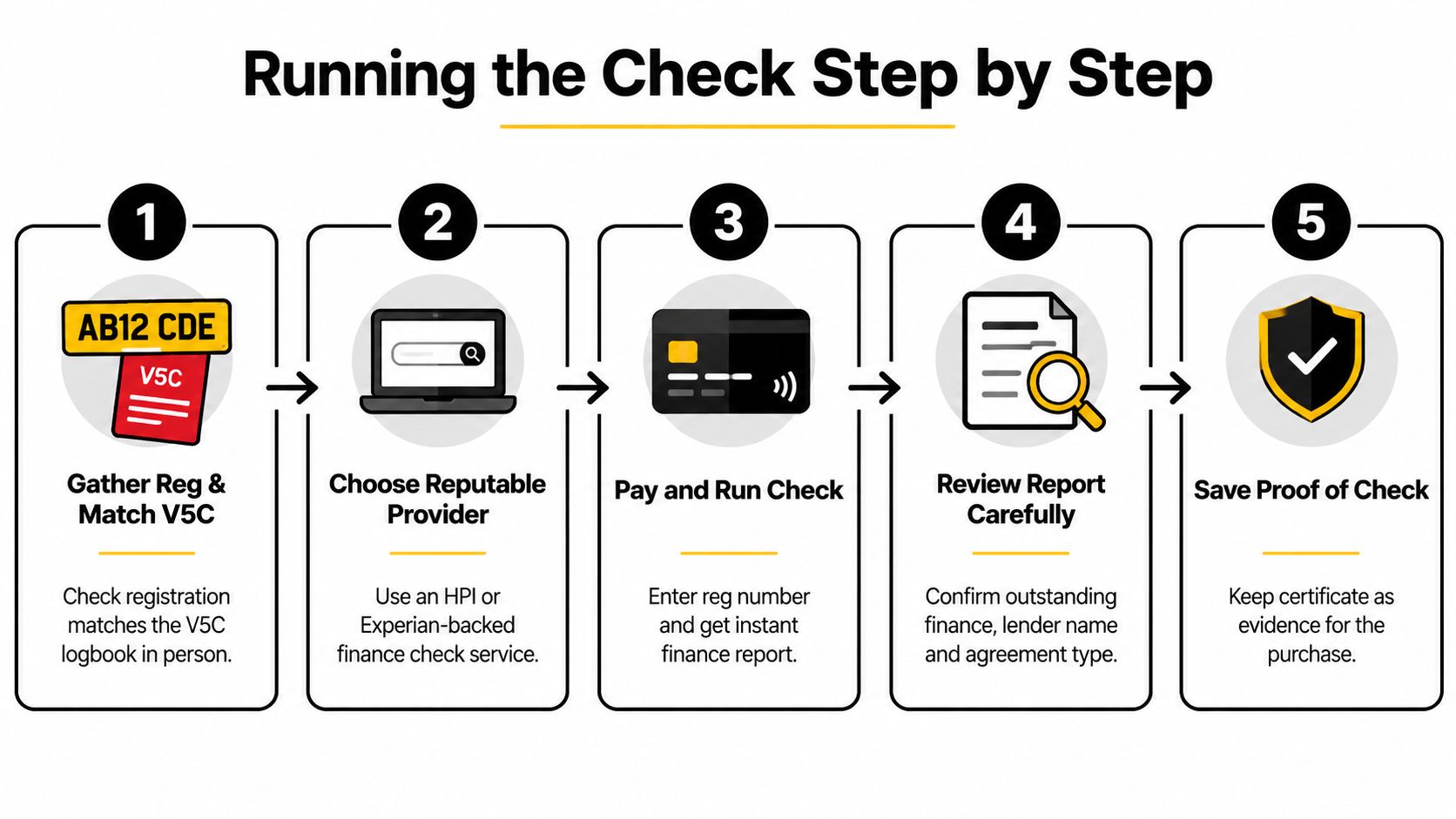
Five checks before money changes hands
-
Match the identity. Check the registration, VIN, make, model, colour, and keeper details against the car and V5C. A mismatch is a stop sign, not a minor clerical issue.
-
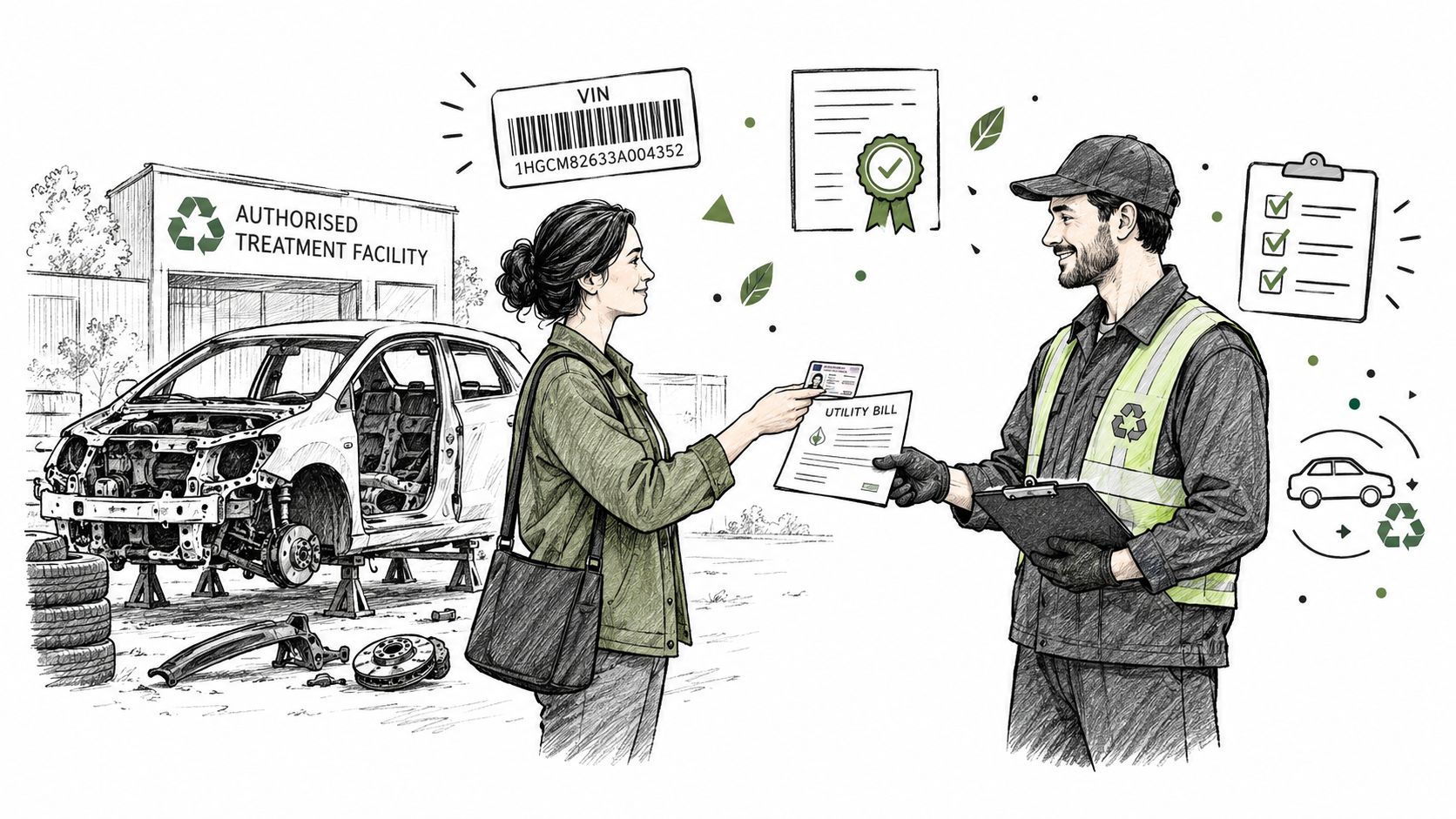
Assess the seller. Ask to see identification and documents that connect the seller to the vehicle. A driving licence and utility bill can help establish consistency, but neither proves ownership by itself.
-
Use a paid provider. Enter the registration carefully on the chosen vehicle history service. Save the completed report with its date and vehicle details.
-
Read every warning. Look specifically for outstanding finance, a lender name, agreement type, stolen-vehicle markers, keeper history, mileage discrepancies, and insurance or write-off records. “No finance recorded” means no marker was found in that report. It isn’t a reason to ignore mismatched paperwork.
-
Keep the evidence. Store the report, advert, messages, receipt, seller details, and any settlement letter. Your paperwork should show what you checked and what the seller represented.
A missing service history doesn’t prove finance, but it weakens the seller’s story. A suspicious V5C, inconsistent keeper information, altered-looking paperwork, or a vehicle that doesn’t match the report should end the negotiation. You can also review what to check if a car may have been scrapped when the vehicle’s history contains an unexplained gap or status concern.
The report video below provides a visual explanation of the checking process.
If the seller refuses a check, insists on cash, creates artificial urgency, or says the report is unnecessary because the V5C is present, leave. A genuine seller with a clear car has no sensible reason to block a basic verification step.
When the Seller Says the Finance Is Cleared
“Finance cleared” is a claim, not proof. Ask the seller for written confirmation from the finance company, linked clearly to the vehicle registration and the agreement. A screenshot of a bank payment or a message saying “it’s all paid” doesn’t establish that the lender has released its interest.
The strongest document is a formal settlement or closure letter from the lender. It should identify the agreement, the vehicle registration, the settlement or closure date, and the lender’s confirmation that the relevant balance has been dealt with. You don’t need to accept vague paperwork that leaves you guessing whether the payment was a partial instalment, a settlement request, or a completed release.
Build a payoff trail
Ask the seller to do three things:
- Name the lender: Get the finance company’s full name and the agreement reference.
- Provide written evidence: Request a settlement letter or closure confirmation that matches the vehicle.
- Permit direct verification: Contact the lender through an official customer-service or complaints route, using contact details found independently rather than a number supplied only by the seller.
A finance check alone won’t show the remaining balance. The lender must provide the settlement figure, and that figure can change with time or payment activity. If the seller wants you to pay them so they can clear the balance later, refuse. The safer arrangement is for the lender to confirm the amount and for settlement to happen directly or through a controlled process.
When documents are missing
The FCA’s guidance for car-finance complaints recommends checking old bank statements, contacting the dealer, and using credit-file information when lender details need to be traced. Its consumer guidance on car-finance complaints is especially useful when the seller says the finance was cleared but can’t produce the paperwork.
A seller who isn’t the original borrower needs extra scrutiny. Multiple keepers, an inherited vehicle, a trade-in, or a private resale can make the chain harder to prove. Ask for the previous seller’s details, purchase documents, and lender correspondence where available. If the seller won’t explain the chain or refuses direct lender verification, don’t try to solve the gap with optimism.
Walk-away test: If the seller can’t prove settlement and won’t let you verify it, the car isn’t ready for sale.
What to Do If Finance Is Found
Stop the purchase. Don’t hand over a deposit, don’t transfer the full price, and don’t rely on a promise that the seller will sort the finance after completion.
Tell the seller that the vehicle can only proceed if the lender’s interest is properly settled. Ask for a current settlement figure and written instructions from the finance company. The cleanest route is usually for the seller to settle the lender directly, then provide confirmation that the agreement has closed.
Use controlled payment arrangements
If you still want the car, structure the transaction so the finance company receives the settlement amount directly. An escrow-style arrangement may reduce the risk of money passing through the seller’s account, but check the provider’s terms and identity carefully. Don’t invent your own informal escrow process with a stranger.
Any written agreement should identify the vehicle, registration, VIN, agreed price, finance settlement amount, who pays the lender, what happens if the lender doesn’t release its interest, and when the remaining balance is paid. Keep the report and every message. If the seller refuses a written arrangement, treat that refusal as decisive.
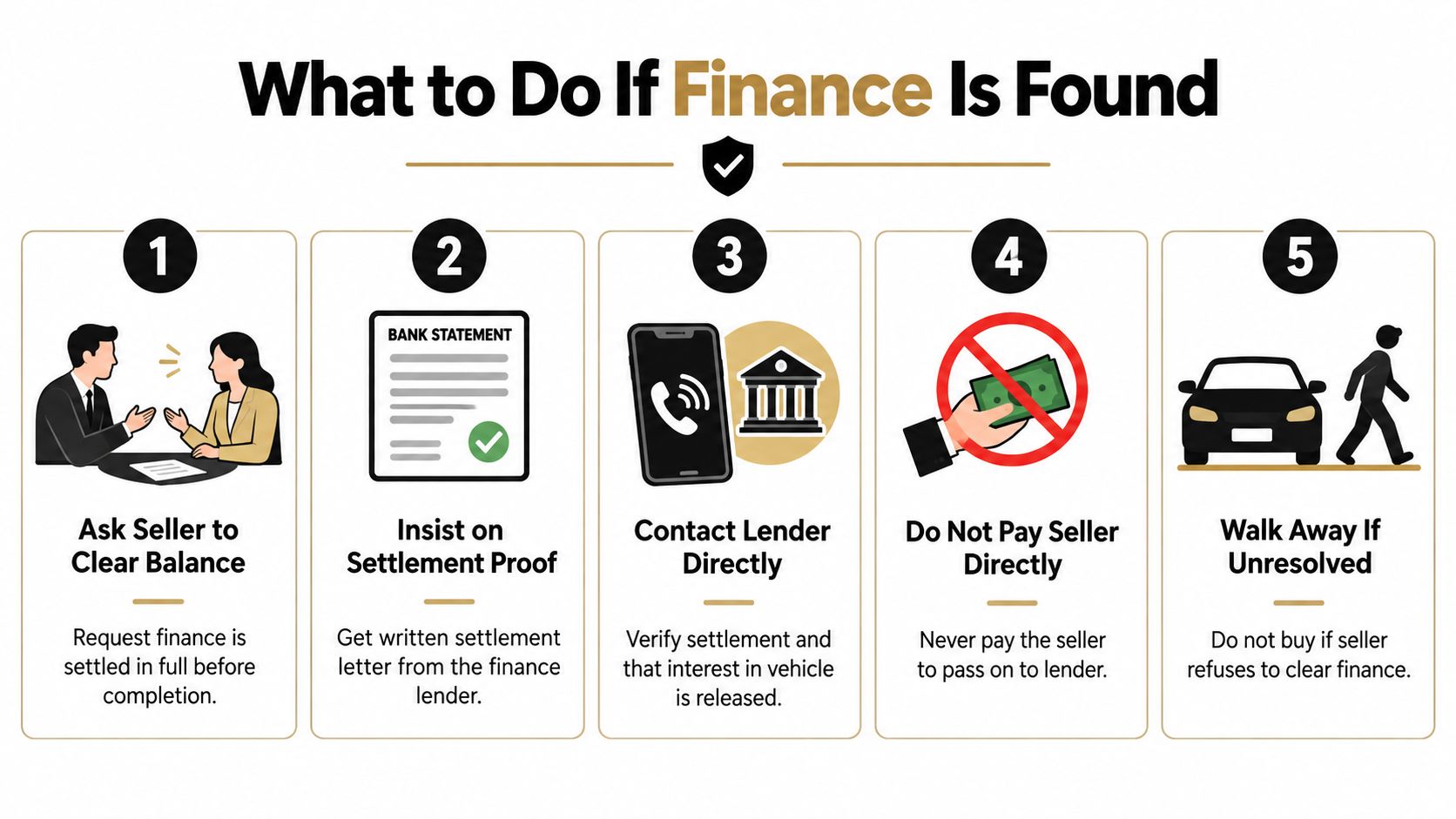
Don’t assume a promise to update the DVLA record solves the finance issue. The V5C records the keeper, and the finance marker is typically held in finance databases. You need confirmation from the lender that its rights have been released, not a new logbook.
If you’ve already paid
If the seller has disappeared or refuses to resolve the matter, collect the advert, payment evidence, messages, report, V5C details, and seller identification. Report suspected fraud to the police and use the appropriate fraud-reporting route, including Action Fraud, where applicable.
The lender may still assert rights over the vehicle, so don’t conceal it, sell it on, or ignore contact. Ask the finance company what evidence it needs and explain that you bought the car in good faith. Recovery of the vehicle or money isn’t guaranteed, which is why prevention is far better than a dispute after payment.
For a complaint about a lender’s handling of the matter, follow its internal complaints process first. The Financial Ombudsman Service explains that lenders generally have an eight-week response window, and its motor-finance commission complaint rules remain subject to evolving arrangements. The Financial Ombudsman Service guidance on car-finance commission complaints records that temporary complaint-handling rules were extended to 31 May 2026, with certain referral deadlines running to the later of 29 July 2026 or 15 months from a final response.
Never pay a seller directly to pass settlement money to a lender. Never accept an old certificate without matching it to the vehicle. Never let urgency replace verification. If the finance remains unresolved, walk away with your money intact.
If you’ve found a car with unresolved finance, serious damage, or an uncertain history, get a clear valuation before deciding what to do next. Scrap A Vehicle offers instant online valuations, free nationwide collection, and same-day bank payment for eligible vehicles, so visit Scrap A Vehicle to check your options.