You’ve just had the call no car owner wants. The MOT has failed, the dash has started lighting up like a Christmas tree, and the garage has given you a bill that makes the car feel older than it should. At that point, guessing is expensive. A proper MOT history check UK is the fastest way to see whether you’re dealing with an isolated fault, a pattern of neglect, or a vehicle that’s already on borrowed time.
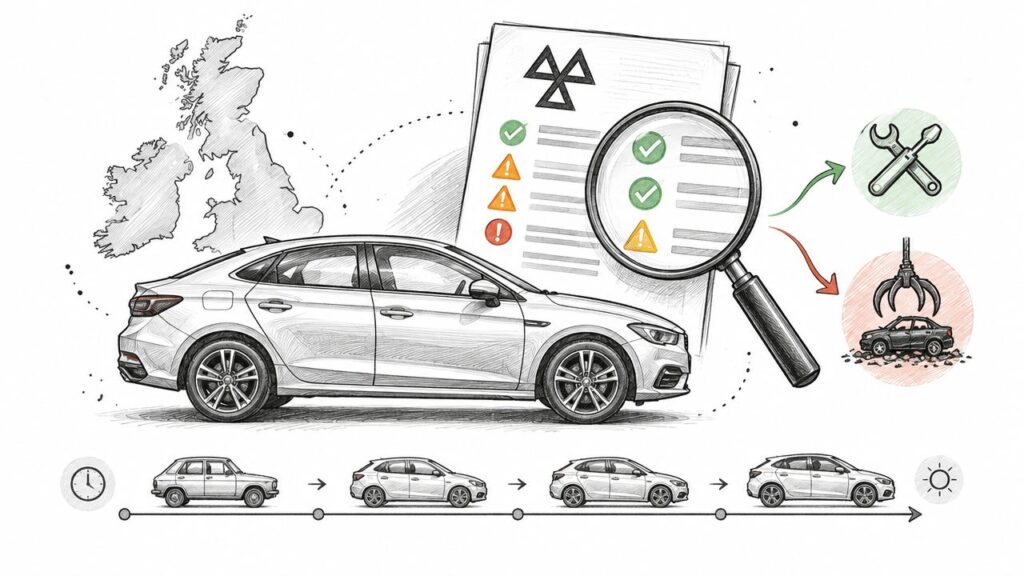
The useful bit is that the government record isn’t a fluffy summary, it’s the car’s documented test life. The official MOT history service shows past test outcomes, recorded mileage, failure items, advisory notices, and the next MOT due date using only the registration number, and it reaches back to 2005 for cars, motorcycles, and vans in Great Britain, with Northern Ireland coverage from 2017 in the API dataset (GOV.UK MOT history service, DVSA anonymised MOT tests and results dataset). That matters because the UK’s MOT record is deep enough to show whether a car has been patched, abused, or maintained properly.
Table of Contents
- Why Every UK Driver Needs an MOT History Check
- How to Perform a Free MOT History Check Online
- Decoding the MOT Certificate and Test Results
- Understanding Defect Categories and Advisory Notices
- Using MOT History to Decide Between Repair and Scrapping
- Selling or Scrapping a Car with a Failed MOT
- Frequently Asked Questions About UK MOT Records
Why Every UK Driver Needs an MOT History Check
A seller can talk a good game. A shiny polish, a fresh air freshener, and a reassuring “it’s always been looked after” don’t tell you much once the first bill lands. The MOT history check UK gives you the part most buyers and owners never get from a quick glance, a long, official record of how the car has behaved over time.
The record tells you what the bodywork won’t
A car can look clean and still have a rotten history. The government’s MOT service lets you see recorded mileage, failure items, advisory notices, and the date the next MOT is due from the registration number alone (GOV.UK MOT history service). That makes it more useful than a visual inspection, because it shows what happened at the test lane, not what someone wants you to believe on the forecourt.
If you’re buying, the check stops you trusting a tidy interior over hard evidence. If you already own the car, it shows whether the latest failure is part of a wider pattern or just a one-off fault that’s worth fixing. If you’re deciding whether to sell or scrap, it tells you whether the car has enough life left to justify more money.
Practical rule: never treat a seller’s confidence as evidence. Treat the MOT record as evidence, then judge the seller’s story against it.
The reason this matters is simple. The official MOT history API covers a huge stretch of digital recordkeeping, and DVSA’s anonymised dataset includes all MOT tests and outcomes from the computerised system onward (DVSA anonymised MOT tests and results dataset). In plain English, the UK has made vehicle condition more transparent than most owners realise. Use that transparency before you spend a pound on repairs or purchase.
Don’t buy blind and don’t repair blind
A used car with a clean-looking body can still hide repeated failures and mileage weirdness. A tired car with an ugly MOT record can still be worth saving if the defects are normal wear items and the numbers make sense. The problem is not the failure itself, it’s the story the failures tell.
That’s why this check is fundamental. It combines compliance, mileage verification, and maintenance history in one public record, and the service pages also let you download current and previous MOT certificates and see what failed at each test (GOV.UK MOT history service). That gives you a factual basis for deciding whether a car deserves a repair, a negotiation, or a one-way trip out of your driveway.
How to Perform a Free MOT History Check Online
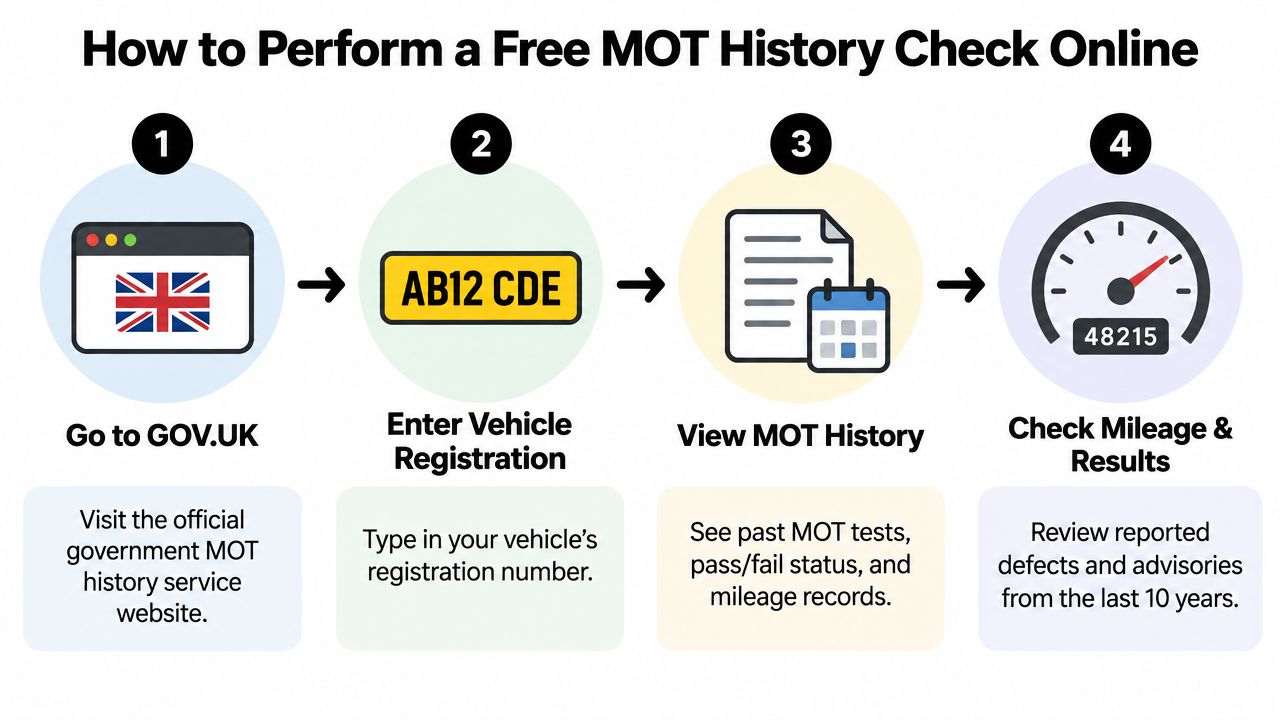
Start with the registration number. That’s it. You don’t need a chassis decoder, a paid account, or a salesman hovering over your shoulder. Go to the official government MOT history service, enter the plate, and the system returns the car’s recorded test trail, including passes, failures, advisories, mileage, and the next due date (GOV.UK MOT history service).
Use the government service first
The best way to do it is brutally straightforward.
- Go to GOV.UK. Use the official MOT history page, not a cloned page or a random checker with poor data.
- Enter the registration number. The service is designed to work from the vehicle reg alone.
- Review the test timeline. Check every pass, fail, advisory, and mileage reading.
- Save the records. The service supports downloading current and previous MOT certificates, which is handy when you’re comparing what a seller told you against what the car has been through (GOV.UK MOT history service).
The depth is the point. The history available for most light vehicles in Great Britain runs back to 2005, the year the system was computerised, and the official API covers cars, motorcycles, and vans from that point onward (DVSA anonymised MOT tests and results dataset). That’s not a shallow consumer lookup. That’s a long-running compliance record.
Treat the free check as your first filter
Use the free MOT history check before you get emotionally attached to a car. If the history is messy, you’ve saved yourself a viewing or a repair bill. If it’s clean, you still need to inspect the vehicle properly, but you’ve already ruled out the obvious nonsense.
The official record also shows what parts failed at each test, which is exactly what you need if you’re trying to decide whether a car is mechanically tired or just in need of normal maintenance (GOV.UK MOT history service). That’s the practical advantage. It turns a vague “looks alright” judgement into something you can use.
Decoding the MOT Certificate and Test Results
A pass means the car met the standard on the day. It doesn’t mean the car is healthy in the everyday sense. A fail doesn’t automatically mean the vehicle is finished either. The value is in the pattern, not the badge.
Read the mileage as a timeline, not a number
Mileage entries are one of the most useful parts of the record because they show how the car has aged. A steady climb usually fits normal use. A sudden drop, a flat stretch that makes no sense, or a sequence that looks disconnected from the vehicle’s age is a red flag you shouldn’t ignore.
That’s where the MOT history check earns its keep. The system lets you see recorded mileage at each test and the full sequence of test outcomes, so you can compare what the seller claims with what the car has been reporting year after year (GOV.UK MOT history service). A decent car has a believable story. A dodgy one usually leaves odd gaps.
Look at where the tests were done
The test station history matters more than many realise. A car that keeps appearing at the same test station with the same kinds of faults isn’t telling you a happy story. It may be perfectly repairable, but it’s also showing you that the owner has been managing the vehicle by reacting to failures instead of preventing them.
A clean-looking car with a messy MOT trail is usually more expensive than it first appears.
When the history shows repeated visits and recurring failure items, that’s not a minor detail. It’s evidence that the underlying condition is deteriorating or that the vehicle has been kept just alive enough to keep moving. That’s a very different proposition from a car with one isolated issue and a sensible repair history.
Use the certificate as a document, not a trophy
The government service supports downloading current and previous certificates, which helps when you need to cross-check what failed and when (GOV.UK MOT history service). If you’re already holding the paper MOT certificate, compare it with the online record. If they don’t line up in a way that makes sense, stop and investigate.
A pristine record usually has three things in common, steady mileage, limited repeat defects, and test outcomes that match the age and use of the car. A heavily repaired one often shows the opposite, repeat advisories, recurring failures, and an ownership history that looks like constant damage control. That’s the difference between a car that’s been maintained and one that’s been limping along.
Understanding Defect Categories and Advisory Notices
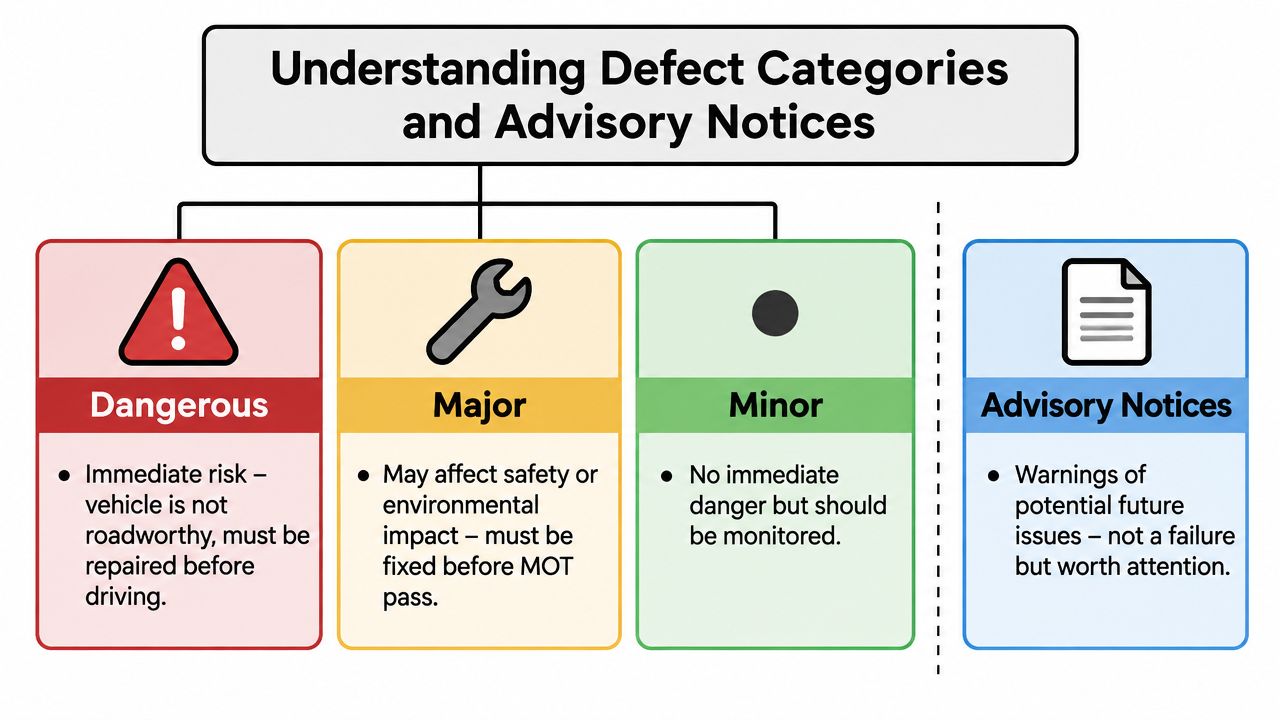
Not every MOT failure carries the same meaning. Some defects are nuisance items. Some are serious. Some are so severe that you should stop treating the car as a normal road vehicle until it’s repaired. DVSA is clear that major defects may prejudice safety or the environment, while dangerous defects are direct and immediate risks to road safety or the environment (MOT inspection manual for private passenger and light commercial vehicles).
Know the difference before you spend money
Here’s the useful distinction.
- Dangerous defects: the vehicle is not roadworthy in that state, and it must be repaired before it’s driven again.
- Major defects: the fault must be fixed before the vehicle can pass the MOT, and DVSA treats it as a safety or environmental issue.
- Minor defects: these do not fail the MOT on their own, but they still tell you wear is starting to show.
- Advisory notices: these are warnings, not failures, but they’re often the first sign that a part is approaching trouble.
The inspection manual also places many structural, corrosion, exhaust, bumper, and body-panel problems into these categories when rigidity or occupant protection is compromised (MOT inspection manual for private passenger and light commercial vehicles). In practice, that means rust and damage around the structure are not cosmetic trivia. They’re engineering issues.
Tyres are the kind of problem people underestimate
One hard lesson from the market is that severe MOT defects often come from ordinary wear items. Aviva says defective tyres account for 60% of dangerous MOT defects (Aviva dangerous MOT defects report). That should change how you read a failure. A tyre-related danger is not “just rubber”. It can be the difference between a small outlay and a much wider maintenance bill.
Rule of thumb: a dangerous defect is a stop sign. A major defect is a repair bill. An advisory is a warning that the bill is coming.
Don’t ignore advisory notices
Advisories are where owners get lazy. They’re easy to dismiss because the car still passes. That’s a mistake. A list of advisories on suspension, tyres, brakes, corrosion, or exhaust components often shows the car is moving from “manageable” to “expensive” long before it fails.
The point isn’t to panic over every note. The point is to ask whether the advisories are isolated wear items or the start of a pattern. If they repeat, the car isn’t getting better. It’s telling you where the money will go next.
Using MOT History to Decide Between Repair and Scrapping
Most owners get it wrong. They ask a false question, “Is it legal?” or “Can it pass?” The better question is, “Does it make financial sense to save this car?” A car can be repairable and still not be worth repairing.
Judge the pattern, not the single failure
DVSA’s Great Britain MOT testing data shows that in Q1 2025/26, cars, vans and passenger vehicles up to 12 seats had 9,808 tests in one published category, with a 25.76% initial fail rate and a 21.29% final fail rate after rectification at the test station (DVSA MOT testing data for Great Britain). That tells you something practical. A fail record alone does not condemn a car. Plenty of faults are fixed and the vehicle goes on.
The question is whether the defects are recurring, worsening, or dangerous. If the history shows one clean repair followed by steady passes, that’s one thing. If it shows the same kinds of failures coming back again and again, you’re looking at a car that’s consuming money instead of preserving value.
Use a simple decision matrix
| MOT History Indicator | Likely Scenario | Recommended Action |
|---|---|---|
| Single isolated failure, then clean passes | A normal repairable issue | Fix it if the car is otherwise sound |
| Repeated advisories on the same wear item | Deferred maintenance building up | Price the repair properly before committing |
| Dangerous defect or structural corrosion | Immediate safety concern | Repair only if the vehicle has clear value left |
| Multiple repeat failures across years | Pattern of neglect or ageing out | Stop pouring money into it |
| Clean MOTs but unusual mileage behaviour | Possible tampering or poor record integrity | Investigate before buying or repairing |
| Failures plus rising cosmetic and mechanical wear | End-of-life signs | Consider scrapping rather than sinking more cash in |
If the failure is emissions-related, the economics get very specific very quickly, so it’s worth reading a focused guide on that exact problem, car failed MOT on emissions, before you decide whether to repair or cut your losses.
Be brutal about repair economics
My advice is simple. If the car needs repeated work on safety items, structure, or multiple systems at once, stop treating it like a keeper. A vehicle that has already become a rolling list of advisories and repeat faults usually eats more money than it returns in useful service.
If the car is otherwise solid and the defect is localised, repair it. If the MOT history reads like a long-running maintenance battle, cut your losses. Don’t let sentiment inflate a dead car’s value.
Selling or Scrapping a Car with a Failed MOT
Once you’ve decided the car isn’t worth repairing, the next mistake is trying to force a private-sale miracle. A failed-MOT vehicle attracts time-wasters, lowball offers, and people who want you to ignore the obvious. That’s not a strategy. It’s a way to turn a bad asset into more hassle.
Private sale is rarely the smart route
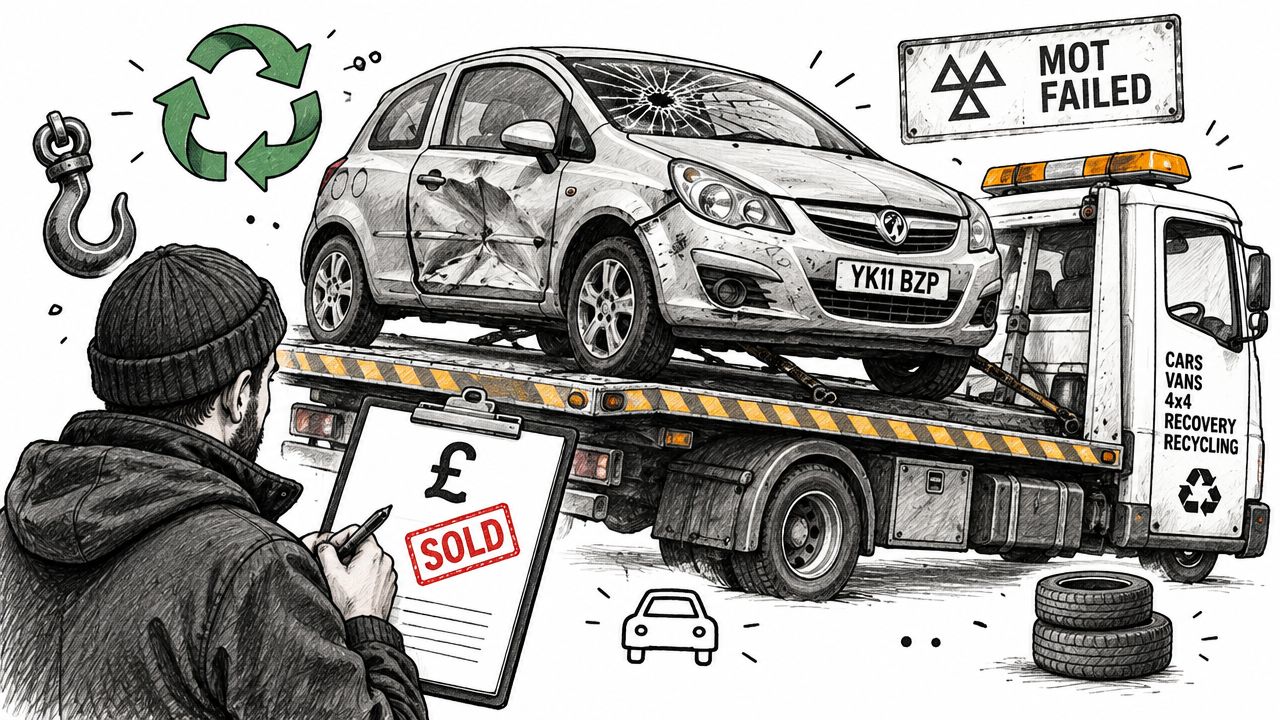
A non-running or damaged car is hard work to sell privately. Buyers will negotiate from a position of maximum suspicion because they know the MOT history, or the lack of a good one, is working against you. Even a roadworthy car with a poor history will be dragged down by the visible faults and the story behind them.
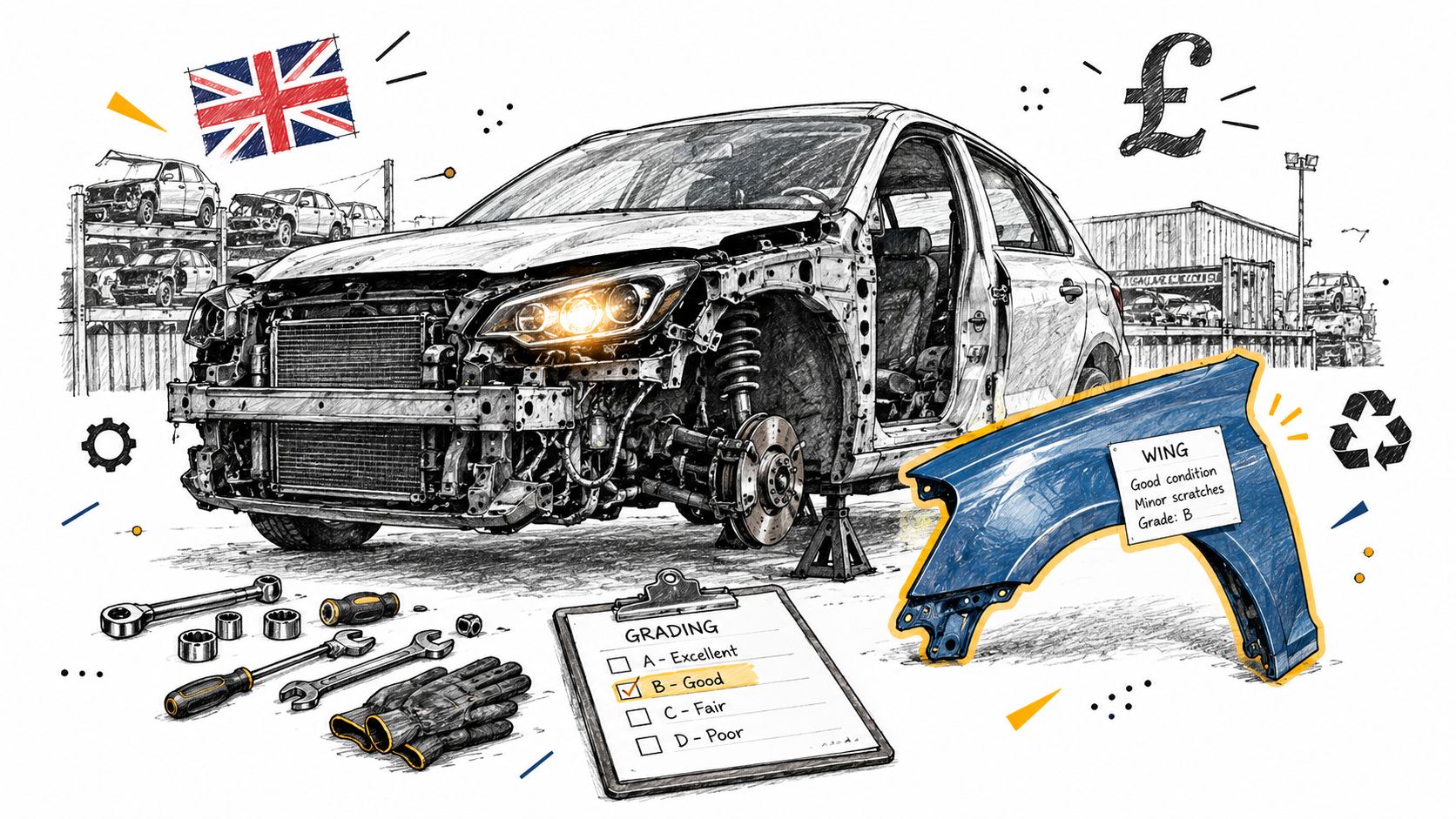
That’s why a professional disposal route makes more sense. A proper vehicle purchasing and recycling service can assess value on more than just scrap metal weight, especially if the car still has salvageable parts or marketable components. The aim is to extract real value from the vehicle, not just punish the owner for wanting rid of it.
Use a proper end-of-life process
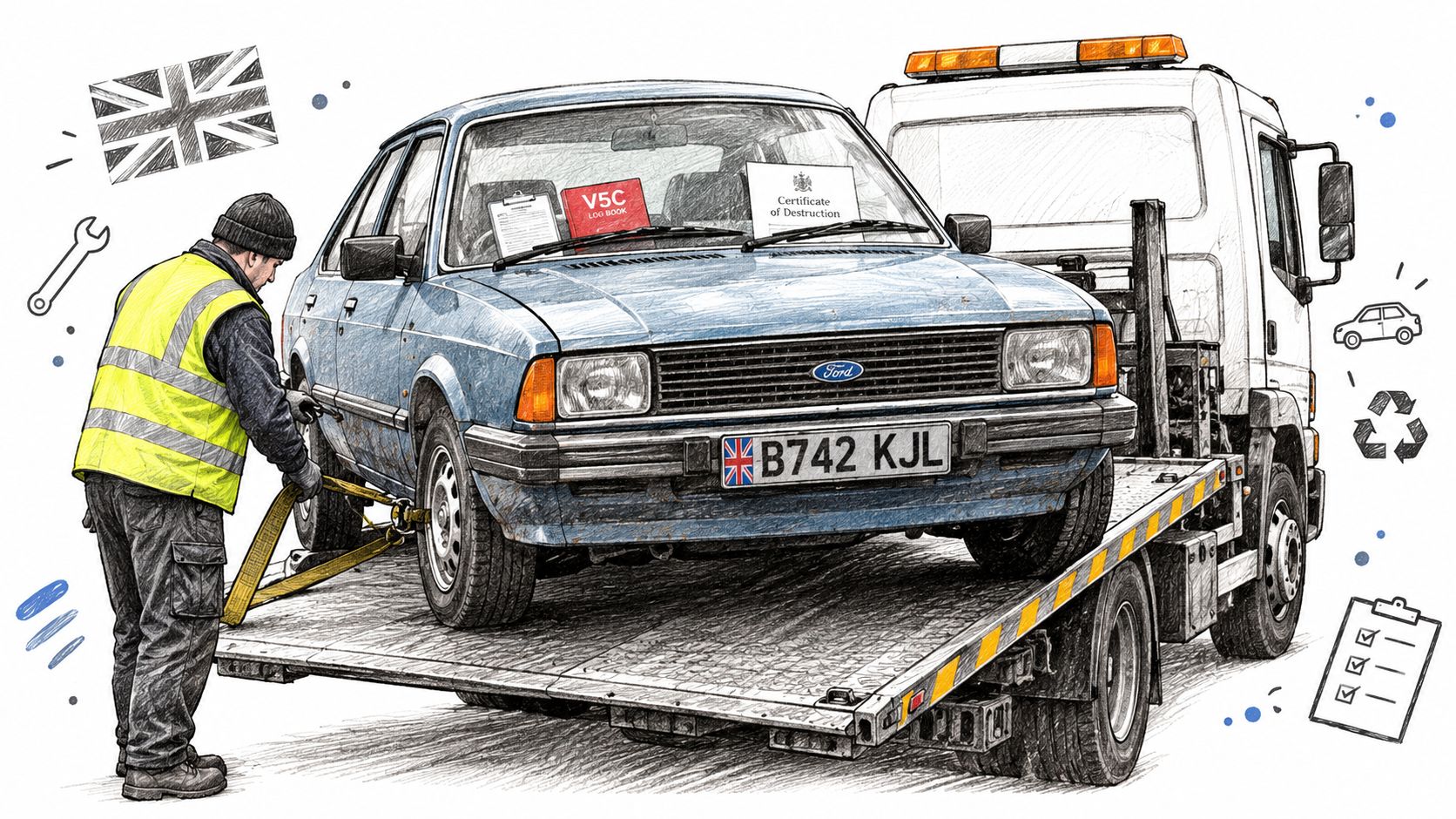
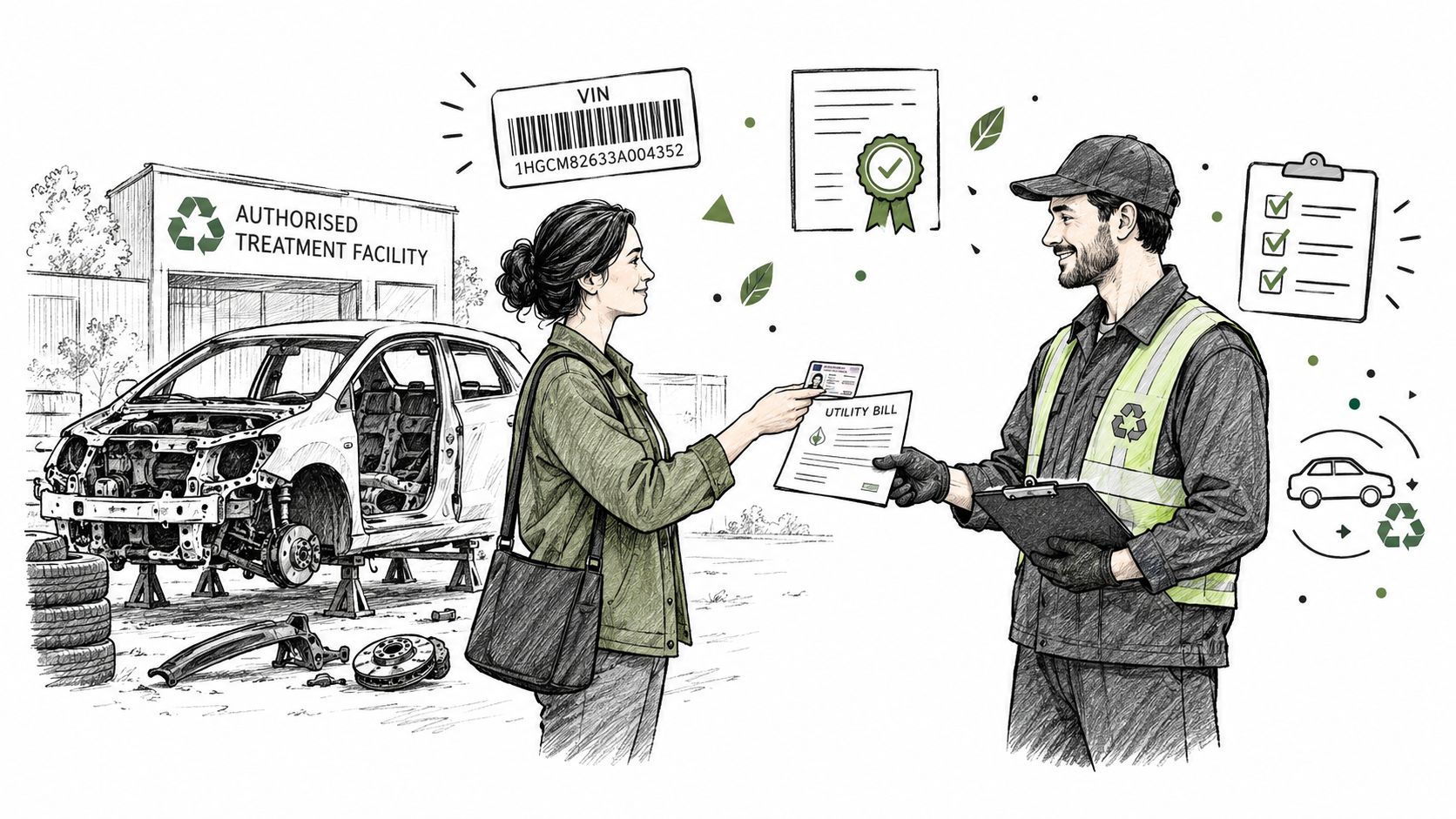
A legitimate vehicle recycling route matters because of the paperwork as much as the money. The owner needs the vehicle handled through an Authorised Treatment Facility, with the right DVLA paperwork and a Certificate of Destruction where appropriate. That’s what closes the loop and protects you from future liability.
There’s also a practical side to it. When a failed-MOT car is collected and processed properly, the owner doesn’t have to babysit the handover or chase uncertain payment. The whole point is to remove the vehicle cleanly and legally, not just dump the headache on someone else.
Later on, watch the handover process carefully and make sure the paperwork is done right. A sloppy disposal can leave you with admin problems you didn’t bargain for.
The main thing is this. Once the MOT history says the car is tired, structurally weak, or constantly failing on expensive items, the smart move is to exit cleanly rather than gamble on another repair.
Frequently Asked Questions About UK MOT Records
What does it mean if the mileage goes backwards?
Treat that as a serious warning sign. A mileage drop between MOT tests can point to a recording error, but it can also indicate odometer tampering, which is exactly why the mileage trail matters in the first place. Don’t brush it off because the car otherwise looks tidy.
Can I get a replacement MOT certificate?
Yes. The government service supports downloading current and previous MOT certificates from the vehicle record, which is the cleanest way to replace missing paperwork (GOV.UK MOT history service). If you need a paper copy, start there before asking a garage to guess at the details.
Can I drive to a pre-booked MOT if the car has failed before?
Yes, but only if the vehicle is still legal to drive. A previous fail doesn’t automatically stop you from using the car to get to a test, but a dangerous defect means the vehicle isn’t roadworthy in that state and must be repaired before it’s driven again (MOT inspection manual for private passenger and light commercial vehicles). Don’t gamble with that distinction.
Should I worry if the car has many advisories but still passes?
Yes, if the advisories repeat. A single advisory isn’t a disaster. A repeated pattern means the car is showing its age and the next failure is probably already on the horizon. That’s when you start asking whether the repair bill still makes sense.
Is a failed MOT the same as the car being scrap?
No. Plenty of failed cars are repairable, and the latest DVSA figures show a sizeable share are rectified at the test station after an initial failure (DVSA MOT testing data for Great Britain). The smart move is to read the defect type, the repeat pattern, and the likely repair cost, then decide with your wallet instead of your hopes.
If your MOT history shows repeated failures, dangerous defects, or repair costs that don’t stack up, stop feeding money into it and move on properly. Scrap A Vehicle handles damaged, failed-MOT, non-running, and end-of-life cars with free nationwide collection, fast payment, and the paperwork done the right way. Get a quote at Scrap A Vehicle and use the car’s history to make a clean, financially sound exit.