You’re probably here because the car on your drive has turned into a decision you keep postponing. It starts innocently enough. A diesel hatchback with another MOT advisory list, a newer car tempting you at the dealer, or a non-runner that’s now doing nothing except losing space and value.
That’s the reality of sell my car UK decisions. Most guides assume you’ve got a tidy, roadworthy car and a patient private buyer lined up. Plenty of owners don’t. They’ve got failed MOTs, body damage, warning lights, patchy history, finance to settle, or buyers who start with “What’s your best price?” before they’ve even seen the car.
The good news is that the UK used car market is deep. The Society of Motor Manufacturers and Traders says the market reached 7,807,872 transactions in 2025, up 2.2% year on year, with 2,020,990 transactions in Q1 2025 alone, which tells you there’s serious buyer activity across the country, not just for showroom stock (used car market data summarised here). That matters because even tired cars often have more than pure scrap value if they’re roadworthy or repairable.
What matters now is choosing the right route, getting paid safely, and cutting off your liability the second the car leaves your hands.
Table of Contents
- Choosing the Right Route to Sell Your Car in the UK
- Documents and Paperwork You Need Before Listing
- Preparing Your Car to Maximise the Offer
- Comparing Offers Across UK Selling Channels
- Viewings, Negotiation and Secure Payment
- DVLA Notification and Liability After the Sale
- Final Checklist and Common Mistakes to Avoid
Choosing the Right Route to Sell Your Car in the UK
A 12-year-old hatchback in Manchester usually fits one of four routes. Stop pretending there are ten clever options. There aren’t. There’s private sale, dealer part-exchange, online instant-sale buyer, and scrap or salvage through an ATF.
Match the route to the car
If the car is clean, runs properly, has a decent MOT and no awkward history, private sale still pays the most in many cases. You’re selling at retail level, not trade level. The downside is obvious. You deal with tyre-kickers, no-shows, negotiation, and payment risk.
If the car is tired but usable, instant-sale buyers and dealers are often the sensible middle ground. You’ll usually take less than a strong private sale, but you cut out a lot of nonsense. This route suits ordinary cars with cosmetic marks, average history, or short MOTs.
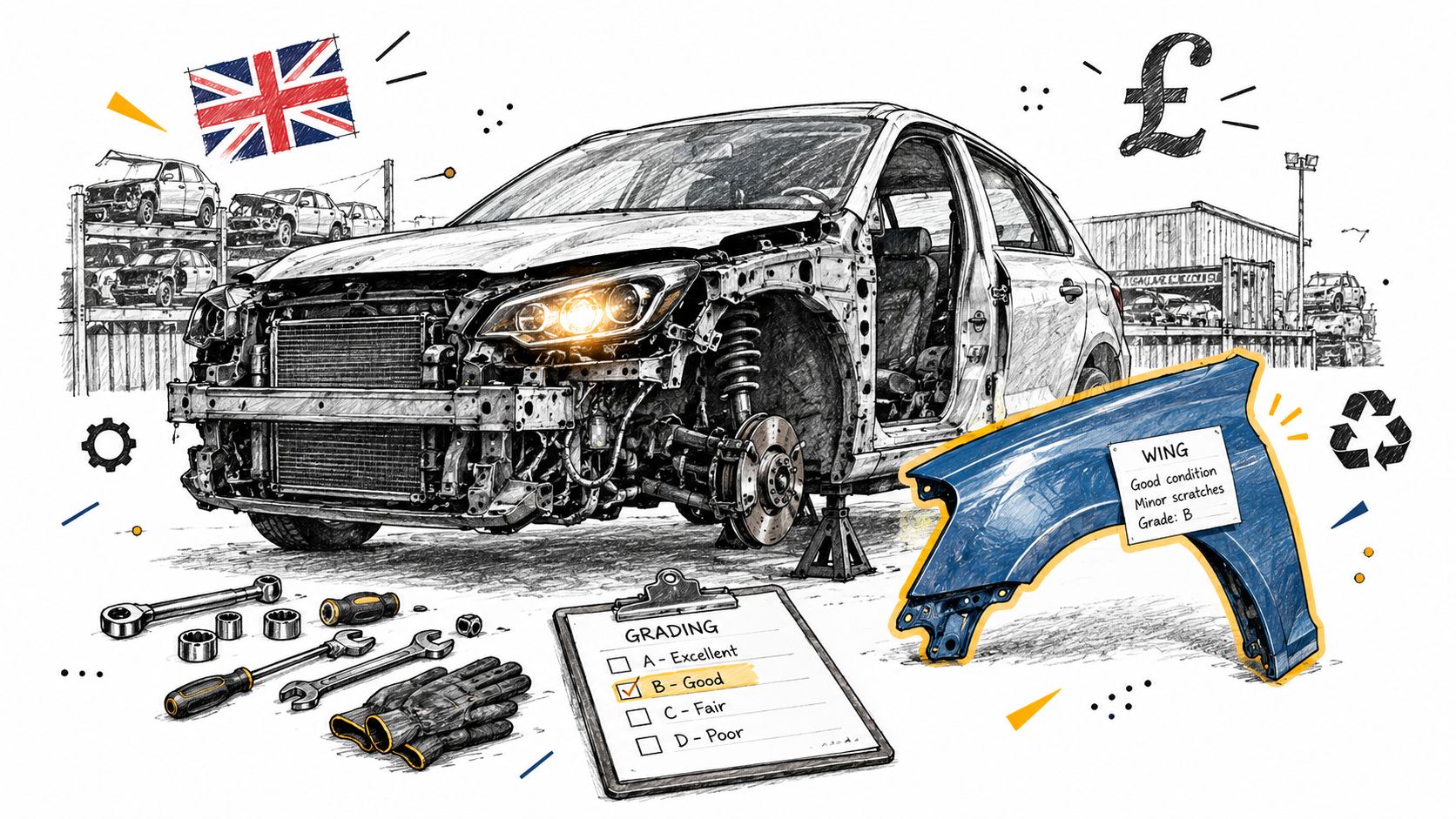
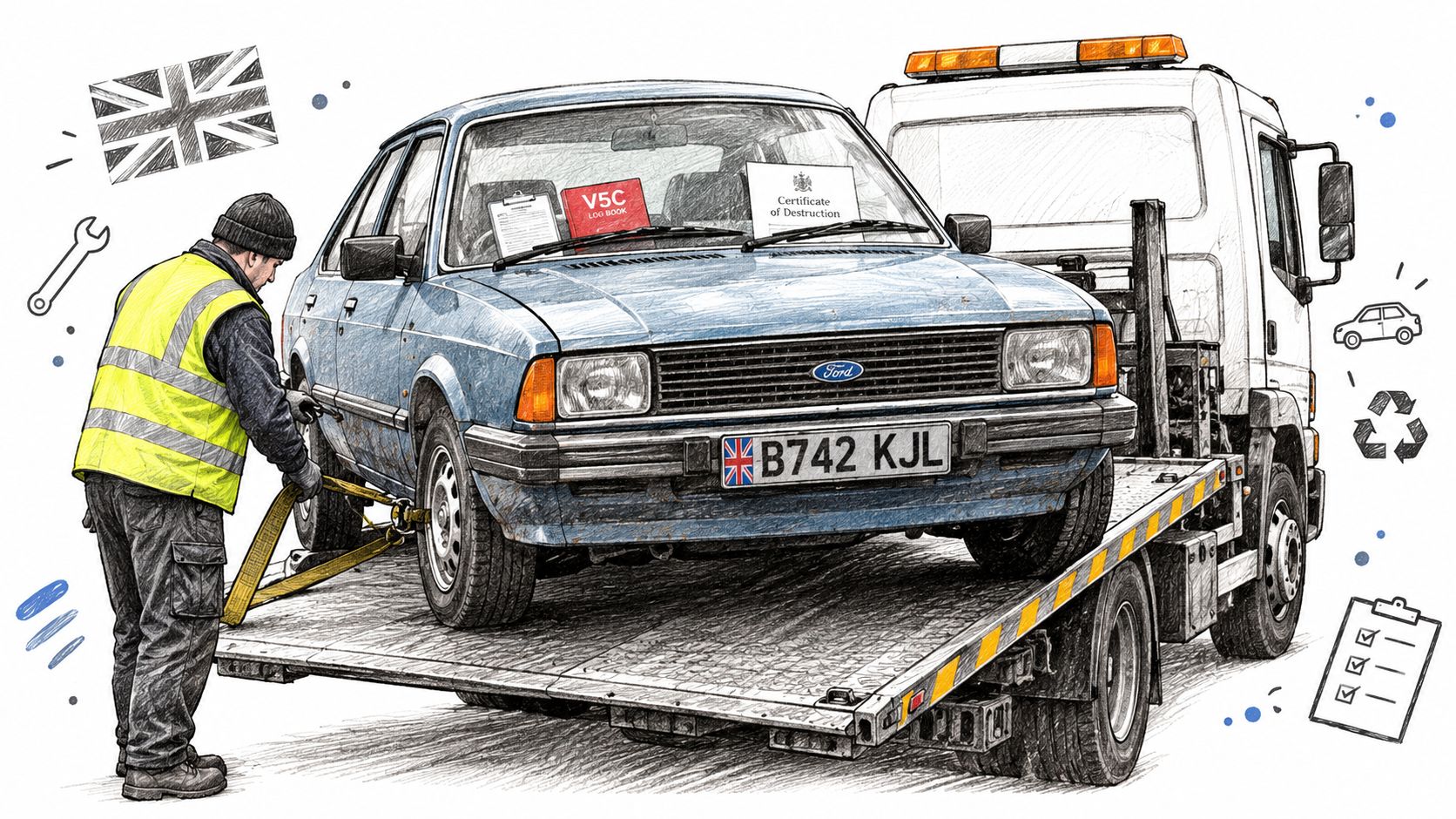
If the car has failed its MOT, has damage, won’t start, or has become a project nobody sensible wants, stop trying to dress it up as a private sale. Move it through a salvage buyer or an Authorised Treatment Facility. That’s the grown-up option.
Practical rule: The rougher the car, the more dangerous and time-wasting a private sale becomes.
There’s one exception people miss. If you’re buying another car on finance, a dealer can sometimes make a stronger part-exchange offer because the whole deal matters to them, not just the value of your old car. If there’s a manufacturer bonus, target to hit, or margin on the replacement vehicle, they may outbid the obvious trade quote.
UK car selling routes at a glance
| Route | Best For | Typical Payout Speed | Main Trade-Off |
|---|---|---|---|
| Private sale | Clean, roadworthy cars with good history | Usually slower | Highest effort, strongest price potential |
| Dealer part-exchange | Owners replacing the car immediately | Fast | Lower offer than top private money |
| Online instant-sale buyer | Running cars that aren’t perfect | Fast | Convenience costs money |
| Scrap or ATF salvage | Non-runners, MOT failures, damaged cars | Fast once booked | Lowest ceiling, but often the only realistic route |
My blunt recommendation
Use private sale when the car presents well and the effort is justified. Use a dealer or instant-sale route when the car sits in that awkward middle ground where buyers start finding faults to chip away at your asking price. Scrap or salvage anything that’s become a liability.
Trying to force the wrong route is where sellers lose money.
Documents and Paperwork You Need Before Listing
A buyer is ready to pay. Then they ask for the V5C, service records, MOT history and proof the finance can be cleared. If you start rummaging through drawers at that point, expect the offer to drop or the deal to die.
Get the paperwork sorted before the advert goes live. That applies whether you are selling a tidy Fiesta privately, handing a mediocre diesel to an instant-buying service, or moving a damaged non-runner to a salvage yard.
The documents that actually matter
Start with the V5C log book. Check the registration, VIN, your name and your address. If any of it is wrong, fix it now. Buyers read admin problems as risk, and trade buyers often freeze the transaction until the details match.
If the V5C is missing, deal with it properly. You still have to tell DVLA when you sell the vehicle, and GOV.UK sets out the seller’s legal responsibilities here: official selling responsibilities guidance.
Then gather the rest in one place:
- MOT details: The paper certificate matters less than the online record and test number, but have both if you can.
- Service history: Dealer stamps are nice. Invoices are what count.
- Receipts for major work: Timing belt, clutch, gearbox repair, brakes, tyres, battery, DPF work. These support your asking price.
- Photo ID and proof of address: Many car buying firms want this before they release payment.
- Finance settlement letter or account details: If there is outstanding finance, know the exact settlement figure and expiry date before anyone turns up.
A spare key belongs in this pile too. It is not paperwork, but it affects value enough to treat it like one of the documents.
What makes buyers cut their offer
Bad paperwork costs real money because it gives the buyer an easy excuse to chip you.
The usual problems are predictable:
- Outstanding finance with no clear settlement plan: Serious buyers pause here.
- V5C details that do not match your ID: That can stall a same-day sale.
- Patchy history with no invoices: “Serviced regularly” means nothing without proof.
- Missing key, locking wheel nut or radio code: Small issue, easy deduction.
- Warning lights and vague explanations: If you cannot prove the fault is minor, the buyer prices in the worst case.
My rule is simple. If a buyer discovers an admin problem you should have fixed in advance, accept that you created the discount.
Keep a written receipt or bill of sale with the date, time, registration, sale price, and both parties’ details. The V5C does not protect you on its own.
For damaged, written-off and scrap-bound cars
Generic selling guides go soft. Paperwork matters just as much when the car is headed for salvage.
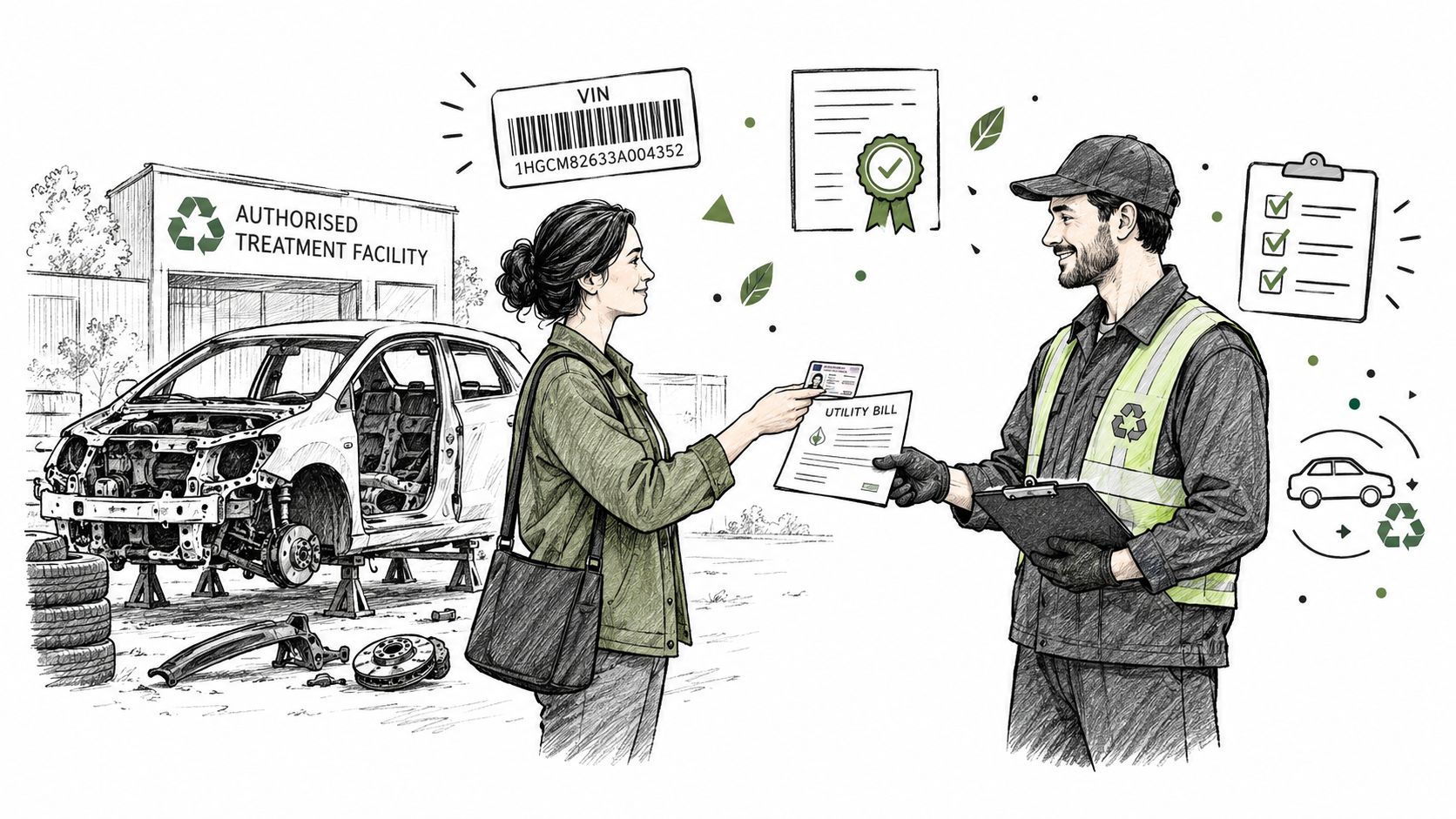
If the car is damaged, off the road or fit only for parts, you still need to prove you have the right to sell it. Salvage buyers and ATFs will want keeper details, ID, and enough information to identify the vehicle properly. If insurance has been involved, keep any write-off or engineer paperwork as well. It helps explain the car’s status and stops arguments later.
Do not oversell a broken car as an easy private sale if the paperwork is thin. A roadworthy used car buyer might tolerate a missing invoice or two. A cautious buyer looking at a non-runner usually will not. That is exactly when low-ball offers start, and that is exactly when you walk away unless the route is trade, salvage or scrap.
Preparing Your Car to Maximise the Offer
Most sellers either do nothing or do far too much. Both are mistakes. You want a 24 to 48 hour prep job, not a restoration project.
What actually lifts the offer
Start with the basics. Wash the car properly, including wheels and arches. Vacuum the interior, clear rubbish, wipe the dash, and remove dog hair if you’ve got it. First impressions still matter, even to trade buyers.
Then clear your digital footprint. Delete paired phones, home addresses in the sat-nav, call logs, and any saved profiles in the infotainment system. People forget this constantly.
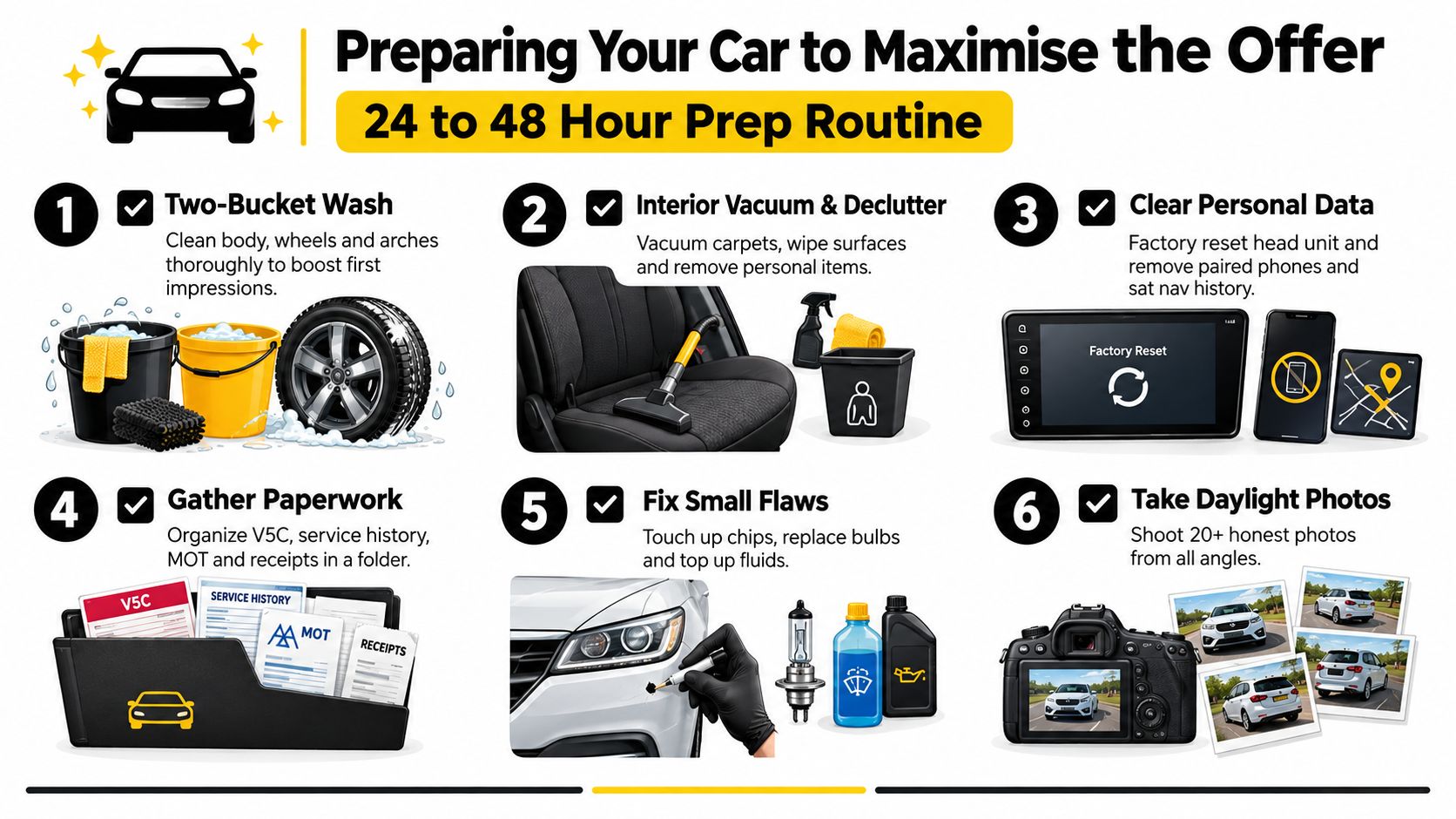
Small fixes can pay back well when they stop a buyer using them as ammunition:
- Replace blown bulbs: Cheap, quick, and buyers always notice.
- Top up fluids: Screenwash, coolant where appropriate, and oil if needed.
- Sort the worst tyre issue: If one tyre is obviously poor, fix that problem first.
- Gather the history neatly: A messy folder looks like a neglected car, even when the work was done.
What usually wastes your money
Don’t start spending like you’re preparing a concours car.
Skip these unless the vehicle is valuable.
- Premium valets: A basic clean is enough for most cars.
- Cosmetic touch-up obsession: On low-value cars, bodywork spend rarely comes back.
- Brand new number plates: Nice to have, not value-driving.
- Big mechanical jobs without a clear return: If the repair bill is painful, the right answer may be to sell as-is.
If the fix costs more than the buyer will add to the offer, keep your wallet shut.
A decent prep routine can turn a dismissive first offer into a fairer one because the buyer sees a car that’s been owned properly, not dumped in panic. The point isn’t perfection. It’s removing easy reasons to chip the price.
Take honest daylight photos once you’ve cleaned it. Good images pull better enquiries. Bad ones attract bargain hunters.
Comparing Offers Across UK Selling Channels
Sellers either think clearly or get mugged off. The route that pays best for a tidy hatchback is often the wrong route for the same car with a failed MOT.
The simple comparison
A clean supermini with sensible mileage and a straight history is still worth exposing to private buyers. But the second that same car picks up a failed MOT, obvious repair needs, or cosmetic damage, private interest drops and haggling gets vicious.
Trade and valuation signals matter too. CAP HPI market reporting cited by Car Dealer says sold volumes received into CAP were about 6.5% higher in Q1 versus the same period last year, while values at the benchmark three-year, 60,000-mile point were still down around -0.8% to -1.0% in the months referenced, with retailer days-to-sell ranging from 29 to 42 days depending on channel (market report summary here). My advice is simple. Compare live offers and sell when the number is acceptable. Waiting for a rebound often backfires.
UK car selling channels compared
| Channel | Typical Offer vs Private | Time to Payment | Haggling Room | Best For |
|---|---|---|---|---|
| Private sale | Usually highest if the car is clean | Slowest | High | Desirable, roadworthy cars |
| Dealer part-exchange | Usually lower, but can be competitive in a changeover deal | Fast | Moderate | Drivers replacing the car now |
| Instant-sale online buyer | Mid-pack for convenience-led selling | Fast | Low to moderate, but watch collection-day deductions | Tired but usable cars |
| Scrap or salvage operator | Lowest ceiling, but realistic for dead or damaged cars | Fast | Very low | Non-runners, MOT failures, damaged vehicles |
When the route flips
Use a normal hatchback as the example. In good condition, private sale is often the right first shot. The same car with a failed MOT, warning lights, and obvious repair bills becomes a different product. At that point, speed and certainty beat chasing a fantasy retail number.
That’s also the point where specialist buyer networks matter. A service such as this guide to getting the best online car selling price is useful because it helps you compare whether your car has resale, salvage, or pure scrap value before you commit.
Exactly when to walk away from a low-ball offer
Walk away when the buyer opens with faults you already disclosed and still uses them to demand a steep drop. That buyer was always going to grind you down.
Walk away when an instant buyer quotes one number online, then starts inventing fresh deductions on collection for wear that was visible in your photos. Some adjustment for genuine undisclosed damage is fair. Fishing for margin on arrival isn’t.
If the car is worth proper money retail, don’t fold to the first trader-style bid. If the car is rough, don’t waste a week defending a number the market won’t support.
Viewings, Negotiation and Secure Payment
A buyer messages at 8pm, says they can come tonight, asks for your lowest price before they’ve seen the car, then arrives talking fast and flashing a banking app screenshot. That sale is heading for trouble unless you control it from the first minute.
Private buyers, trade buyers and scrap operators all behave differently at handover, but the risks are similar. Rushed inspections, pressure discounts, dodgy payment claims and missing paperwork catch sellers with clean hatchbacks and damaged non-runners alike. Treat every viewing as a transaction that needs rules.
How to run the viewing properly
Set the ground rules before anyone turns up. Confirm the time, confirm the address, and tell them what they need if they want to drive the car. If they object to basic checks, don’t entertain them.
Have the car ready and accessible only when you are present. Keep the keys on you. Keep the V5C, MOT details, service history and receipts ready to show, but don’t leave documents lying around for someone to photograph or pocket while you’re distracted.
For a running car, meet at home or in a sensible busy place with decent visibility. For a non-runner or damaged car, daylight matters even more because buyers will use poor conditions as an excuse to chip away at the price. If someone insists on a random industrial estate or wants to collect from somewhere that makes you uncomfortable, refuse and move on.
For test drives, check the licence and insurance first. If they are not insured to drive your car, you drive and they sit in. If they do drive, go with them.
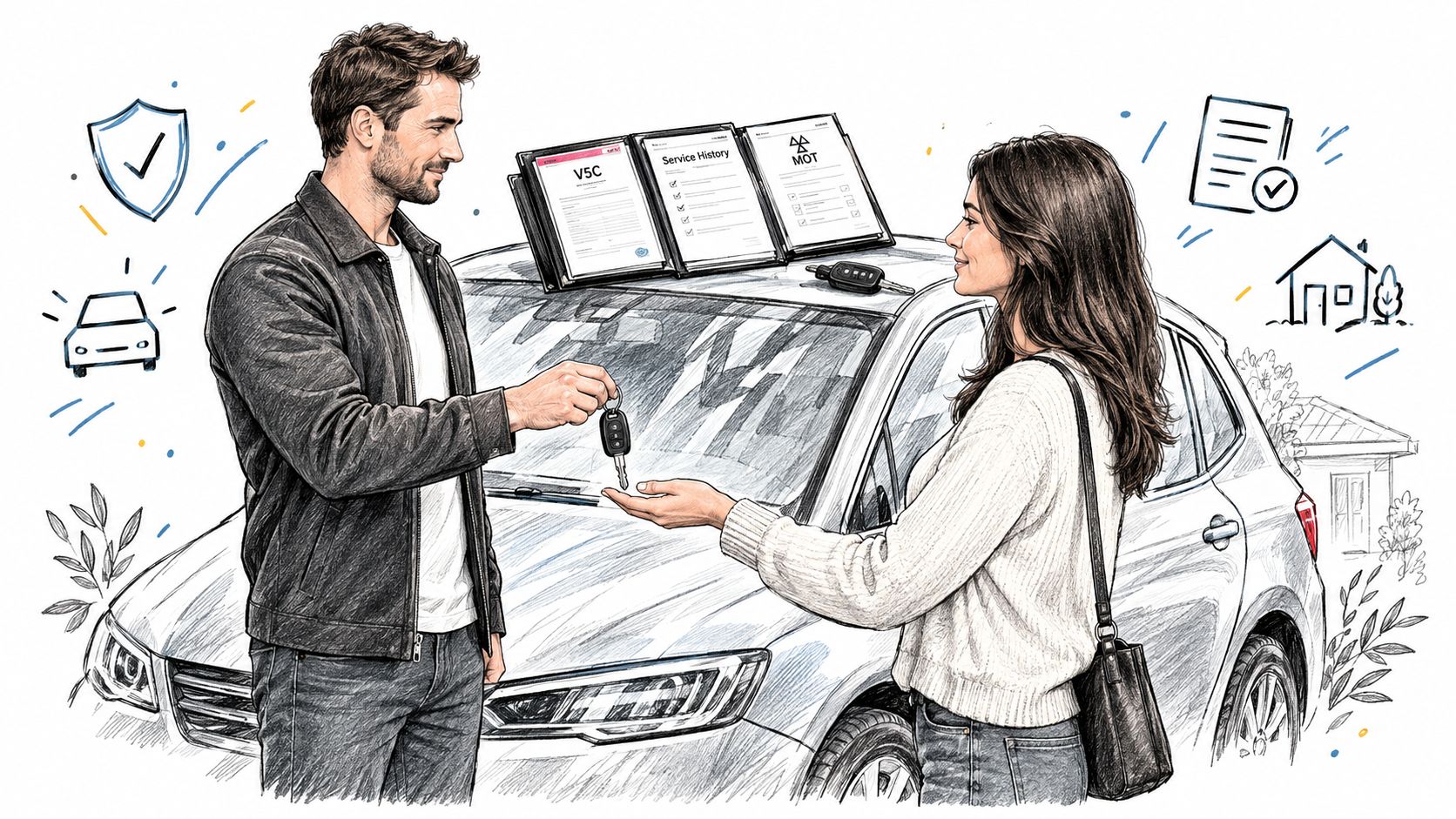
Keep one key on your person at all times.
How to negotiate without being pushed around
The best negotiating position is simple. Describe the car accurately before the viewing, price it with a bit of room, and stop talking once the buyer has seen it.
A fair buyer will point to real issues and make a reasoned offer. A chancer will repeat the same minor faults, talk as if they are doing you a favour, and try to create urgency. Don’t reward that behaviour.
Use a simple rule. Genuine new information can justify a price change. Faults already shown in the advert cannot.
- If they raise a real issue you missed: adjust if the point is fair
- If they attack faults already disclosed: hold your number
- If they start grinding over every stone chip: they are testing your nerve
- If they demand a big drop before proper inspection: end it
- If they say “cash today” like it changes everything: it doesn’t
If the offer drops below what the car is realistically worth, walk away. That applies just as much to a roadworthy Fiesta as it does to a failed-MOT diesel being bought for salvage. The only time to accept a lower figure is when the buyer is offering speed and certainty on a car that would otherwise cost you time, recovery fees or further depreciation.
Payment that actually protects you
For any serious amount, use bank transfer and verify it in your own banking app or by calling your bank. Do not rely on a screenshot. Do not rely on an email confirmation. Do not rely on “it’s pending”.
UK Finance reported £629.3 million stolen in the first half of 2025 across 2.09 million confirmed fraud cases, according to UK Finance’s fraud update. That is the backdrop for every private vehicle sale in Britain. Payment checks are not paranoia. They are basic procedure.
Cash is only workable for low-value cars, and even then it creates counting, counterfeit and deposit problems. Cheques are worse. A cleared UK bank transfer is the cleanest option.
Use this handover checklist:
- Record the buyer’s full name and address
- Write the date and exact time of handover
- Note the agreed price
- Write down the odometer reading
- Have both parties sign a receipt
- Confirm the funds are in your account before the car, keys and documents leave
One more rule. If the buyer is sending a friend, transporter or recovery truck, the payment still has to be cleared before collection. That point gets missed with scrap, salvage and non-runner sales, where sellers are often so relieved to get the car gone that they relax at the worst possible moment. Don’t.
DVLA Notification and Liability After the Sale
This is the bit too many sellers treat as admin. It isn’t. It’s the line between a completed sale and fines, letters, penalties, and grief landing on your doormat weeks later.
Notify DVLA after handover
Only tell the DVLA once the buyer has physically taken the vehicle. Not when they say they’re coming later. Not when they send a deposit. Handover first, notification second.
The online keeper-change route is now the normal way to do it. The service has processed more than 40 million transactions since launch, and over 70% of keepers used it in the prior 12 months, which shows that digital notification is the dominant route for staying compliant (DVLA process summary here).
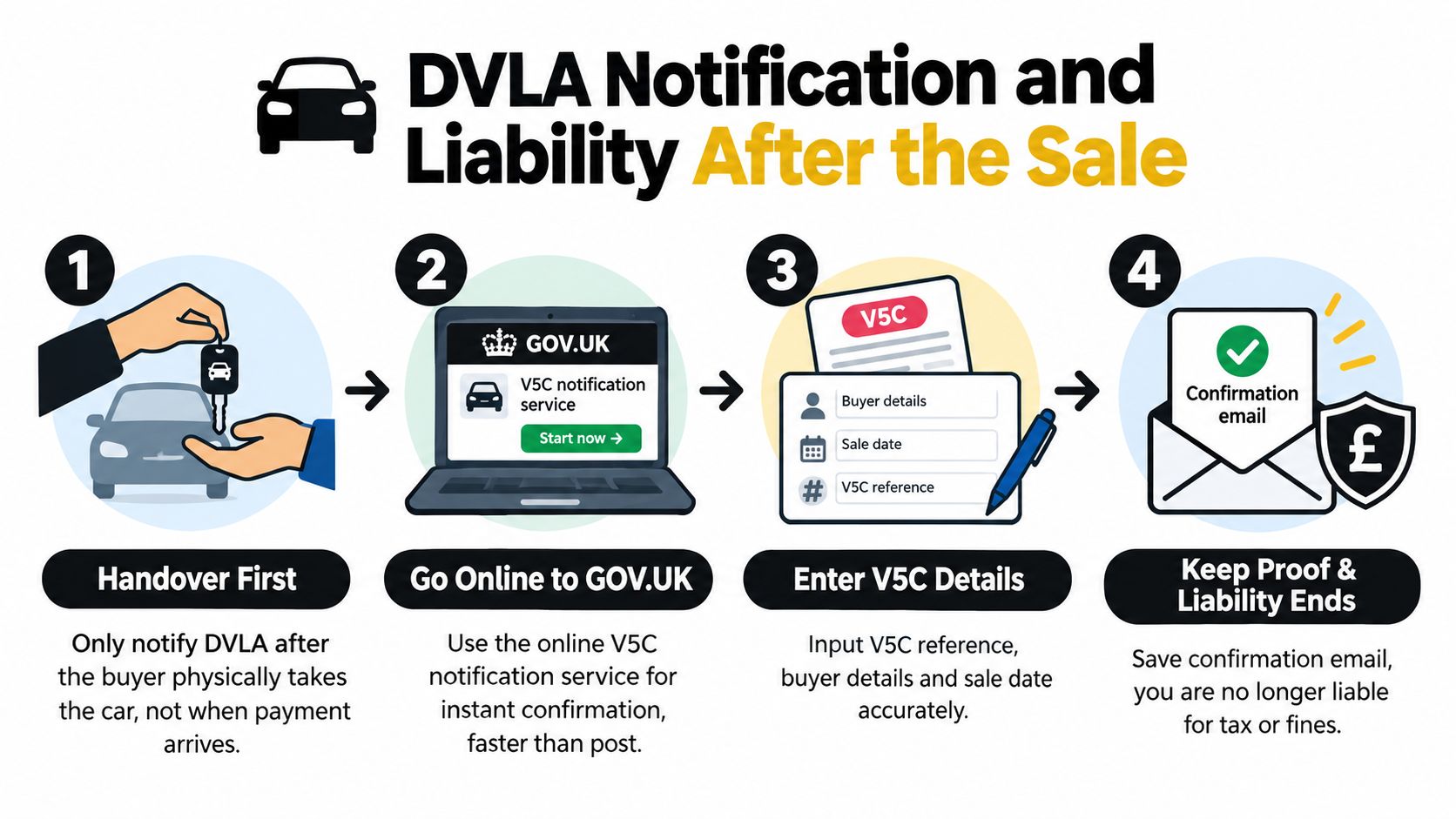
You’ll need the V5C details and the buyer’s full information. Enter them carefully. Sloppy details create future arguments.
Proof matters more than people think
Keep your confirmation and keep your signed receipt. If parking fines, speeding notices or other correspondence turn up later, your proof-of-sale paperwork is what gets you out of the mess quickly.
Older advice still confuses people about slips and sections of the V5C. Ignore outdated habits and follow the current digital route where possible. It’s cleaner, faster, and leaves a clearer record.
This short video gives a useful visual walkthrough of the process.
The risk if you get lazy
If you only half-do the paperwork, you leave the door open to trouble. The seller’s legal duty is to notify the DVLA when they no longer own the vehicle. Until the record updates, liability and correspondence can stay attached to the old keeper.
Record the exact handover time on your receipt. That one detail can save a lot of arguing if a ticket or offence lands on the same day.
Final Checklist and Common Mistakes to Avoid
Most sellers don’t need more information. They need a firm decision rule.
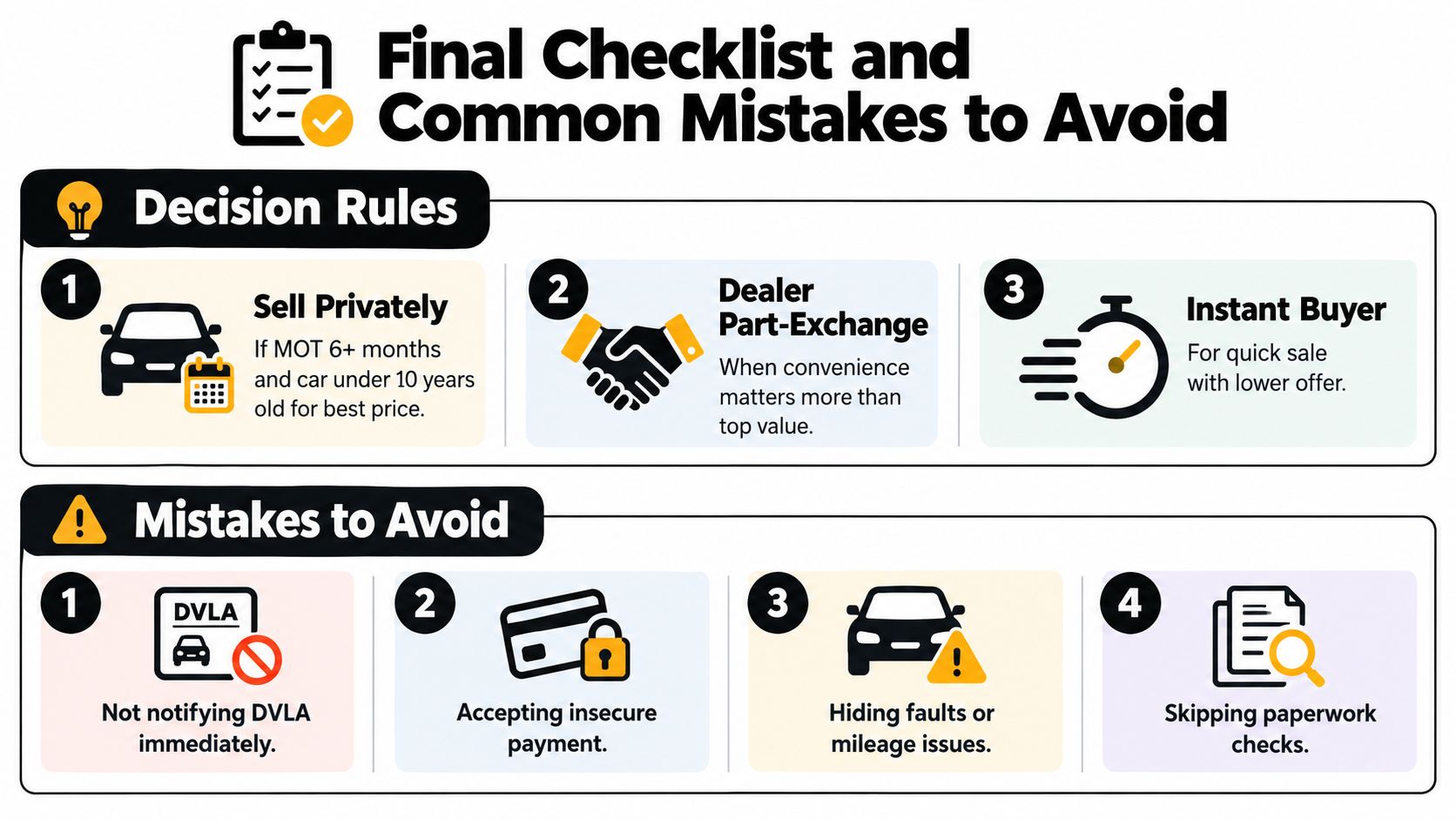
If the car is tidy, roadworthy and easy to retail, try private sale first. If convenience matters more than squeezing every last pound, part-exchange it. If it’s awkward, tired, damaged or hard to shift, use an instant buyer or salvage route. If it’s at end of life, stop pretending it’s a retail car and move it through a licensed disposal route.
Decision rules that keep you out of trouble
Use these as your final filter:
- Private sale suits clean cars: Good history, presentable condition, proper buyer appeal.
- Dealer part-exchange suits busy owners: Especially if you’re changing cars immediately.
- Instant buyers suit speed: Useful when the car runs but won’t impress private buyers.
- Scrap and salvage suit terminal cases: Non-runners, serious MOT failures, crash damage, end-of-life vehicles.
For that last group, a service such as Scrap A Vehicle is one factual option. It offers online valuations, free UK collection, bank payment on collection, and handles DVLA paperwork through licensed ATF channels for damaged, end-of-life and roadworthy vehicles.
Mistakes that cost sellers money
These are the errors I see over and over:
- Handing over keys before cleared funds arrive: Never do it.
- Trusting a banker’s draft from someone you don’t know: Too much risk, too little upside.
- Lying about faults or history: Buyers find out, then either walk or punish your price.
- Forgetting insurance and tax implications: Don’t assume anything transfers automatically.
- Leaving DVLA notification until later: That “later” is how trouble starts.
The sale isn’t finished when the buyer smiles and drives off. It’s finished when payment, paperwork and DVLA notification are all done.
Your pre-handover check
Before the car leaves:
- Take final photos of the car
- Photograph the odometer
- Remove personal items and data
- Hand over service records and spare key
- Complete and sign a receipt
- Verify payment in your bank
- Submit the DVLA notification
- Keep copies of everything
Keep your proof of sale for a good while after the transaction. If anything comes back later, paperwork wins arguments fast.
If your car has failed its MOT, won’t start, has accident damage or just isn’t worth the hassle of a private sale, Scrap A Vehicle gives you a straightforward route with an online quote, collection, payment by bank transfer and the DVLA paperwork handled properly. If you want the car gone without the usual buyer drama, it’s a sensible next step.