That dead hatchback on your drive has become an expensive garden ornament. You’ve got two quotes on your phone, neither buyer has explained what collection includes, and the higher figure looks tempting until you wonder whether it’ll be cut down when the transporter arrives. That uncertainty is exactly why you should compare scrap car prices before handing over the keys.
Scrap value isn’t determined by weight alone. The vehicle’s class, make and model, reusable parts, completeness, location, collection method and current market conditions all affect the final payout. A sensible comparison also protects you from paperwork trouble, surprise deductions and buyers who promise a Certificate of Destruction but can’t provide one.
Table of Contents
- Why Comparing Scrap Car Prices Matters in the UK
- What Actually Drives Your Scrap Car Valuation
- How to Get and Compare Instant Online Quotes
- Price Benchmarks by Vehicle Class and Collection Method
- Spotting Hidden Fees and Risky Offers
- Negotiation Tactics and Timing Your Sale
- Legal Protections Every Seller Should Understand
- Your Scrap Car Price Comparison Checklist
Why Comparing Scrap Car Prices Matters in the UK
The UK end-of-life vehicle market is large, with annual scrappage estimated between 1.6 million and 2 million vehicles. Another report records 933,700 deregistered vehicles in 2025 and an average scrappage age of 17 years. The underlying market figures are available in the UK scrap car report.
That volume gives sellers choice, but it also makes quotes harder to judge. Collection firms, local yards, Authorised Treatment Facility networks and online lead generators can all price the same vehicle differently. Their costs, access to reusable parts and collection arrangements vary, so the first offer is only a starting point.
Practical rule: Treat the first quote as a benchmark, not a decision.
Price history also shows why timing matters. One large UK dataset records an average paid value of £133 in 2014, falling to £85 in 2016, then rising to £386 in 2022 before easing to £219 in 2026. The average payout therefore more than quadrupled from the 2016 low to the 2022 peak, before dropping by about 43%, according to Remove My Car’s scrap car data.
Metal weight provides only the baseline. A complete vehicle with sought-after parts, a valuable vehicle class or an easy collection postcode can beat a heavier car that a buyer expects to dismantle or transport at greater cost. That is the comparison angle many sellers miss, and it can shift the payout by hundreds of pounds.
A weak comparison can also leave you with a deduction after collection, a reduced price following inspection, missing DVLA paperwork or continued liability for a vehicle you believed had left your ownership.
Check every offer against:
- The current market average.
- Comparable vehicles in the same class and model range.
- Collection, drop-off and postcode terms.
- Whether reusable parts are included.
- The buyer’s ATF status and Certificate of Destruction process.
Use those checks to classify each quote as strong, ordinary or suspiciously low before accepting it.
What Actually Drives Your Scrap Car Valuation
A scrap buyer is pricing several value streams at once. The steel shell provides a baseline, but parts, logistics and legal processing decide whether the offer stays near that baseline or moves substantially higher.
Six factors that shape the bid
Vehicle weight and metal value set the floor. A heavier vehicle contains more recoverable steel and other materials, but weight-only yards usually stop there. That approach can undervalue a complete car with parts that still have a resale market.
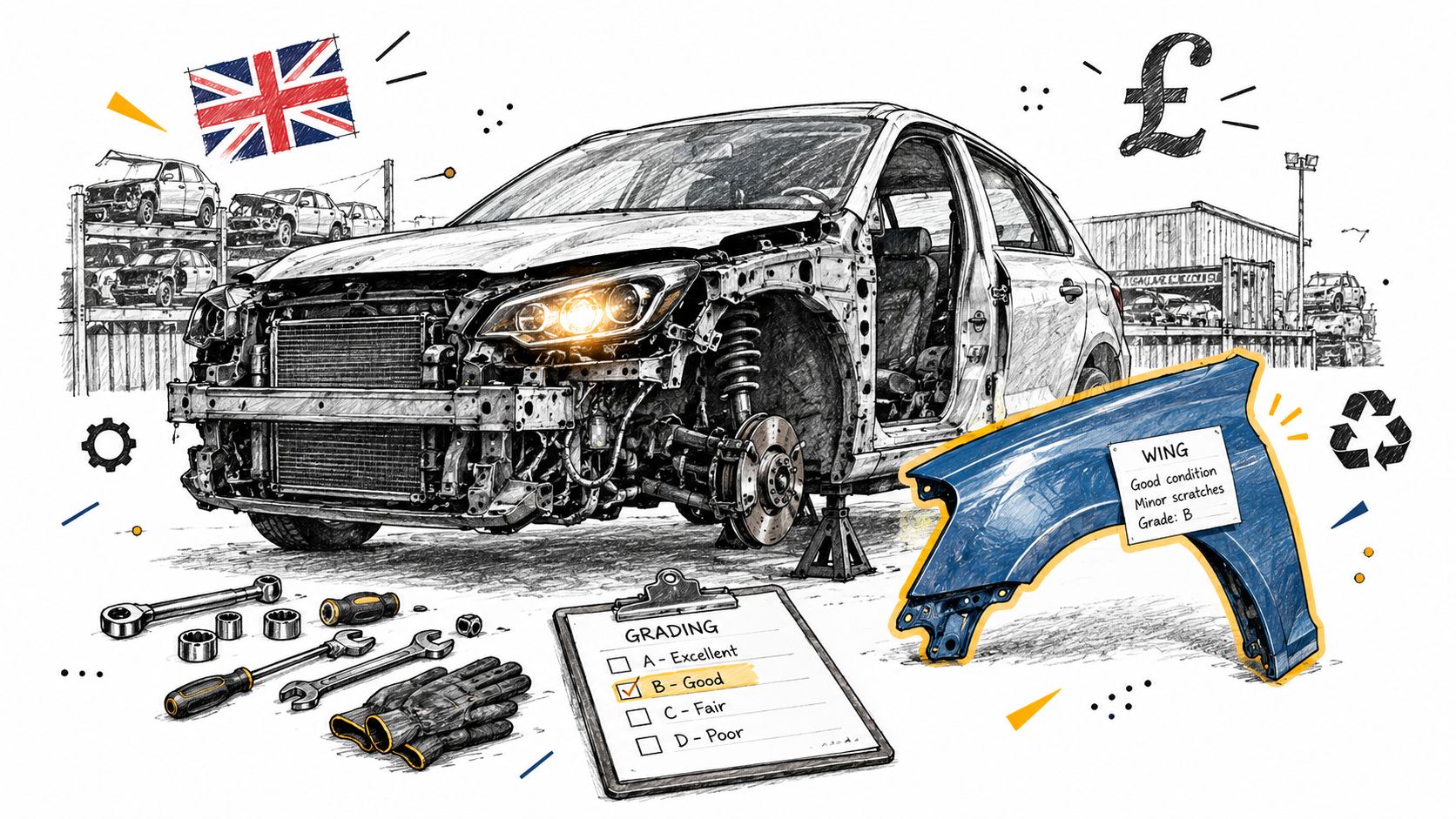
Salvageable components can change the calculation. Catalytic converters, alloy wheels, engines, gearboxes, electronic control units, infotainment systems, airbags and undamaged body panels may be worth more to a dismantler than their contribution to the crushed shell. A common model with strong aftermarket demand can therefore attract a better offer than a heavier but obscure vehicle.
Vehicle class matters because size affects both metal content and component demand. A small city car, a family hatchback, an estate, an SUV and a van sit in different valuation bands. The UK scrap car price update from CarTakeBack shows why broad national averages can hide a wide spread, including observed values from £241 to £279 over the last 12 months and a full sample ranging from £0 to £8,059 across 461,991 vehicles.
Make and model can be decisive. One recent UK dataset records an average paid value of £333 for Land Rover compared with £214 for Ford, while Range Rover reaches £402 in the same source. Another report places Land Rover at £283, illustrating that the benchmark changes by dataset and vehicle mix. Use make-by-make scrap car values to test whether your car deserves more than a generic rate.
Condition and completeness affect what the buyer can recover. A complete non-runner with its catalytic converter, wheels, interior, keys and major electronic units intact may outperform a stripped vehicle. A car that starts and rolls is easier to load, while a burnt-out, flooded or dismantled vehicle demands more handling.
Location and collection method influence the net payout. A buyer must account for driver time, fuel, loading equipment, transport distance and ATF handling. Drop-off can produce a higher gross offer because the seller removes some of that logistical cost.
| Valuation factor | Typical impact on offer | Example adjustment |
|---|---|---|
| Vehicle size and weight | Establishes the metal baseline | Larger cars and vans generally command higher category benchmarks |
| Salvageable parts | Can lift the offer beyond metal value | Intact catalytic converters, electronics and body panels add recoverable value |
| Make and model | Changes parts demand | Land Rover and Range Rover benchmarks exceed some mainstream-car averages |
| Condition | Affects loading and reuse | A complete, rolling car is easier to process than a stripped or burnt vehicle |
| Collection location | Changes transport economics | Remote collections may attract a lower net offer |
| Handover method | Alters buyer costs | Drop-off quotes can exceed collection quotes |
Specialist networks often beat weight-only yards because they can dismantle, test and sell usable components before recycling the remaining shell. That’s the central point: your car is not just a pile of metal. It’s a bundle of parts, materials and handling requirements.
How to Get and Compare Instant Online Quotes
Online calculators are useful only when you give every buyer the same accurate information. If one quote says the car runs and another says it’s a non-runner, you aren’t comparing prices. You’re comparing different assumptions.
Follow the same process for every buyer
Prepare the registration number, mileage, MOT status, postcode, exact location, starting condition, rolling condition, key availability and V5C status. Mention missing wheels, catalytic converter removal, accident damage, flood damage or stripped parts before accepting an offer. A buyer can revise a quote when the actual vehicle differs materially from the description.
Submit the same details to at least four sources. Use a mix of a national comparison service, a specialist scrap network, a local ATF-linked buyer and a traditional yard-style collector. You can also run the vehicle through the Scrap A Vehicle instant valuation tool as one comparison point.
Then record each response in a simple grid:
- Headline offer.
- Collection charge or deduction.
- Payment method and timing.
- Whether paperwork handling is included.
- ATF name and Certificate of Destruction arrangements.
- Conditions that allow the buyer to reduce the price.
The advertised figure matters less than the net amount you’ll receive. Ask whether collection is free, whether the price is fixed after the description is verified, and whether payment arrives before the driver leaves.
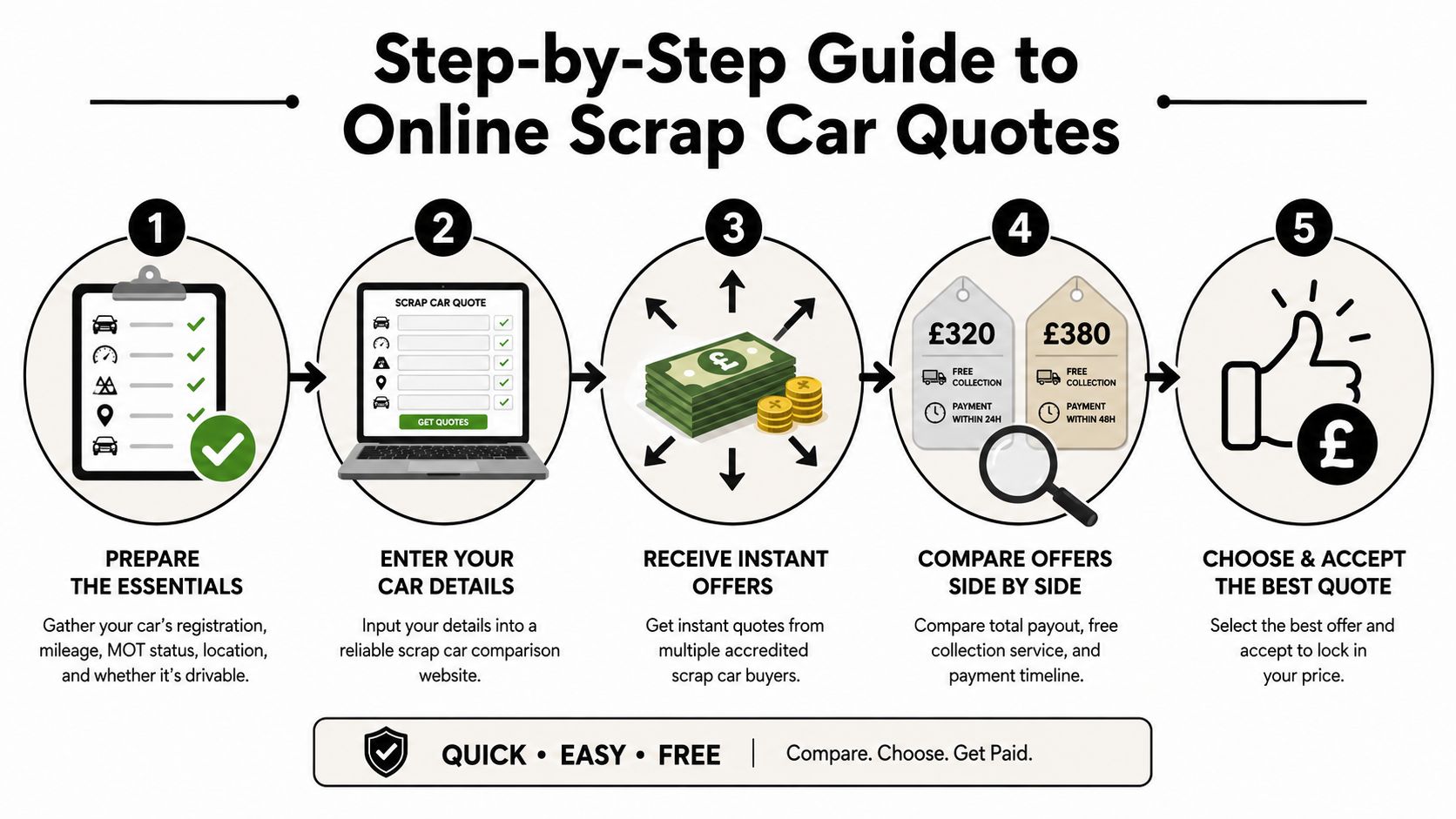
Chase the top two offers within 24 hours and ask each buyer to confirm the same facts in writing. Online prices move with market conditions, so don’t assume a quote will remain open indefinitely. If the buyer refuses to state deductions or gives vague answers about the ATF, remove that quote from your shortlist regardless of its headline value.
Price Benchmarks by Vehicle Class and Collection Method
A single national average gives a poor starting point. Vehicle class, recoverable parts and collection logistics can move the offer substantially, so compare your quote with the range for the vehicle you own.
The Honest John scrap car guide reports typical 2026 values of £145 to £215 for small cars, £195 to £275 for medium family cars, £255 to £355 for large cars and estates, £305 to £455 for SUVs and 4x4s, and £380 to £570 for vans and large SUVs. These are benchmarks, not guaranteed payouts. A complete vehicle with desirable parts can beat a weight-only offer, while missing components or difficult access can reduce it.
| Vehicle class | Free collection (£) | Drop-off at yard (£) |
|---|---|---|
| Small cars | 145 to 215 | 145 to 215 |
| Medium family cars | 195 to 275 | 195 to 275 |
| Large cars and estates | 255 to 355 | 255 to 355 |
| SUVs and 4x4s | 305 to 455 | 305 to 455 |
| Vans and large SUVs | 380 to 570 | 380 to 570 |
Use the same ranges as a baseline for both methods, then adjust for the actual logistics. A separate 2026 comparison found average collection quotes from £165 to £270, while drop-off quotes reached £290. It reported that transport and handling could change the payout by roughly 10% to 15%.
A drop-off figure only wins if the extra money covers your fuel, time and recovery costs. Do not drive an unroadworthy vehicle to save a collection charge. A buyer offering more for delivery may also be shifting the transport burden onto you.
Parts matter as much as metal weight. A complete van, SUV or sought-after model may deserve a stronger offer because engines, gearboxes, catalytic converters and usable panels have resale value. Ask the buyer whether the price reflects salvageable parts, rather than accepting a generic scrap-metal calculation.
Check your result against the monthly benchmark. One UK report placed the current average at £254 across 461,991 vehicles, while another showed an average of £226, with most cars paying between £154 and £302, according to Car.co.uk’s market reporting. A complete SUV, van or high-demand model quoted near the bottom of the small-car range needs a clear explanation.
Spotting Hidden Fees and Risky Offers
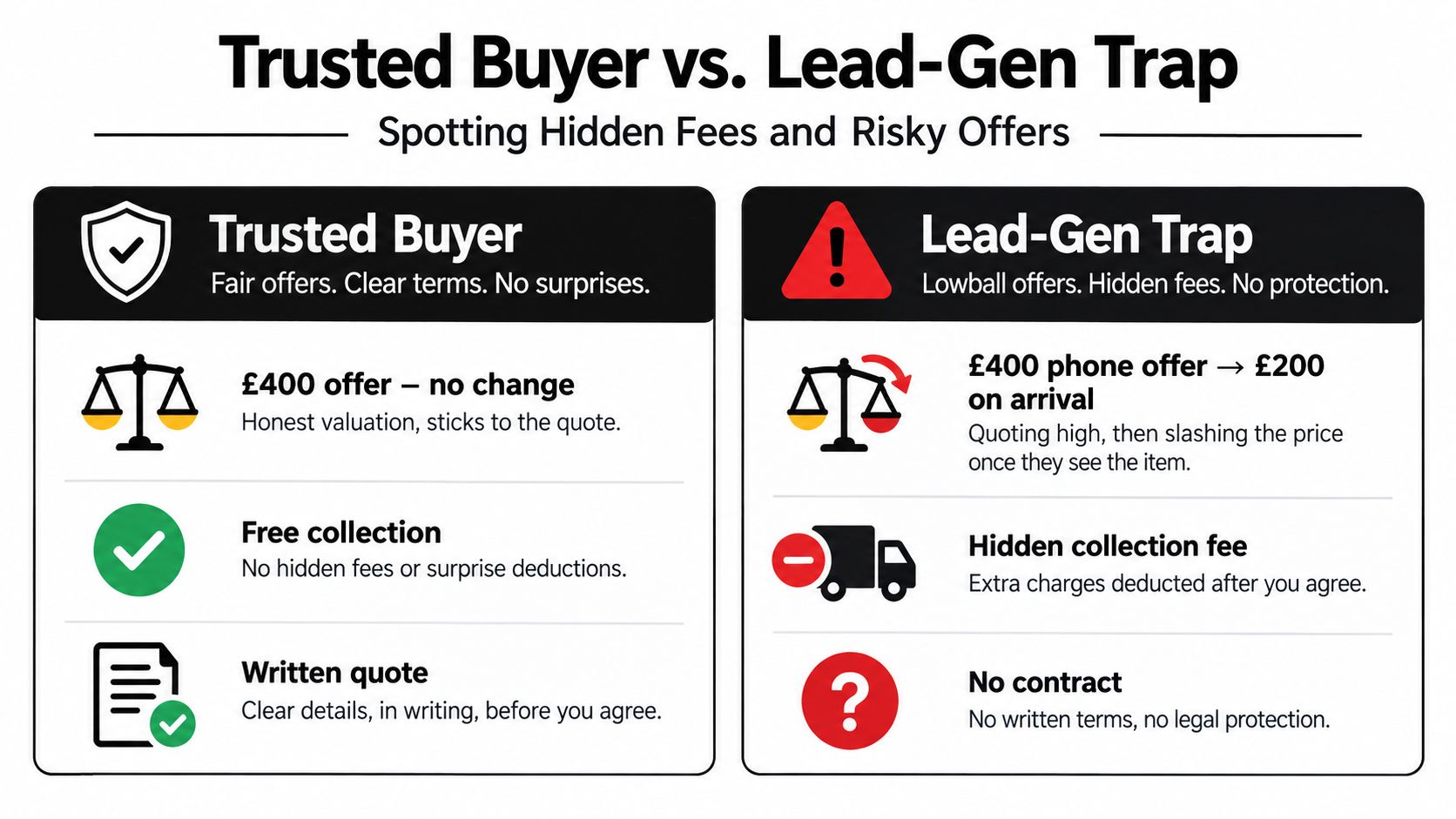
The most dangerous scrap quote is the one that looks excellent until collection day. Some buyers use an attractive headline to win your details, then rely on the inconvenience of a waiting driver to force a reduction.
A credible offer states the vehicle details, total payment, collection terms, payment method and paperwork process. A risky offer leaves room to reinterpret everything.
The warning signs
- The arrival-day haircut: The buyer quotes a strong figure by phone, then halves it after a cursory inspection without identifying a genuine change in condition.
- The unexplained collection deduction: The offer excludes transport, mileage or postcode charges that weren’t mentioned during the quote.
- The invented administration cost: The buyer introduces DVLA, processing or environmental fees after you’ve agreed to collection.
- The cash-only handover: Cash without a proper receipt makes it harder to prove payment, ownership transfer or the agreed amount.
- The missing ATF details: The operator can’t name the Authorised Treatment Facility that will process the vehicle.
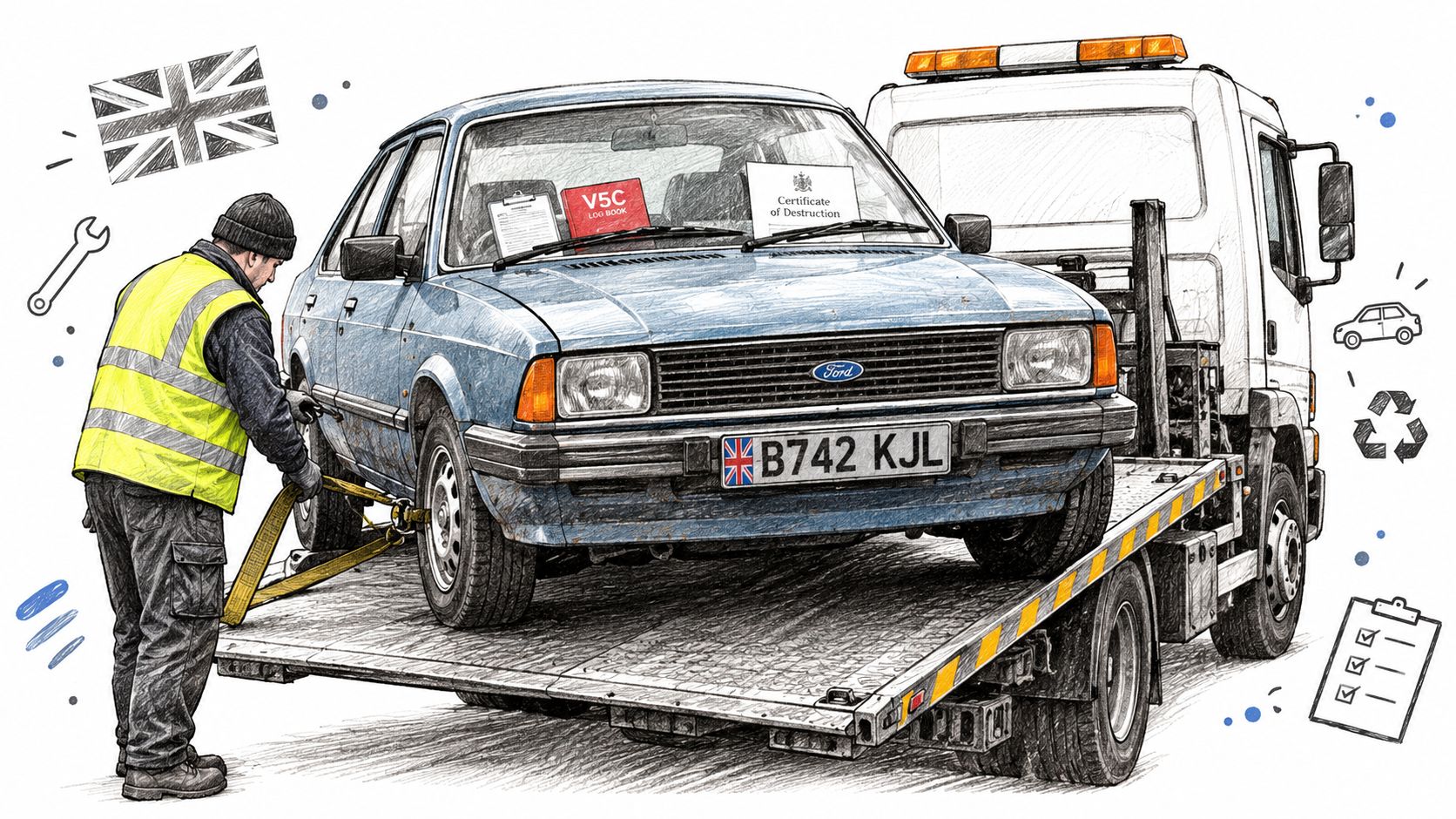
- The paperwork shortcut: The buyer photographs your V5C but doesn’t confirm how the trader slip will reach DVLA.
Only an Authorised Treatment Facility can issue a Certificate of Destruction for an end-of-life vehicle. Without that document, you may remain exposed as the registered keeper, with potential tax, parking or congestion-charge correspondence continuing to arrive.
A fair quote survives contact with the transporter. If the buyer needs to renegotiate, they should show you the specific fact that changed.
Ask for the final price in writing before booking. Confirm that collection costs are included, the vehicle will go to an ATF, and the Certificate of Destruction process is clear. If the buyer applies pressure, refuses written terms or says paperwork can be sorted later, walk away.
Negotiation Tactics and Timing Your Sale
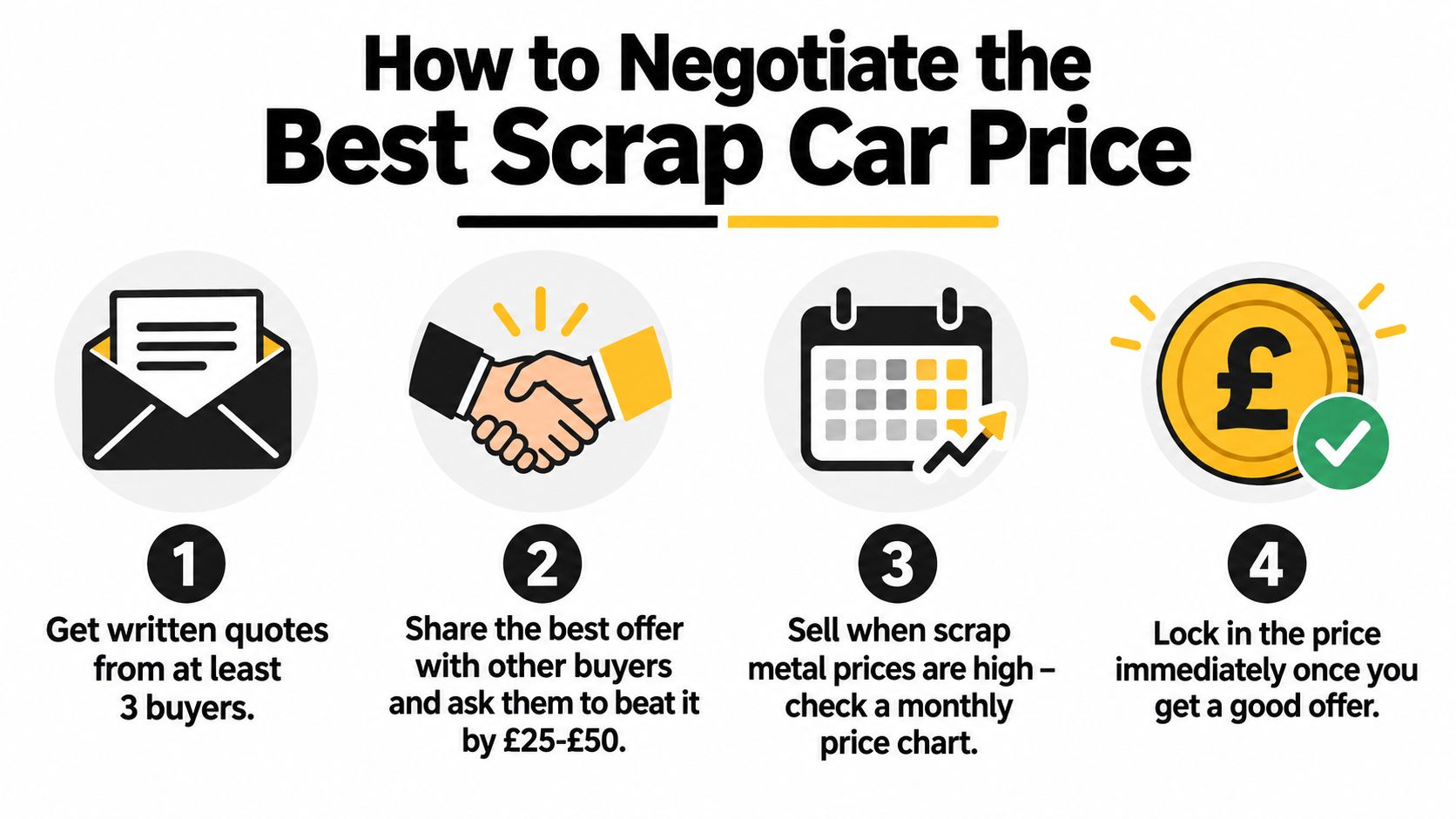
A buyer has offered £250 in writing, while another has quoted £220 by phone. Use the written figure to make the second buyer compete, then compare what each offer includes.
Get the strongest quote in writing and send the same vehicle details to another buyer. State the offer amount and ask whether they can improve it while keeping collection, payment and paperwork terms unchanged. Do not rely on a verbal promise. Written terms make the buyer accountable and give you a firm benchmark for the current UK market.
Timing matters, but seasonal folklore is a poor guide. UK reporting shows monthly averages can vary by £20-£40 within a quarter, so check the current month’s benchmark instead of relying on last year’s figure. The available figures appear in Remove My Car’s scrap price guidance.
Use a simple negotiation script
- Ask the buyer to confirm the net payout, not only the headline quote.
- Share the best written offer with one competing buyer.
- Ask whether the car’s running and rolling condition changes the price.
- Confirm the figure is fixed unless the vehicle description was materially inaccurate.
- Agree the collection slot and payment method before handing over the keys.
A drivable car can be easier to load and route, but any alleged uplift must appear in the booking. Do not repair an end-of-life car to chase a higher scrap quote. Repairs can cost more than the added valuation.
Salvageable parts, vehicle class and collection logistics can move the payout well beyond the scrap-metal figure alone. Compare offers on the same basis, including the car’s condition and location, before choosing the highest net amount.
Use bank transfer at handover and check the amount before the driver leaves. A buyer who insists on cash, delays payment or says an invoice is sufficient gives you a clear reason to cancel.
Legal Protections Every Seller Should Understand
The paperwork is part of the price comparison. A buyer offering slightly more but leaving you exposed to DVLA problems isn’t offering better value.
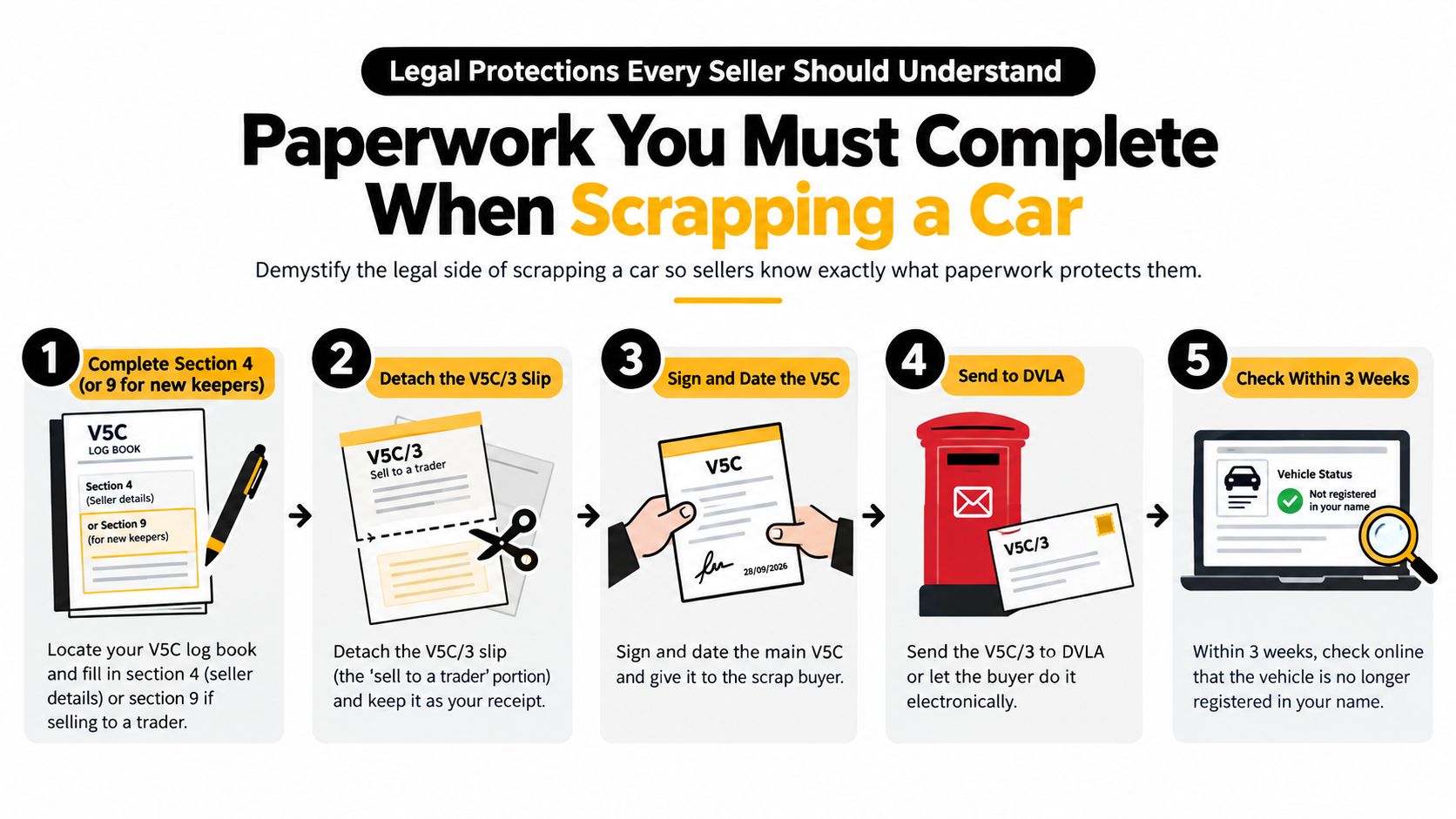
Start with the V5C log book. Complete the relevant section for selling or transferring the vehicle, detach the V5C/3 trader slip where applicable, and retain it as evidence of the transaction. The exact section can depend on the V5C version and whether you’re transferring to a trader, so follow the instructions printed on your document rather than guessing.
Use an ATF and confirm the destruction record
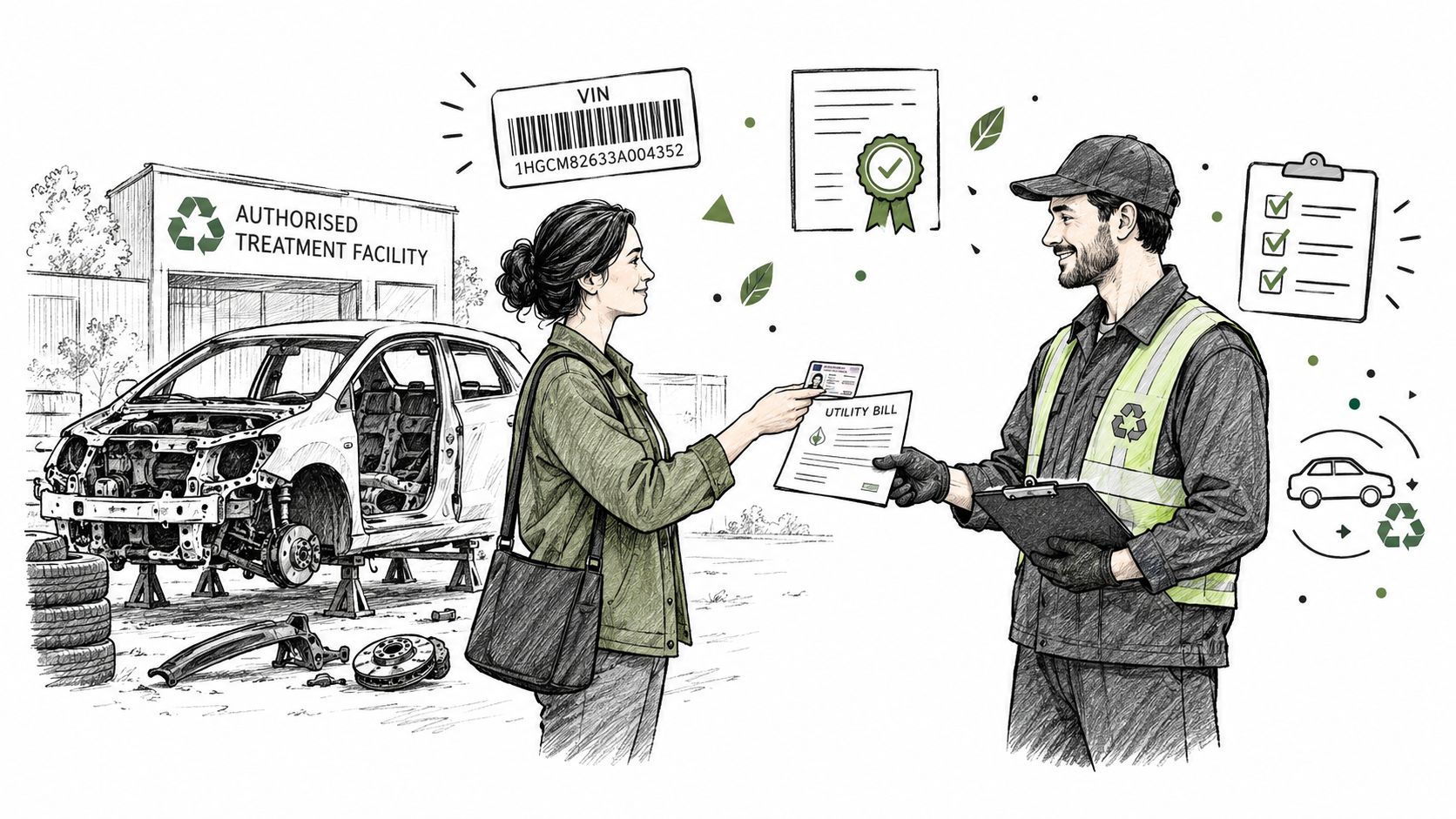
An Authorised Treatment Facility is approved to depollute and dismantle end-of-life vehicles. The facility removes hazardous materials, processes the vehicle through the permitted recycling route and can issue the official Certificate of Destruction.
The CoD is the document that matters most after collection. It supports the end of your keeper liability for a vehicle that has been formally destroyed, rather than merely sold for salvage or stored elsewhere. Before booking, verify the facility through the relevant government environmental register and ask who will issue the CoD.
Some operators handle salvage rather than destruction. That can be legitimate for a repairable vehicle, but you still need written confirmation of the ownership transfer and DVLA notification. A buyer who calls itself a green-parts operator doesn’t automatically provide a CoD.
For example, if a non-compliant buyer takes a car without completing the DVLA chain, the former keeper could continue receiving parking notices or other correspondence linked to the registration. Keep the buyer’s receipt, collection confirmation, payment record, V5C/3 evidence and CoD. If the expected notification doesn’t arrive, contact DVLA promptly and retain proof that you notified the buyer and supplied the required details.
Your shortlist should contain only buyers who can explain the paperwork chain in plain English. Legal certainty isn’t an optional extra. It belongs beside the payout figure in your comparison grid.
Your Scrap Car Price Comparison Checklist
Work through this list before you book collection:
- Confirm the vehicle details: Check the registration, make, model, mileage, MOT position and condition you submit.
- Describe missing items: State whether the catalytic converter, wheels, keys, battery, interior and major components are present.
- Collect written estimates: Get at least four quotes using identical information.
- Separate value lines: Ask the buyer to distinguish metal value, salvage value, collection and administration.
- Check the net payment: Confirm exactly what reaches your bank account.
- Challenge collection deductions: Ask whether the postcode, loading method or distance changes the price.
- Verify the ATF: Identify the licensed facility that will process the vehicle.
- Confirm the CoD: Ask when the Certificate of Destruction will be issued and how you’ll receive confirmation.
- Fix the price in writing: Get a clear statement that the figure won’t change unless your description was materially inaccurate.
- Agree payment timing: Check the transfer before the keys and vehicle documents change hands.
- Keep your records: Retain the quote, booking confirmation, receipt, V5C/3 evidence and CoD.
- Check the DVLA position: Follow up if the vehicle remains linked to you after the buyer’s promised notification.
A strong offer has collection included, names the ATF, confirms the Certificate of Destruction, pays by bank transfer at handover and places the price within 10% of the relevant vehicle-class market range, using the vehicle-class benchmarks as the comparison point. It should be written in plain English, with no surprise deductions or vague inspection clauses.
You’re the customer, not a favour-seeker asking someone to remove an unwanted car. Compare the net figures, test the terms and reject any buyer who won’t put the important promises on paper.
Scrap A Vehicle provides instant online valuations, free nationwide collection, same-day bank payment on collection and ATF-linked processing with DVLA Certificate of Destruction arrangements. Visit Scrap A Vehicle to compare your vehicle details against a current offer before you commit to a buyer.