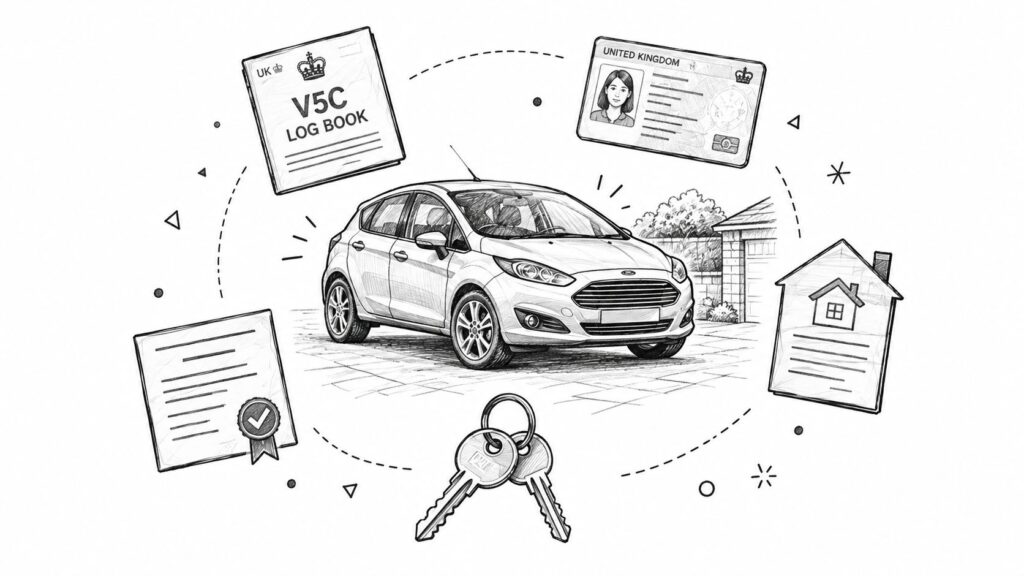
You’ll need the V5C logbook, photo ID, proof of address, and all sets of keys to scrap a car in the UK. The Certificate of Destruction is the paper that closes the loop with the DVLA, so don’t treat it as an extra.
You’re probably dealing with a car that’s been sitting on the drive too long, a failed MOT that isn’t worth fixing, or an inherited motor where half the paperwork has vanished. That’s normal. The trick is knowing what an Authorised Treatment Facility will accept first, what can be recovered later, and what will stop the handover dead at the gate.
Table of Contents
- What You’ll Need to Scrap a Car in the UK
- The Core Documents Explained
- What Happens on Collection Day
- When the Paperwork Goes Wrong
- How the ATF and DVLA Close the Loop
- Pre-Scrapp Checklist and Common Mistakes
What You’ll Need to Scrap a Car in the UK
A 2006 diesel parked on the driveway, tax long gone, MOT history now just a memory. That’s the sort of job that lands on my desk every week, and the people who get it done quickly are the ones who turn up with the right paperwork first.
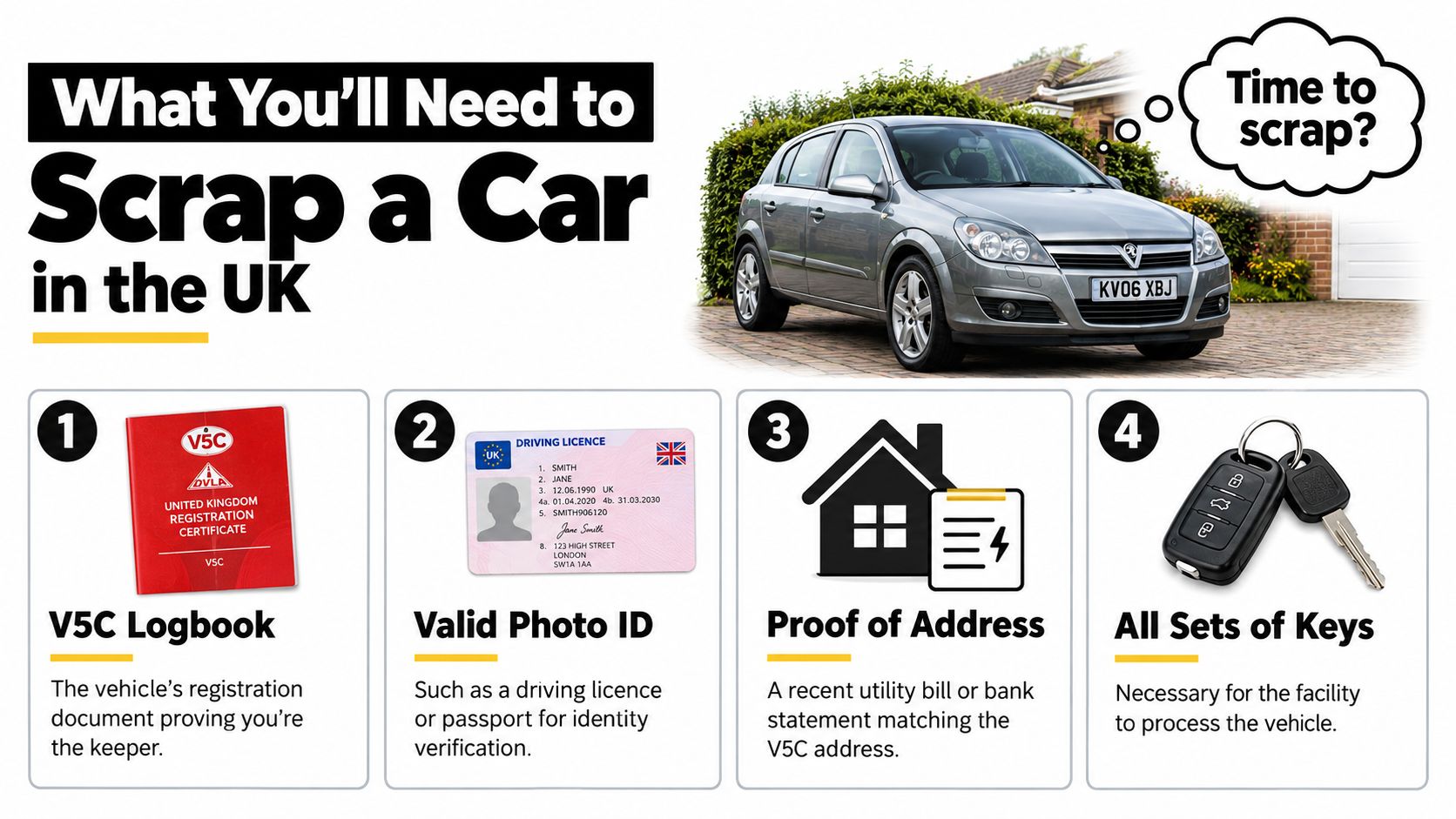
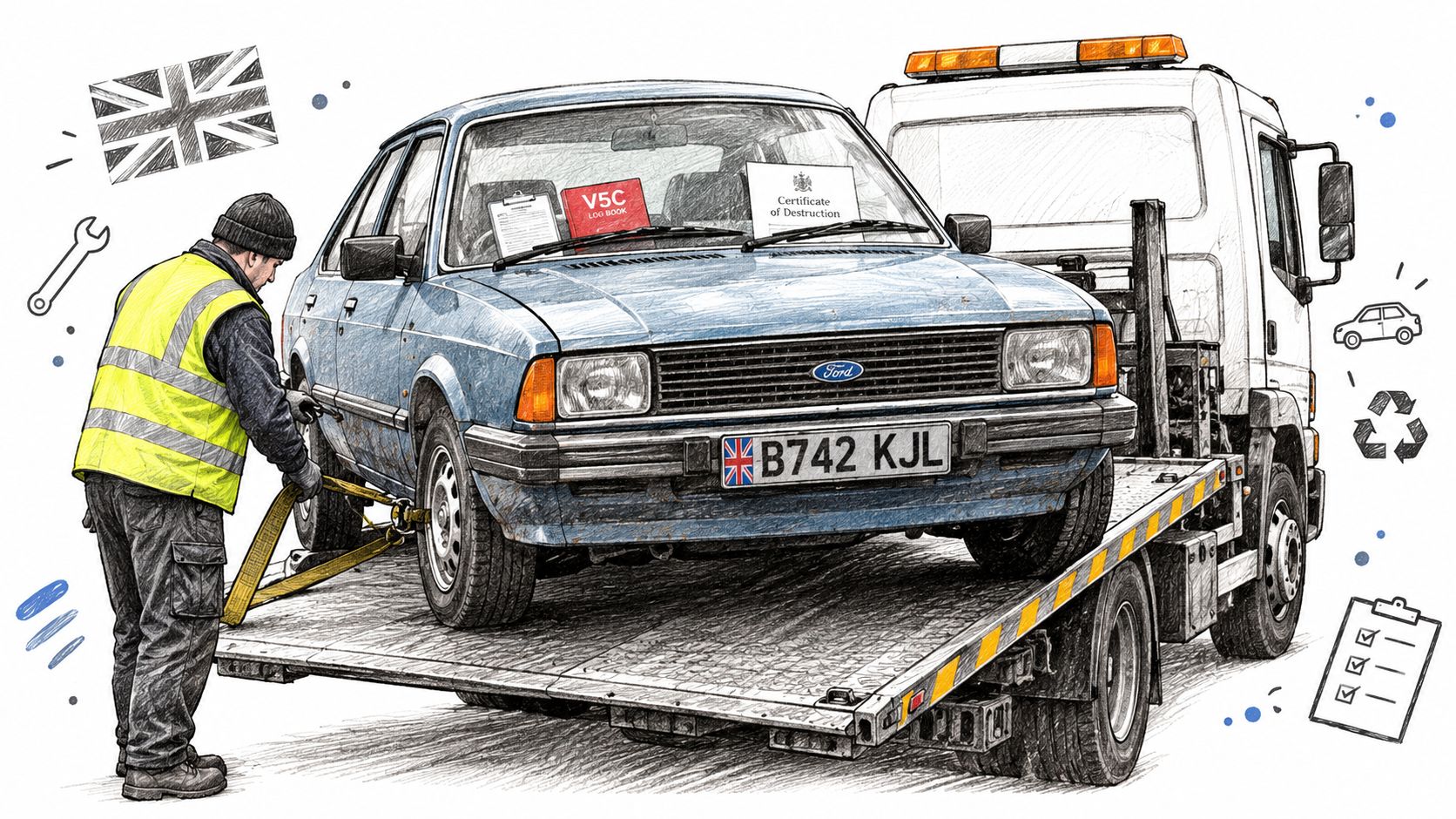
The core checklist is simple. Bring the V5C logbook, a piece of photo ID, a recent proof of address, and all sets of keys, including spares. The V5C matters most because it carries the 11-digit reference number used to tell DVLA the vehicle has been disposed of, and official guidance says the yellow section should be completed when a vehicle is scrapped or written off, with notification also possible online. Once the vehicle is destroyed by an ATF, the keeper receives a Certificate of Destruction as proof the car has been destroyed. Certificate of Destruction guidance
Practical rule: if one item is missing, the job can still sometimes move forward, but the V5C is the one document that keeps the whole process clean.
Older vehicles sometimes still have a V5 rather than a V5C, and that can confuse owners who haven’t touched the paperwork for years. The right answer isn’t to improvise, it’s to match the vehicle details, prove who you are, and let the ATF verify the keeper before the car changes hands. Where finance is still outstanding, there’s one more piece of paper needed, the lender’s settlement letter.
You don’t need to overthink this. Get the documents together before collection, and you’ll avoid the usual delay where the driver is ready, the car is ready, and the keeper is the only thing slowing the job down.
The Core Documents Explained
The V5C is the key document
The V5C logbook proves the vehicle is registered to you, or at least that you’re the person legally allowed to hand it over. The ATF uses it to notify DVLA and close the record, which is why the V5C is not just a formality. Section 9, the new keeper slip, is not a substitute for the main logbook when you’re scrapping the car.
Photo ID and proof of address are identity checks
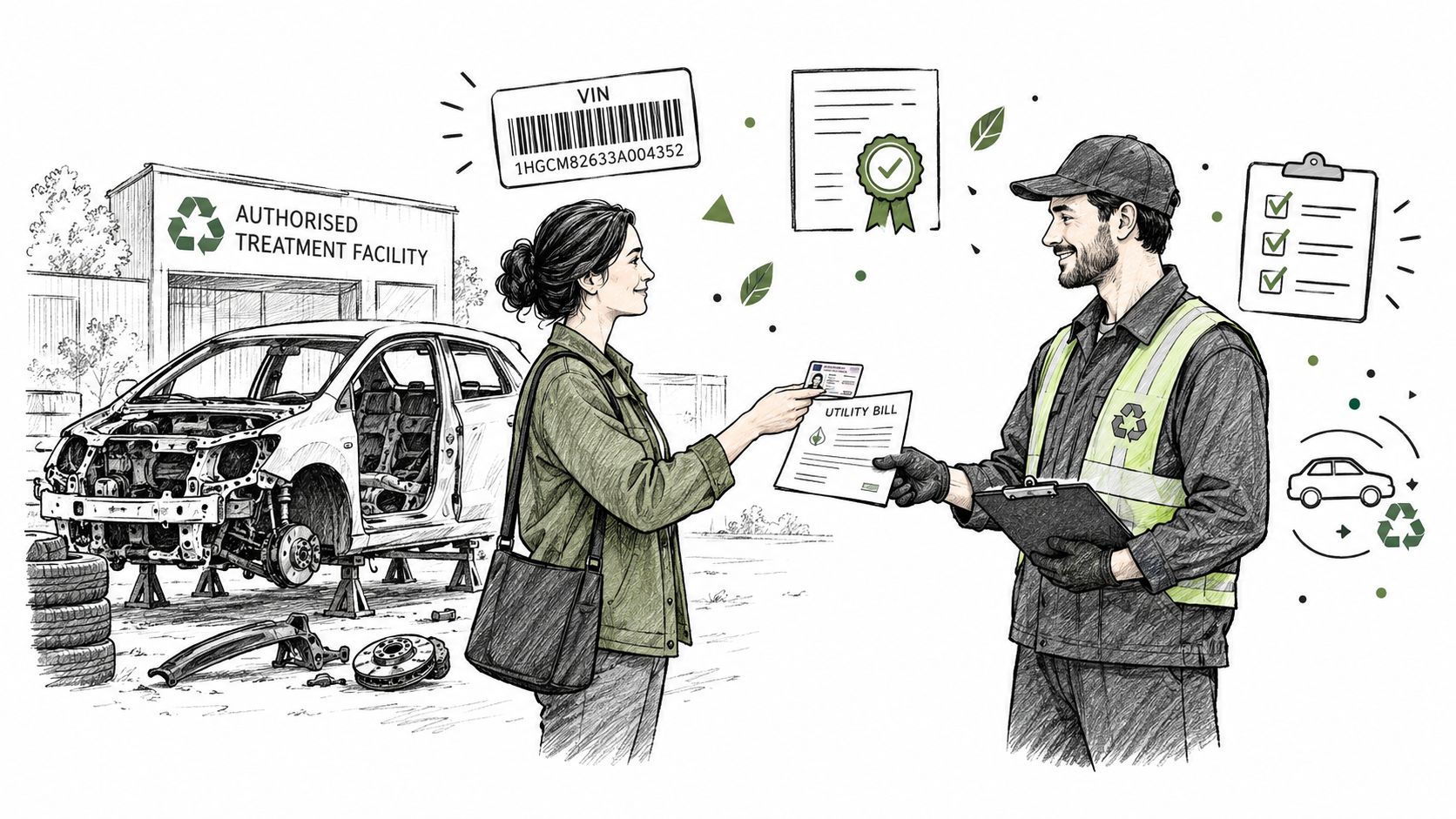
Photo ID, usually a driving licence or passport, tells the ATF the person at collection is the same person tied to the vehicle paperwork. Proof of address, like a utility bill, bank statement, or council tax letter, backs that up when the V5C address is old or the keeper details need checking. That matters more with older cars, because people move house, inherit vehicles, or forget to update records after years of ownership.
Keys and finance details stop avoidable refusals
Keys are not a nice extra, they’re part of the handover. The driver needs to know the car can be accessed and that the ignition can be checked, which helps rule out anything stolen or suspicious. If the car is still on finance, the lender’s written settlement confirmation must come first, because the vehicle is not free to scrap until the agreement is cleared.
| Document | Who Provides It | Why the ATF Needs It |
|---|---|---|
| V5C logbook | Keeper or owner | To verify the vehicle and notify DVLA |
| Photo ID | Keeper | To confirm the person handing over the car |
| Proof of address | Keeper | To support identity and current keeper details |
| All keys | Keeper | To help confirm access and practical handover |
| Settlement letter | Finance company | To show the car is no longer under finance |
If the paperwork doesn’t line up, a decent ATF will slow the process down rather than take a risk. That’s the right call, because bad paperwork is how people end up fighting over a vehicle they thought was already gone.
What Happens on Collection Day
The driver should arrive, identify themselves, and check the car against the details you gave when booking. They’ll look at the vehicle, the VIN, the V5C, and the keys, because the yard wants to know the car in front of them is the one that’s been authorised for disposal. That check protects both sides.
The handover is simple if your documents are ready
You’ll sign the relevant section of the logbook, or the whole document if you’re using an older V5, to say the vehicle is being scrapped. Then the driver takes the car, leaves you with a receipt or collection note, and the job moves into the ATF’s legal process. The Certificate of Destruction doesn’t normally land on the doorstep that day, because the vehicle still has to be depolluted and processed first.
Anything personal should come out before the driver leaves. Check the boot, glovebox, under the seats, door pockets, and wherever else you’ve stuffed random bits over the years. Don’t leave behind garage remotes, dash cams, charger leads, or paperwork with your address on it.
A quick reality check helps here. If the car has a private plate you want to keep, sort that before collection. If the stereo is aftermarket and needs a security code, deal with it before the tow truck arrives. Once the car’s gone, your room to argue is gone too.
Confirm the collector is legitimate
Ask for the ATF name and licence details if anything feels off. A proper collector won’t mind, and you can verify the status if needed. Scrapping is about removing risk, not taking on a new one because someone showed up with a truck and a smile.
When the Paperwork Goes Wrong
The messiest scrappage jobs are rarely the damaged cars. They’re the old ones, the inherited ones, and the ones that changed hands on a handshake years ago.
Missing V5C or lost keeper details
If the logbook has vanished, the usual fix is to apply for a replacement using the DVLA process and keep the vehicle details handy. Where the paperwork is missing but the car still has to go, you can sometimes move ahead by proving identity and giving the ATF the registration, make, and model, then notifying DVLA after transfer. I’d still call that a messy route, because every missing document makes the ownership check more important.
Inherited cars and long-stored vehicles
Inherited vehicles need a paper trail that shows who now has authority over the car. In practice, that means the death certificate and the grant of probate or equivalent estate paperwork, alongside the vehicle details. If the car’s been parked for years, the issue is rarely the metal, it’s proving the right person can lawfully release it.
Missing keys or outstanding finance
Missing keys won’t always kill a job, but they slow the collection and make some yards cautious. Finance is more serious. If there’s an outstanding hire-purchase or similar agreement, contact the lender and get a settlement letter before you book a collection.
Don’t forge documents and don’t try to bluff your way through ownership. A fake logbook or invented consent letter can turn a simple disposal into a serious problem.
| Problem | Fix / Workaround |
|---|---|
| Lost V5C | Apply for a replacement and keep the vehicle details ready |
| Missing keys | Tell the ATF early, because access and loading may need extra arrangements |
| Inherited car | Use the death certificate and probate paperwork to show authority |
| No paperwork from a cash purchase | Gather any proof of purchase, then contact DVLA if needed |
| Outstanding finance | Get written settlement confirmation from the lender |
The yards worth dealing with are the ones that handle awkward jobs every day. They’ll tell you what’s missing, what they can work around, and where a delay is unavoidable. That’s better than being promised a smooth collection and getting blocked at the gate.
How the ATF and DVLA Close the Loop
Only an Authorised Treatment Facility can legally scrap a vehicle and issue a Certificate of Destruction. That certificate is the proof that matters, because it shows the car has been destroyed and the DVLA record should be closed. The government guidance says an ATF should issue it within 7 days for cars, light vans, and 3-wheeled motor vehicles, and without it the registered keeper can remain liable if the record is not properly closed. DVLA scrapped and written off vehicles guidance
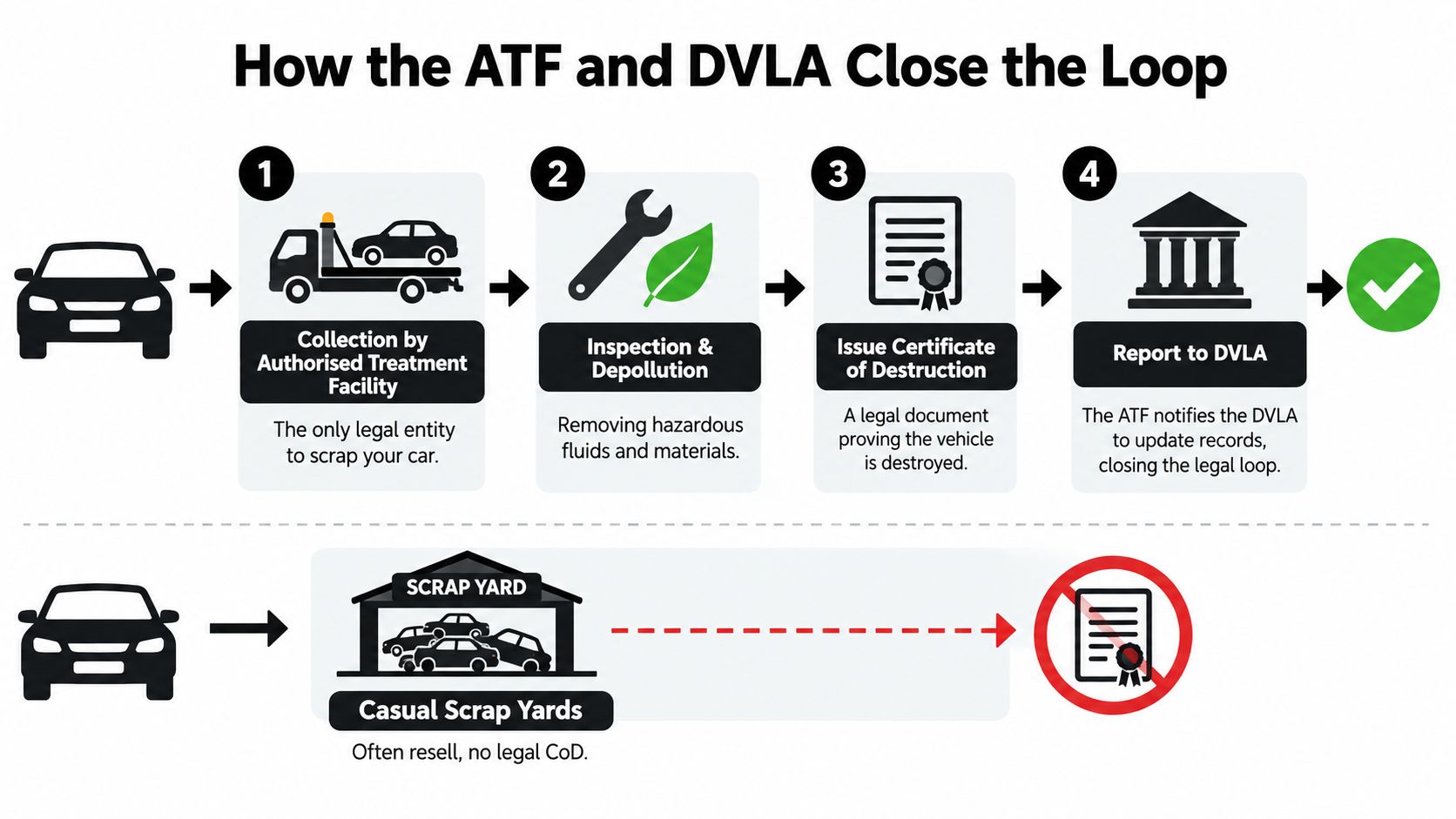
Once the car reaches the ATF, it’s depolluted, fluids are drained, and the shell is dealt with properly. The DVLA notification follows electronically, which is why a legitimate scrap yard isn’t just a collection service, it’s part of a regulated disposal chain. If you want the official proof trail, the Certificate of Destruction process is laid out in detail on Scrap A Vehicle’s CoD guide.
The important point is liability. If the record stays open, the keeper stays exposed to headaches they thought were already over. Keep the CoD safe, and check that your V5C record has been updated through the DVLA enquiry service if you want to make sure the handover was processed properly.
I’ve seen plenty of people assume a verbal promise from a collector is enough. It isn’t. The certificate is the proof, and the ATF is the only place that can give you the right one.
Pre-Scrapp Checklist and Common Mistakes
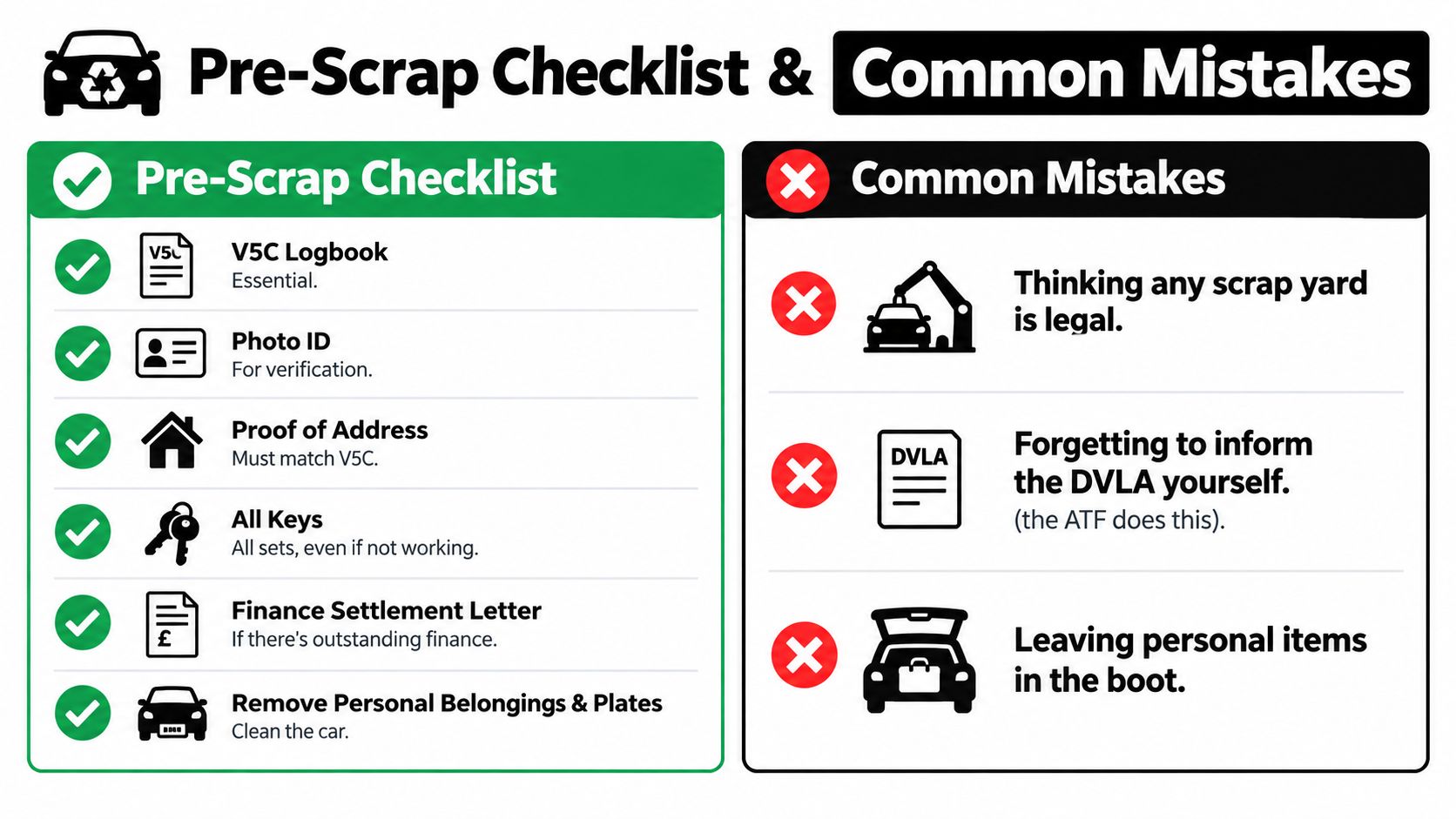
Print this, screenshot it, or just work through it before the truck arrives.
- V5C logbook ready: Put it with the keys so you’re not searching for it at the last minute.
- Photo ID checked: Make sure the name matches the keeper details where possible.
- Proof of address dated recently: Utility bill, bank statement, or council tax letter.
- All keys gathered: Include spares, even if one doesn’t work properly.
- Finance settlement letter stored: Only needed if the car is still under an agreement.
- Personal plates and data removed: Take private plates off first, and clear the infotainment system if it stores contacts, addresses, or phone links.
A few mistakes cause more grief than they should. Don’t cancel tax before the scrapping is properly recorded, don’t hand the car to a random collector just because they offered cash, and don’t let someone else use their ID to pass the vehicle off as theirs. If the boot still has your tools, books, or documents in it, empty it before collection.
The clean way to do this is straightforward.
- Gather the documents.
- Remove plates and personal data.
- Take photos for your records.
- Hand over only at an ATF.
- File the Certificate of Destruction with your records.
Scrapping a car should be boring in the best possible way, quick, documented, and final. If you want a collection service that handles the paperwork properly and deals with awkward vehicles without games, visit Scrap A Vehicle and get the car moved through the right route from the start.