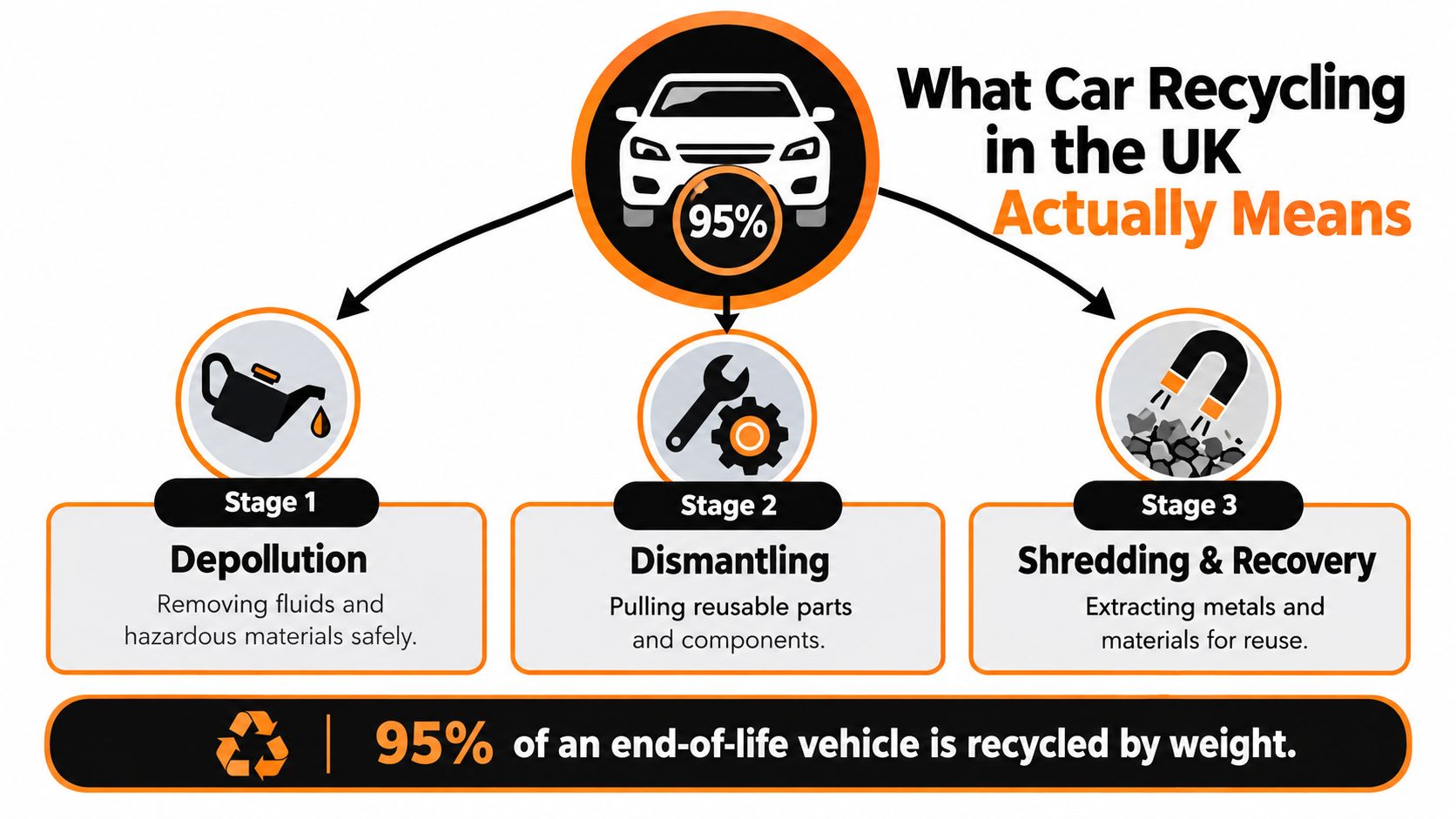
A UK end-of-life vehicle can be recovered at a rate of up to 95% by weight, but that figure doesn’t mean every part is treated in the same way. A compliant recycler first removes hazardous materials, then salvages usable components, and only afterwards processes the remaining shell for metal and other materials. The important question for an owner is not just, “How do I scrap my car?” It’s, “Which route keeps the greatest value in use while closing my legal responsibility?”
Table of Contents
- What Car Recycling in the UK Actually Means
- The Legal Framework and the Numbers Behind It
- Inside an Authorised Treatment Facility
- Why Parts Recovery Matters More Than Ever
- Choosing the Right Route for Your Vehicle
- Compliance and the Digital Waste Shift
- A Practical Checklist Before You Scrap or Salvage
What Car Recycling in the UK Actually Means
Think of a worn-out car like a library book returned after years of use. A librarian doesn’t immediately pulp it. They check whether it can be repaired, remove anything that needs special handling, pass useful material to another reader, and recycle the remainder. Car recycling in the UK follows a similar sequence, although the safety and legal controls are much stricter.
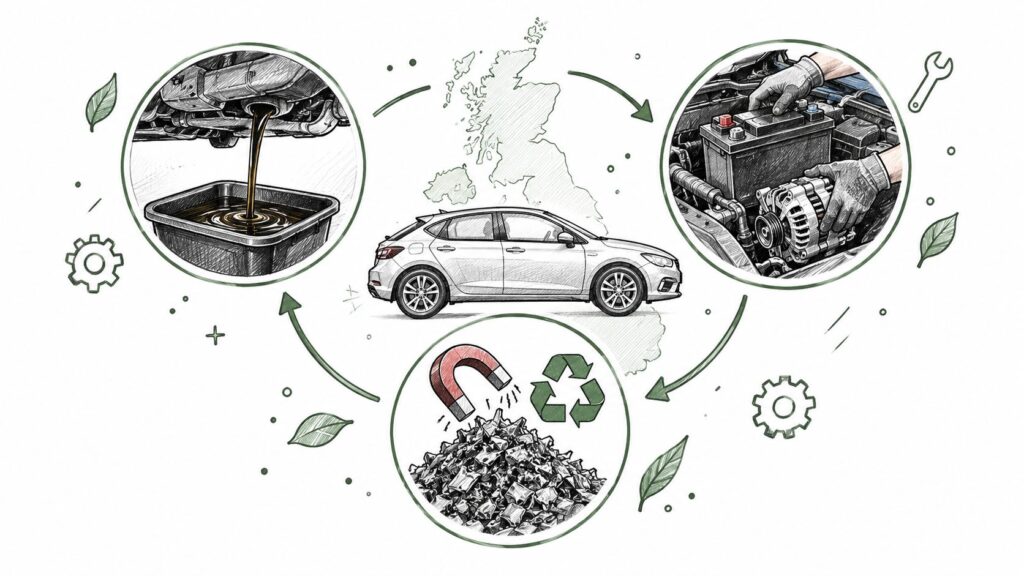
The process has three connected stages:
- Depollution removes fuel, oil, coolant, brake fluid, refrigerant, batteries and other hazardous items before the vehicle is dismantled.
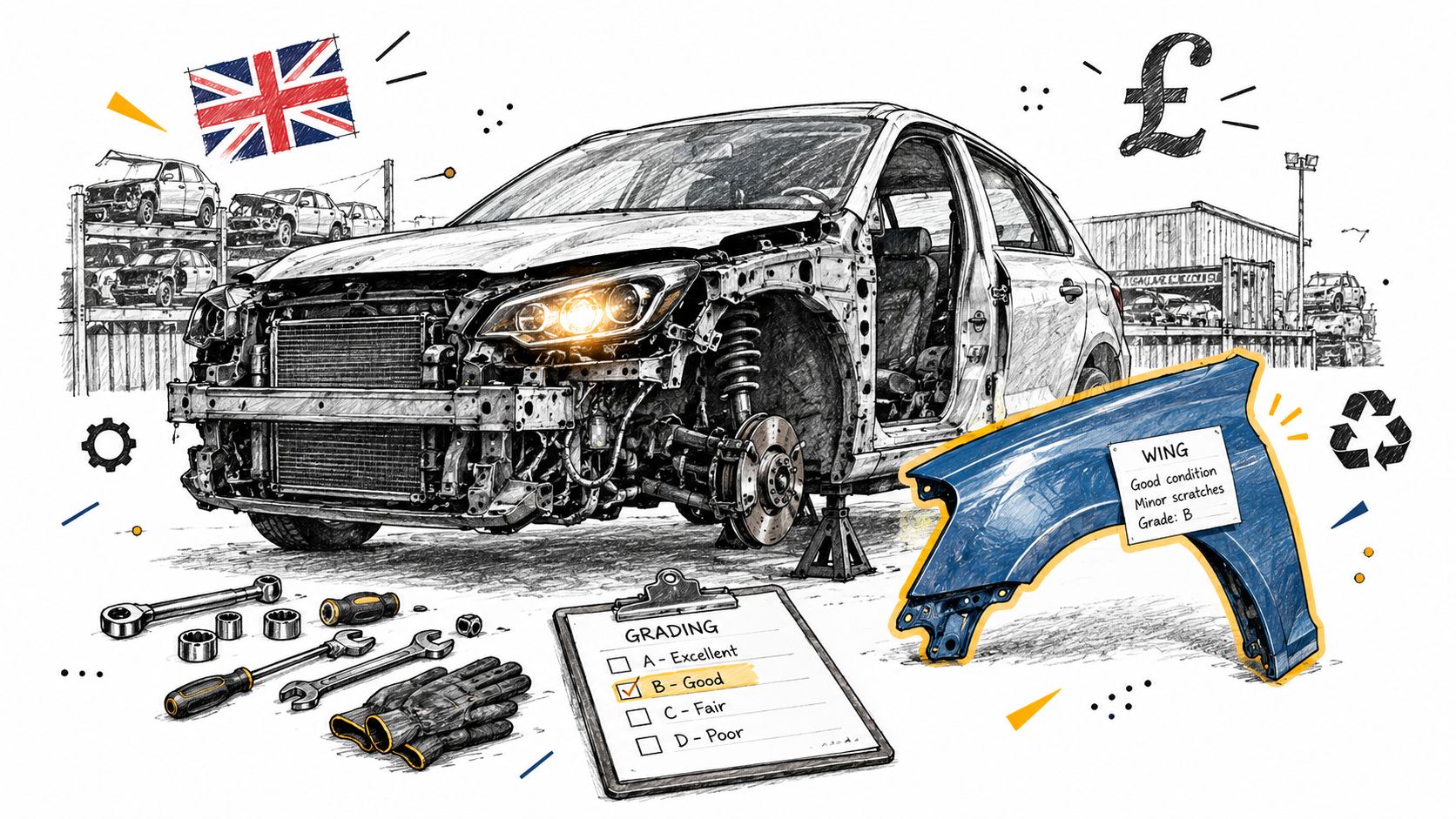
- Dismantling identifies components that can be tested, catalogued and sold as used parts.
- Shredding and recovery processes the remaining vehicle body, separating metals and other materials from residue.
The distinction matters because a vehicle that goes straight to a shredder may still produce valuable metal, but it loses the opportunity to keep a working engine, gearbox, electronic unit or body component in service. UK rules require licensed facilities to maximise separation rather than treat the car as a simple source of scrap metal, as explained in the GOV.UK guidance for end-of-life vehicle waste sites.
Why the facility matters
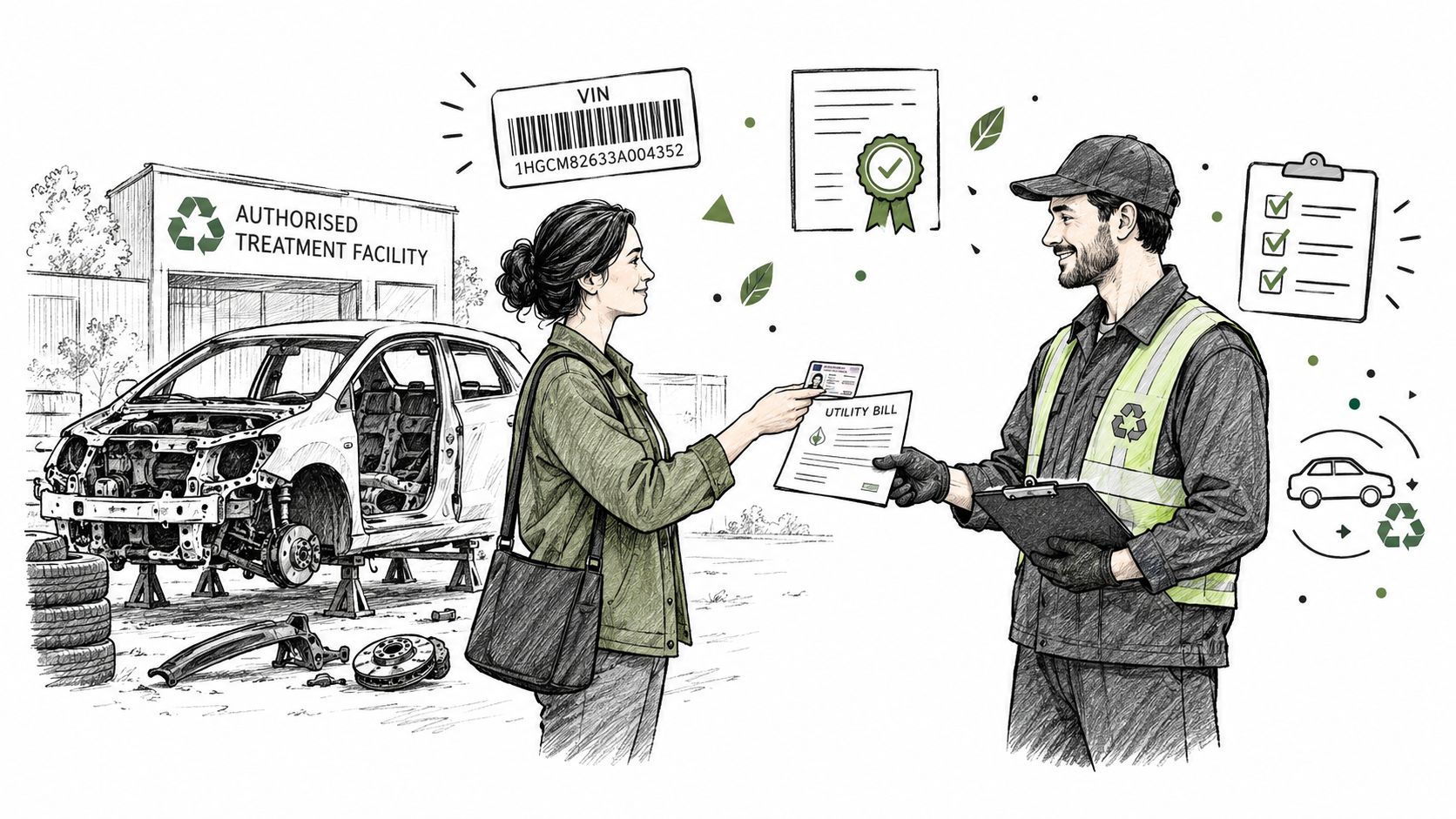
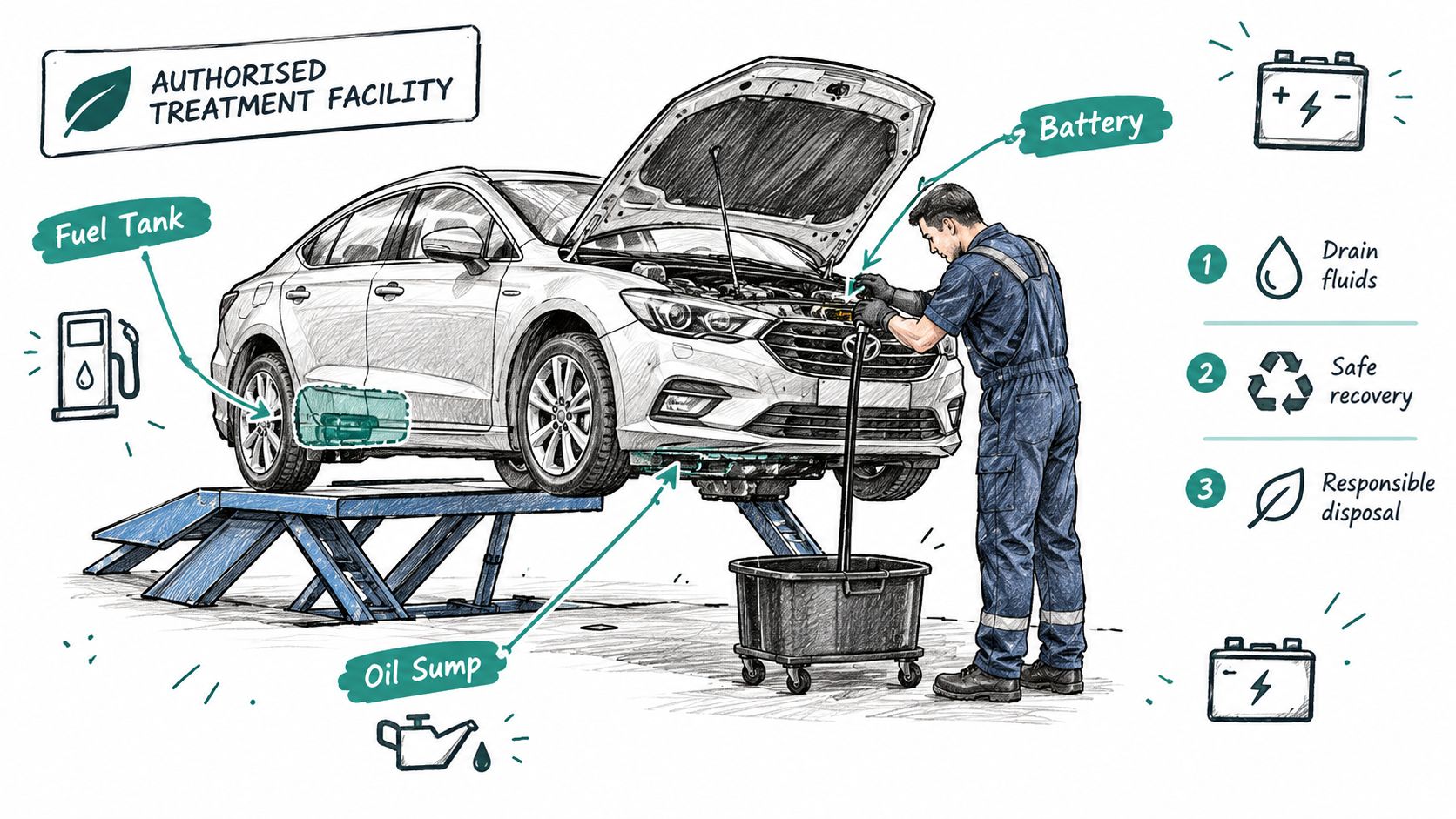
An Authorised Treatment Facility, usually shortened to ATF, is the controlled site that receives and treats qualifying end-of-life vehicles. It is responsible for depollution, dismantling, record-keeping and the onward movement of recovered materials.
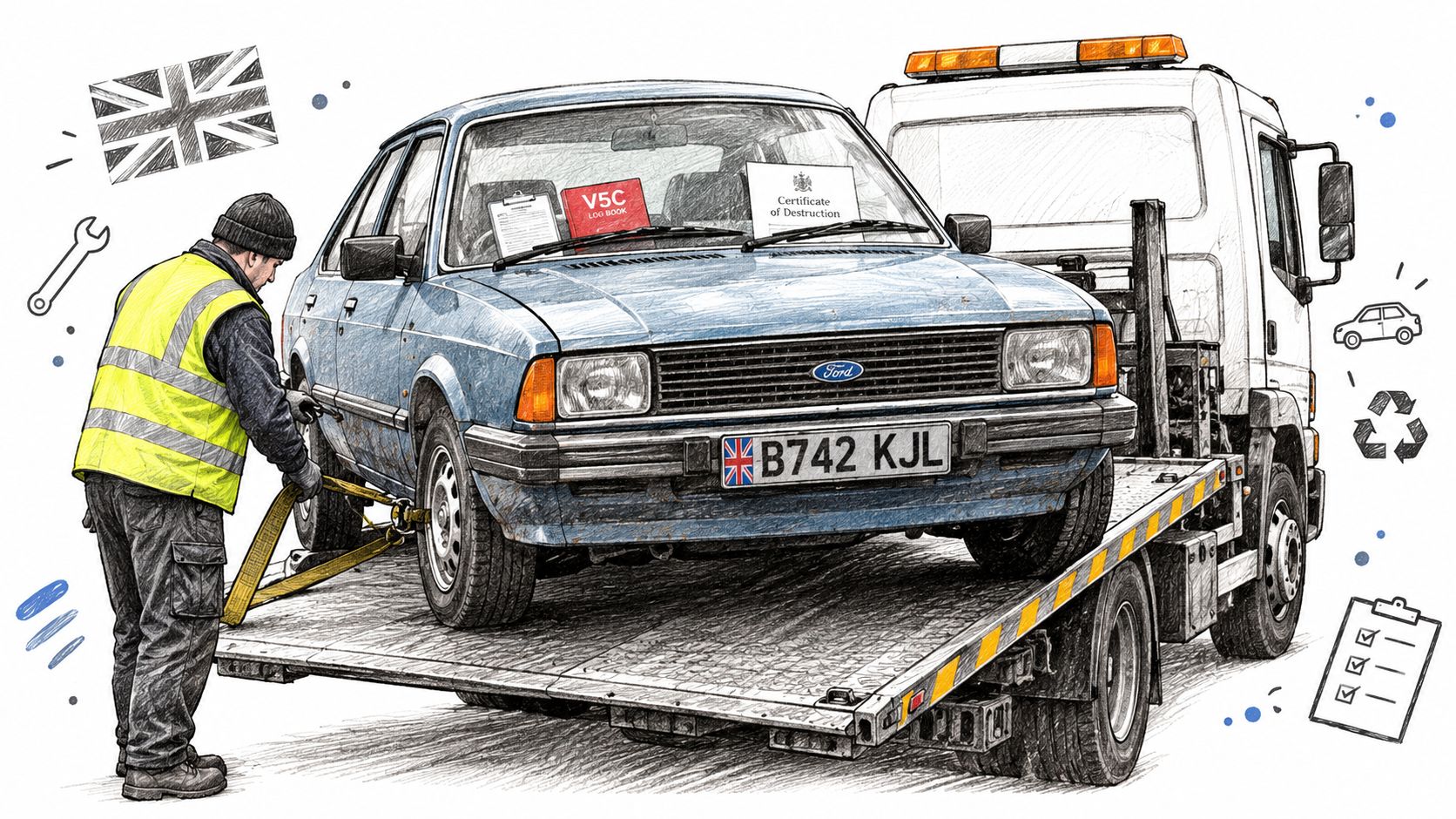
For a UK passenger car, the ATF can use the DVLA electronic system to issue a Certificate of Destruction, or CoD. The DVLA’s INF169 guidance explains that the certificate applies to qualifying vehicles and closes the vehicle record permanently. For the keeper, that certificate is the legal evidence that the vehicle has been destroyed and treated at an authorised site.
Without a proper CoD, the vehicle may remain connected to the last keeper. That can leave you exposed to future correspondence, penalties or questions about a car you no longer possess. A legitimate recycling service therefore isn’t just arranging collection. It is completing a regulated chain from handover to formal deregistration.
The Legal Framework and the Numbers Behind It
UK end-of-life vehicle rules set two related targets, measured by average vehicle weight: 95% recovery and 85% recycling. Both benchmarks appear in GOV.UK’s ELV guidance, but they describe different outcomes.
Recycling means turning recovered material into material that can be used again. Recovery is wider. It can include recycling, reuse and energy recovery. The distinction works like two measuring cups: the recovery figure counts more types of output, while the recycling figure counts the material that remains in recycling or reuse streams.
| Metric | Statutory Target | Latest UK Figure |
|---|---|---|
| Recovery | 95% by average vehicle weight | 96.9% in 2015, 92.25% in 2016, 94.1% in 2017 |
| Recycling | 85% by average vehicle weight | 85.2% recycling and reuse in 2018 |
| ELVs captured | Not a target | 1.24 million tonnes in 2016, rising to 1.47 million tonnes in 2017 and 2018 |
| Recycled or reused material | Not a target | 1.31 million tonnes in 2018 |
The figures compiled in the UK scrap car report show why these percentages should not be treated as interchangeable. The 96.9% recovery rate in 2015, reported in that source, includes the broader recovery category. The 85.2% recycling and reuse figure in 2018 refers to material that stayed within recycling and reuse.
What the gap means for your car
The gap between the two targets has a practical meaning. Material can count towards recovery without becoming a reusable component or a secondary raw material for new products. That is why a high recovery result does not automatically mean every valuable part was saved.
A working gearbox, undamaged body panels, serviceable electronics or sought-after trim may have greater practical value when assessed for reuse than when the vehicle is sold only by weight. An ATF can examine those parts before the remaining shell is shredded. For an owner, the key question is therefore whether the car still contains parts that another vehicle can use.
The scale of the system makes those decisions significant. The UK captured 1.24 million tonnes of ELVs in 2016, followed by 1.47 million tonnes in both 2017 and 2018, while 1.31 million tonnes were recycled or reused in 2018, as reported in the same UK sector source. Small improvements in dismantling choices can affect a large material stream, especially where scarce, high-demand parts are more useful than shredded metal.
Inside an Authorised Treatment Facility
A vehicle’s arrival at an ATF starts a controlled sequence, not an informal strip-down. The operator identifies the vehicle, records its condition and confirms the paperwork before staff begin treatment.
Depollution comes first
Technicians drain fuel, engine oil, coolant, brake fluid and refrigerant using equipment designed to contain those substances. They also remove the battery, catalytic converter and tyres so each can enter an appropriate treatment or resale stream.
This order protects workers, prevents contamination and creates the foundation for accurate recovery. A car can’t be safely dismantled while fluids remain trapped in its systems, and an ATF can’t demonstrate compliant treatment without records showing what was removed and where it went.
Dismantling protects the value of parts
Once the vehicle is safe, trained staff assess engines, gearboxes, body panels, interior trim, electronic modules and other components. Parts suitable for reuse can be tested, described and catalogued against the vehicle identification number, giving buyers useful information about provenance.
Some modern facilities use specialist attachments such as Powerhand. The equipment connects to material handlers and can pull a vehicle apart more surgically, helping staff separate aluminium, steel, copper, plastic, wiring looms and motors rather than mixing them prematurely. EMR’s explanation of modern vehicle recycling describes how high-tech dismantling and separation systems can recover up to 95% of vehicle materials.
The remaining shell is then baled or shredded. Magnets separate ferrous metals, while other separation systems handle non-ferrous materials and residual streams. The operator’s audit trail links the vehicle received, the treatment steps, the recovered parts and the outgoing materials.
The following video shows the type of dismantling activity owners should expect from a professional facility.
Practical rule: A recycler should be able to explain what happens to the car after collection, not just quote a price for taking it away.
Why Parts Recovery Matters More Than Ever
The better question is often which parts are scarce enough to justify salvage. A vehicle’s scrap value comes from its materials, but its salvage value can come from one component that another driver needs urgently.
Current UK used-parts market data shows a pronounced mismatch between supply and demand. Ford parts make up 7.2% of available inventory but 44.7% of demand, while engines represent 2.4% of inventory but 14.1% of demand, according to the UK used automotive parts market intelligence report.
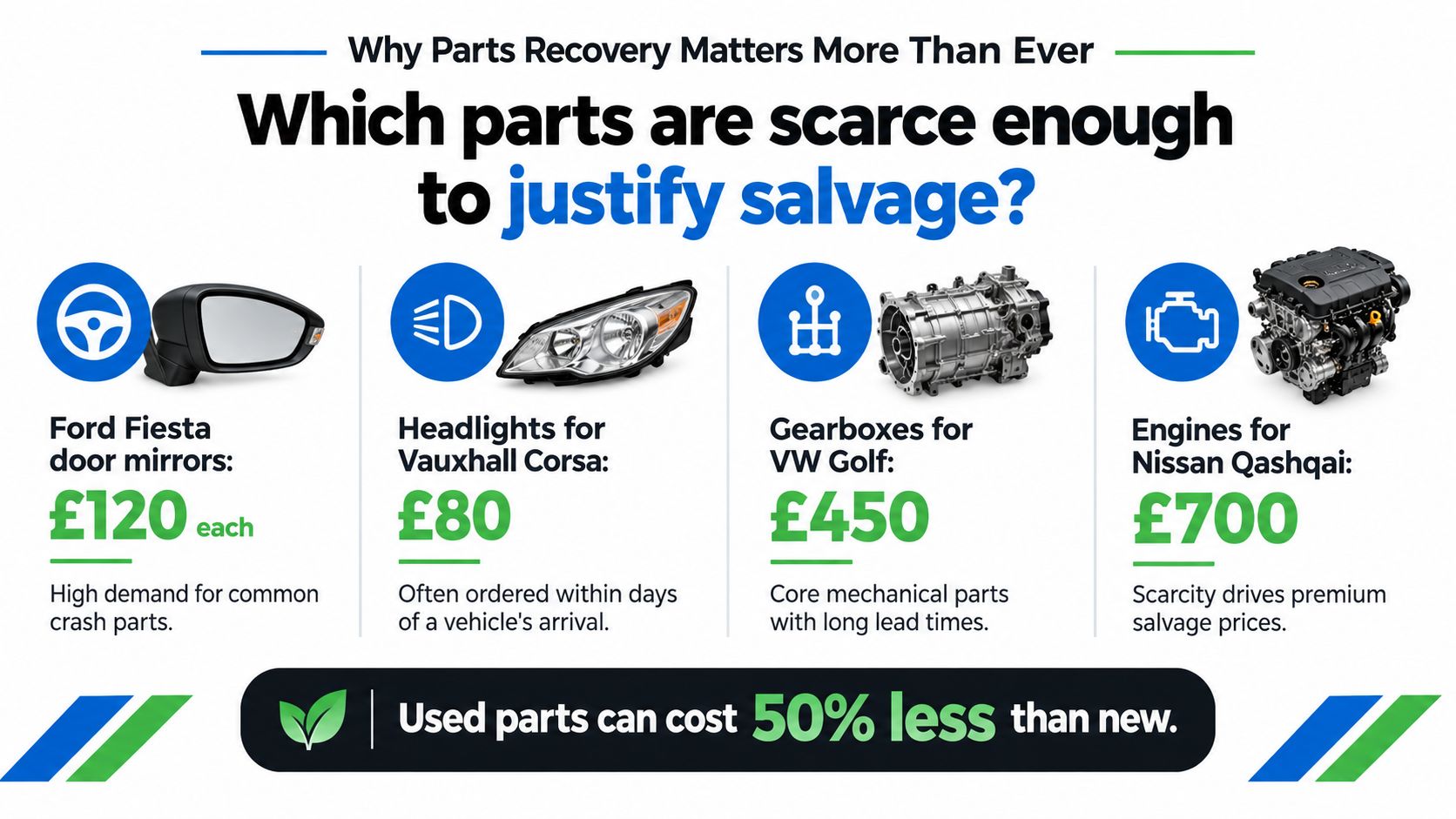
That imbalance changes the owner’s decision. A common model with a damaged body can still contain a useful engine or gearbox. Conversely, a yard may hold many low-demand panels while repairers struggle to source mechanical or electronic units. The car’s condition needs to be assessed component by component, not judged only by its appearance.
The ageing UK fleet strengthens that argument. A recent UK analysis says 8.67 million licensed cars are 13 years old or more, about 25% of the fleet, making affordable replacement parts especially relevant for motorists keeping older vehicles on the road. That doesn’t mean every old car should be dismantled, but it does mean a salvage assessment can be more useful than an automatic shred decision.
A used part also keeps an existing component in productive use. The environmental benefit comes from extending that part’s service life and reducing demand for a newly manufactured replacement, while the financial benefit comes from giving owners and repairers another option when new parts are costly or delayed.
If you’re comparing available components, the green car parts range provides one example of how dismantled parts can remain in circulation after a vehicle reaches the end of its road life.
Choosing the Right Route for Your Vehicle
Owners usually have three practical choices. The right one depends on the car’s condition, its parts demand, how quickly you need it collected and how much work you’re prepared to do yourself.
| Route | Typical payout | Paperwork | Owner effort | Best for |
|---|---|---|---|---|
| Scrap sale to an ATF or collector | Usually based mainly on vehicle and material value | V5C details and CoD | Low | Cars with severe damage, extensive corrosion or little salvage demand |
| Sale to a salvage specialist or breaker | May reflect valuable reusable parts as well as material value | V5C, sale records and CoD where treated as an ELV | Low to moderate | Running or near-running cars with desirable components |
| Owner-supplied salvage parts | Potentially the highest return, depending on demand and condition | V5C updates, sale records and correct DVLA notifications | High | Owners with storage, time, tools and buyers for specific parts |
Route one is the simplest
Selling directly for scrap suits a car that has failed its MOT, suffered severe accident damage or costs more to repair than it is worth. The ATF takes responsibility for treatment, and the owner should receive confirmation of the CoD where the vehicle qualifies.
Payment timing varies by operator and collection arrangement. Confirm whether the payment is a bank transfer or cheque before the vehicle leaves, and don’t assume that a collector offering convenience is automatically an ATF.
Route two preserves more value
A salvage specialist or breaker can inspect the vehicle for parts before processing the shell. This route tends to make more sense where the car has a sought-after engine, gearbox, electronic module, undamaged panels or clean interior.
Ask how the buyer handles the vehicle after purchase. You want a clear answer on the treatment facility, the CoD, the DVLA notification and whether the quoted amount depends on a later inspection.
Route three demands careful administration
Removing and selling parts yourself can produce a better return, but it also transfers work and responsibility to you. You need safe storage, accurate descriptions, suitable packaging, buyer communication and correct updates to the V5C and DVLA records.
Don’t remove identifying components or dispose of the shell casually. If the remaining vehicle becomes waste, it still needs lawful treatment through an appropriate facility. The highest apparent price can become poor value once your time, transport, storage and compliance obligations are included.
Compliance and the Digital Waste Shift
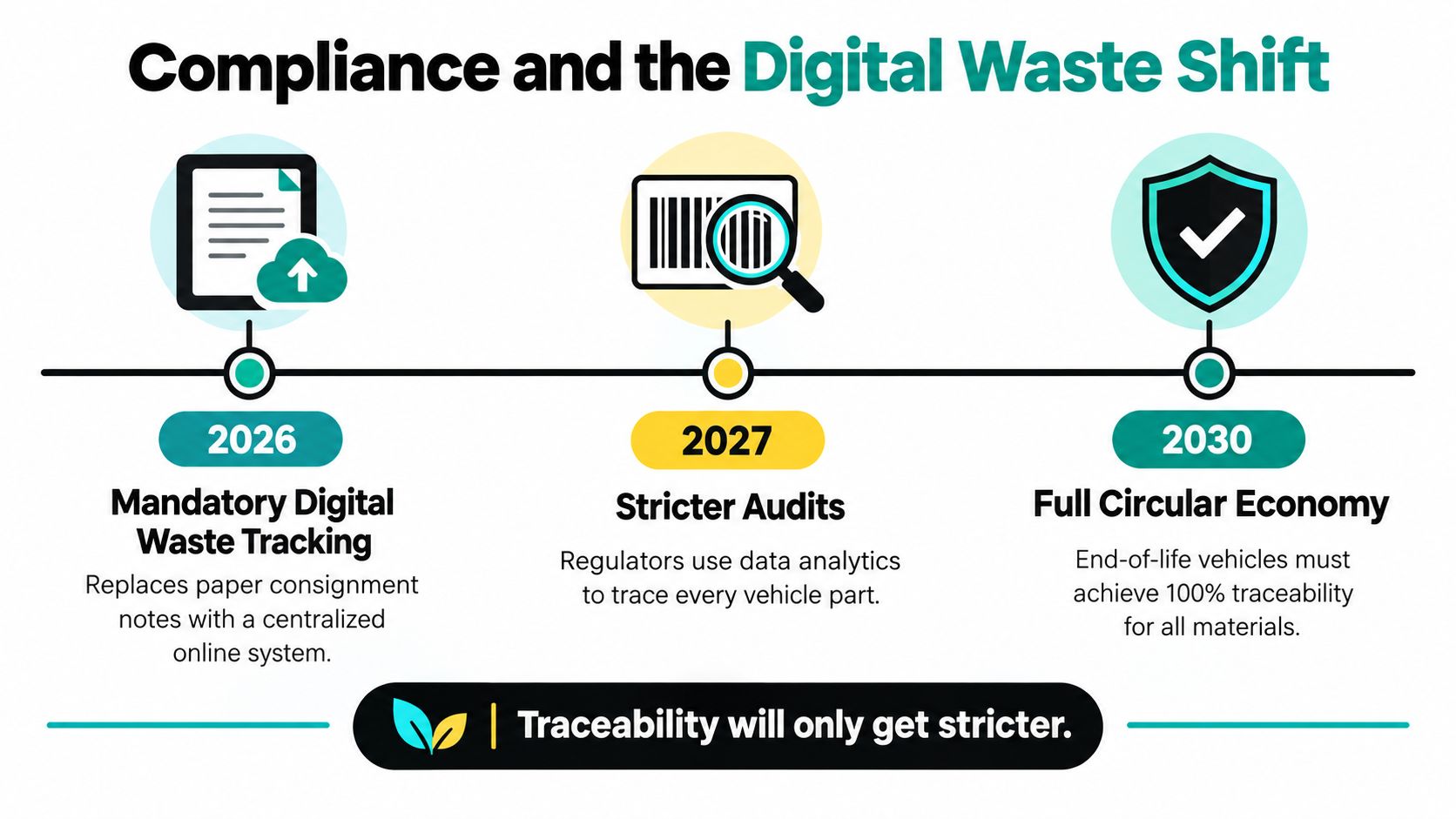
Traceability is becoming central to car recycling in the UK. Paperwork records a handover, while connected digital records can follow a vehicle from collection through treatment to its final destination. For owners, that creates a clearer chain of responsibility. For operators, it means missing or inconsistent information is easier to identify.
The UK digital waste-tracking rollout is scheduled to begin in 2026. Starting 1 October 2026, permitted receiving sites in England, Wales and Northern Ireland are scheduled to begin recording waste movements digitally. Scotland’s requirement is expected to follow in January 2027, according to Burges Salmon’s UK digital waste-tracking overview.
Why electric vehicles change the workflow
The traditional ELV framework still centres on ATF treatment, hazardous-waste controls, and recovery and recycling targets calculated by average vehicle weight. Electric and hybrid vehicles add high-voltage batteries, fire and isolation risks, and valuable electronic components. ATFs therefore need suitable procedures for making vehicles safe, storing batteries, and separating parts.
The sector’s priorities now include battery safety, fire prevention, advanced dismantling and critical-mineral recovery. That changes the value calculation for an end-of-life vehicle. A steel shell may be easy to process, while a usable battery component, electronic module, or other scarce part may justify careful salvage before shredding.
Better records don’t replace competent treatment. They make it easier to prove that competent treatment happened.
Owners should expect reputable facilities to ask about the vehicle’s provenance, battery condition, previous damage, and whether it is conventional, hybrid, or fully electric. Digital records, photographs, weighbridge data, and certificates can link the handover to the final outcome.
ISO 14001 alignment can formalise environmental management through documented checks and audits. It does not replace ATF legal requirements, but it can show that an operator manages environmental controls through an organised system rather than a single form.
A Practical Checklist Before You Scrap or Salvage
Use this checklist before booking collection or driving to a recycling site.
-
Confirm the ATF status. Ask for the facility’s name, fixed site address and confirmation that it can legally treat your vehicle. A collector who can’t explain where the car is going creates avoidable risk.
-
Prepare the documents. Find the V5C log book, MOT history, service records and repair receipts. These records can help a salvage buyer identify desirable parts and verify the vehicle’s background.
-
Record the vehicle’s status. Note whether the car is taxed or declared SORN. Tell the buyer if it doesn’t run, has accident damage, contains a high-voltage battery or is missing keys.
-
Remove personal property. Check the boot, glovebox, door pockets and under-seat storage. Remove number plates only where the agreed process and DVLA instructions require it, and confirm what the collector expects before handover.
-
Agree payment in writing. Ask whether payment arrives by same-day bank transfer or cheque, and whether the amount is fixed before collection. Don’t hand over the car based on a verbal promise that changes after loading.
-
Get the CoD details. For a qualifying passenger car, the ATF should issue the official Certificate of Destruction through the DVLA system. Keep the certificate or confirmation for your records and retain the centre’s contact details.
-
Watch for warning signs. No CoD, cash-only payment and no fixed site address are reasons to stop and verify the operator. A professional service should explain its paperwork and treatment route clearly.
-
Check the DVLA record. Verify that the vehicle has been recorded as disposed of after the handover. Don’t assume your tax and insurance position is resolved until the relevant DVLA update is confirmed.
The car’s physical departure isn’t the end of the transaction. Keep the CoD, collection confirmation, payment evidence and contact details in one place in case a later query concerns ownership, tax, insurance or disposal.
Scrap A Vehicle provides online valuations, free UK collection, same-day bank payment and processing through licensed Authorised Treatment Facilities, with DVLA Certificates of Destruction for qualifying vehicles. If you need to scrap, sell or arrange salvage for a damaged or end-of-life car, visit Scrap A Vehicle and request a vehicle valuation.