You’ve got an old car sitting there, the MOT’s done, the tax reminder’s nagging you, and you just want it gone without getting stung. The right move is usually simple, but the paperwork decides whether it stays simple or turns into a liability problem.
If you’re looking at Motorwise scrap my car options, think in two parts from the start, price and proof. Get both right, and you can clear the car quickly, get paid properly, and avoid the classic mistake of handing over a vehicle without the right disposal record.
Table of Contents
- Getting an Instant Quote and Preparing Your Documents
- Understanding Scrap Value vs Salvage Potential
- Choosing Between Motorwise and Scrap A Vehicle
- Arranging Collection and Handling DVLA Paperwork
- Avoiding Common Pitfalls in Vehicle Disposal
- Exploring Alternative Options Beyond Scrappage
Getting an Instant Quote and Preparing Your Documents
Start with the registration number and postcode, because that’s the fastest way to get a live valuation and see whether the car is being treated as scrap or salvage. A good quote should reflect the actual vehicle details, not just a generic weight guess, and the official disposal route only works cleanly when the buyer can match the car to the paperwork.
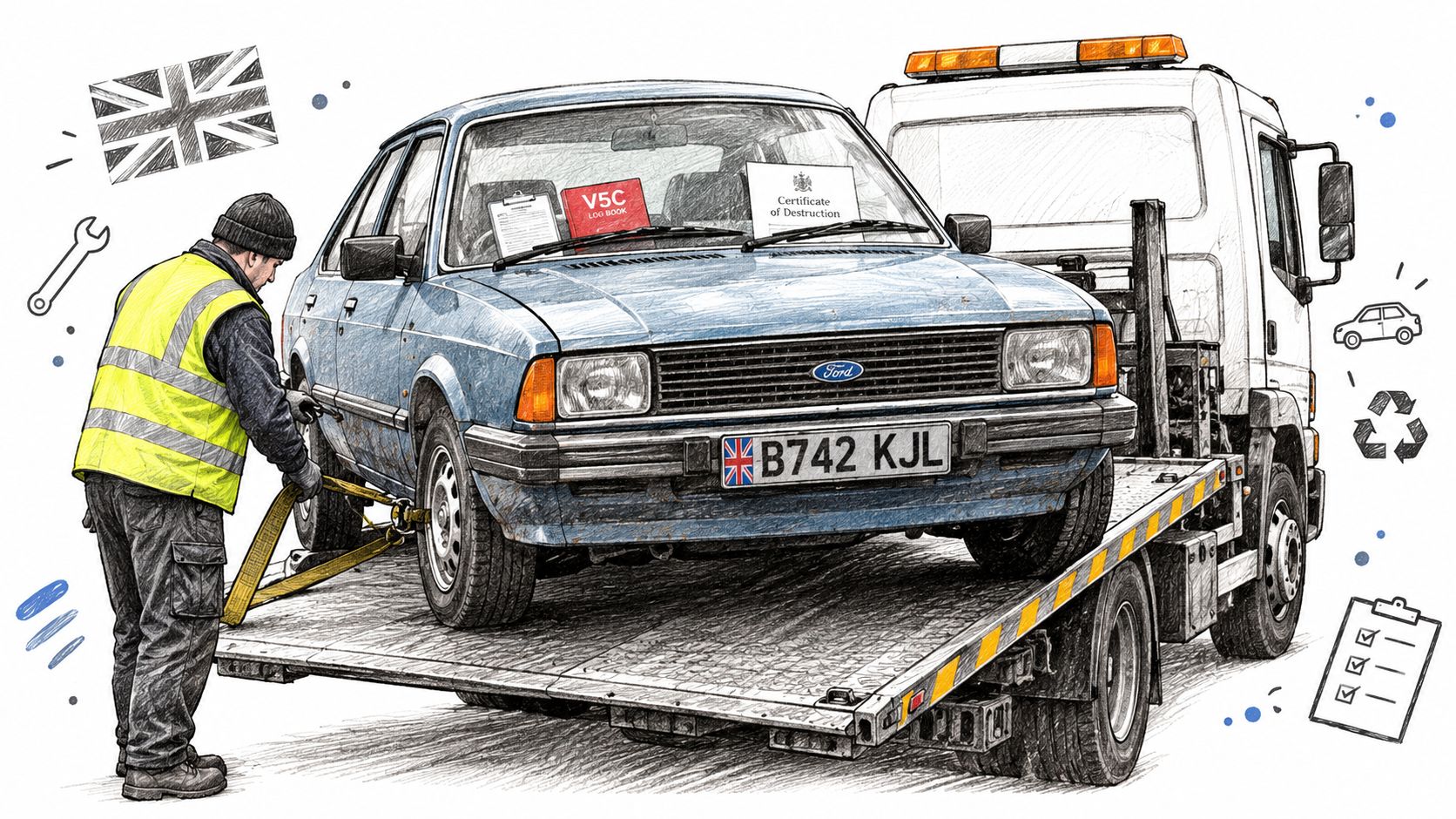
Before you book anything, get your V5C logbook out and check that the details are accurate. If the logbook’s missing, you can still scrap the car, but you need to be more careful about ownership evidence and the buyer’s licence status, because the paperwork gap is where people get trapped later. For a clear checklist of what to have ready, see what documents are needed to scrap a car.
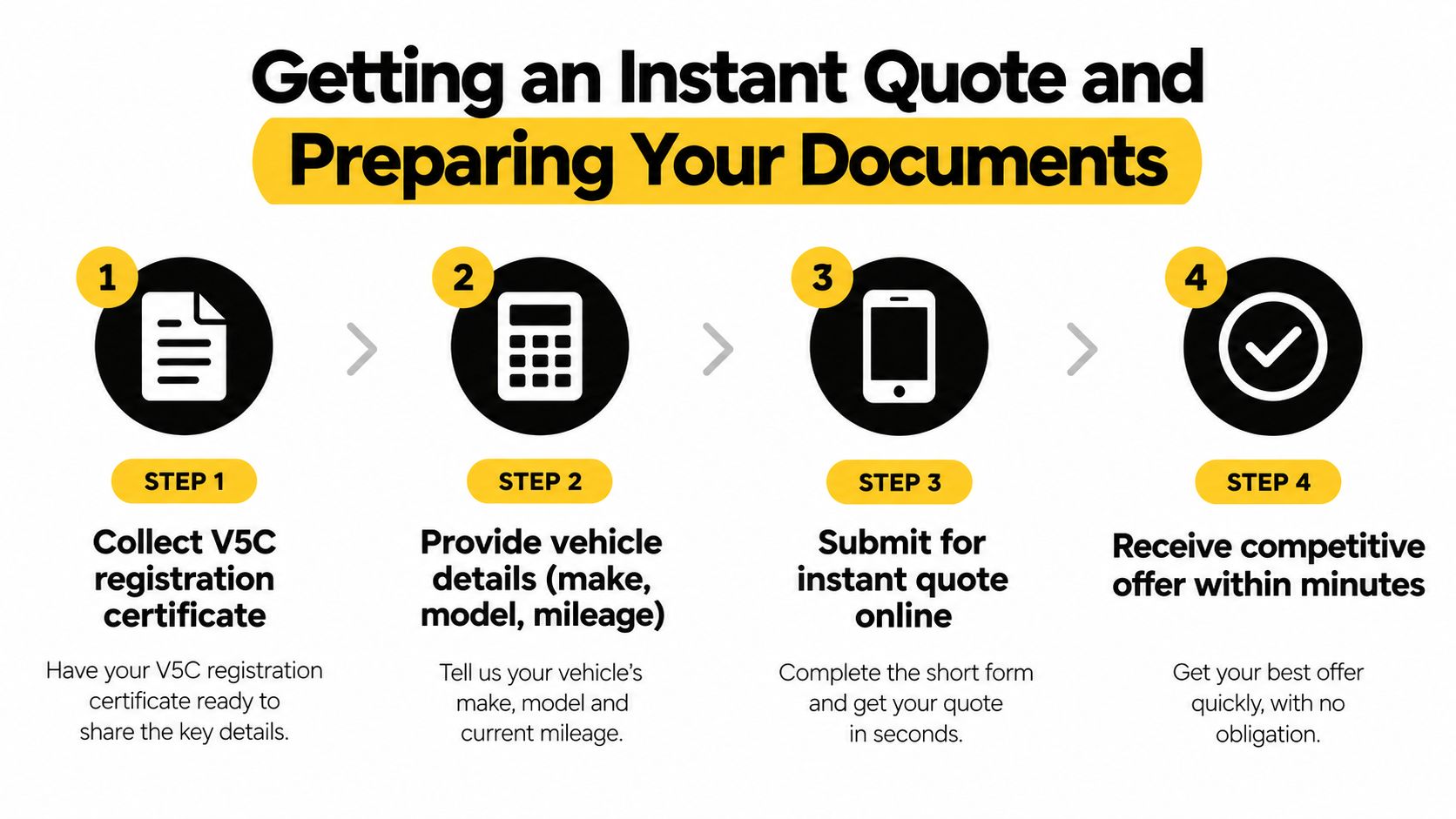
What to have ready before collection
- V5C registration certificate: This is the cleanest proof that the vehicle is yours and makes the handover simpler.
- Accurate vehicle details: Make, model, mileage, and condition matter because they affect whether the car is treated as pure scrap or as a vehicle with usable parts.
- Personal items removed: Clear the glovebox, boot, and door pockets before the driver arrives.
- Transferable registration removed if needed: If you want to keep a private plate, deal with that first.
Practical rule: If the quote looks good but the buyer can’t explain the paperwork, walk away. A fast collection isn’t worth a future DVLA headache.
The collection itself should be free and straightforward, but don’t leave it to the last minute to sort access. If the car is blocked in, parked awkwardly, or non-running, say so up front. That avoids a failed pickup and protects the quoted price from being trimmed because the driver had extra work.
Understanding Scrap Value vs Salvage Potential
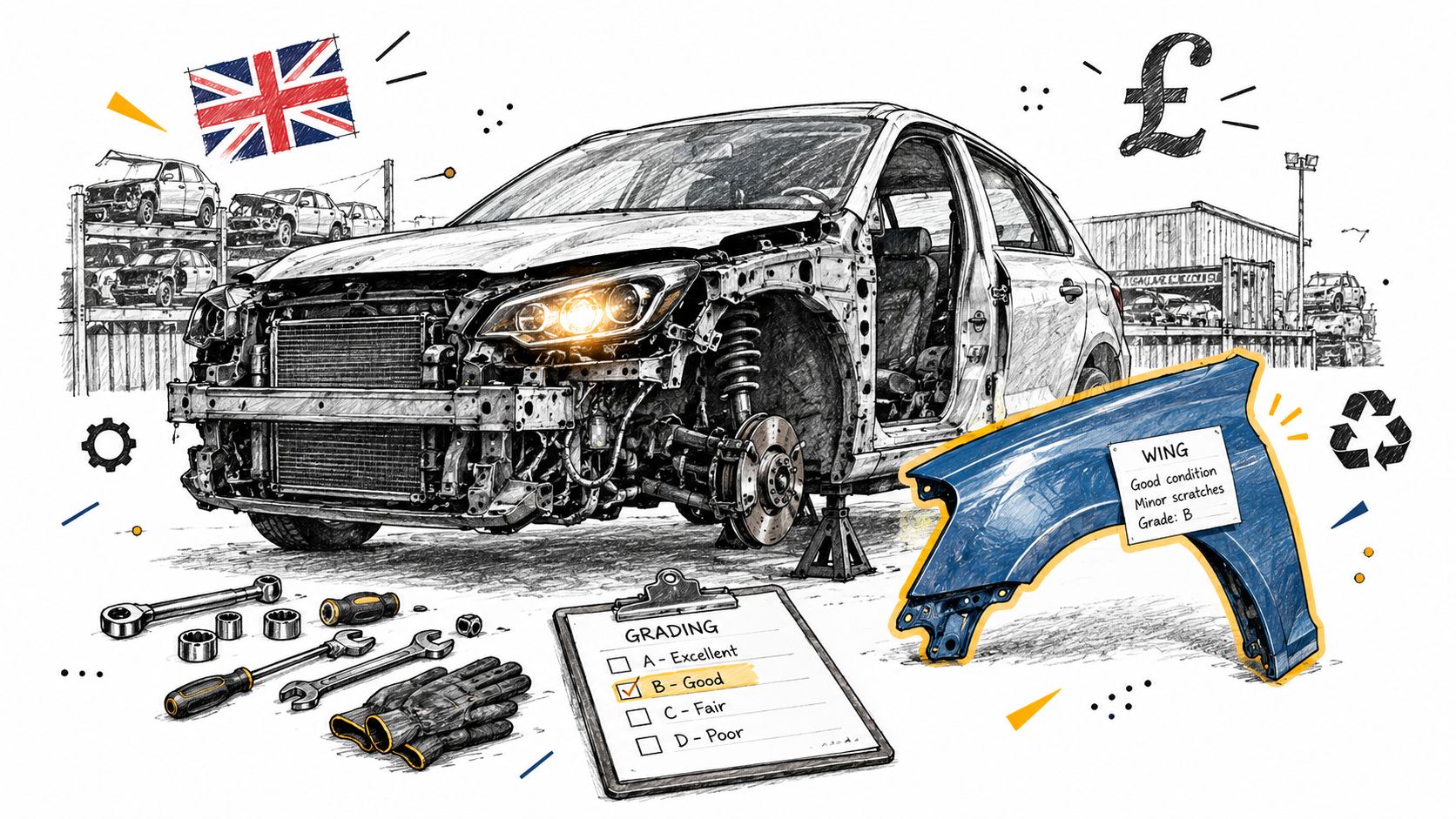
Owners often treat scrap value as little more than the car’s weight in metal, but that misses the central decision. A vehicle can be an end-of-life vehicle and still have salvage potential if the parts, trim, or drivetrain are still wanted. If you price it only as scrap, you can leave money on the table.
Market data supports that split. A large 2026 dataset reported an average scrap payout of £254, with only 2.9% of vehicles under £100 and 6.4% over £500 (Car.co.uk scrap car report). It also showed the £100 to £200 band was the most common offer range at 21.5% of quotes, which is exactly where salvage value starts to matter.
Age and condition change the offer
That same report found that 16 to 20-year-old cars averaged £232 in the 2024 to 26 period, while 21 to 25-year-old cars averaged £218 in the same period. That gap matters because newer, more complete cars often carry more usable parts, and buyers can price that into the offer instead of treating the car as plain scrap.
A car that still starts, rolls, or has intact high-demand parts should be priced as more than metal unless the buyer can show why it is not.
What to do with a low offer
If the first quote is weak, do not accept it on the spot. Compare it against the car’s age, whether it runs, whether major parts are intact, and whether the buyer is actually assessing salvage potential. The right split is straightforward: ELV scrap, salvage or non-runner, and roadworthy resale.
That distinction protects you from a common mistake, handing over a car with recoverable value as if it were only worth crushing. If the vehicle still has usable panels, engine parts, or trim, a specialist buyer may pay more than a straight scrap yard. For many owners, that is the difference between getting a fair payout and giving up cash for no reason.
Choosing Between Motorwise and Scrap A Vehicle
If you’re deciding between services, don’t just compare the first number on the screen. Compare what each buyer is doing with the car, because the right option depends on whether you want a simple scrappage handover or a quote that also considers salvage value.
Motorwise is built around a quick quote-to-collection flow, and its public guidance says it checks both scrap and salvage offers while arranging collection through licensed treatment facilities. Scrap A Vehicle is a broader disposal service that offers instant online valuations, free nationwide collection, same-day bank payment, DVLA paperwork handling, and used green parts supply for dismantled vehicles.
| Feature | Motorwise | Scrap A Vehicle |
|---|---|---|
| Quote approach | Scrap and salvage pricing are referenced in its guidance | Instant online valuation using registration and postcode |
| Collection | Arranged through its network | Free nationwide collection |
| Payment | Bank transfer is the legal route for scrap vehicles in the UK | Same-day bank payment after collection |
| Paperwork | Uses the ATF and DVLA disposal process | DVLA paperwork handled, including Certificates of Destruction |
| Extra services | Salvage-focused disposal is highlighted | Also supplies used green parts from dismantled cars |
The key difference is how much of the car’s value gets considered before the collection is booked. If your car really is at the end of its life, either route can work. If it’s damaged but still has valuable parts, the service that looks at salvage potential is usually the smarter choice.
My view: pick the buyer that can justify the number, not the one that just promises speed. Speed is useful, but a weak valuation is still a weak valuation.
There’s also a legal side to the choice. A proper buyer should be able to route the vehicle through an Authorised Treatment Facility and issue the right destruction record. Without that, you’re trusting them with your liability, and that’s a bad trade.
Arranging Collection and Handling DVLA Paperwork
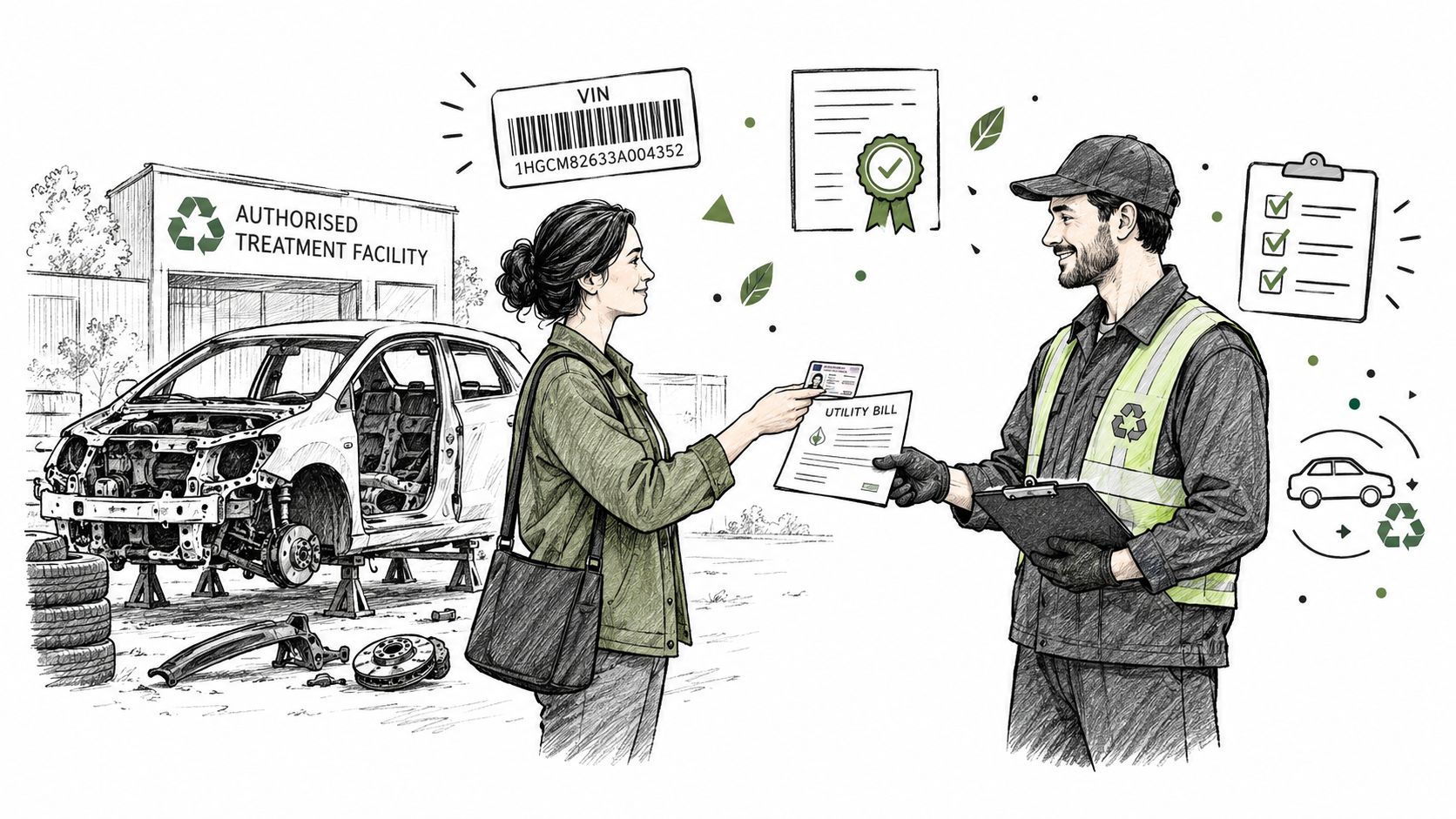
The collection day should be dull. If someone starts arguing about ownership, licence status, or whether the car can legally be taken, the disposal is already at risk. Use an Authorised Treatment Facility, get the vehicle collected, and make sure the official destruction record is issued through the DVLA system.
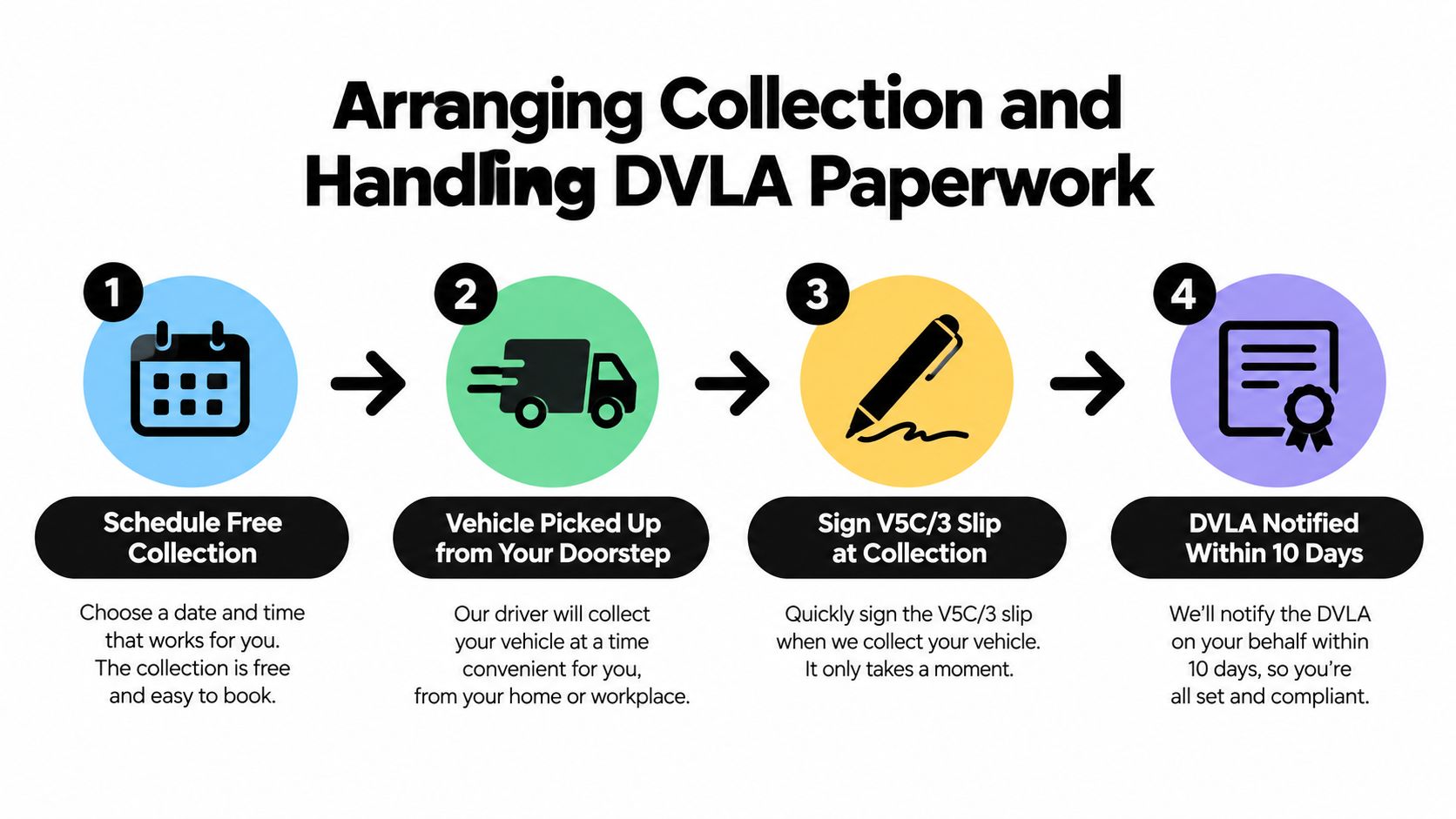
The legal sequence that protects you
- Schedule the collection: Confirm the buyer is an ATF or is sending the car to one.
- Hand over the vehicle: Let the driver take the car only once the details match the booking.
- Sign the relevant paperwork: The disposal record has to be generated properly.
- Keep the proof: The official Certificate of Destruction is what removes doubt about future liability.
The government guidance says scrappage must go through an ATF, and the owner should receive a Certificate of Destruction to prove the car was permanently destroyed and removed from road use (INF169 guidance). That record is the line between a clean disposal and a car that still appears linked to you in the system.
Don’t leave the site without some form of collection note or proof of handover.
The same INF169 guidance says CoDs are for passenger cars, light goods vehicles under 3.5 tonnes, and 3-wheeled motor vehicles. If the buyer cannot explain that process plainly, use someone else.
The biggest mistake is assuming the handover closes the loop. It does not. The paperwork closes the loop, and that is what keeps you out of trouble later.
Avoiding Common Pitfalls in Vehicle Disposal
The biggest mistake is treating every scrapyard as a lawful disposal route. It is not. If the outlet is not an ATF, you lose the protection that comes with proper authorised processing, and you should not hand over the car just because the offer is easy.
Paperwork matters just as much. Scrapping without a V5C and assuming the buyer will handle the admin can leave you exposed. GOV.UK says you can scrap a vehicle at an authorised treatment facility, but you must tell DVLA or risk a £1,000 fine (GOV.UK scrapped and written-off vehicles). The same GOV.UK guidance says a Certificate of Destruction should be issued within 7 days for cars, light vans, and 3-wheeled vehicles.
The mistakes I’d avoid every time
- Using a non-ATF outlet: No ATF status means no clean legal disposal trail.
- Leaving the DVLA notification to chance: You need proof that the car is off the road.
- Accepting a scrap-only offer too quickly: If the car has salvage value, you may be giving up money you could have kept.
- Ignoring ownership proof when the V5C is missing: You need stronger evidence, not less.
Hard truth: if the paperwork is messy, the risk is not theoretical. It stays with the keeper, not the seller who made the cheerful promise.
Owners often notice the problem only after the car is already gone. By then, they are chasing documents and explanations instead of making a clean decision upfront. Slow down for ten minutes, check the ownership proof, confirm the disposal route, and do not let a low-friction handover replace proper paperwork.
Exploring Alternative Options Beyond Scrappage
Not every tired car belongs in the scrap lane. If it still runs, still looks presentable, or only needs minor work, selling it as a roadworthy vehicle can make more sense than accepting a dismantler’s price. The point is to get the car into the right category before you press “accept”.
There’s also a middle ground worth considering, especially for damaged cars. Some buyers assess salvage value as well as scrap weight, and the government notes that an ATF may repair and resell a vehicle rather than completely scrap it (Motorwise salvage guidance). That means the core decision is often not “scrap or keep”, but “scrap value or salvage value”.

If you want the cleanest route, use this checklist. Confirm the buyer is an ATF, separate scrap from salvage, keep the V5C or ownership proof ready, and make sure the destruction record is issued. If the car is roadworthy, don’t let a scrap-only quote define its value.
Scrap A Vehicle handles instant valuations, free nationwide collection, DVLA paperwork, and bank payment for end-of-life, damaged, and roadworthy cars. If you want a proper comparison between scrap and salvage value before you book collection, visit Scrap A Vehicle and get the car assessed on its real condition, not just its weight.