You turn the key, hear a click, and nothing happens. Or perhaps the engine starts but the car has just failed its MOT, and the garage has handed you a repair estimate that feels out of proportion to the vehicle’s age. The car may be sitting on a driveway, blocking access, while you try to work out whether to repair it, sell it for salvage, or arrange collection.
A non-runner isn’t automatically worthless. The right choice depends on why it can’t be driven, what the repairs involve, how old the vehicle is, and whether it still has useful salvage value. A completely immobile car can still enter a legal recycling route through an authorised treatment facility, while a newer vehicle with one contained fault might justify repair or a salvage sale.
This guide takes you from the everyday meaning of car non runners to the practical decision after an MOT failure. You’ll learn what counts as a non-runner, how the main options compare, which legal steps matter, and how collection and payment work when the car won’t move under its own power.
Table of Contents
- What Counts as a Car Non Runner in the UK
- Your Four Main Options for Car Non Runners
- Should You Repair or Scrap After an MOT Failure
- Legal and Logistical Essentials for Non Runners
- How Scrap A Vehicle Handles Car Non Runners
- Making the Right Call for Your Non Runner
What Counts as a Car Non Runner in the UK
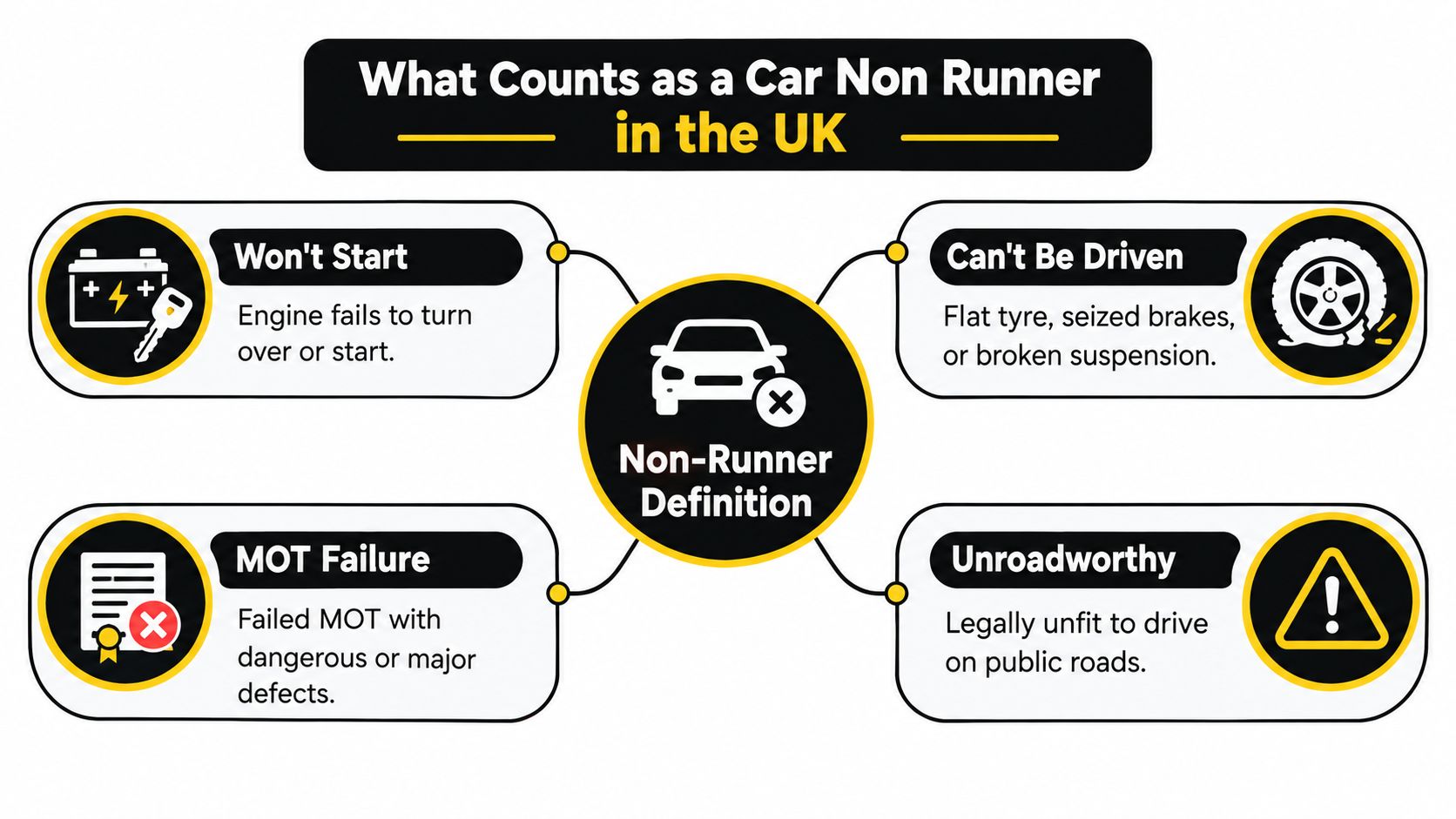
In ordinary conversation, a non-runner is a car that won’t start or can’t be driven safely. That includes a vehicle with a flat battery, seized engine, failed gearbox, damaged wheels, locked brakes, or serious accident damage. It can also include a car that starts but can’t move, steer, or stop reliably.
Think of the vehicle as a chain of connected systems. The engine provides movement, the gearbox transfers it, the wheels and suspension keep the car rolling, and the brakes allow the driver to control it. One critical break in that chain can make the whole car unusable, even if several other parts remain in good condition.
Mechanical problems that create a non-runner
Some non-runners have obvious engine faults. A seized engine, failed timing system, or major overheating problem can make repair uneconomic. Others fail because of less visible systems, such as a damaged electronic control unit, faulty immobiliser, failed fuel system, or automatic gearbox problem.
A car may also count as a non-runner even though its engine starts. Examples include:
- Locked wheels: Seized brakes or damaged wheel bearings can prevent safe movement.
- Steering or suspension damage: A broken suspension component or accident-damaged steering system can make the car unsafe.
- Transmission failure: The engine runs, but the gearbox won’t engage drive or reverse.
- Structural damage: A collision may leave the vehicle unable to travel safely, even if it starts.
- MOT-related defects: A dangerous fault means the car can’t legally be driven away on public roads.
The important point is that “non-runner” describes the vehicle’s usable condition, not just the engine’s behaviour. Tell any recovery driver or buyer whether the car starts, rolls, steers, brakes, and can be placed into neutral. Those details determine the equipment needed for safe loading.
The legal meaning matters too
If the vehicle is an end-of-life vehicle, UK waste guidance treats it as hazardous waste until an authorised treatment facility has fully depolluted it. The process includes removing the battery, fuel, oils, brake fluid, coolant, air-conditioning gas, mercury-containing parts, catalytic converter, airbags, and seat-belt pre-tensioners, as explained in the UK government’s end-of-life vehicle guidance.
That’s why a non-runner can’t be treated as ordinary metal. It may contain flammable liquids, pressurised systems, explosive components, and substances that could contaminate the ground. A licensed facility makes the vehicle safe before dismantling and recycling it.
Practical rule: Tell the buyer the complete condition. “It doesn’t start” isn’t enough if the brakes are seized or the wheels won’t roll.
Your Four Main Options for Car Non Runners
A car that won’t move gives you four broad routes. The best one depends on the vehicle’s age, fault, paperwork, condition, and the amount of effort you’re willing to invest.
Scrapping is usually the simplest choice for an old vehicle with several faults, serious corrosion, or an MOT failure that would require extensive work. A licensed dismantler arranges recovery, depollutes the car, removes reusable components, and recycles the remaining materials. The outcome is a compliant disposal process rather than another repair bill.
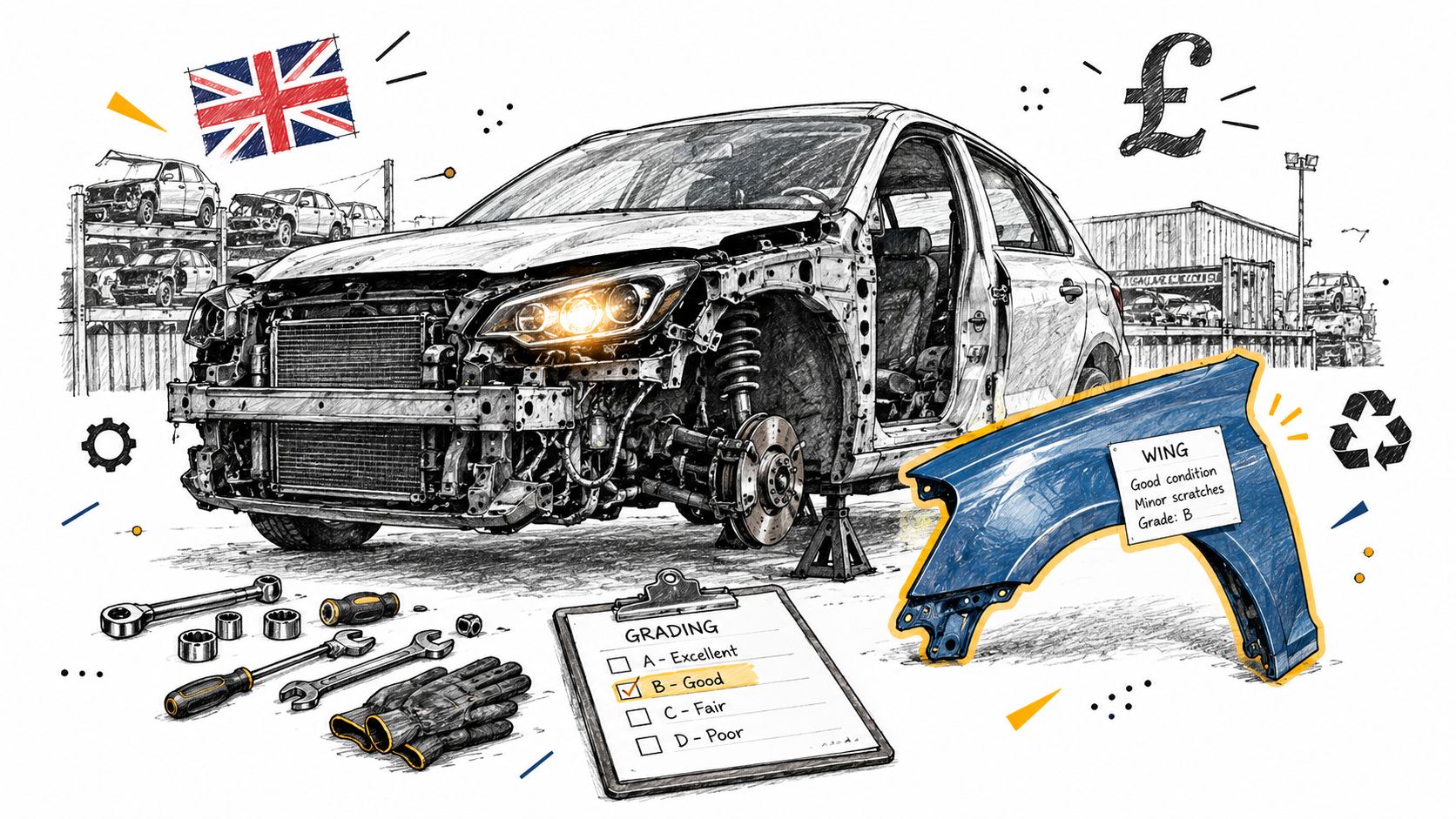
A salvage sale can suit a newer car with repairable damage or valuable parts. A specialist buyer may assess the engine, gearbox, panels, interior, wheels, electronics, and catalytic converter separately instead of valuing the car only by its metal content. Accident-damaged vehicles and cars with a single major failure often fit this route better than very old cars with widespread wear.
Repairing makes sense when the fault is limited and the vehicle still has useful life after the work. A battery, starter motor, tyre, brake component, or isolated electrical fault may be manageable. The calculation changes when the garage identifies several unrelated defects, especially on a car that has already accumulated repeated advisories.
Parts harvesting is another possibility for owners with mechanical knowledge, storage space, and time. You might recover usable components yourself, but dismantling a vehicle also creates responsibility for fluids, batteries, airbags, and other hazardous parts. If the car is ultimately an end-of-life vehicle, it still needs to reach a compliant treatment route.
Which option fits your non-runner
| Option | Best for | Typical outcome | Effort level |
|---|---|---|---|
| Scrap | Older cars with multiple failures or severe corrosion | Collection, depollution, dismantling and recycling | Low |
| Salvage sale | Newer cars, accident damage or one valuable major component | Specialist valuation based on parts and repair potential | Low to moderate |
| Repair | A contained fault with a reasonable repair quote | Car returns to road after testing and maintenance | Moderate to high |
| Parts harvesting | Owners with skills, tools and secure storage | Useful components removed before final disposal | High |
A 17-year-old car with failed brakes, corrosion and an unreliable clutch may not need a perfect diagnosis before you compare scrap and salvage offers. Repairing one fault may expose the next expensive problem. A newer car with a failed alternator or damaged bumper presents a different decision, because one repair may restore much of its usable value.
The car’s value isn’t just its weight. It may include reusable parts, repairable systems, or demand from specialist buyers. Ask what the offer is based on, whether collection is included, and what paperwork you’ll receive when the vehicle is taken away.
Should You Repair or Scrap After an MOT Failure
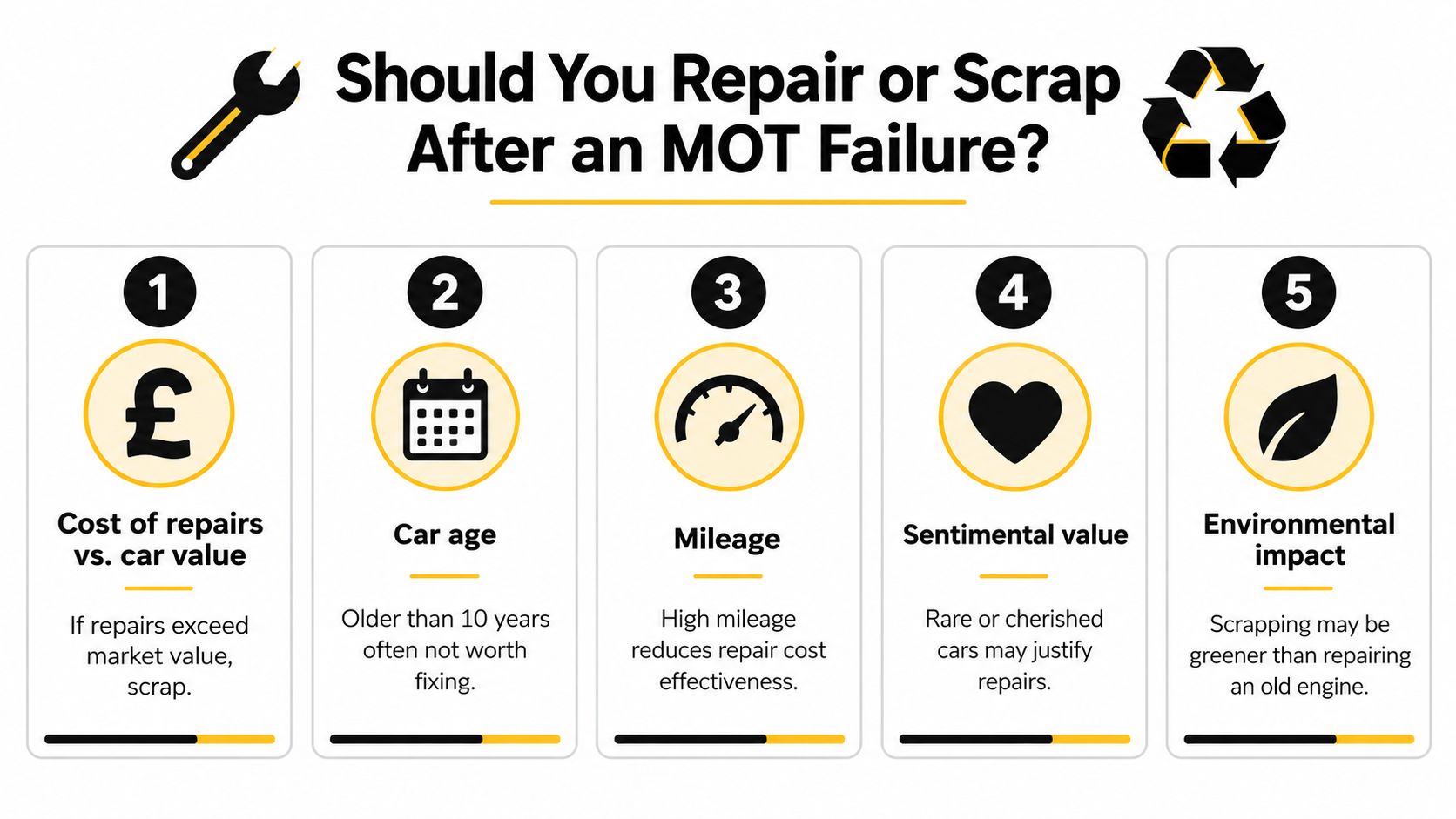
The failure notice arrives after a routine test, but the right response is a calm comparison, not an instant decision to scrap. An MOT failure identifies defects that need attention before the vehicle can be used legally and safely. Start with the tester’s report, then compare the likely repair cost with the car’s value as a usable vehicle and as a source of parts or scrap.
Read the report in three groups:
- Safety-critical defects affect braking, steering, tyres, suspension, structure, or visibility. A dangerous defect means the car cannot be driven away, as explained in RAC guidance on driving without an MOT.
- Retest items must be repaired before the vehicle can pass. Some are contained faults, although the garage should check whether nearby components show related wear.
- Advisories are warnings rather than immediate failures. Several advisories covering brakes, suspension, corrosion, tyres, or fluid leaks suggest that today’s repair may be followed by another bill soon.
Use the repair quote as a decision point
The average scrap car value is about £254, according to the RAC’s non-runner and MOT decision guidance. Treat that figure as a benchmark, not a guaranteed offer. The actual amount depends on the vehicle, its condition, location, and the value of recoverable materials or parts.
A repair becomes harder to justify when the quote approaches the car’s running value. Ask:
- Will the repair solve the main problem? A clutch replacement will not cure serious corrosion or failing suspension.
- What else is already due? Review the advisories and recent MOT history for signs of further work.
- What will you own afterwards? An older car may still have a tired engine, gearbox, exhaust, or electrical system after one successful repair.
The UK car parc is ageing. Remove My Car’s report on Britain’s ageing cars records 8.67 million licensed cars aged 13 years or more, around 25% of the fleet. Older vehicles often carry higher mileage, so several costly faults can appear close together. That can turn a modest-looking MOT failure into a repair chain with no clear stopping point.
Watch this short visual guide before approving major work:
Sentimental value can make a repair worthwhile even when the figures do not. For an ordinary commuter car, scrapping or salvage is often the more practical choice when a large quote sits alongside several advisories and an ageing vehicle.
Legal and Logistical Essentials for Non Runners
A non-runner still needs careful handling after it leaves the road. Start by preventing the car from becoming an accidental liability.
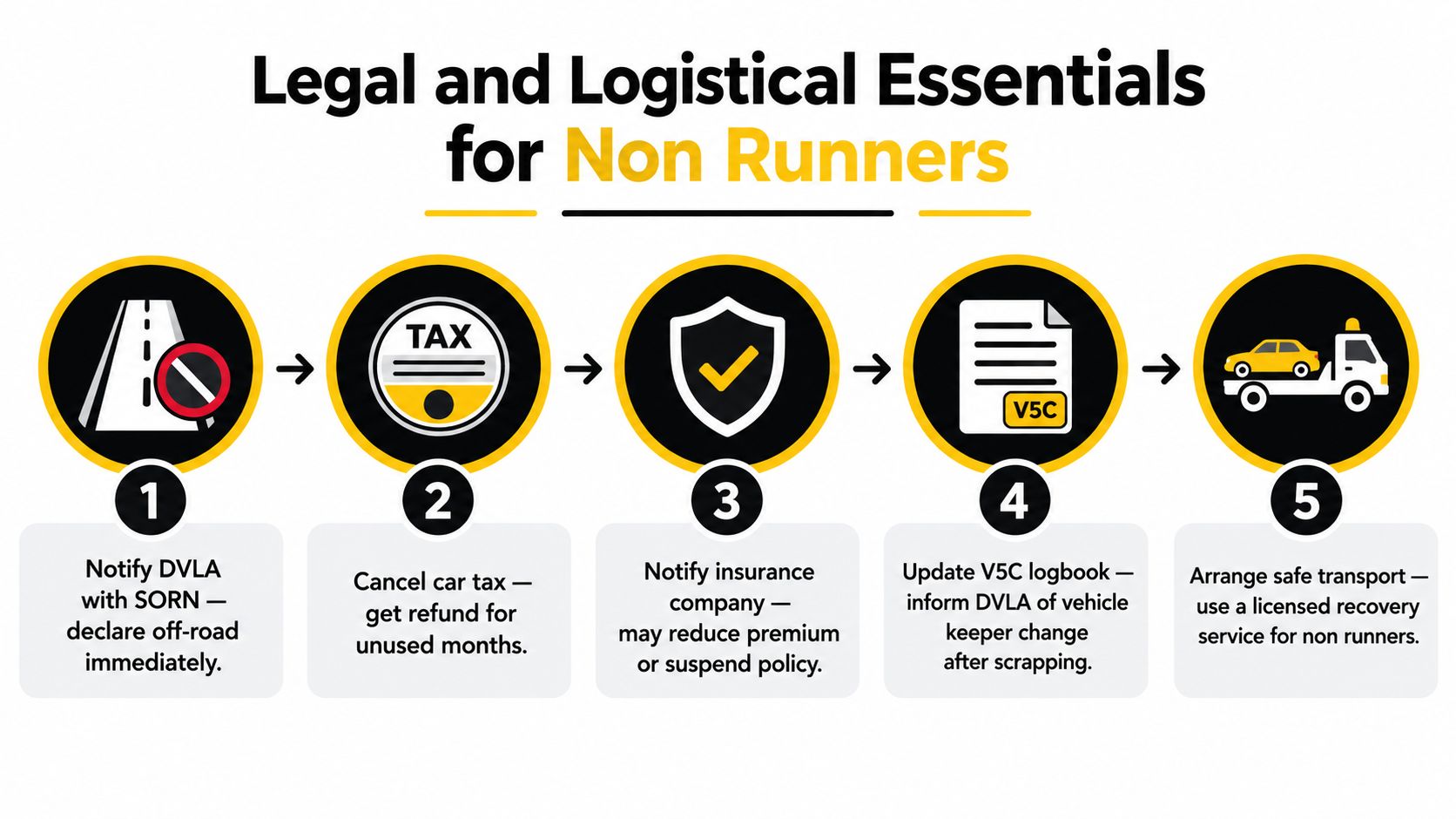
If it’s parked on private land and won’t be used, make sure its off-road status is properly dealt with through a Statutory Off Road Notification, commonly called SORN. Don’t drive a SORN vehicle on public roads except in the limited circumstances allowed for a pre-arranged MOT appointment. Keep insurance arrangements under review, because a car stored off-road may need different cover from one used regularly.
Prepare the handover
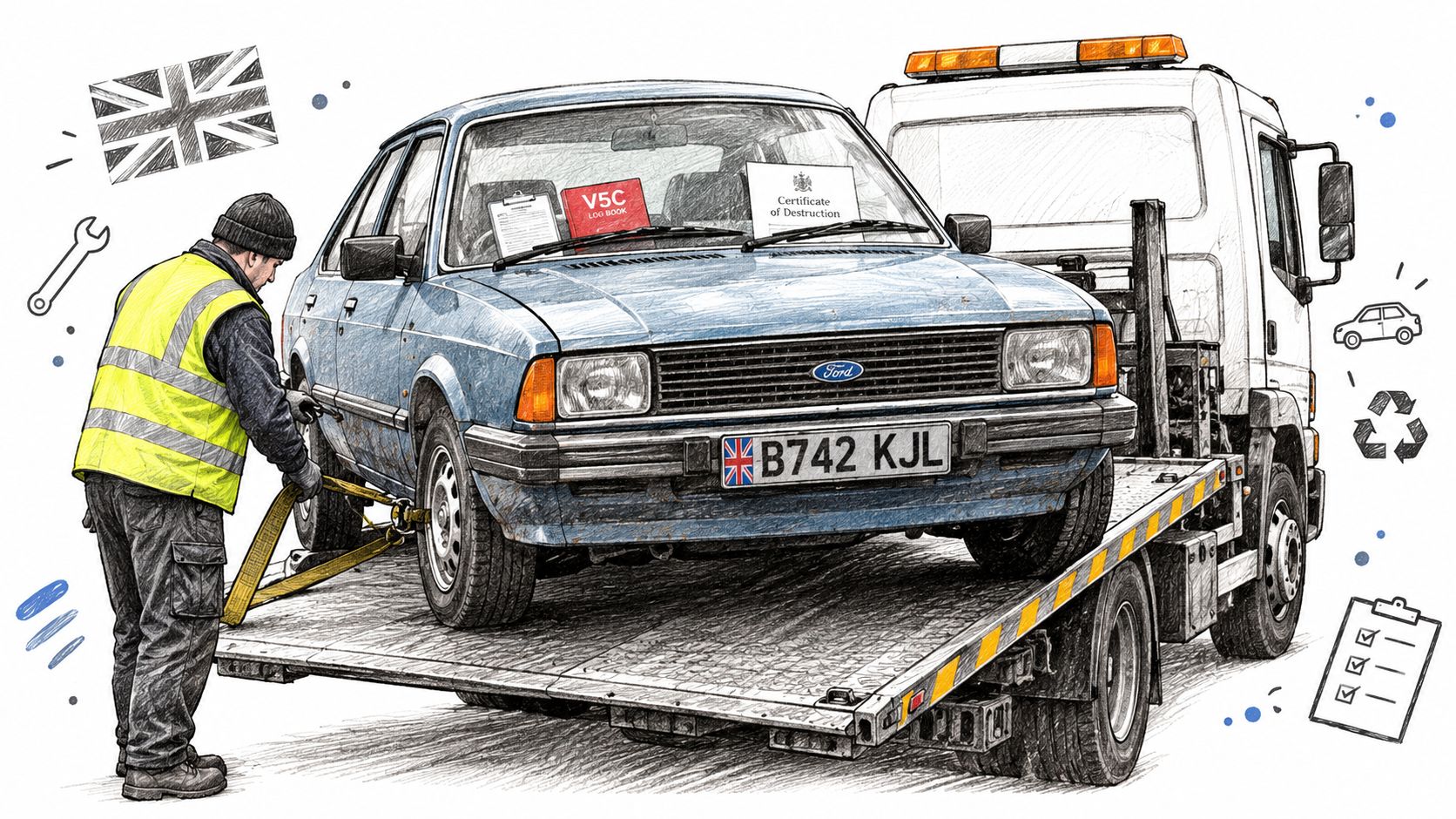
Before collection, find the V5C logbook, remove personal belongings, and photograph the car’s condition. Tell the recovery team whether it starts, rolls, steers, brakes, and has accessible wheels. A vehicle with locked brakes or no steering needs different loading equipment from one that has a flat battery.
The collection point matters too. Narrow entrances, soft ground, steep driveways, low branches, and blocked access can affect how the driver loads the car. If the recovery vehicle can’t reach the driveway, agree a safe nearby meeting point rather than leaving the driver to improvise.
Confirm the disposal paperwork
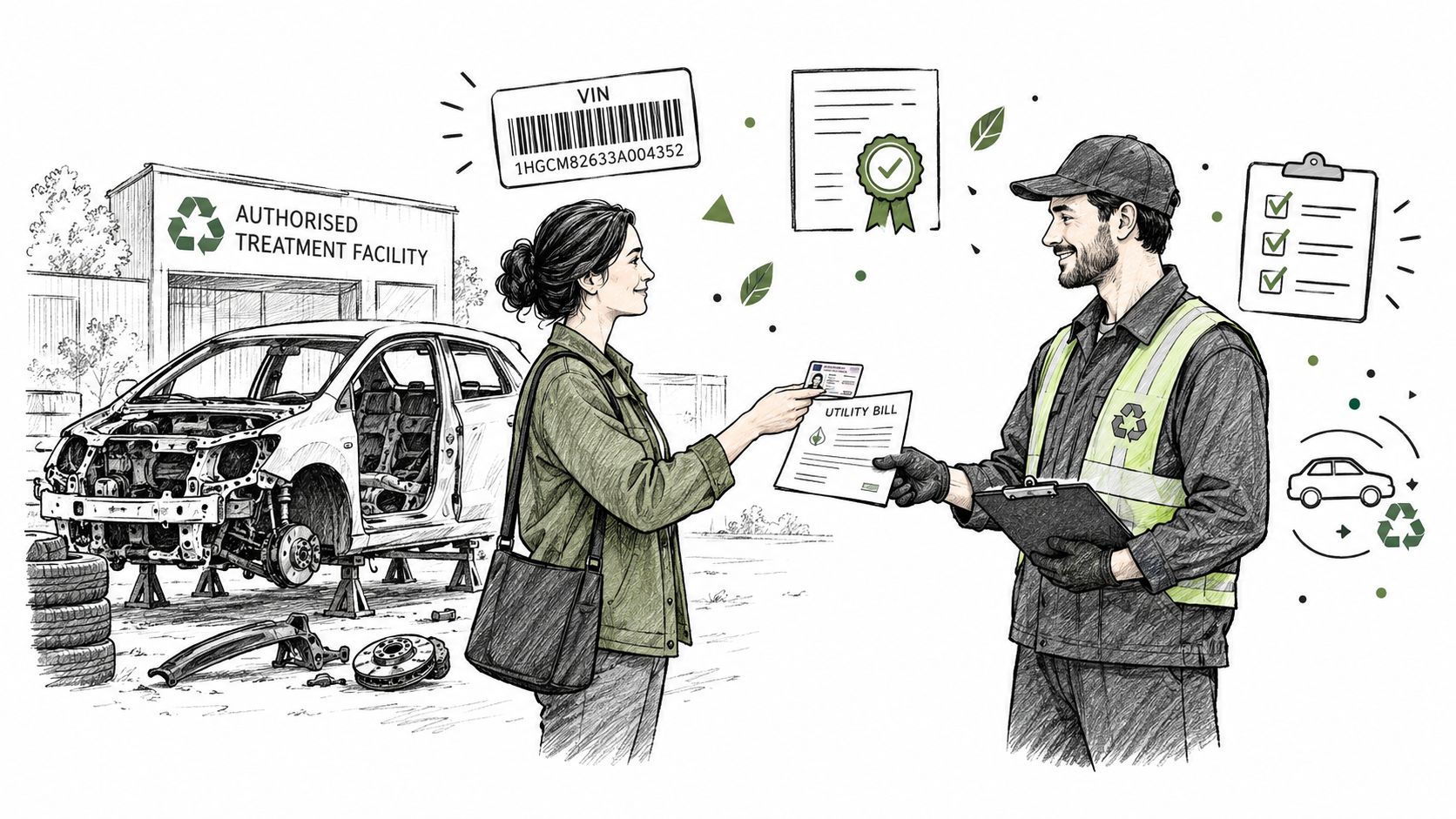
Use an authorised treatment facility for an end-of-life vehicle. The facility depollutes the car on a suitable impermeable surface with sealed drainage, removes hazardous materials, and dismantles it under the relevant waste controls. The UK network had 1,951 authorised treatment facilities operating in 2025, according to the UK scrap vehicle report from CIWM-referenced industry data.
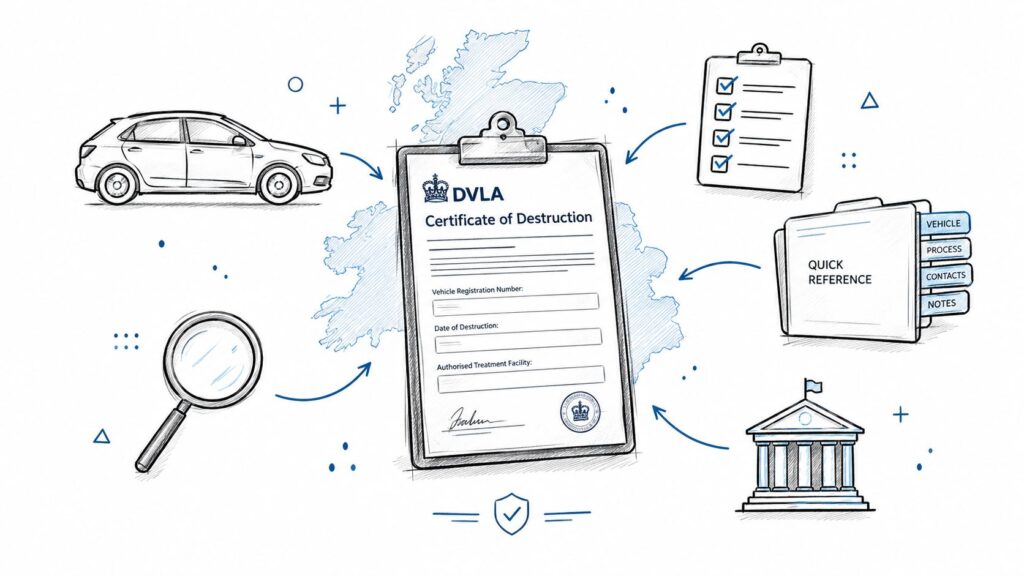
After scrapping, the ATF issues a Certificate of Destruction to the final keeper. DVLA then removes the vehicle from its registration database. Keep the certificate and any collection confirmation with your records. You can also review the appearance and purpose of a UK vehicle Certificate of Destruction before handover.
UK end-of-life vehicle rules established a route where delivery of an ELV to an ATF is at no cost to the final user. Confirm the collection terms in writing, including payment timing and whether any deduction applies for missing paperwork or an inaccurate condition description.
How Scrap A Vehicle Handles Car Non Runners
A typical non-runner collection begins with the vehicle details rather than a long mechanical diagnosis. You enter the registration and postcode to request an online valuation, then describe the condition. A car that starts but won’t move, one with seized brakes, and one with a dead battery may need different recovery arrangements, so those details matter.
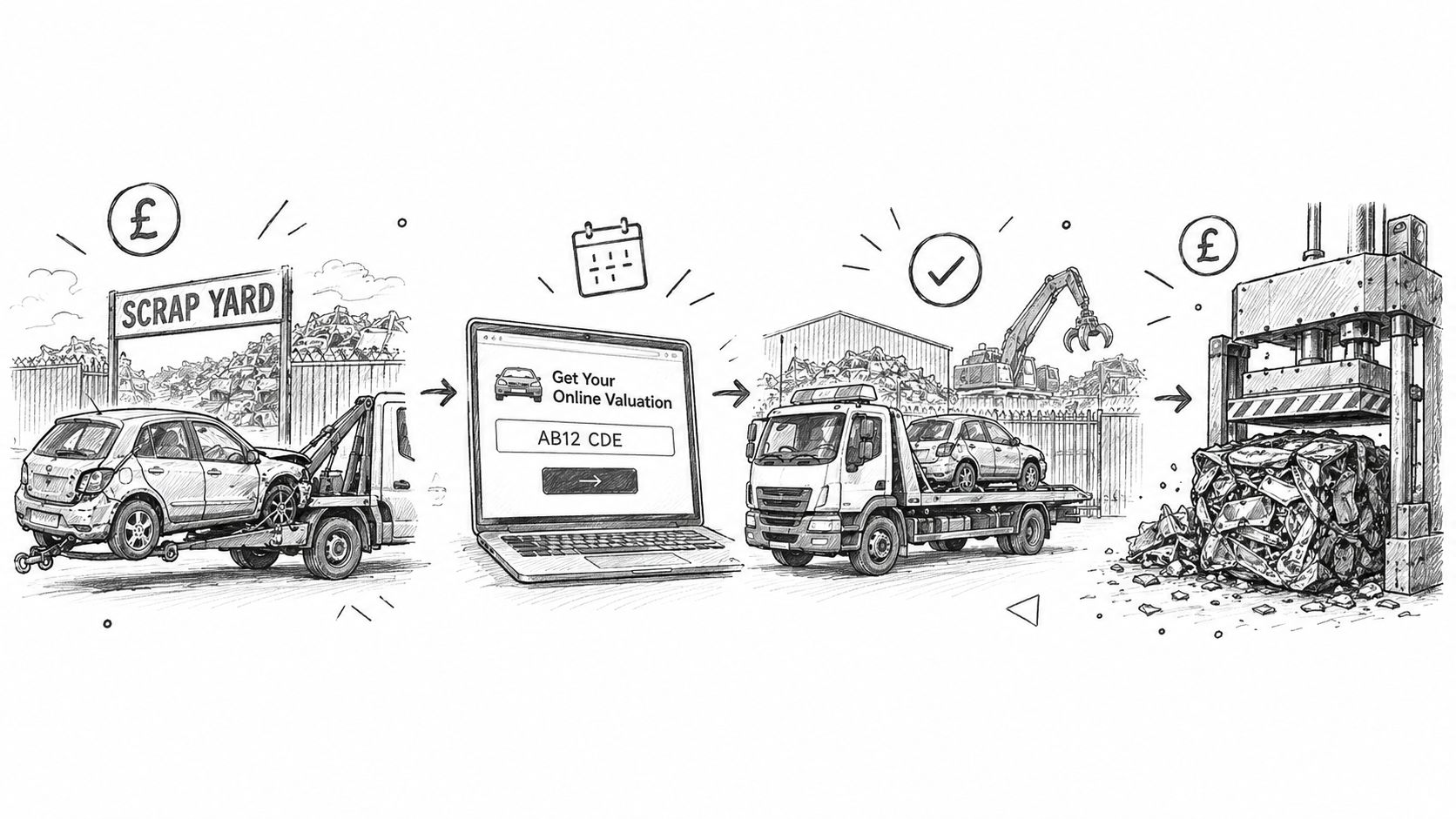
Once you accept the offer, Scrap A Vehicle arranges free nationwide collection, including cars that won’t start. Its stated average collection time is around 24 hours from acceptance, with flexible booking options where available. Give the driver clear access information and have the keys and V5C ready if you hold them.
Payment is made by Faster Payment on collection, with confirmation before the driver leaves. That gives you a clear point at which the vehicle changes hands. The service also states that it handles DVLA administration, including the relevant keeper update and Certificate of Destruction process.
The final value may reflect more than scrap metal. Scrap A Vehicle works with a network of specialist buyers, so a non-runner may be assessed for usable engines, gearboxes, panels, interiors, catalytic converters, wheels, or electrical components. This can be relevant when a vehicle has salvage potential despite being uneconomic to repair.
Dismantling takes place through ATF-certified partners, with depollution and recycling aligned with end-of-life vehicle requirements and ISO 14001 environmental management standards. Reusable components can enter the used-parts market as green parts, with stated savings of up to 70% off recommended retail price, according to the publisher’s service information.
That journey suits an owner who wants a clear outcome without arranging a separate garage inspection, recovery vehicle, dismantler, and DVLA process. It isn’t the only route, but it combines valuation, transport, payment, and compliant treatment in one handover.
Making the Right Call for Your Non Runner
The key question isn’t, “Why won’t it start?” It’s whether the car has enough remaining value to justify the next repair. Age, mileage, corrosion, previous advisories, and the number of systems affected often matter more than the single fault that first stopped the vehicle.
Recent UK scrap data places the average age of a scrapped vehicle at 17.5 years in 2025, up from 16.4 years in 2022, as reported by Remove My Car’s UK scrappage data. That pattern supports a practical checklist:
- Read the complete MOT failure and advisory report.
- Get a written repair estimate.
- Check whether the car has several unrelated ageing components.
- Compare the running value with salvage and scrap offers.
- Confirm collection, payment, and Certificate of Destruction arrangements.
- Be honest about whether the car starts, rolls, steers, and brakes.
A non-runner isn’t a dead end. It’s a vehicle at a decision point, and a clear comparison can prevent you spending heavily on a car that has already reached the end of its economical life.
If your car won’t start, has failed its MOT, or needs recovery from private land, request an online valuation from Scrap A Vehicle. You can describe the condition, arrange free collection, receive payment on handover, and move the vehicle into a compliant recycling route.