The repair quote has arrived, the MOT has expired, and the car on the driveway is now costing money before it even moves. You might be weighing another round of repairs against selling it, scrapping it, or leaving it until a buyer takes the risk. With older vehicles staying on UK roads for longer, that decision needs more thought than a simple scrap-metal estimate.
An end-of-life vehicle is not merely an unwanted car. It becomes a regulated waste stream, with hazardous materials, reusable components, paperwork, and recovery targets all affecting what happens next. The value can sit in a gearbox, an exportable engine, or a small control unit, not just in the steel shell.
Table of Contents
- The Economics of Keeping Older Cars on the Road
- Legal Definitions and Hazardous Waste Rules
- Inside the Authorised Treatment Facility Process
- How Export Markets and Niche Parts Drive Value
- Green Parts and the Future of Vehicle Recycling
- Your Step-by-Step Guide to Legal Car Disposal
- Final Checklist for End of Life Vehicle Owners
The Economics of Keeping Older Cars on the Road
The UK car parc is ageing. 8.67 million cars were at least 13 years old, representing 25% of the 34.5 million licensed-car fleet, according to UK car parc ageing data. That matters because owners of older vehicles face a different calculation from someone selling a nearly new car. A repair may restore transport, but it doesn’t necessarily restore meaningful resale value.
The same source records the average scrapped car as 17 years and 3 months old with 131,700 miles. Those figures describe vehicles that owners have often kept in service well beyond the point where routine maintenance is the only concern. Rust, suspension wear, emissions faults, electrical failures, tyres, and repeated MOT work can arrive close together, turning one affordable repair into a pattern of expenses.
Finding the tipping point
The useful question isn’t, “Can this car be repaired?” Most cars can be repaired if the owner is willing to spend enough. Ask instead whether the repair buys reliable motoring or merely postpones the next major bill.
A practical assessment should include:
- Immediate work: List the MOT failure items, advisories, warning lights, fluid leaks, and known mechanical faults.
- Recent spending: Separate normal servicing from repairs that indicate an ageing system, such as repeated suspension, cooling, clutch, or electrical work.
- Likely resale value: A roadworthy older car may sell for more than its scrap value, but a non-runner or failed-MOT vehicle will attract a much narrower market.
- Replacement risk: Scrapping removes the current problem, but replacing the vehicle creates its own purchase and running costs.
A cheap repair can make sense where the body is sound, the engine and gearbox are healthy, and the car has a useful service history. It makes less sense when the repair bill is only the first visible part of a longer list, particularly if the car has little residual value and is already difficult to insure or maintain.
Practical rule: Treat the car as a whole asset, not as a single MOT invoice. A repair is worthwhile when it restores dependable use, not merely when it gets a pass certificate.
For fleet managers, the calculation is broader. Downtime, recovery, driver disruption, and workshop capacity can make disposal more sensible than extending the life of a marginal vehicle. Owners should also remember that an end-of-life car can contain parts with a value that a private buyer won’t recognise, which is why a specialist valuation may differ from a basic weight-based scrap estimate.
Legal Definitions and Hazardous Waste Rules
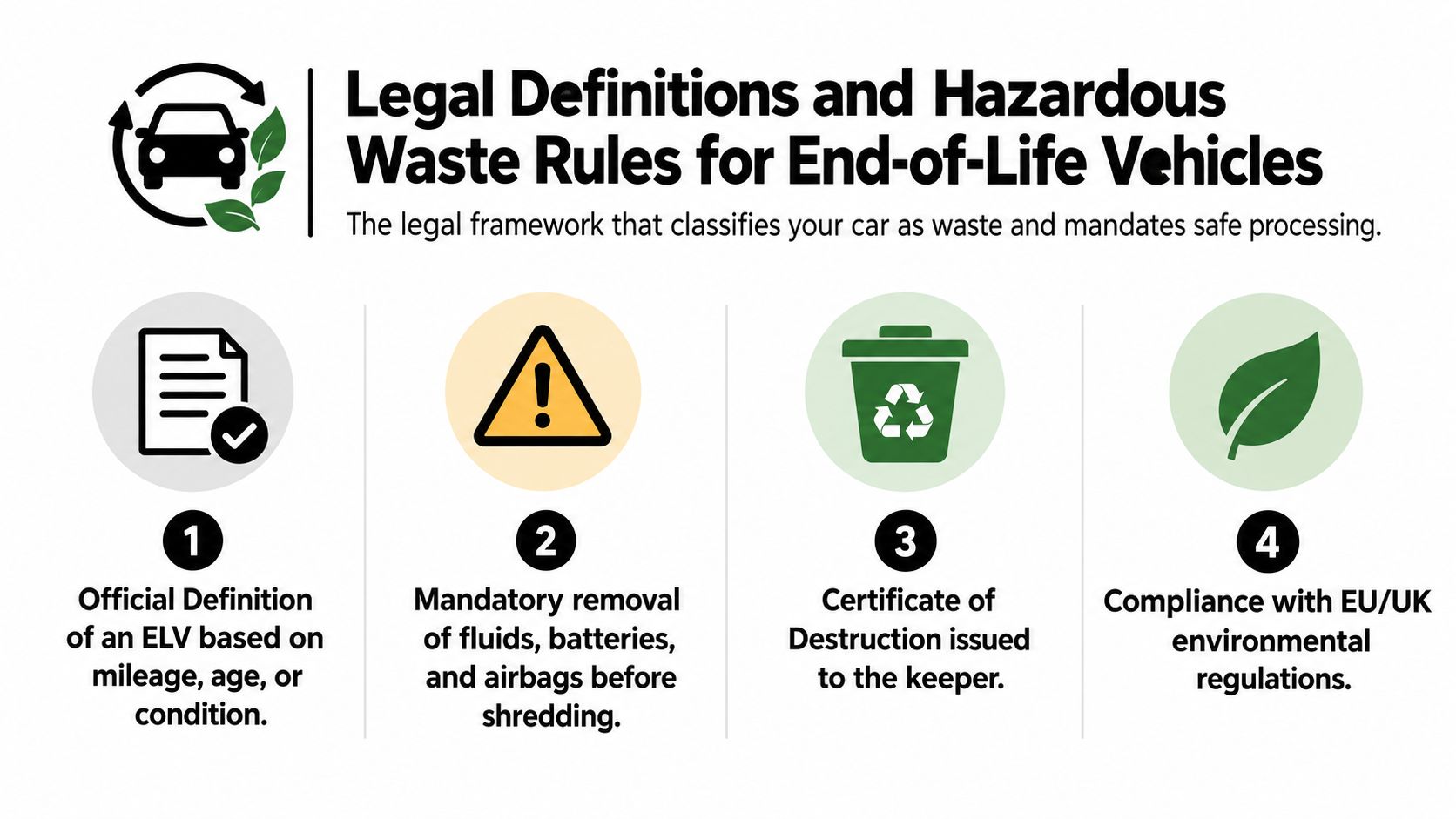
A car that has reached end of life is treated as hazardous waste until fully depolluted in England and Wales, under the UK End-of-Life Vehicles Regulations. Age and mileage do not determine that status. The issue is what remains inside the vehicle, and what could escape during storage, crushing, or shredding.
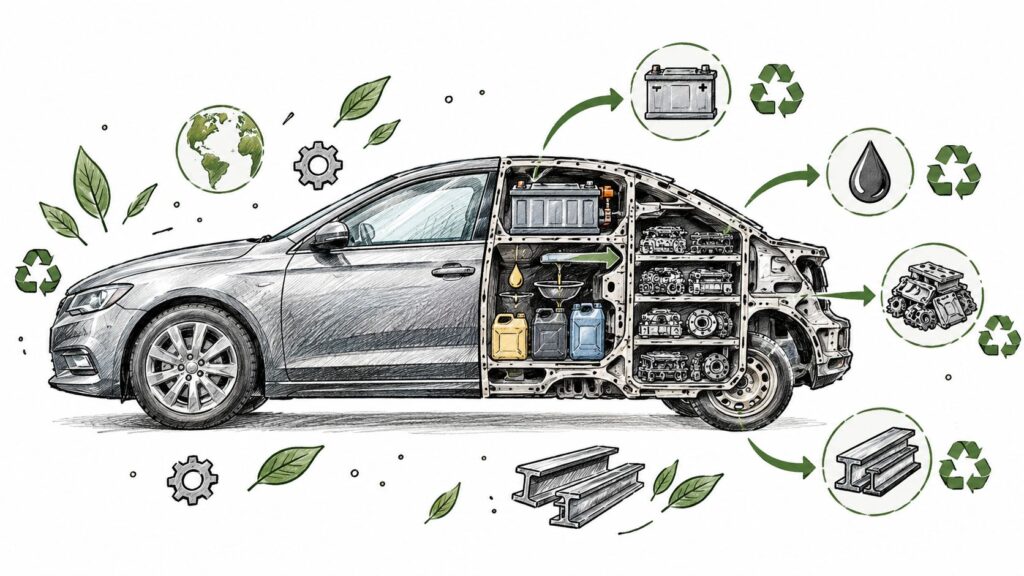
The operator must remove the battery, fuel, tyres, LPG tanks, fluids, mercury-containing components, and catalytic converter before the shell enters ordinary recycling. Fluids include engine oil, brake fluid, coolant, and air-conditioning gas. This sequence is the point at which a vehicle’s value shifts from a mixed, contaminated object to separate material and reusable parts.
Why the sequence matters
Depollution is the technical gateway to recycling. Before it is complete, the operator must apply hazardous-waste controls. Crushing first can release fluids, damage gas-containing equipment, and contaminate metals or plastics that could otherwise be recovered. For a recycling yard, compliance is therefore part of the economics, not just an environmental formality. A facility that skips these controls risks contamination, enforcement action, and lower-quality material.
The UK waste-site guidance for end-of-life vehicles requires an Authorised Treatment Facility, or ATF, to issue a Certificate of Destruction and keep the vehicle off the road. That document confirms that the vehicle has entered the authorised disposal route.
Before handing over the car, check four practical points:
- ATF status: A transporter or unlicensed collector may collect a vehicle without being authorised to treat it.
- Depollution before crushing: Hazardous components and fluids must be removed first.
- Documented destruction: The Certificate of Destruction provides the formal record of disposal.
- Correct vehicle category: Vehicles over 3.5 tonnes fall outside the standard free take-back framework and need different proof of destruction.
The paperwork protects the owner as well as the environment. Abandoning a vehicle, using an unknown collector, or failing to obtain proof can leave uncertainty over who remains responsible. A collection receipt alone is not enough. Keep the ATF details and Certificate of Destruction as an audit trail.
Inside the Authorised Treatment Facility Process
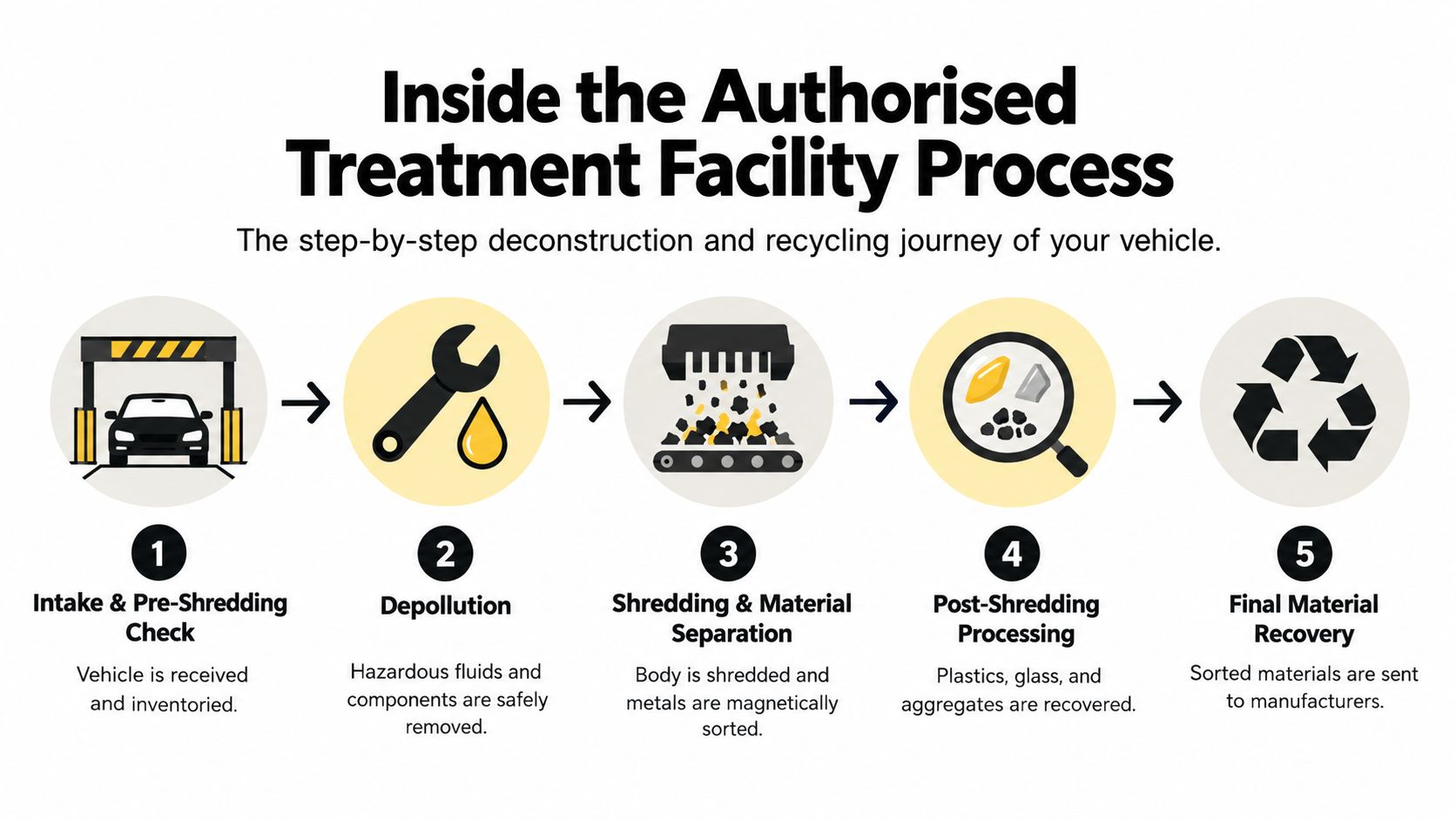
An Authorised Treatment Facility starts by controlling the vehicle and the site. On arrival, staff inspect the car over sealed drainage, record its condition, and identify hazards that need separate handling. This keeps fuel, oil, coolant, and other fluids out of the ground. It also gives the operator a clear condition record before dismantling begins.
The first physical operation is depollution. Technicians recover fluids, remove the battery and other hazardous components, and make the vehicle safe to work on. That order matters commercially as well as legally. Parts can then be assessed for reuse, while the remaining materials can enter the correct processing route without contaminating each other.
What the dismantling line is protecting
The UK dismantling requirements specify which components must be removed so they can be recycled effectively. These include the catalytic converter, metal parts containing copper, aluminium or magnesium, tyres, and large plastic items such as bumpers, dashboards, and fluid containers.
In practice, the work follows a controlled sequence:
- Intake and inspection: Staff identify the vehicle, record its condition, and check for risks.
- Depollution: Fluids, batteries, fuel-related items, LPG equipment, and other controlled components are removed.
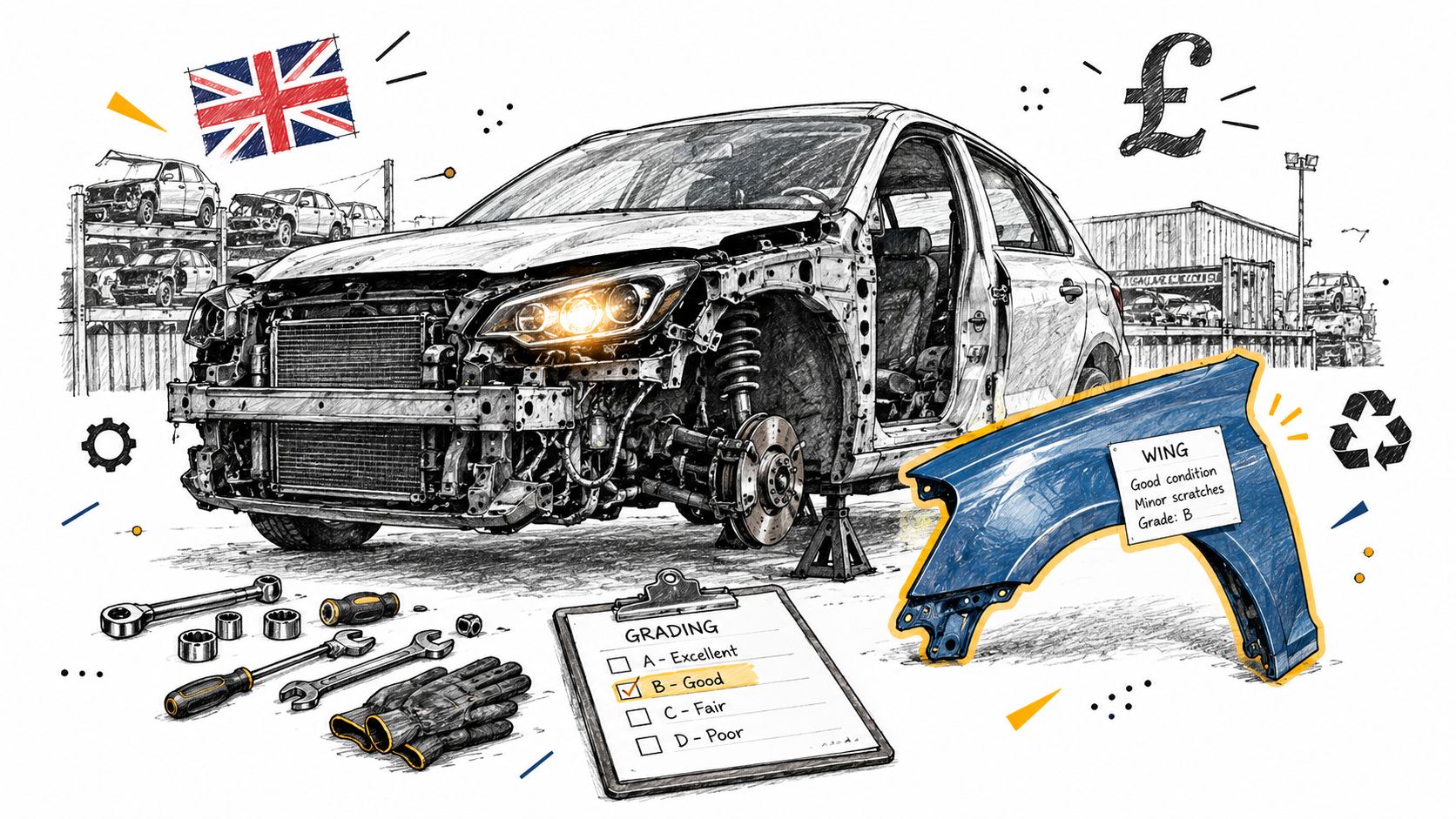
- Dismantling: Reusable engines, gearboxes, electrical parts, body panels, and interior components are assessed.
- Shell processing: Once safe, the remaining shell is prepared for crushing or shredding.
- Material separation: Steel, aluminium, plastics, glass, and other outputs are separated and sent into appropriate recycling routes.
The material rules also shape how ATFs handle recovered parts and waste. Lead, hexavalent chromium, and mercury are restricted to 0.1% by weight in any homogeneous material, while cadmium is limited to 0.01%, subject to specified allowances. The substance-control requirements explain why an ATF needs controlled procedures rather than improvised stripping.
After reusable components are separated, the shell becomes a feedstock rather than a complete car. Steel makes up most of its weight, with further steel and aluminium in the engine and gearbox. Plastics represent less of the total, but shredding and refinement allow facilities to divert more from landfill. The final value therefore comes from sorting and routing each component correctly, not just weighing the vehicle as mixed scrap.
How Export Markets and Niche Parts Drive Value
A car’s scrap value is decided before the shell reaches the scale. Steel provides the baseline return, while dismantlers assess whether specific components can support a repair market. A vehicle with limited demand in Britain may still contain parts wanted by buyers in markets where older cars remain in service.
An engine or gearbox can be difficult to sell domestically when the matching models are becoming uncommon. Overseas buyers may still need the same unit, especially where keeping an existing vehicle running costs less than replacing it. Export value depends on condition, specification, compatibility, transport costs, and confirmed buyer demand. It is an opportunity, not a guaranteed premium.
The small component that matters
The most valuable part may be a small, manufacturer-specific control unit rather than a major mechanical assembly. A working module can keep a vehicle operational when a new replacement is expensive, unavailable, or no longer supplied through normal channels. Specialist dismantlers recognise these part-number patterns more reliably than a basic metal-price calculator.
Value usually falls into three layers:
- Raw material value: The steel shell and non-ferrous metals provide the basic recycling return.
- Reusable component value: Engines, gearboxes, catalytic converters, body panels, wheels, lighting units, and interior parts may be tested and sold.
- Niche or export value: Unusual control modules and powertrain components may attract buyers beyond the immediate UK market.
Condition often matters more than the badge. A damaged engine, incomplete vehicle, or unit with unknown history may be worth less than an ordinary-looking component that can be tested, identified, and supplied with confidence. Dismantlers check part numbers, compatibility, visible damage, and the labour required to remove the item safely. An expensive removal process can erase the extra value.
The best value on an end-of-life car can be a part most owners would never think to remove.
Owners should provide accurate details before requesting a valuation. Registration, mileage, damage, missing parts, keys, and whether the vehicle runs all affect the assessment. A credible buyer can then decide whether the car suits a UK green-parts sale, an export customer, or material recycling. That assessment explains why a specialist offer may differ from a purely weight-based quote.
Green Parts and the Future of Vehicle Recycling
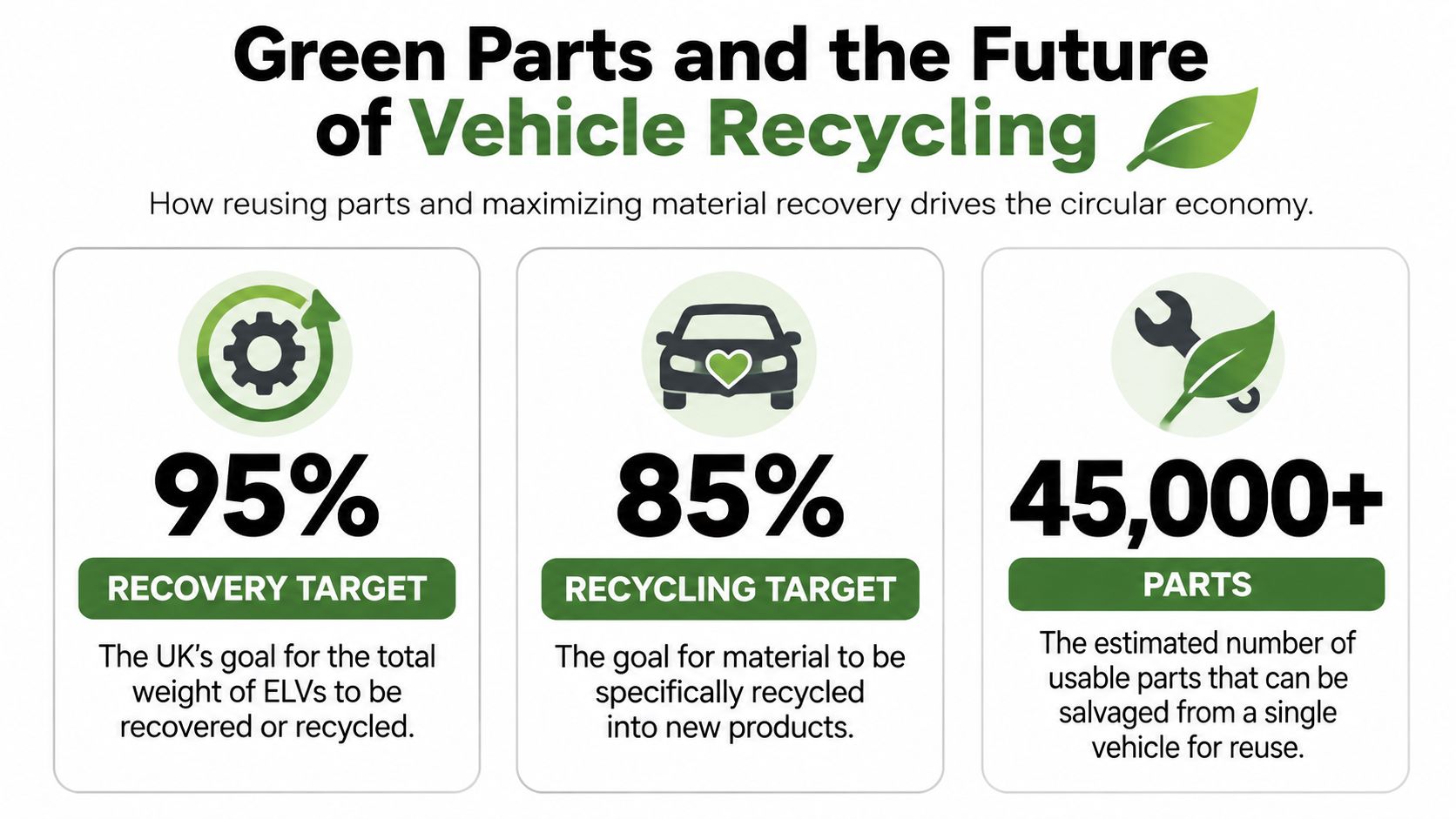
The UK’s ELV policy is designed to make recovery broader than ferrous scrap. It sets a 95% recovery target and an 85% recycling target by average vehicle weight, with UK ELV policy and producer reporting guidance explaining the reporting obligations to Defra. These targets encourage operators to recover usable components and non-ferrous materials before the shell reaches the shredder.
Reuse and recycling aren’t interchangeable. Reusing a tested component preserves the part’s function and avoids manufacturing a replacement. Recycling converts material into an input for another product. A responsible ATF needs both routes because engines, electrical units, trim, metals, plastics, and glass don’t all have the same next destination.
Green parts in a changing fleet
The current ELV stream remains overwhelmingly powered by internal-combustion vehicles. One 2025 dataset reported petrol and diesel vehicles made up 99.8% of ELVs, as described in UK ELV market data. That makes engines, gearboxes, alternators, starters, exhaust components, and conventional electrical systems central to today’s dismantling market.
Electric vehicles will change the mix. Battery packs need specialist assessment, safe isolation, controlled storage, and appropriate recycling or reuse routes. They can carry significant technical and safety considerations, while the wider parts market will gradually shift towards electric motors, inverters, charging equipment, and battery-related components.
Manufacturers also face stronger pressure to design cars with end-of-life treatment in mind. The EU ELV Directive timeline set reuse and recovery at 85% by 1 January 2006, with reuse and recycling at 80%, before raising the thresholds by 1 January 2015 to 95% reuse and recovery and 85% reuse and recycling. The direction is clear: manufacturers and recyclers must consider the full vehicle lifecycle.
Industry practice is moving towards greater use of recycled vehicle material in new production. The practical ambition described by the content owner is that 20% of materials used to build new cars should come from recycled old cars. That figure must be treated as an industry direction rather than a universal result for every vehicle or ATF today.
Owners can see the circular economy in a direct way through used green car parts, where a serviceable component from one vehicle can help keep another in use.
Your Step-by-Step Guide to Legal Car Disposal
Start by deciding whether you need to scrap the car or sell it as a roadworthy vehicle. A running car with a valid MOT, useful history, and sound condition may attract a buyer above its material value. A failed-MOT car, accident-damaged vehicle, or non-runner is more likely to suit an ATF or salvage purchaser.
A clean handover process
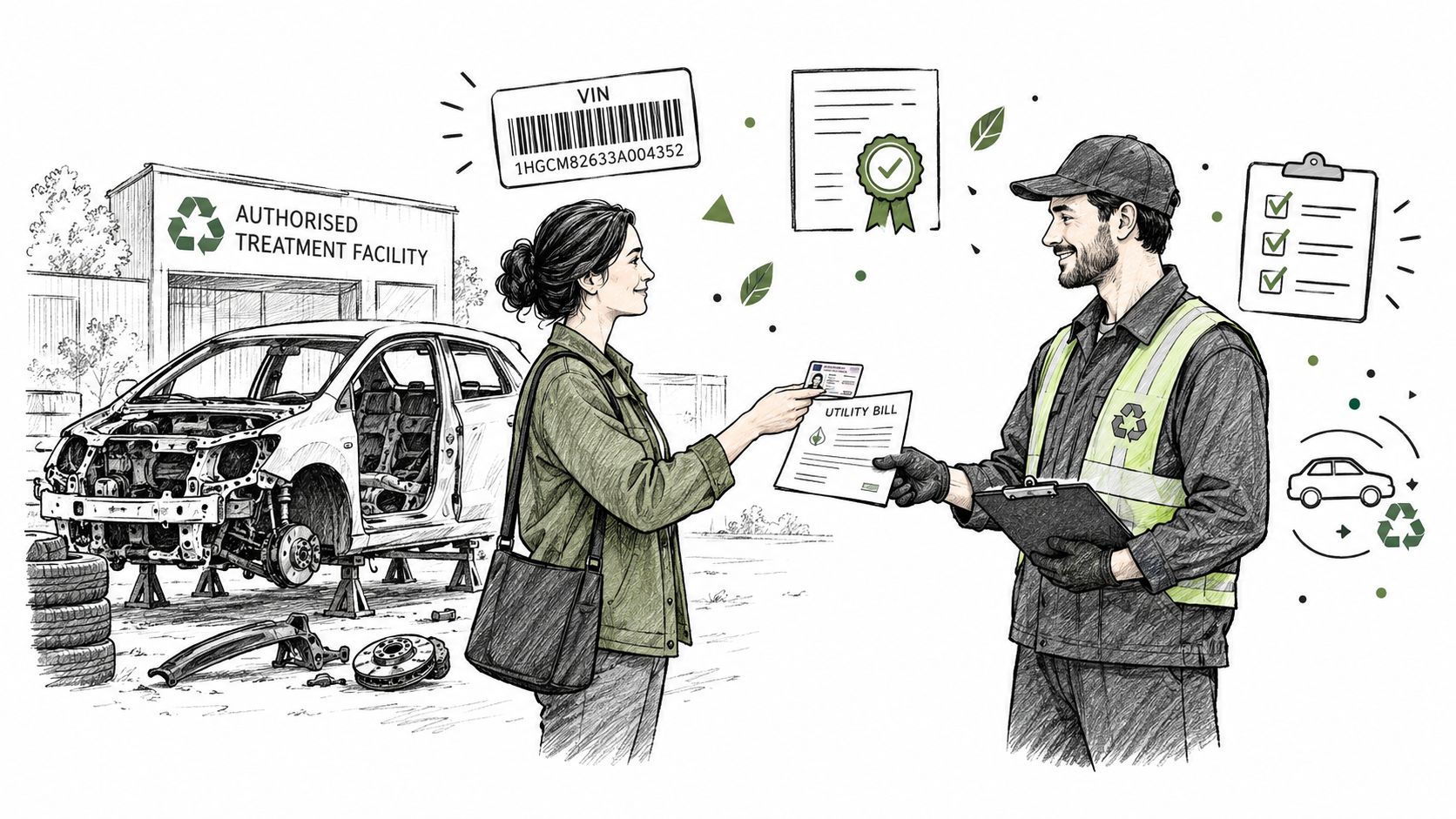
- Collect the vehicle details. Have the registration, postcode, mileage, condition, keys, location, and finance information available. Accurate information helps a buyer distinguish a repairable vehicle from an ELV.
- Request a written valuation. An online quote based on registration and postcode can provide a starting point, but confirm whether the price is guaranteed, whether collection is free, and whether deductions apply.
- Check the operator’s route. Ask which licensed ATF will receive the vehicle and who will issue the destruction paperwork. Don’t rely on a vague promise that the car will be “taken away”.
- Prepare the car. Remove personal belongings, service documents you want to keep, toll tags, house keys, and any other property. Don’t remove parts that were included in the agreed valuation without telling the buyer.
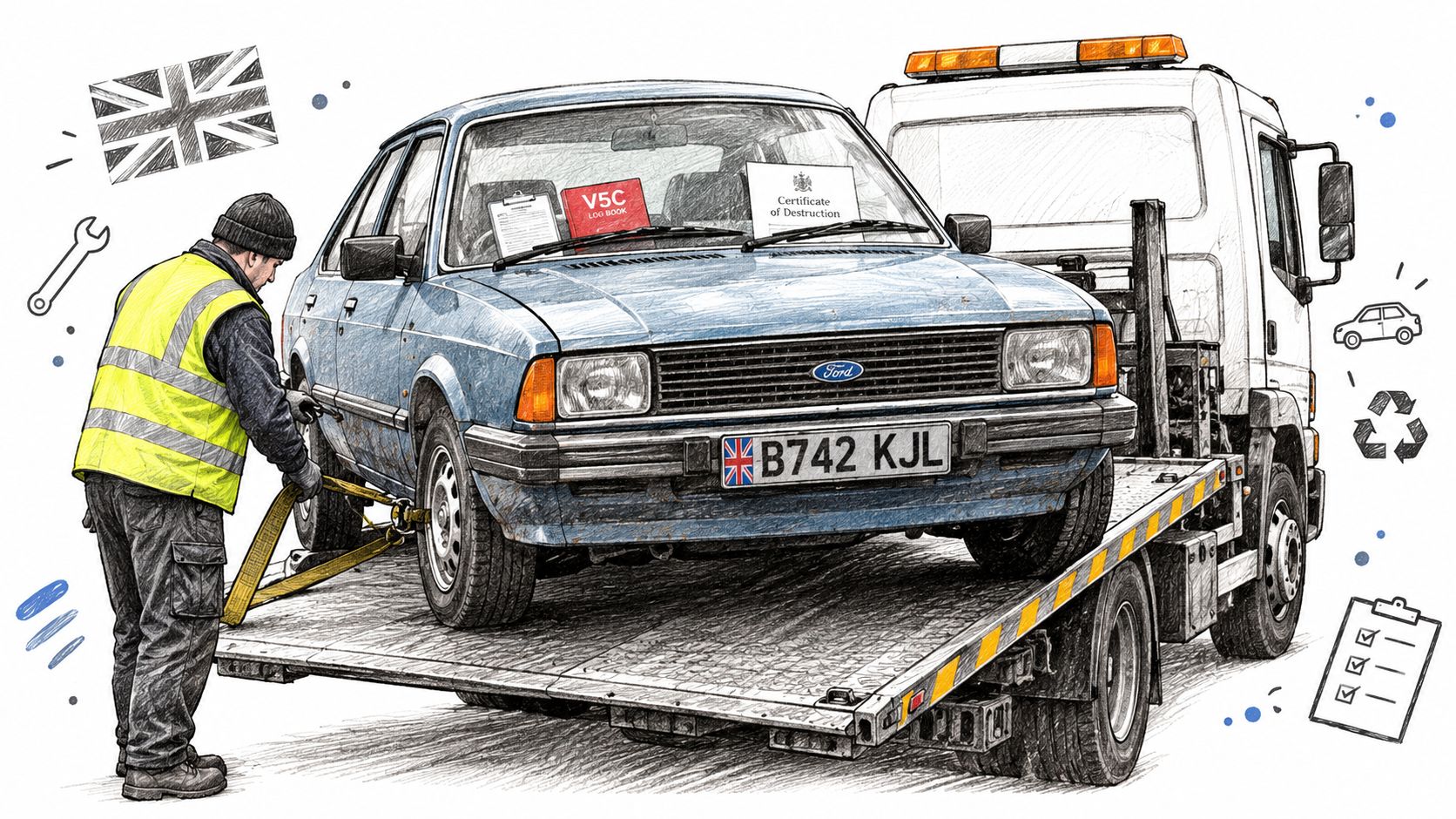
- Confirm collection arrangements. Give clear access instructions, disclose whether the car is locked, damaged, underground, on private land, or unable to roll, and agree the collection time.
- Complete the DVLA notification. Update the V5C details as required and retain the relevant confirmation. The ATF should issue the official Certificate of Destruction where applicable.
A reputable service may arrange free nationwide collection, including from a home or workplace, and offer same-day bank payment once the vehicle has been checked against the agreed description. Scrap A Vehicle provides instant online valuations, collection, payment on handover, and DVLA paperwork through licensed ATF partners, giving owners one route to compare against other compliant buyers.
Weight classes and proof
Don’t assume every vehicle follows the same free take-back process. The government guidance states that vehicles over 3.5 tonnes fall outside that framework and need different proof of destruction. Vans, specialist vehicles, and commercial assets deserve an early check because their weight and category can affect collection, documentation, and price.
Never accept cash arrangements that leave no paper trail, a price that changes only after loading, or a collector who refuses to identify the receiving facility. Keep the quote, collection confirmation, payment record, and Certificate of Destruction together.
Final Checklist for End of Life Vehicle Owners
The strongest handover is simple to verify. You know who is collecting the car, where it is going, what you will be paid, and which document proves that the vehicle has been destroyed through the proper route.
Use this check before the driver arrives:
- Confirm the buyer: Check the operator’s ATF connection and ask which facility will carry out treatment.
- Match the vehicle description: Make sure the agreed registration, condition, keys, mileage, missing parts, and collection location are accurate.
- Protect your belongings: Search the boot, glovebox, door pockets, centre console, charging areas, and under-seat storage.
- Remove personal identifiers: Take out toll tags, parking permits, house keys, and removable documents. Follow the buyer’s instructions about number plates and don’t remove anything that could affect the agreed valuation without confirmation.
- Check the payment: Confirm the amount, payment method, timing, and whether the transfer will be made before the vehicle leaves.
- Keep the paperwork: Retain the valuation, collection confirmation, payment evidence, and any receipt supplied at handover.
- Notify the DVLA: Ensure the V5C update has been completed and obtain the official Certificate of Destruction when the vehicle qualifies for one.
- Check unusual vehicles: If the vehicle is over 3.5 tonnes, confirm the alternative proof-of-destruction requirements before collection, using the government ELV guidance.
Don’t judge the outcome only by the headline price. A slightly higher offer can become poor value if the collector charges for recovery, refuses proper paperwork, or leaves you exposed to future correspondence. Conversely, a responsible buyer may identify reusable parts, export opportunities, or salvage value that a basic scrap calculation misses.
End-of-life cars are part of a controlled material chain. The car must be depolluted, valuable parts should be assessed, recyclable components need protecting, and the keeper needs clear proof that responsibility has passed into the authorised treatment process.
If your vehicle has failed its MOT, suffered accident damage, stopped running, or reached the end of its useful life, request an instant valuation from Scrap A Vehicle. You can arrange UK collection, confirm payment on handover, and obtain the DVLA paperwork needed to close the vehicle’s ownership trail properly.