Last updated: June 2026
The best scrap car price almost never comes from the first buyer you call. It comes from a complete car, honest details, and a few competing quotes lined up side by side. Do those three things and most drivers add £30 to £80 to the figure they would otherwise have accepted, without any extra effort beyond a few minutes of comparison.
Scrap prices move with the metal market, your car’s weight, its reusable parts and where you live, so two identical Fiestas can fetch very different offers in the same week. The good news is that the levers that decide the best scrap car price are mostly in your hands. This guide walks through each one, with current 2026 figures so you know what a fair offer actually looks like.
What decides the best scrap car price?
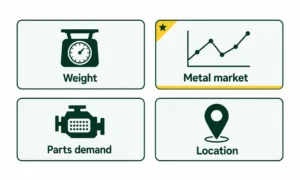
Your scrap car price is set mainly by weight, the live scrap metal rate, demand for your car’s reusable parts, and your location. Buyers start from the metal value, then add or subtract for condition, sought-after components and how far they have to travel to collect.
Most yards pay roughly by the tonne, so a heavy SUV or van usually beats a small city car on metal alone. On top of that sits parts demand: a working engine, an intact catalytic converter, a good battery and clean alloys can lift an offer well above the bare metal figure. The market itself shifts month to month — UK scrap car prices in 2026 have hovered around the £253 mark on the CarTakeBack scrap car price index, with most ordinary cars landing somewhere between £150 and £400 depending on those same factors. Knowing that range is the single best defence against a lowball quote, and the quickest way to see where your own car sits is to find out what your car is worth before you start comparing offers.
Keep the car complete
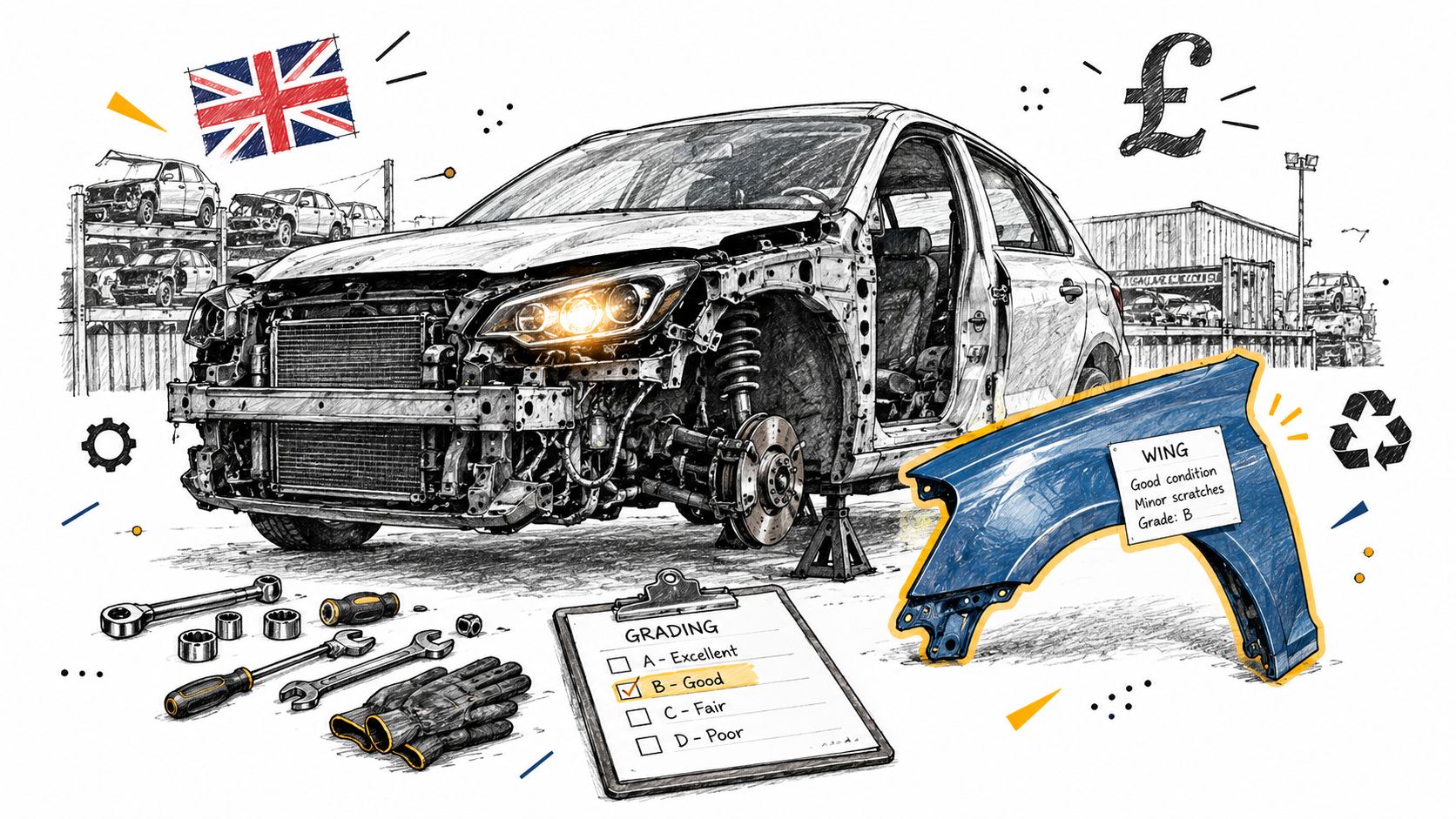
A whole car is almost always worth more than one that has been picked apart, so leave it intact unless you already know a specific part has strong resale value. When the engine, gearbox, catalytic converter, wheels and battery are still fitted, the buyer can recover value from parts as well as scrap weight — and that shows up in the quote.
Stripping components first tends to cost you more than the parts are worth at the kerb. A missing catalytic converter or battery is an obvious deduction, and yards price defensively when a car turns up half-dismantled. Unless you have a confirmed buyer for a high-value part, the complete car is the stronger hand.
Give accurate information
Describe the car honestly when you request a quote: make, model, year, mileage, damage, and whether it starts or rolls. Accurate details get you a firm price first time and stop the offer changing on collection day.
If the buyer arrives and the car is not as described — say it was quoted as running but won’t start, or parts are missing — they can revise the figure or refuse the job. A two-minute honest description protects the number you were promised and keeps the handover quick.
Compare more than one quote
Never accept the first offer without checking a few others, because different buyers value the same car differently depending on parts demand, their collection area and local competition. A quick comparison is where most of the real money is found, and it’s the surest route to the best scrap car price for your vehicle.
This is also where online comparison services tend to beat a single local yard. Rather than one take-it-or-leave-it rate, they run your registration through a network of licensed buyers competing for the car, so you see the strongest available figure instead of one yard’s opening bid. Free collection is usually built in, so there’s nothing quietly deducted afterwards.
Check for hidden fees
A headline price means little until you know what lands in your account, so always ask whether the quote includes free collection and full payment. Some buyers advertise a strong number, then trim it later through recovery charges or admin fees.
A good quote is clear and easy to understand. If anything is vague, ask for the final figure in writing before you agree, and confirm how and when you’ll be paid. Reputable buyers pay by secure bank transfer, never with a vague promise on the day.
Choose the right time to sell
Scrap prices rise and fall with the metal market, so a stronger market means better offers and a weak one means less for the same car. Watching the trend can earn you a little more — but only within reason. Timing alone won’t guarantee the best scrap car price; it works best alongside comparison and a complete vehicle.
Don’t wait too long chasing a peak. Unless your car is a rare or classic model, its value generally drifts down with age as the most valuable components wear out, and a damaged, uninsured or untaxed car sitting on the drive is a liability. For most drivers, getting a quote sooner beats gambling on a better market later.
Make collection easy
The simpler your car is to collect, the cleaner your quote tends to be, so make sure it’s accessible and the handover details are ready. A car wedged in a tight spot or off the public road may need extra recovery equipment, and that can pull the price down.
Have the keys and paperwork to hand, clear a path for the recovery vehicle, and pick a collection slot you can actually make. Straightforward jobs are cheaper for the buyer to run, and that saving often stays in your offer rather than being clawed back.
Sort the paperwork and your personal items
Before the car goes, check the glovebox, boot, under the seats and the door pockets — once it’s collected, anything left inside is hard to get back. This rarely affects the price, but it saves a lot of avoidable stress.
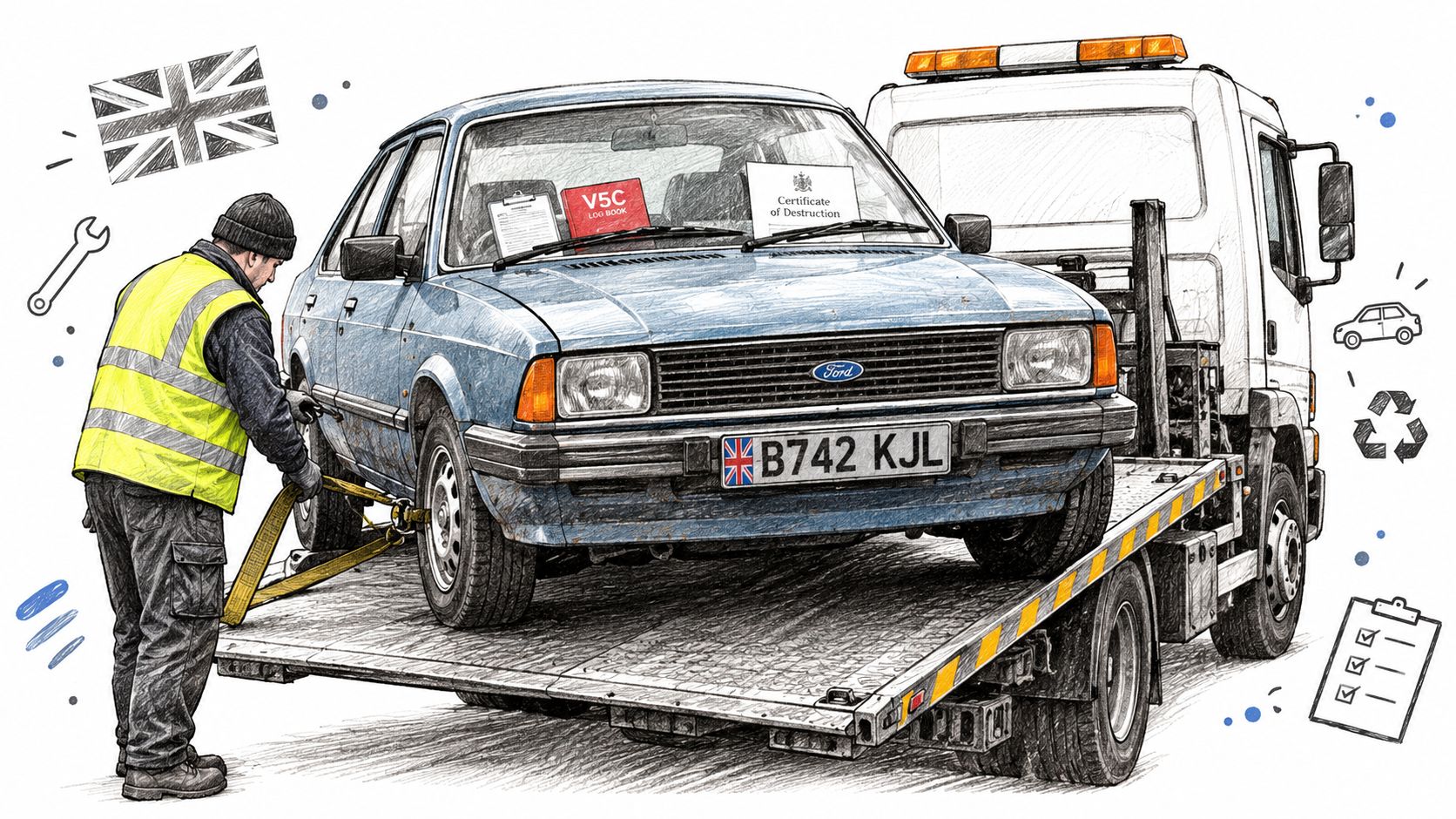
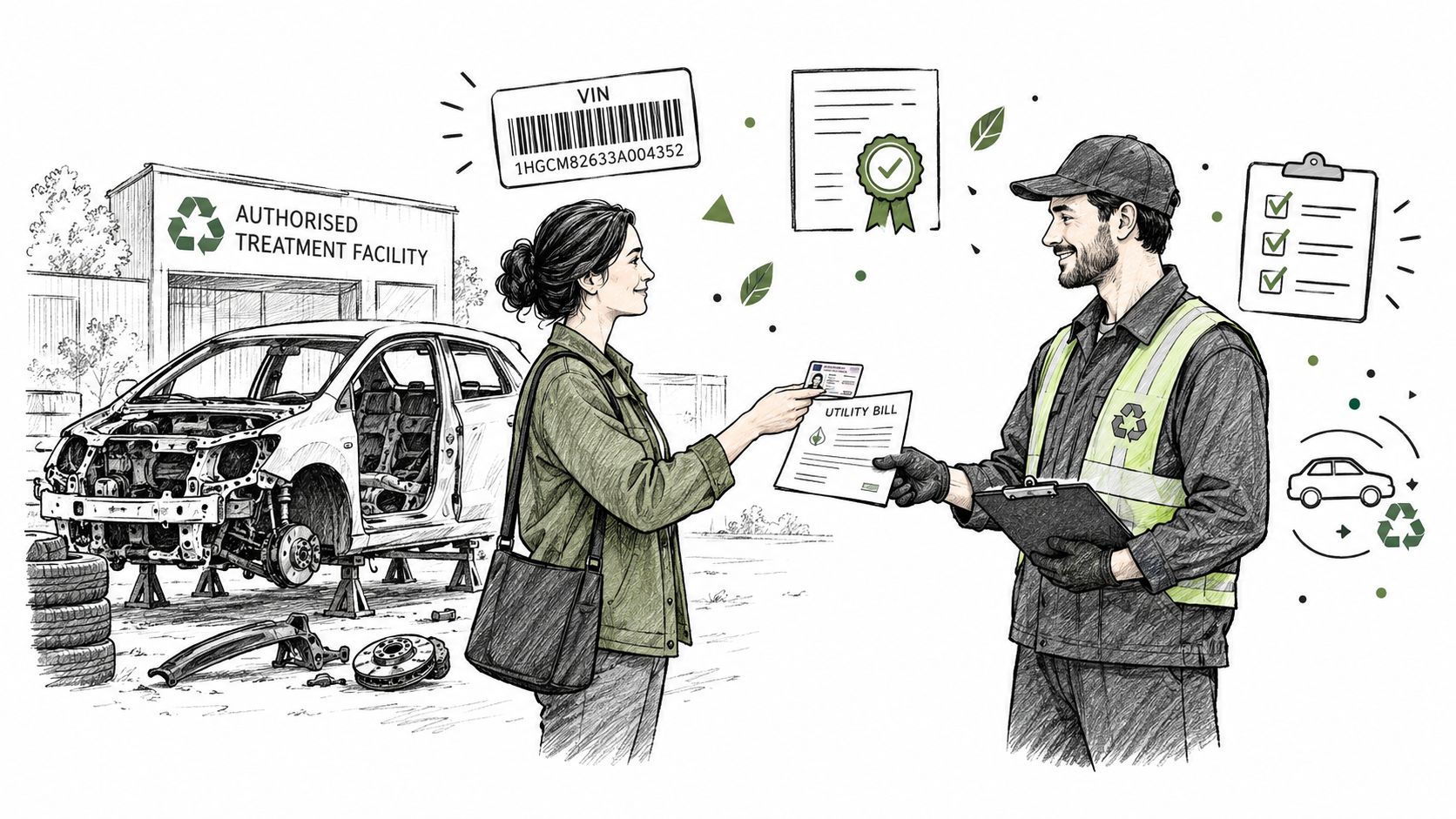
Just as important is the legal side. You must use an Authorised Treatment Facility (ATF), tell the DVLA the car has been scrapped, and get a Certificate of Destruction in return. The official GOV.UK guidance on scrapping a vehicle sets out exactly what you must do. A proper buyer handles the V5C paperwork for you and issues that certificate, which is what formally takes the car off your record and protects you from future tax or liability.
Use a trusted buyer, not just the highest number
The best price isn’t always the biggest headline figure — it’s the offer that actually arrives, paid in full, with a clean collection. A buyer who pays what they promised and disposes of the car legally beats one whose quote looks great but unravels on the day. The best scrap car price is the one you can actually bank.
Look for clear terms, free collection, secure payment, ATF accreditation and a proper Certificate of Destruction. Those signals separate a genuinely good deal from a number designed to win the click and shrink later.
Quick checklist for the best scrap car price
- Keep the car complete — leave the engine, cat, battery and wheels fitted.
- Give honest, accurate details when you request a quote.
- Compare several quotes, or use a comparison service that does it for you.
- Ask whether collection is free and payment is in full.
- Confirm the final figure in writing before you agree.
- Have your V5C, keys and vehicle details ready.
- Make the car easy to access for collection.
- Sell while the metal market is strong, but don’t wait forever.
- Choose an ATF and insist on a Certificate of Destruction.
Final check before you sell
Before you agree to scrap the car, make sure you know the final price, whether collection is included, how payment will be made, and that you’ll receive a Certificate of Destruction. A good buyer makes all of that simple and transparent.
The real goal isn’t just any quote — it’s a fair quote from a buyer you can trust. Get your free, no-obligation valuation and compare it against the figures above, then sell when the number and the buyer both stack up.
Find out what your car is worth · Free scrap car collection · Get an instant quote
Frequently asked questions
What is the average scrap car price in the UK in 2026?
The average scrap car price in 2026 sits around £253 on the CarTakeBack index, with most cars worth between £150 and £400. Heavier vehicles, cars with valuable parts and those in areas with strong yard competition tend to sit at the higher end.
How do I get the best price for my scrap car?
Keep the car complete, give honest details, and compare several quotes rather than accepting the first. A comparison service that pits licensed ATF buyers against each other usually returns the strongest offer, with free collection included.
Should I remove parts before scrapping to make more money?
Usually no. A complete car is worth more to most buyers because they can recover parts value as well as metal. Removing the catalytic converter, battery or wheels normally reduces the offer by more than you’d gain, unless you already have a confirmed buyer for that part.
Does my location change the scrap price?
Yes. Local yard competition and collection distance both affect the figure, so urban areas with several nearby ATFs often pay more than remote rural spots. A car that’s hard to reach may also attract a recovery deduction.
What paperwork do I need to scrap a car legally?
You need your V5C logbook, you must use an Authorised Treatment Facility, and you must notify the DVLA. In return you should receive a Certificate of Destruction, which confirms the car is off your record. A reputable buyer handles this for you.