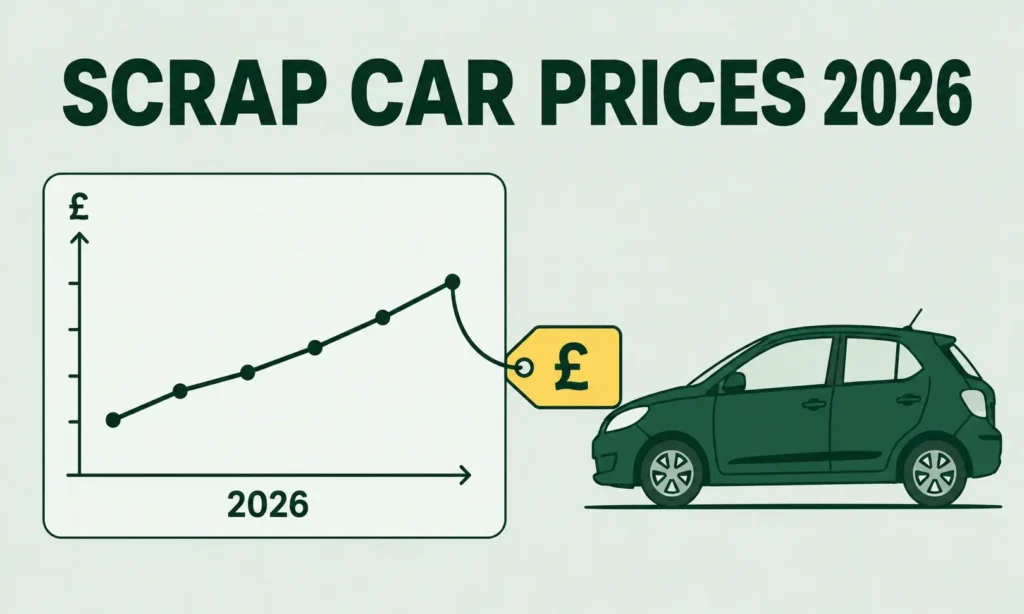
If you’re weighing up scrapping a car this year, the first question is usually how much you’ll get for it. Scrap car prices in the UK aren’t fixed — they move with the metal market, your car’s weight and parts, and how easily a buyer can collect it. In 2026 the typical scrap car sits around £253 on the CarTakeBack index, with most vehicles landing somewhere between £150 and £400, and heavier or parts-rich cars going higher.
That range is wide for a reason: two near-identical Fiestas can be quoted differently in the same week depending on the day’s steel price and the buyer’s location. This guide explains what’s driving scrap car prices in the UK through 2026, what your car’s size and condition mean for the figure, and how to make sure the quote you accept is a fair one. Scrap car prices UK-wide follow the same core drivers, but the exact number always comes down to your specific vehicle.
What are scrap car prices in the UK in 2026?
Scrap car prices in the UK in 2026 average about £253, with most cars worth £150 to £400 depending on weight, condition, parts and location. Larger vehicles and those with valuable components sit at the top of that range; small, stripped or hard-to-reach cars sit at the bottom.
As a rough guide to where different vehicles fall in 2026:
| Vehicle type | Typical 2026 scrap price |
|---|---|
| Small hatchback (e.g. Fiesta, Corsa) | £150–£280 |
| Medium car (e.g. Focus, Golf) | £250–£350 |
| Large SUV / 4×4 / van (e.g. Discovery, Transit) | £350–£500+ |
| Low-mileage car under 10 years (parts value) | £400–£500+ |
These are starting points, not promises. The only reliable figure is a live quote against your exact registration, because the market underneath these bands shifts constantly.
What affects scrap car prices in 2026?
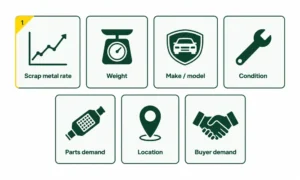
Seven things shape your scrap car value in 2026: the live scrap metal rate, vehicle weight, make and model, condition, demand for reusable parts, your location, and overall buyer demand. They work together, which is why two similar cars can still get different quotes.
A complete car in an easy-to-reach spot will usually beat a damaged one with missing parts, even if they’re the same model. Below, each factor is broken down so you can see where your own car is likely to land.
Scrap metal prices
Scrap metal prices are the single biggest lever on vehicle value. When metal markets are strong, scrap car quotes rise; when they soften, prices fall — even if nothing about your car has changed.
Those movements are driven globally. UK rates track benchmarks like the London Metal Exchange, and demand from Chinese steel mills is the biggest single influence. Early 2026 has seen moderate, stable demand, so steel has sat roughly £120–£180 per tonne — enough to keep the average car’s base metal value around £150–£270 before parts and condition are added.
Vehicle weight
Heavier vehicles contain more recoverable metal, so they usually attract stronger scrap quotes. Yards often price by the tonne, which is why SUVs, vans and 4x4s tend to beat small hatchbacks on metal alone.
Weight isn’t the whole story, though. A heavy car that’s been stripped or is difficult to collect can still be quoted below a lighter, complete one. Completeness and access matter alongside the kerb weight in your handbook.
Make, model and parts demand
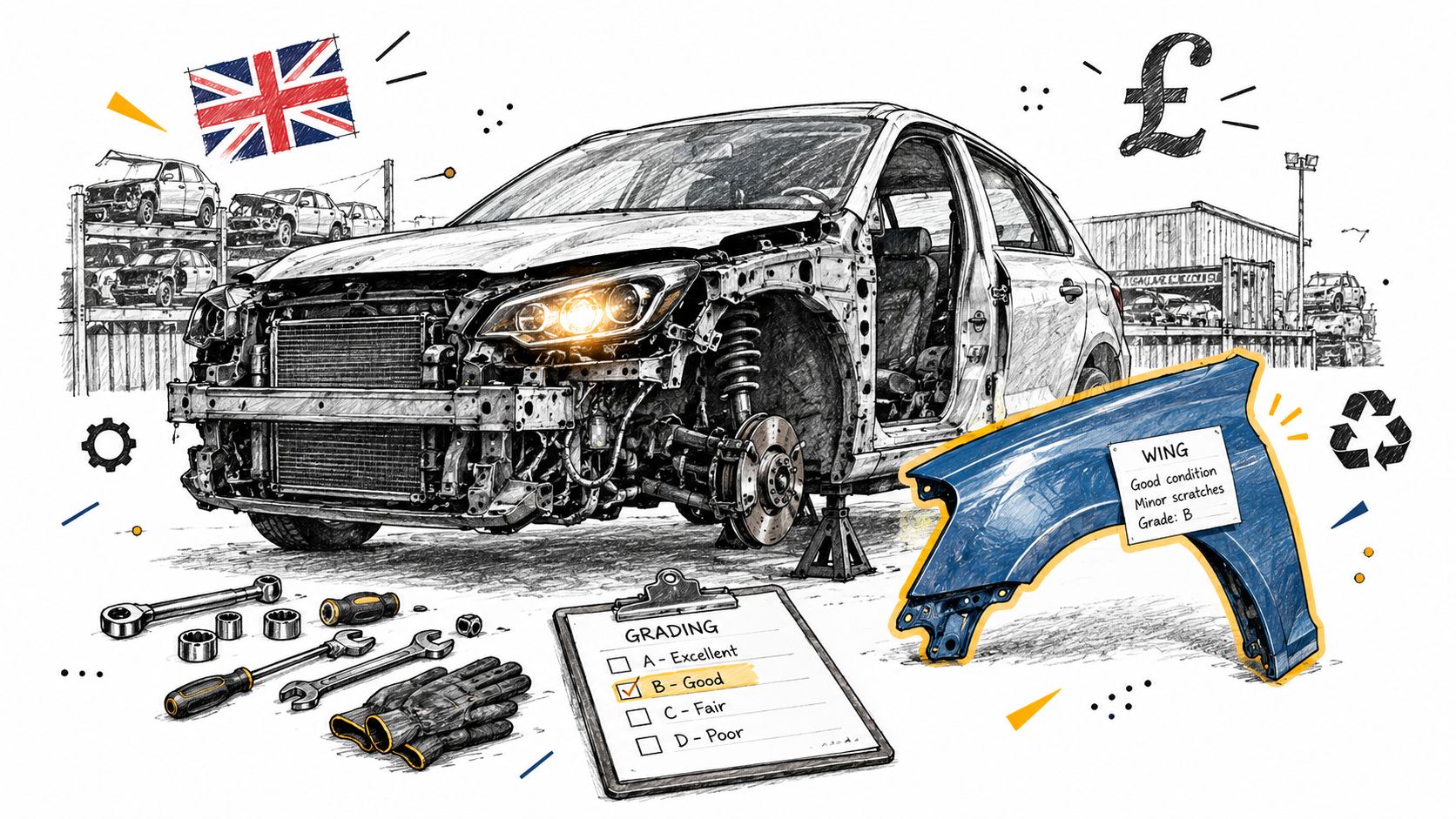
Some cars are worth more than their bare metal because of the parts they carry. Catalytic converters, alloy wheels, gearboxes, electronics and other reusable components can lift an offer well beyond scrap value.
Popular makes with strong used-parts demand benefit most here. The flip side is theft: a missing catalytic converter — a common problem in some areas — can cut a quote by £100 to £400 depending on the vehicle. Cars under ten years old often beat the average because buyers can recover real value from their parts.
Condition and completeness
A complete vehicle is almost always worth more than one that’s been picked apart. With major parts still fitted, the buyer sees more recoverable value and prices accordingly.
Damage pulls the other way. A heavily crashed, badly rusted or part-stripped car will usually be quoted lower than a straightforward, complete one that’s easy to process and collect.
Location and collection
Where your car sits changes the offer. Areas with several competing yards — typically cities — tend to pay more, while remote or awkward locations attract transport deductions. London, for example, often runs £30–£100 above the UK average, whereas rural Scotland can sit below it for an identical car.
If the vehicle is easy to reach, the buyer saves on recovery and can pass that on. A car stuck off-road or in a tight space may need extra equipment, which eats into the price.
What to expect from scrap car prices through 2026
Expect scrap car prices in 2026 to stay flexible rather than fixed. Quotes will rise and fall month to month with the steel market, parts demand and collection costs, but the underlying drivers won’t change.
Two longer trends are worth knowing. As more petrol and diesel cars reach end of life, the supply of vehicles for scrap is rising, which can soften prices for ordinary models. At the same time, the shift to electric vehicles is creating new salvage value in batteries, motors and inverters — a category the industry is still pricing. For most owners, though, the practical picture is simple: a complete, easy-to-collect car with valuable parts and reasonable condition will attract a stronger offer than one that’s missing parts or hard to recover.
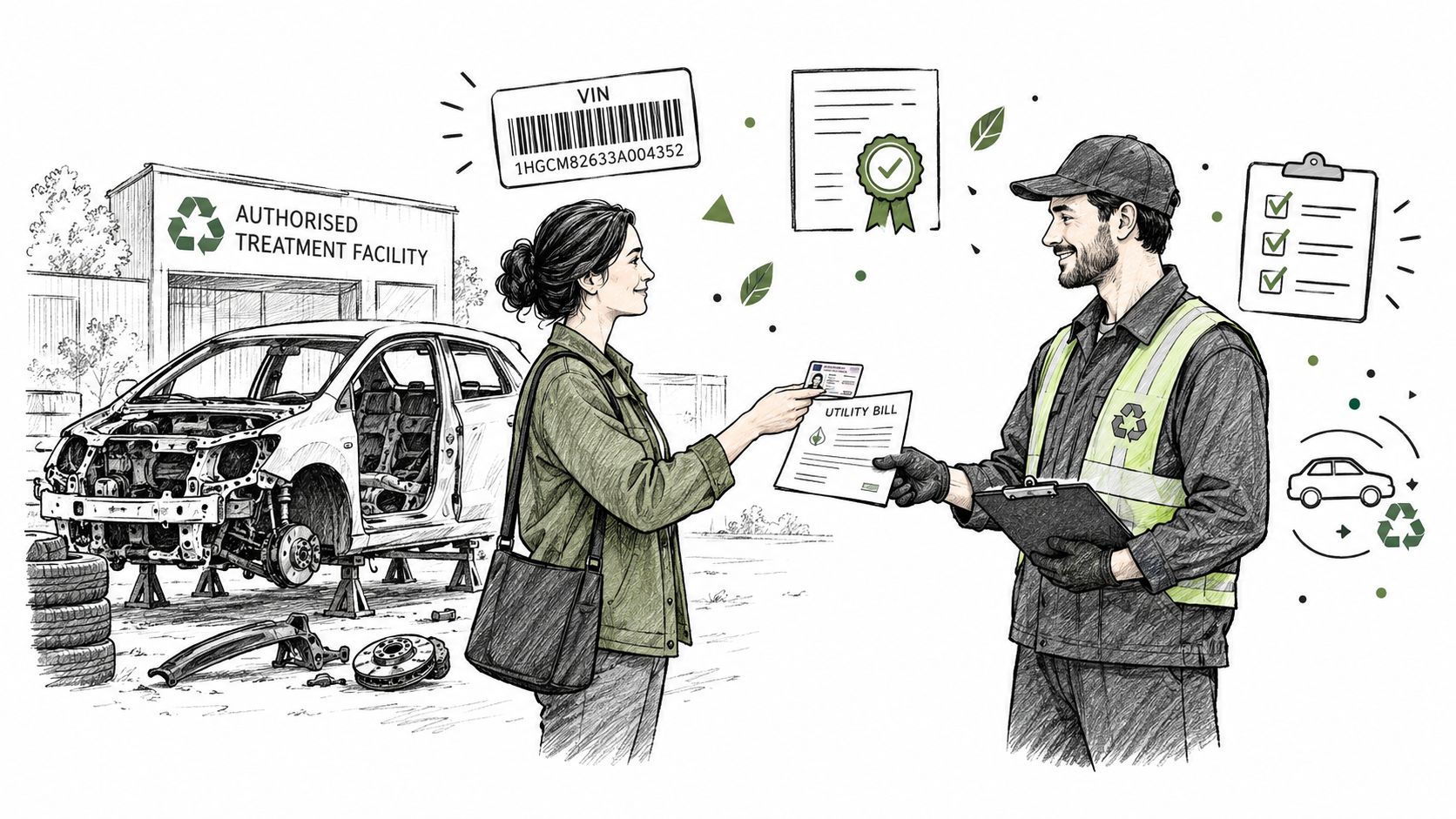
Regional differences will also persist through the year. Urban areas with busy ports and competing yards tend to pay £20–£50 per tonne more than rural ones, so the same car can be worth noticeably more in a city than in an isolated village. When you scrap a car you must also use a licensed Authorised Treatment Facility and notify the DVLA; the official GOV.UK guidance on scrapping a vehicle sets out exactly what’s required and what paperwork you should receive.
How to get the best scrap car price in 2026
To get the best scrap car price in 2026, keep the car complete, give accurate details, compare a few quotes, confirm collection is free, and check for hidden deductions before you agree.
- Leave the engine, catalytic converter, battery and wheels fitted — stripping parts usually costs more than it earns.
- Describe the car honestly: make, model, year, mileage, damage, and whether it starts or rolls.
- Get more than one quote, or use a service that compares licensed buyers for you.
- Confirm collection is included and payment is in full, by secure bank transfer.
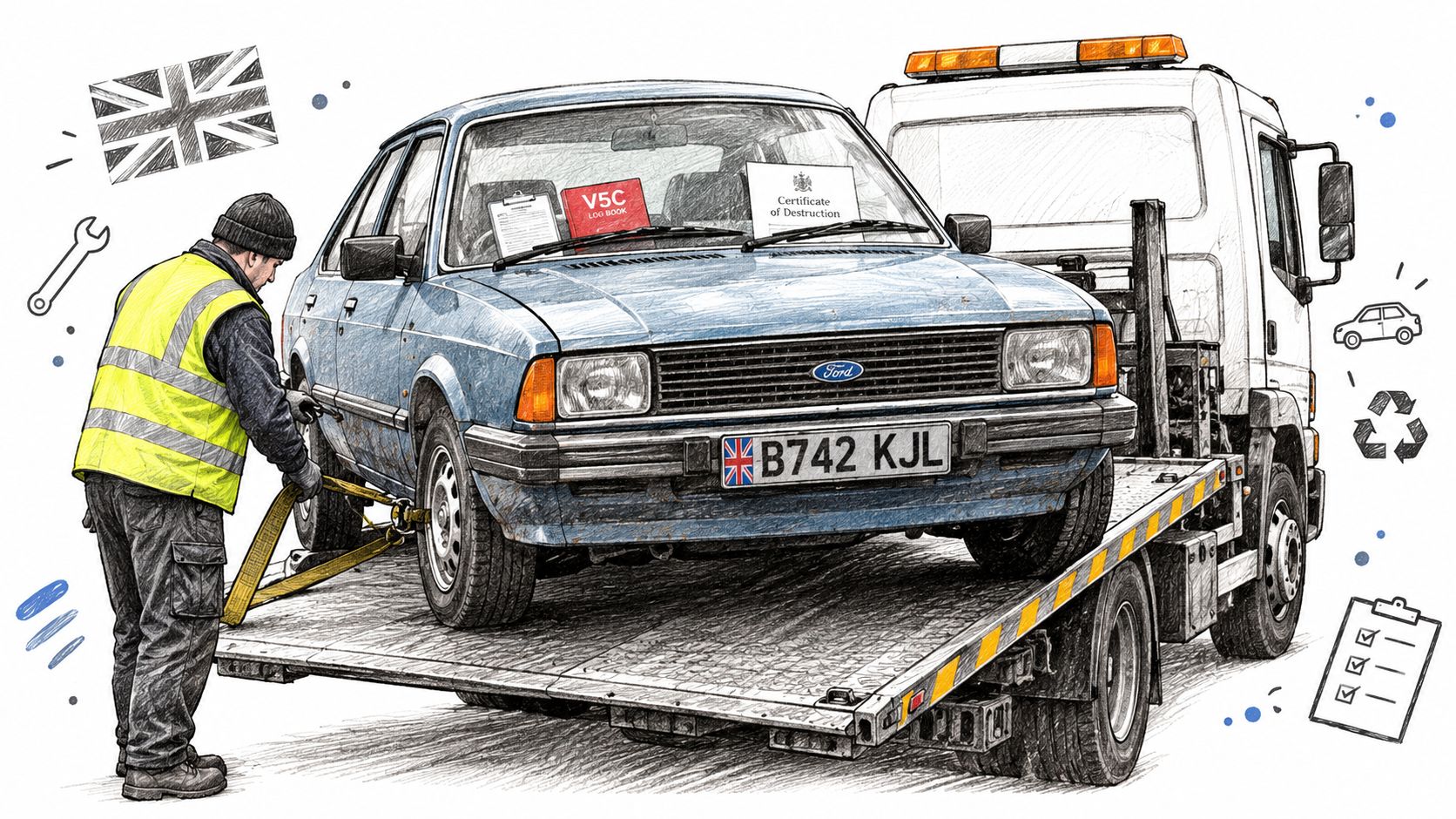
- Use an Authorised Treatment Facility and get a Certificate of Destruction.
Don’t over-think timing. The gap between a “good” and “bad” market window is usually only £20–£50 on an average car, so if your vehicle is costing you money in storage, insurance or failed repairs, a quote today normally beats waiting months for a better rate. A live valuation on your exact car is always more reliable than a general estimate.
Find out what your car is worth · Free scrap car collection · Get an instant quote
Frequently asked questions about scrap car prices
How much is the average scrap car worth in the UK in 2026?
The average scrap car in 2026 is worth around £253, based on the CarTakeBack index, with most vehicles falling between £150 and £400. Heavier cars, those with valuable parts, and cars in areas with strong yard competition tend to sit higher.
Why do scrap car prices change so often?
Scrap car prices track the global metal market, which moves with steel demand — especially from China — and benchmarks like the London Metal Exchange. Rates can shift within days, so a quote in early 2026 may differ from one later in the year even for the same car.
Do bigger cars get higher scrap prices?
Usually yes. Heavier vehicles contain more recoverable metal, so SUVs, vans and 4x4s generally beat small hatchbacks. But a heavy car that’s stripped or hard to collect can still be quoted below a lighter, complete one.
Does location affect scrap car prices in the UK?
Yes. Areas with several competing yards tend to pay more, and London often runs £30–£100 above the UK average. Remote or hard-to-reach locations can attract transport deductions that lower the final figure.
Should I wait for scrap prices to rise before selling?
Usually not. The difference between a good and bad market window is typically only £20–£50 on an average car, and value generally drifts down with age. If the car is costing you money to keep, a quote now normally beats waiting.