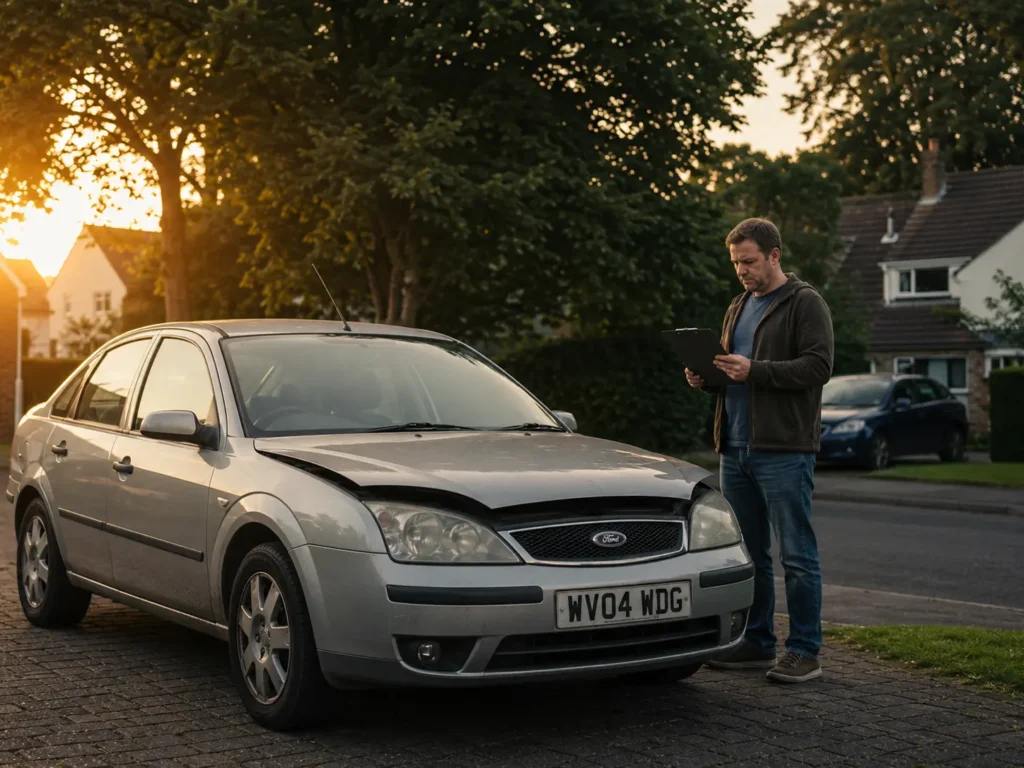
A car is not worth repairing when the cost of the repairs is more than 50% of the car’s current market value. This is the rule that UK garages, insurers and salvage buyers all use, and it is the fastest way to know whether to fix or scrap. If your car is worth £1,500 and the bill is £900, the repair eats most of what the car is worth, and you are unlikely to get that money back.
Beyond the 50% rule, there are a handful of other warning signs that push a car past the point of repair: repeated MOT failures, structural rust, a major engine or gearbox fault, and the kind of accumulating bills that turn ownership into a money pit. If you already know your car is past it, get an instant scrap quote using your reg and postcode. Otherwise, the rest of this guide walks you through exactly how to make the call.
When Is a Car Not Worth Repairing in the UK?
The simplest test is the cost-to-value ratio. Get a proper quote for the repair, then check your car’s current market value on Auto Trader or Parkers. If the repair quote sits above half the car’s value, you have crossed into uneconomical territory.
That ratio is the starting point, but it is not the only thing that matters. A 6-year-old car worth £4,000 with a £2,400 repair might still be worth fixing if it has a clean MOT history and you plan to keep it five more years. A 14-year-old car worth £800 facing a £400 repair is technically only at the 50% line, but the next MOT is six months away and the rust is already in the sills. Same ratio, very different decisions.
So treat the 50% rule as a strong signal, not a verdict. The factors that swing it either way: age, mileage, MOT history, and whether the repair fixes the car or just buys you a few more months.
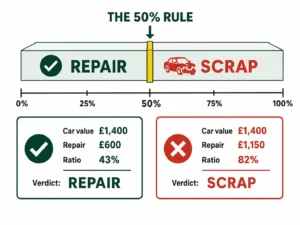
The 50% Rule Explained (With a Worked Example)
Here is how to apply the 50% rule in practice. Take a real-world scenario: a 2012 Ford Focus 1.6 TDCi with 124,000 miles. The MOT has failed on a corroded rear subframe, two broken coil springs, and a borderline catalytic converter.
| Step | Detail | Figure |
|---|---|---|
| 1. Current market value (Auto Trader) | 2012 Focus, 124k, average condition | £1,400 |
| 2. Garage repair quote | Subframe + springs + cat | £1,150 |
| 3. Calculate the ratio | £1,150 ÷ £1,400 | 82% |
| 4. Apply the rule | Anything above 50% is borderline; above 70% is almost always scrap | Scrap |
| 5. Likely scrap value | Complete car with working cat | £280 – £380 |
| 6. Net cost of repairing vs scrapping | Repair: £1,150 out / Scrap: £330 in | £1,480 swing |
The same maths works on any car. Spend two minutes getting both numbers and the answer is usually obvious. For a full breakdown of how scrap quotes are calculated, see our guide on how scrap car prices are calculated.
7 Signs Your Car Is Not Worth Repairing in 2026
If any two of the following apply, you are likely past the point of economical repair:
- Repair quote exceeds 50% of car value. The single biggest signal.
- Repeated MOT failures. Two MOTs in a row needing serious work usually means the car is deteriorating faster than you can repair it.
- Structural rust. Corrosion on subframes, chassis rails, suspension mounts, or sills affects crash safety. This is not a cosmetic problem.
- Major engine or gearbox fault. Anything four-figure is borderline. £2,000+ on a sub-£3,000 car is almost always uneconomical.
- Multiple repairs needed at once. A single £400 brake job is fine. £400 brakes plus £350 suspension plus £500 exhaust plus £200 emissions = £1,450, often more than the car is worth.
- Pattern of expensive bills year on year. Two consecutive years of £600–£1,000 repairs usually means the car is at end-of-life. The third year is rarely cheaper.
- High mileage (100,000+) combined with age (10+ years). The depreciation curve has flattened. Repair costs have not.
If three or more apply, the decision is essentially made. Get a scrap quote before you spend another penny on the repair.
Average UK Car Repair Costs in 2026
Real repair prices for the most common UK garage jobs in 2026 — the ones that push owners into the scrap-or-repair decision. Prices include parts and labour at independent garages; main dealers run 30–60% higher.
| Repair | Typical 2026 cost | Worth fixing if car is worth… |
|---|---|---|
| Brake pads + discs (per axle) | £200 – £400 | £400+ (almost always) |
| Clutch replacement | £400 – £900 | £1,800+ |
| Timing belt + tensioner | £300 – £700 | £1,400+ |
| Alternator replacement | £250 – £500 | £1,000+ |
| Catalytic converter | £400 – £1,200 | £2,400+ |
| DPF cleaning / replacement | £500 – £2,000 | £4,000+ |
| Gearbox repair or replacement | £500 – £3,500 | £7,000+ (or scrap it) |
| Head gasket failure | £800 – £2,000+ | £4,000+ (or scrap it) |
| Subframe / structural corrosion | £600 – £1,500 | £3,000+ |
| Full engine rebuild or replacement | £2,000 – £6,000 | Rarely worth it on cars under £8,000 |
The “worth fixing if” column is just the 50% rule applied. Anything below the threshold and you are pouring money into a car that will not recover the spend at resale.
What MOT Failures Push a Car Past the Point of Repair?
Around 1 in 3 UK cars fail their initial MOT each year. Most of those failures are cheap to fix: lights, wipers, tyres, bulbs. But some failure categories tip the car straight into scrap territory.
| Failure type | Typical repair cost | Scrap threshold |
|---|---|---|
| Lighting / bulbs / wipers | £10 – £80 | Fix every time |
| Tyres (per tyre) | £50 – £150 | Fix unless 4 tyres on a sub-£500 car |
| Suspension (springs, bushes, drop links) | £150 – £600 | Borderline on cars under £1,500 |
| Brakes (pads, discs, calipers) | £200 – £600 | Borderline on cars under £1,200 |
| Emissions / catalytic converter | £400 – £1,200 | Scrap on cars under £2,400 |
| Structural corrosion (subframe, chassis) | £600 – £1,500 | Scrap on cars under £3,000 |
| Multiple combined failures | £1,200 – £2,500 | Scrap on cars under £5,000 |
If your car fails on a single cheap category, fix it. If it fails on multiple major categories — especially structural or emissions — the car is telling you it has reached the end. You can scrap a car that has failed its MOT with no penalty; in fact, scrapping is exactly what the law expects when a vehicle is beyond economical repair.
When Does Age or Mileage Tip the Balance?
Two cars can have identical repair bills and reach very different conclusions, because age and mileage change what the car is worth and how long it has left.
| Car age | Mileage | 50% rule still applies? | Realistic guidance |
|---|---|---|---|
| Under 5 years | Any | Yes, strictly | Almost always worth repairing unless write-off |
| 5 – 10 years | Under 80,000 | Yes | Repair if under 50%, borderline 50–70% |
| 5 – 10 years | 80,000 – 120,000 | Apply at 40% | Be stricter; repair only if under 40% of value |
| 10 – 15 years | Under 100,000 | Apply at 40% | Worth fixing only if low-mileage and clean history |
| 10 – 15 years | Over 100,000 | Apply at 30% | Most repairs over 30% mean scrap |
| 15+ years | Any | Apply at 25% | Almost always cheaper to scrap and replace |
The pattern is simple: the older the car and the higher the mileage, the lower the threshold for “worth repairing” becomes. A 16-year-old runabout with 140,000 miles is hard to justify repairing for more than a quarter of its value, because everything else on the car is also wearing out.
Repair vs Scrap vs Salvage: Which Makes Sense?
“Scrap” is not your only alternative to repair. Three routes give different returns depending on the state of your car:
| Option | Best when | Typical UK return (2026) |
|---|---|---|
| Repair | Repair cost is under 50% of value and the car is otherwise sound | Keeps the car on the road |
| Scrap | Repair cost exceeds 50% of value, or multiple major failures | £180 – £500 |
| Salvage (Cat S/N) | Newer car (under 10 years), repairable, accident damage rather than wear | £500 – £5,000+ |
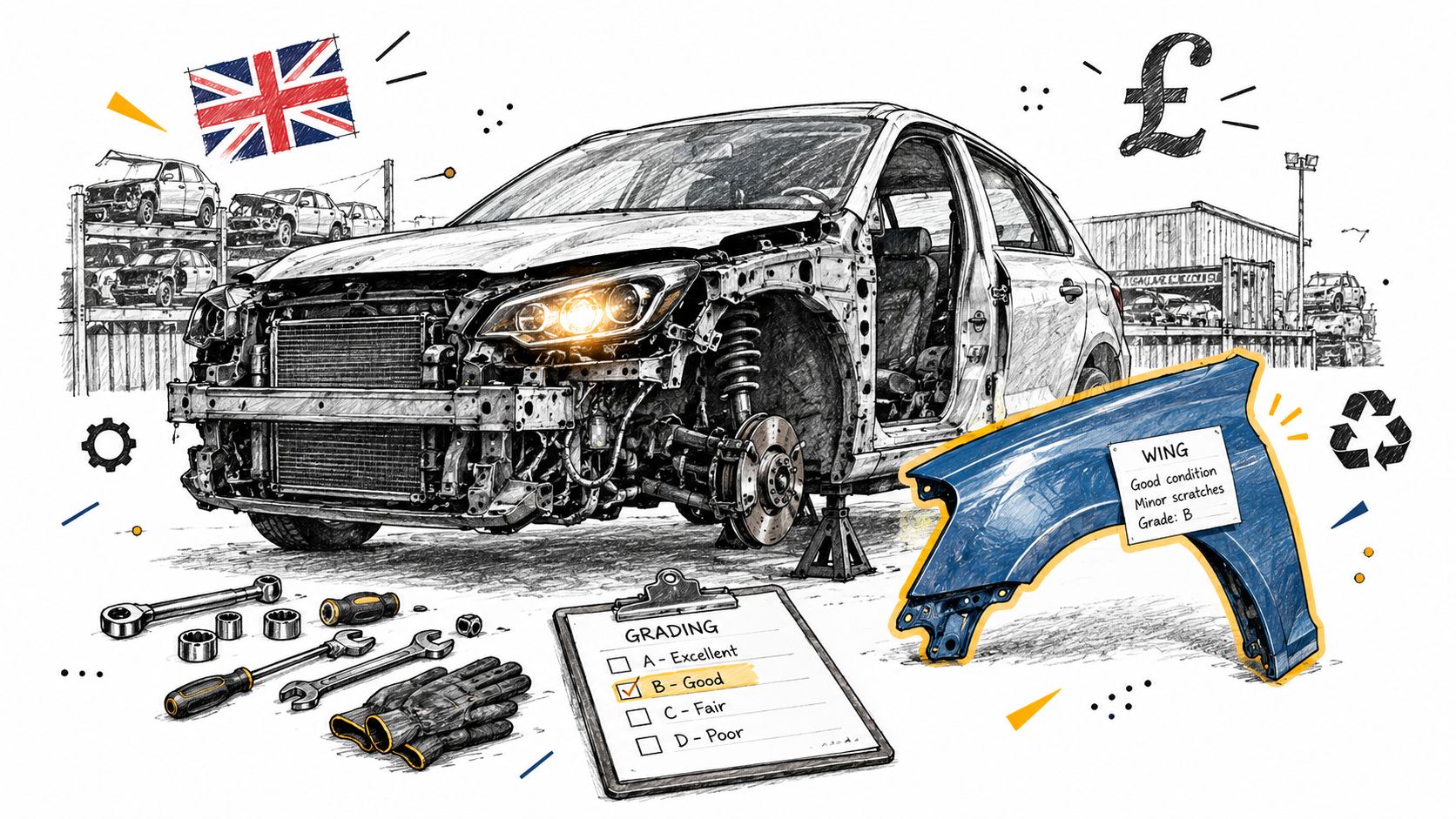
| Parts-out | Rare model, recent year, valuable working components | Variable — usually best left to specialists |
If you are unsure which category your car falls into, our scrap car guide covers how to tell the difference. For working components like batteries and alternators, our used car parts page covers what dismantlers pay.
How to Calculate Whether to Repair or Scrap Your Car
A 5-minute exercise that will tell you exactly what to do:
- Step 1 — Get the repair quote in writing. Ask the garage for a parts-and-labour breakdown. Verbal estimates rarely include the full bill.
- Step 2 — Check your car’s market value. Use Auto Trader, Parkers, or a free valuation tool. Be honest about condition — not what you hoped to sell for, what buyers actually pay for similar cars.
- Step 3 — Divide repair cost by car value. If under 50%, lean toward repair. Between 50–70%, depends on age and other factors. Over 70%, almost always scrap.
- Step 4 — Factor in what is coming next. Check the MOT advisories. If next year’s bill is also likely to be hefty, the case for scrapping is stronger.
- Step 5 — Get a scrap quote for comparison. Knowing what the car is worth as scrap gives you a real alternative to weigh against the repair.
That last step is where most people stop short. They get the repair quote and assume scrap is the obvious bad option. A 2010 Focus with a working cat can still scrap for £350-£450, and that money goes straight against the cost of your next car. Get an instant scrap quote
What Happens If You Decide to Scrap?
If the maths says scrap, the process is genuinely straightforward in 2026. Three steps:
- Get a quote. Reg and postcode, takes 30 seconds. The quote is based on weight, current scrap metal rates, and the value of your catalytic converter and other reusable parts.
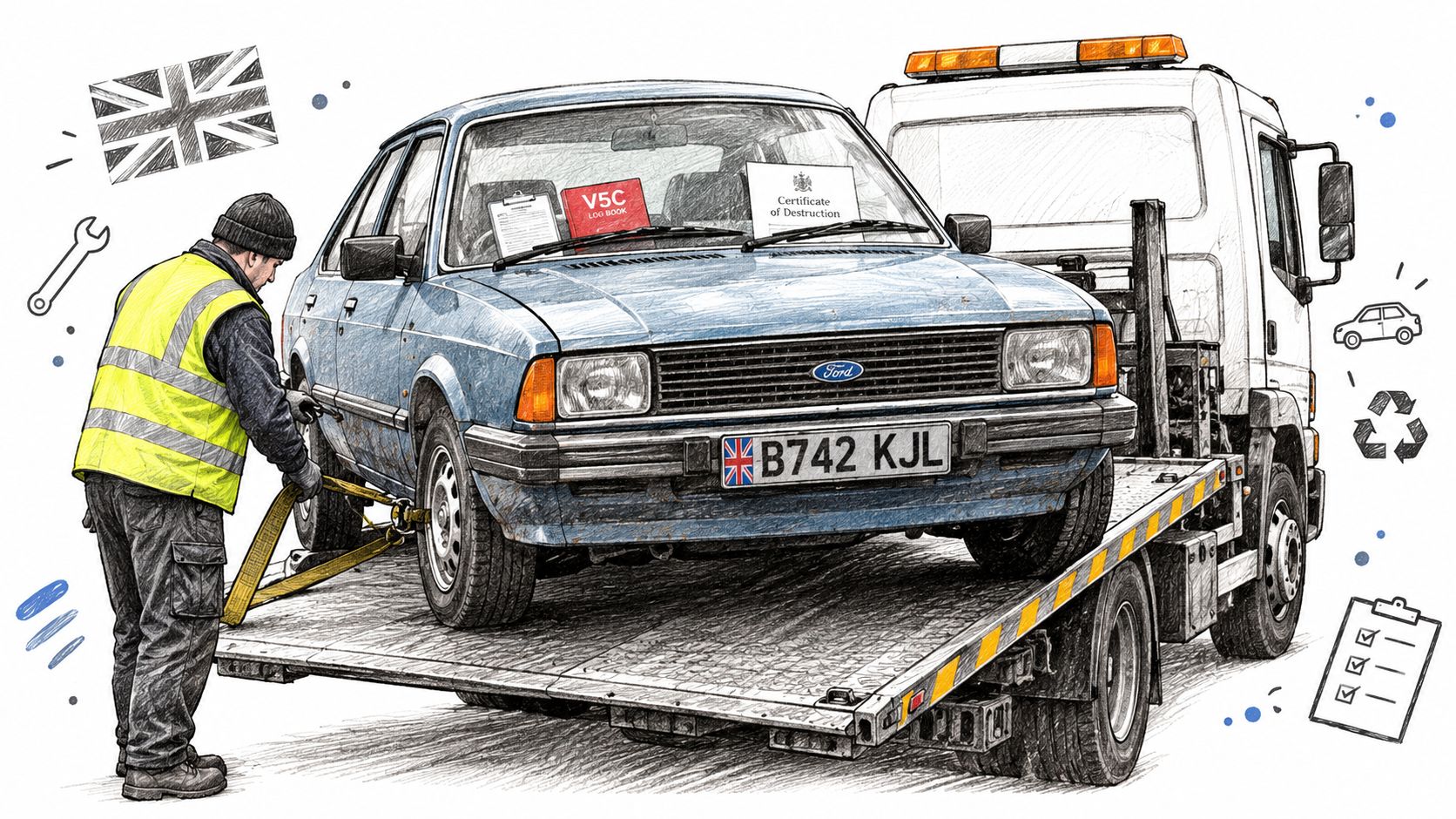
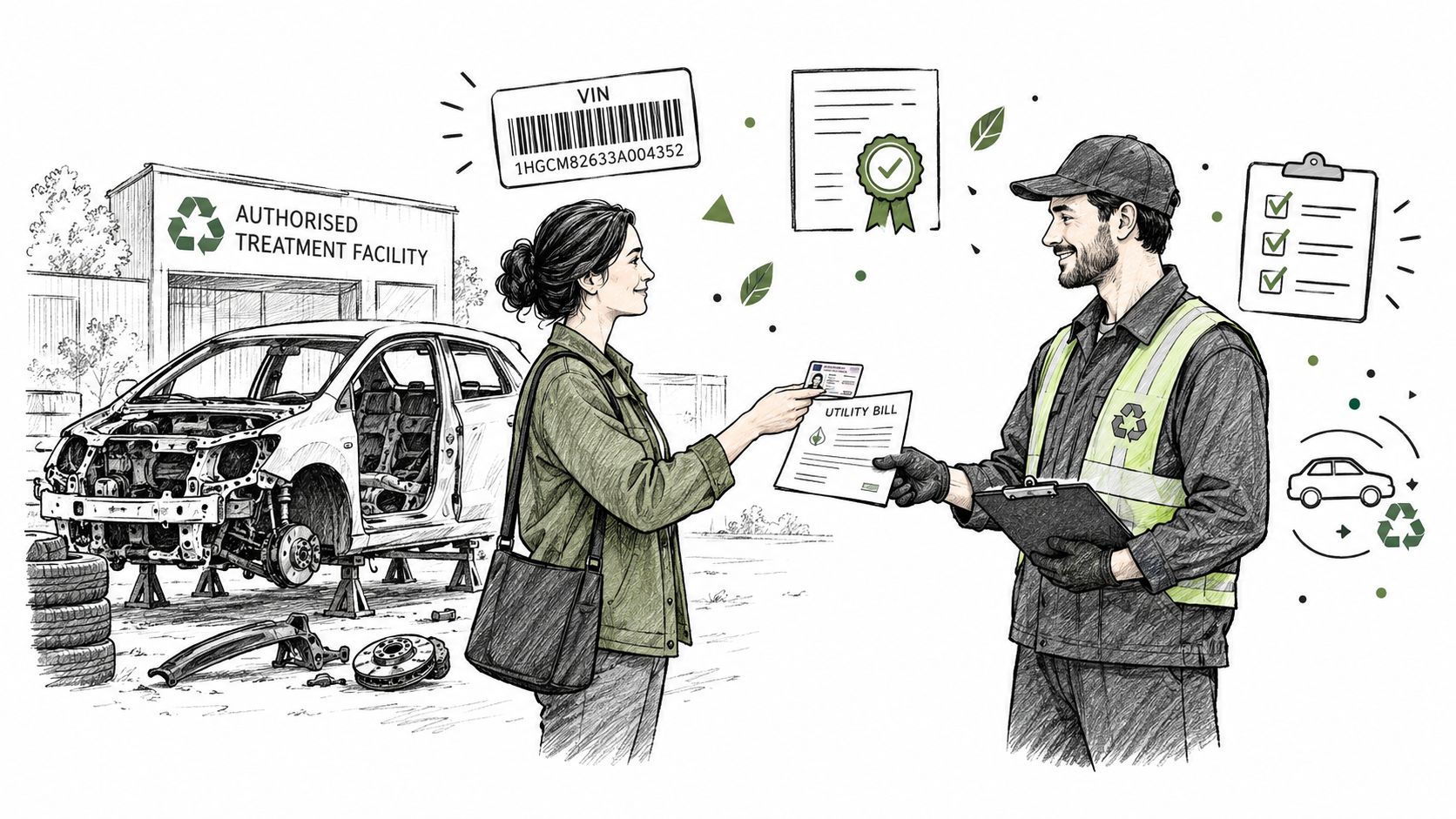
- Book free collection. Any DVLA-Authorised Treatment Facility (ATF) we work with will collect from your address at no charge. The car does not need to start or move.
- Get paid + DVLA notified. Payment lands in your bank on collection day. The ATF notifies the DVLA, cancels your road tax (refunding any unused months), and issues your Certificate of Destruction within seven working days.
One thing worth knowing: scrapping for cash is illegal in the UK under the Scrap Metal Dealers Act 2013. Any buyer offering cash on collection is operating outside the law and you risk losing the paperwork that proves the car is no longer your responsibility. Free collection across the UK is included in every legitimate quote.
Frequently Asked Questions
What does “beyond economical repair” actually mean?
It means the cost of fixing the car is more than what the car is worth fixed. Insurers use the term when deciding to write off a vehicle. For private owners, it usually kicks in at the 50% threshold — repair cost above half the car’s market value. The phrase is most commonly heard after accident damage, but it applies to wear and tear too.
Can I scrap a car that still has finance on it?
No. The finance company is the legal owner until the loan is settled, so you cannot scrap it without their permission. Settle the finance first, then scrap. Check with HPI if you are unsure whether outstanding finance is registered against your reg. Our scrap car FAQs cover finance, lost V5C, and other paperwork scenarios.
What if my car fails its MOT — do I have to scrap it?
No, you have three choices. Repair it and book a retest. Sell it to a specialist buyer who handles non-runners. Or scrap it. Which is right depends on the repair cost vs the car’s value. If the failure is on a cheap category (lights, tyres, simple suspension), fix it. If it is structural or multi-category, scrap is usually cheaper.
How much will I get if I scrap a 15-year-old car?
Most 15-year-old cars scrap for £180 to £350 in 2026, depending on weight, whether the catalytic converter is fitted, and your location. A 15-year-old SUV or large saloon with a working cat will sit at the upper end. A small hatchback with a missing cat will be at the lower. Get a live quote based on your reg for an accurate figure.
Is it worth repairing a car that has just failed its MOT?
It depends on what failed. Around two-thirds of MOT failures in the UK are on cheap categories (lights, bulbs, wipers, tyres) costing under £150 to fix — always worth repairing. The other third involve brakes, suspension, emissions, or structural issues, where the cost can run £500 to £1,500+. Apply the 50% rule. If the total repair is above half the car’s value, scrap is usually the smarter call.
Get a Real Scrap Quote Before You Decide
The best decision is the one made with both numbers in hand: what the repair will cost, and what the car is worth as scrap. Without the second number, you are only comparing the repair to a vague idea of value.
Enter your reg and postcode for an instant figure. Free UK collection, same-day bank payment, and DVLA paperwork handled. If the maths still favours repair after you see the quote, you have lost nothing. If it favours scrap, you have your answer in 30 seconds.
Get your instant scrap quote or start the scrap process with us today.
This guide was reviewed by the Scrap A Vehicle Team. Last updated: June 2026. We work with DVLA-Authorised Treatment Facilities (ATFs) across England, Scotland and Wales. For official MOT guidance, see gov.uk/mot-reasons-fail.