Free Scrap Car Valuation

Get an instant online quote in under 30 seconds, free collection from anywhere in the UK, and same-day payment straight into your bank account.

Enter your details to see what your car is worth right now.

The Service

Find Out What Your Car Is Worth in 30 Seconds

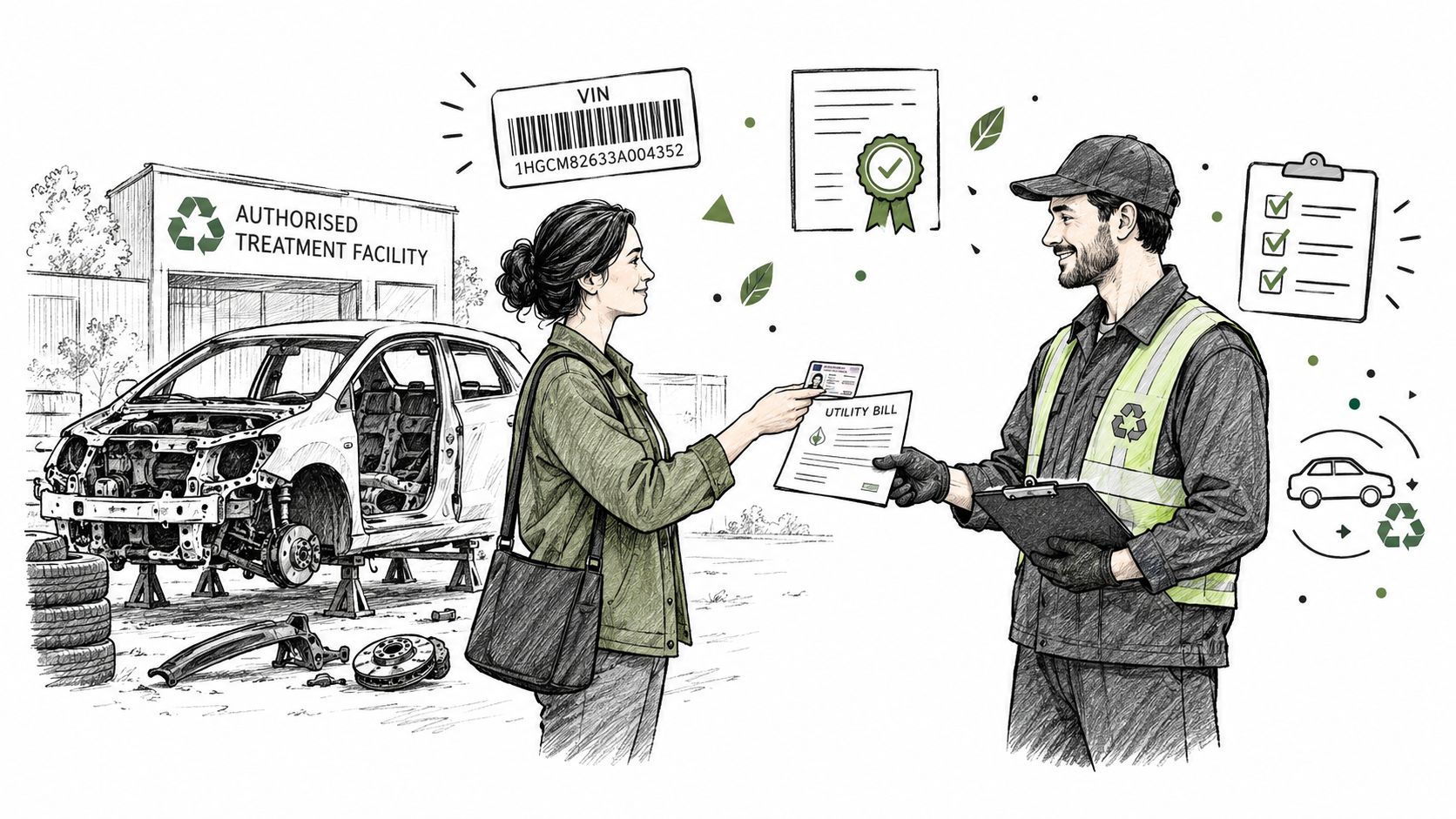
A scrap car valuation tells you exactly how much your vehicle is worth based on its weight, the current price of recyclable metals, the value of its catalytic converter, and whether any parts can be sold as salvage. At Scrap a Vehicle, our free online valuation tool pulls your car’s details from the DVLA database and compares offers from our network of licensed Authorised Treatment Facilities – giving you the best available price in under 30 seconds.
No signup. No email address. No phone number. Just your registration and postcode. That’s all we need to show you exactly what your car is worth right now.

Vehicle Category

Low

High

Key Pricing Factor

Small hatchback (Corsa, Fiesta, Polo)

£150

£280

Light weight. Value mostly from cat + steel.

Medium car (Focus, Golf, Astra)

£200

£350

Good parts demand. Potential salvage premium.

Large saloon (3 Series, A4, Mondeo)

£220

£400

Heavier build + premium brand parts market.

SUV / 4x4 (Range Rover, X5, Discovery)

£300

£500+

Heaviest category. Large cats with high precious metal content.

Van (Transit, Sprinter, Vivaro)

£250

£450

Significant weight. Strong commercial parts demand

Electric / hybrid vehicle

£150

£600+

Battery pack can add significant value if intact.

Classic / vintage (pre-1990)

£100

£400

Specialist market. Restoration parts can command premium.

These are indicative ranges. The only accurate way to know what your specific car is worth is to get a live quote – which takes about 30 seconds with our free tool.

What’s the Difference Between Scrap Value and Salvage Value?

These two terms get used interchangeably, but they’re actually quite different – and the difference directly affects your payout.

Scrap value

Scrap value is what your car is worth as raw materials. The vehicle gets crushed, shredded, and the metals are separated and sold. The price is based almost entirely on weight and current metal market rates. This is the baseline – the minimum your car is worth.

Salvage value

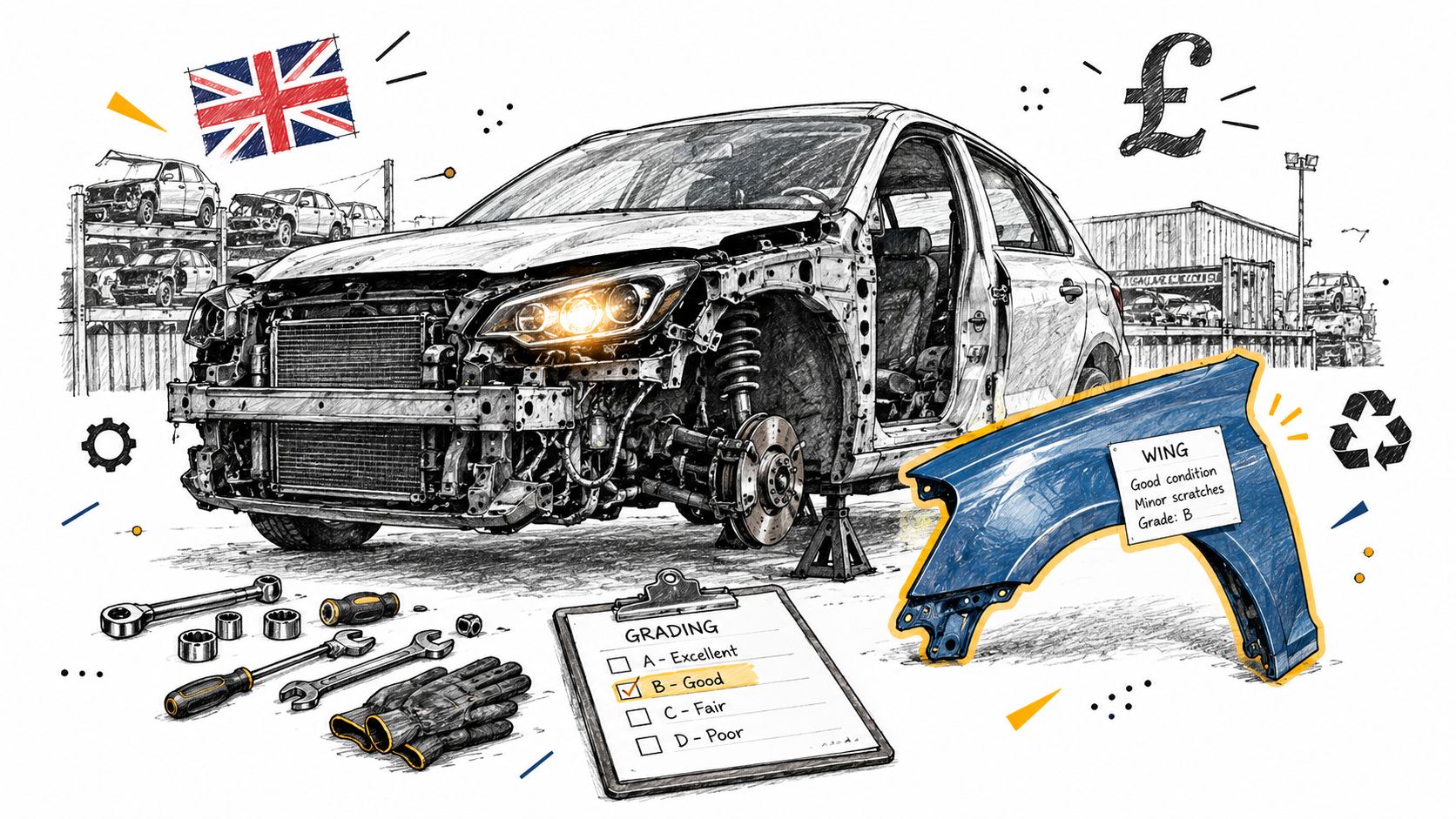
Salvage value is what your car is worth when it’s taken apart and the usable parts are sold individually. Engines, gearboxes, alternators, body panels, headlights, alloy wheels, interiors – these all have resale value. A salvage buyer pays more because the total value of the parts exceeds the metal value.

To put numbers on it: a Ford Focus might be worth £180 as pure scrap, but £320 as salvage if the engine still runs and the body panels are straight. When you get a quote from us, we automatically check both routes and give you whichever is higher. You don’t need to figure it out yourself – our system does the comparison for you. If you want to explore the salvage route further, visit our salvage buyers page.

How Can I Increase My Car’s Scrap Value?

You can’t change your car’s weight or the global price of steel. But there are a few things within your control that can bump up what you receive:

Leave the catalytic converter in place

a car with its cat intact is always worth more. Removing it yourself won’t get you more money overall – you’ll get less for the car and face the hassle of selling the cat separately (which isn’t straightforward legally)

Don’t strip parts before selling

buyers value the car as a complete unit. Removing the battery, wheels, or other components reduces the offer. If the car has salvage potential, a complete vehicle is significantly more attractive to buyers

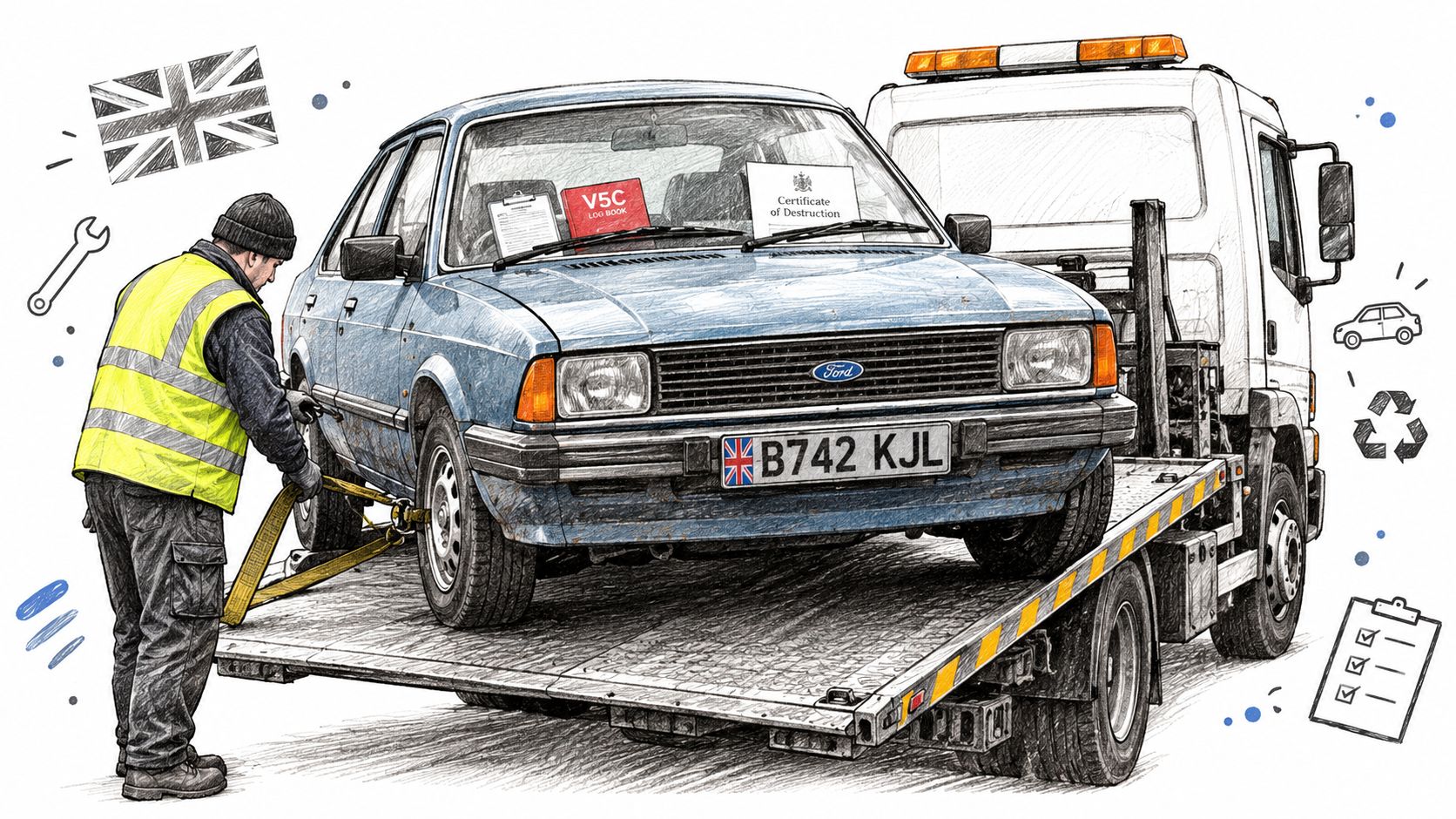
Have your V5C logbook ready

cars with paperwork in order are easier and cheaper to process. That efficiency benefit often gets passed on to you as a slightly higher quote

Be accurate about condition

if you describe your car honestly and the reality matches on collection day, the price stands. Overstate the condition and the driver might adjust downward. Honesty upfront avoids awkward conversations later

Check whether it qualifies as salvage

if your car still runs, has a working engine, or has parts in good condition, ask specifically about salvage value. It can be 30–50% more than basic scrap

Time your sale with the market

metal prices fluctuate. Our quotes reflect live rates, so there’s no trick to timing it perfectly. But if you’re not in a rush, checking our scrap car prices guide can give you a sense of market direction

How Is Scrap Car Value Calculated?

This is the bit most people are curious about, and it’s actually more straightforward than you’d think. Your scrap car’s value comes down to a handful of measurable factors, and we check every one of them when we calculate your quote.

01

Vehicle Weight

Weight is the single biggest factor. When a car is scrapped, it’s ultimately being sold as recyclable metal – mostly steel and aluminium. A heavier car contains more metal, and more metal means more money. It’s that simple. A small hatchback like a Vauxhall Corsa weighs around 1,100kg. A large SUV like a Range Rover tips the scales at over 2,200kg. That weight difference alone can mean £100–£200 more in scrap value.

02

Catalytic Converter

The catalytic converter is often the single most valuable component on a scrap car. It contains precious metals – platinum, palladium, and rhodium – that are recovered during recycling. Depending on the type of cat and the car it came from, it can add anywhere from £30 to over £200 to your valuation. Diesel cats tend to be worth less than petrol ones. And if the cat has already been stolen or removed, expect a noticeable drop in your quote. For a deep dive into this, check our guide to catalytic converter scrap values.

03

Current Metal Market Prices

Scrap metal prices change daily on the global commodities market. Steel, aluminium, and copper all fluctuate based on supply and demand, manufacturing output, and international trade conditions. When metal prices are high, scrap car values rise. When they dip, so do quotes. As of early 2026, UK scrap steel trades at roughly £180–£220 per tonne, though this shifts regularly. Our valuation tool uses live market data, so your quote always reflects the current rate – not last month’s.

04

Make, Model, and Age

Certain makes and models hold more value than others. It’s not just about weight – some cars have parts that are in high demand on the second-hand market. A 2015 Volkswagen Golf has components that mechanics actively want to buy. A 2003 Rover 75? Less so. Newer vehicles tend to be worth more because their parts are still relevant and their metals are less corroded. But even very old cars have scrap value based on their metal content alone.

05

Vehicle Condition

Running cars almost always get better offers than non-runners. A car that still starts and drives can often be sold through salvage buyers rather than going straight to the crusher. Salvage means the car gets dismantled for parts, and those parts can be worth significantly more than the raw metal. That said, we buy cars in every condition. Non-runners, MOT failures, accident-damaged, fire-damaged, flood-damaged – all of it. The condition affects the price, but it never prevents us from making an offer.

06

Your Location

Where you are in the UK can have a small impact on your quote. If you’re close to an ATF processing centre, the transport cost is lower, which can mean a slightly higher offer. Remote and rural locations may see marginally lower prices because of the collection distance. The difference is usually £10–£30, so it’s not a dealbreaker – but it’s worth knowing.

Can I Get a Valuation for a Car With No MOT?

Yes. Your car doesn’t need a valid MOT for us to value it or collect it. We buy MOT failures every single day – cars that have failed on emissions, rust, structural issues, brakes, or any other reason.

Since our collection service brings a flatbed or recovery truck to your door, your car never goes on the public road under its own power. It doesn’t need to be roadworthy, taxed, or insured.

In fact, some of the best scrap values come from cars that failed their MOT on expensive repairs. A car that needs £1,200 in welding to pass might only be worth £1,500 on the road – so scrapping it for £250–£400 and avoiding the repair bill is often the smarter move financially.

Got an MOT failure sitting on your drive? Get a free valuation now, or check our dedicated MOT failures page for more details.

Is an Online Valuation More Accurate Than Going to a Scrapyard?

Generally, yes – and here’s why.

When you walk into a local scrapyard, you’re getting one offer from one buyer. They have no incentive to compete with anyone else, and they know you’ve already made the effort to drive there. The price reflects that.

An online valuation service like ours compares offers from multiple ATFs and salvage buyers across the UK simultaneously. Our system finds the highest bidder for your specific vehicle, which almost always beats a single scrapyard quote. It’s the same principle as getting three quotes for any service – competition drives better prices.

There’s also the convenience factor. An online quote takes 30 seconds from your sofa. Driving to a scrapyard takes time, fuel, and a valid MOT. If your car doesn’t run, you’d need to arrange and pay for transport just to get a price – which makes no sense when you can do it online for free.

One thing to watch out for: some online services give artificially high quotes to get you to book, then drop the price on collection day. We don’t do that. Our quotes are guaranteed for 7 days, and the price you see is the price you get – provided the car matches your description.

How Often Do Scrap Car Prices Change?

Scrap metal prices move daily on the global commodities market, but your car’s scrap value doesn’t swing wildly from day to day. Meaningful price shifts tend to happen over weeks and months rather than hours.
The main factors that cause prices to move:  

Global steel demand

when construction and manufacturing activity increases, steel demand rises and scrap prices follow. China’s manufacturing output is the single biggest driver of global steel pricing

Copper and aluminium markets

both are recovered from scrapped vehicles and traded on the London Metal Exchange. Price movements here directly affect your car’s value

Precious metal prices

platinum, palladium, and rhodium (found in catalytic converters) fluctuate based on automotive industry demand and mining supply

Seasonal patterns

scrap volumes tend to increase after winter (more MOT failures) and at year-end (fleet renewals). Higher supply can temporarily push prices down

UK-specific factors

exchange rates, shipping costs, and domestic recycling capacity all play a role

Our valuation tool updates in real time, so your quote always reflects the current market – not last week’s or last month’s numbers. If you got a quote a few weeks ago and didn’t act on it, it’s worth checking again as the price may have changed.

How long is my scrap car quote valid for?

Our quotes are guaranteed for 7 days from the date they’re issued. Scrap metal prices fluctuate, so we can’t hold offers indefinitely. If you come back after the 7-day window, you’ll get a fresh quote based on current market rates.

Is the valuation really free with no obligation?

Completely free, no strings attached. You enter your reg and postcode, see your price, and decide what to do. No signup, no email required, no follow-up sales calls. If you don’t want to proceed, just close the page.

Will I get the same price on collection day?

Yes, as long as the car’s condition matches what you described when you got the quote. If you said it runs and it doesn’t, or the catalytic converter is missing when you didn’t mention that, the price may be adjusted. Accurate descriptions protect both sides.

Why is my quote different from another website?

Different services use different buyer networks and pricing models. Some show inflated estimates to attract bookings and then adjust downward on the day. Our quotes are based on confirmed offers from licensed ATFs and are guaranteed – the price you see is the price you’ll receive.

Can I get a valuation without providing my phone number?

Yes. Our online tool only requires your registration number and postcode. We don’t ask for your phone number, email address, or any personal details at the quote stage. Those are only needed if you decide to proceed with collection.

What if I think my car is worth more than the quote?

It might be. If your car is in better condition than typical scrap – particularly if it still runs – mention that when you speak to our team. We’ll check salvage options which often pay more. You can also compare our offer with other services. We’re confident we’ll be competitive.

Do you value vans and commercial vehicles too?

Absolutely. Our valuation tool works for cars, vans, and light commercial vehicles of all makes and sizes. Transit, Sprinter, Vivaro, Berlingo – enter the reg and you’ll get a price. For larger fleet disposals, contact us directly for bulk pricing.

How does an electric car’s scrap value compare to petrol or diesel?

It depends on the battery. Electric vehicles with an intact, functioning battery pack can be worth significantly more than equivalent petrol or diesel cars because the battery contains valuable lithium, cobalt, and nickel. A damaged or degraded battery reduces this premium. Our system factors battery condition into the valuation.

Get Your Free Instant Valuation

Instant, Accurate, No Obligation.

scrapeavehicle.co.uk

Scroll to Top