If your car is sitting on the drive and you’re not using it, you don’t have to keep paying tax and insurance on it. You can declare it off the road instead, and knowing how to SORN a car takes about ninety seconds and costs nothing. This guide walks through every way to do it, the rules that come with it, and the refund you are owed.
What does SORN mean?
SORN stands for Statutory Off Road Notification. It is a formal declaration to the DVLA that your vehicle is off public roads and not being driven, so it no longer needs to be taxed or insured.
Under UK law, every registered vehicle must either be taxed and insured or declared SORN. If a car is left untaxed without a SORN, the DVLA assumes it is still in use and its enforcement system will flag it automatically.
How to SORN a car

You can SORN a car online, by phone, or by post, and online is by far the fastest. For all three you will need the 11-digit reference number from your V5C logbook, or the 16-digit number from a V11 tax reminder.
The three routes are below.
- Online. Use the GOV.UK “Make a SORN” service. It is confirmed straight away and is the quickest way to start your tax refund.
- Phone. Call the DVLA on 0300 123 4321, a 24-hour automated line, with your V5C or V11 to hand.
- Post. Fill in a V890 form and send it to the DVLA, Swansea, SA99 1AR. Allow up to four weeks for confirmation.
If you have just bought the car or don’t have a V5C in your name, you will need to apply for a logbook first with a V62 form, which costs £25.
How much does it cost to SORN a car?
Making a SORN is free, whichever route you choose. There are no admin fees online, by phone or by post, though a phone call is charged at your normal rate.
Money only changes hands if you need a replacement logbook first, which is the £25 V62 fee. The SORN itself never costs anything.
Can you drive a SORN car?
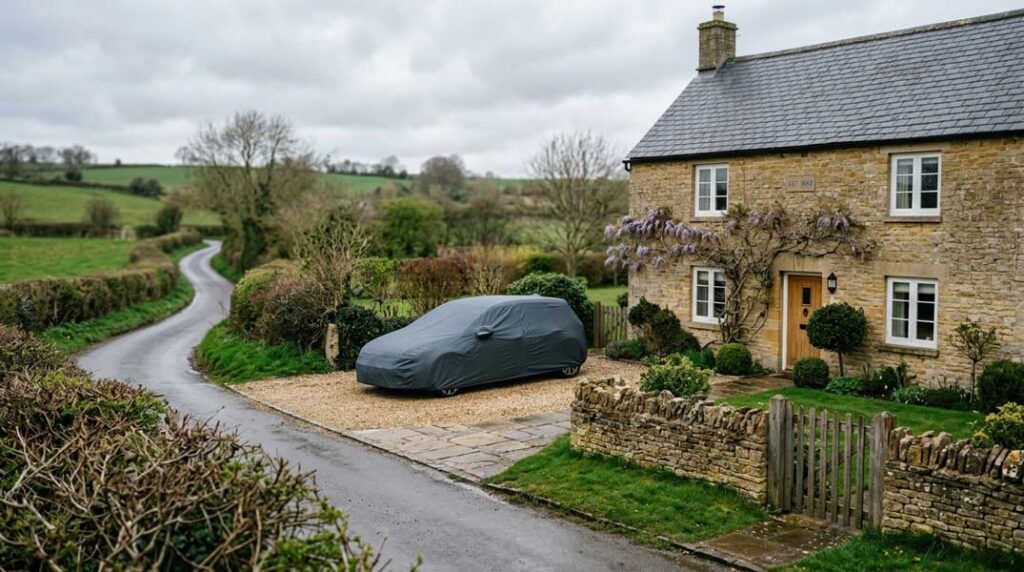
No. Once a car is declared SORN, you cannot drive or park it on a public road for any reason. The one exception is driving to a pre-booked MOT test. Everywhere else it has to be kept on private land.
That means a garage, a driveway or private land you have permission to use. Parking on the street outside your house does not count and still breaks the rules. Use a SORN car on the road and you face an automatic penalty, a fine of up to £2,500 if it reaches court, and the risk of the car being clamped or seized.
Do you get a tax refund when you SORN?
Yes. When your SORN is confirmed, the DVLA automatically refunds any full remaining months of vehicle tax and cancels your direct debit if you pay that way. You do not need to claim it separately.
Refunds cover whole months only, so part-months aren’t paid back. That is why it is worth checking the date before you apply, since declaring a day into a new month loses you that month’s refund. Any cheque goes to the name and address on your V5C, so make sure the DVLA has your current address.
How long does a SORN last?
A SORN lasts indefinitely. There is no renewal and no expiry, and it stays in place until you tax the car again, sell it, or scrap it.
One thing catches people out. A SORN doesn’t transfer to a new owner. If you buy a car that was declared off the road, the previous keeper’s SORN doesn’t carry over, so you have to make your own declaration to keep it off the road legally.
How do you take a car off SORN?
To bring a SORN car back onto the road, you simply tax it again. Taxing the vehicle at GOV.UK automatically cancels the SORN, so there is no separate step to undo it.
Before you can tax it, the car needs a valid MOT and insurance in place. If the MOT has lapsed, you are allowed to drive to a pre-booked test, and once it passes you can tax the car and use it normally.
SORN or scrap: which is right for your car?
A SORN is the right move when you plan to use the car again, whether that’s storing it over winter, pausing during repairs, or keeping a project off the road. It saves you tax and insurance while the car waits.
It’s less useful when a car is truly finished. If it’s failed its MOT with repairs that cost more than it’s worth, a SORN only parks the problem while the car sits and deteriorates. In that case scrapping is the cleaner option, since it ends your DVLA responsibility and puts money in your pocket. You can find out what your car is worth with a free valuation, weigh it against keeping the car, and if scrapping makes sense we offer free collection and an instant online quote.
Frequently asked questions about SORN
Do I need insurance on a SORN car?
Not legally. Once a car is declared SORN, insurance is no longer a requirement because the vehicle isn’t being used on the road. Some owners keep fire and theft cover on a valuable car, but it’s optional.
How quickly does a SORN start?
If you apply online or by phone using your V5C, the SORN starts immediately. Using a V11 reminder, it can start from the first day of the next month. A postal V890 takes up to four weeks to confirm.
Can I SORN a car parked on the road?
No. A SORN car must be kept on private land such as a garage or driveway. Parking on a public road, including the street outside your home, counts as using the road and is not allowed under a SORN.
What happens if I don’t SORN or tax my car?
The DVLA assumes the car is in use and flags it automatically. You can receive a fixed penalty starting at £80, a court fine of up to £2,500, and the vehicle can be clamped or seized.
Does a SORN expire if I do nothing?
It doesn’t. A SORN has no end date and never needs renewing. It only ends when you tax the car, sell it, or scrap it. As long as the car stays off the road, the SORN remains valid.