Most owners start with the wrong question. They ask, “What’s my van worth?” and then check a scrap calculator based mainly on weight, or copy the asking price of a similar advert. Neither approach gives you a reliable answer. A van’s value can sit anywhere between retail, trade, salvage and component value, and the correct figure depends on its engine code, specification, mileage, condition, paperwork, VAT status and local demand.
A failed MOT doesn’t automatically make a van worthless. Nor does high mileage, accident damage or a tired body. The right buyer may value the engine, gearbox, catalytic equipment, doors, panels and other reusable components even when a private buyer won’t touch the vehicle. Here’s how to work out which market your van belongs in, and how to avoid accepting a price based on the wrong valuation method.
Table of Contents
- Why Your Van Is Worth More Than You Think
- How Buyers Calculate Commercial Vehicle Value
- Choosing the Right Selling Route for Your Van
- Hidden Variables That Swing Your Final Payout
- Preparing Your Van and Paperwork for Valuation
- Securing Your Quote and Arranging Collection
Why Your Van Is Worth More Than You Think
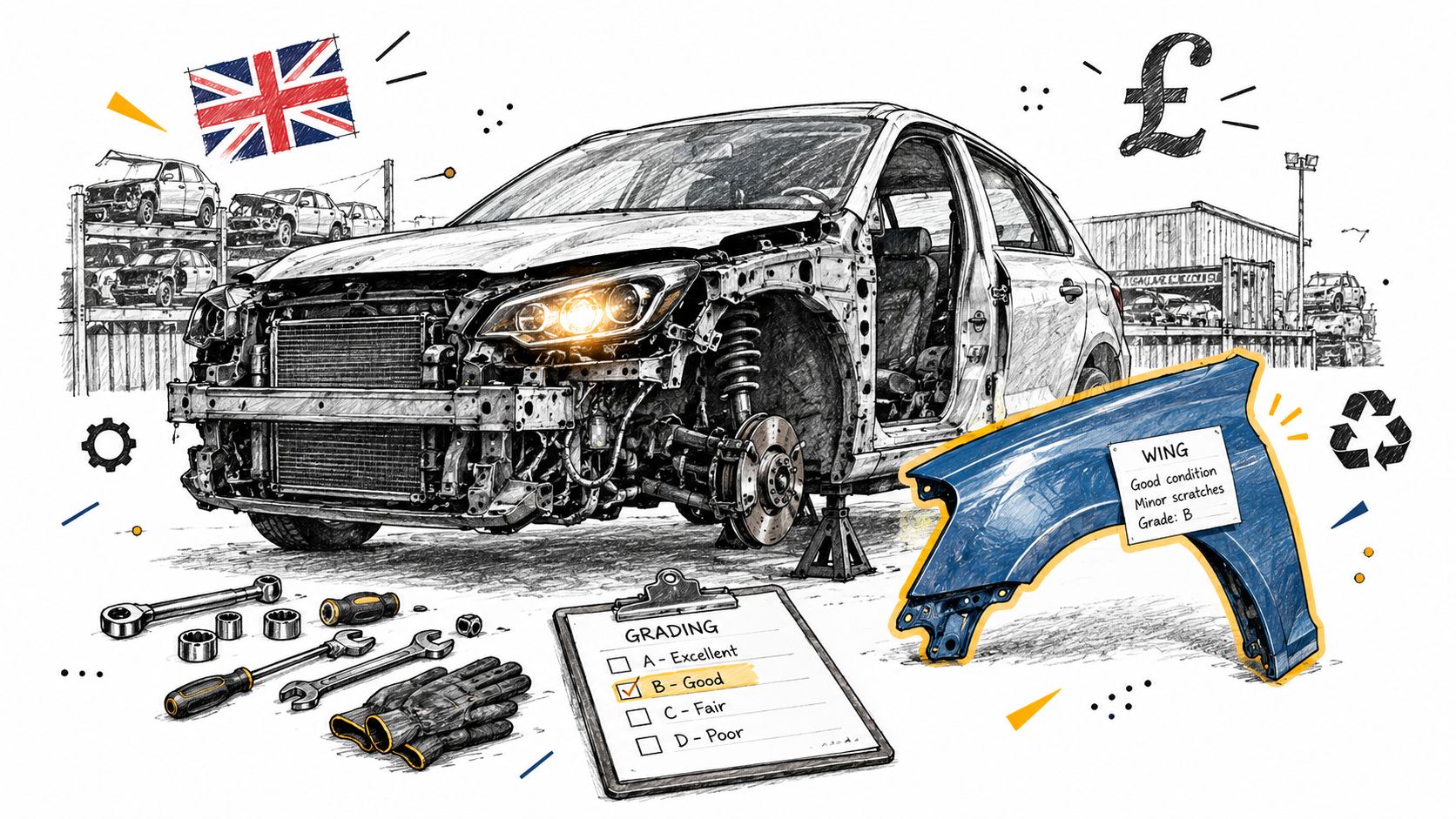
The most common myth is simple: a van in poor condition has no value. That’s wrong. A damaged or non-running van may have little retail appeal, but it can still contain valuable mechanical and body components. A specialist buyer looks beyond the dented panel or failed MOT and asks a more useful question: which parts can be reused, and what demand exists for that exact vehicle?
That distinction matters because scrap metal is only one layer of the calculation. A roadworthy Ford Transit with a good service record belongs in a different market from a non-runner with severe mechanical failure. A damaged Vauxhall Vivaro may still be attractive because its engine, gearbox, doors or interior can support repair work elsewhere. Even a vehicle that has reached the end of its useful life as a complete van can retain salvage value.
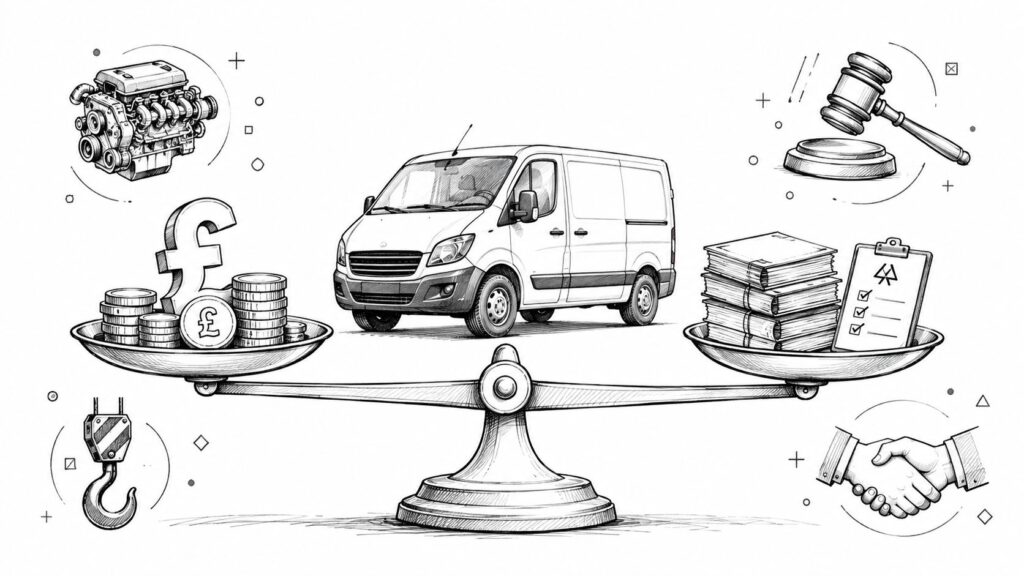
Four different meanings of van worth
There isn’t one universal figure. Buyers normally assess a van against the route most likely to produce a return:
- Retail value: The price a private buyer may pay for a usable, presentable van with convincing history.
- Trade value: The amount a dealer or trader can justify after allowing for preparation, warranty risk and resale margin.
- Auction value: A market-led figure shaped by competing bids, specification, mileage and buyer appetite on the day.
- Salvage value: The value of the vehicle’s reusable parts, repair potential and recyclable materials.
Parkers’ depreciation data shows why a roadworthy van can be worth far more than its scrap weight. Over the first 36 months and 60,000 miles, small vans typically retain about 26% of their original value, while medium vans retain 25% to 37%, depending on the model, and large vans retain 22% to 29%. Parkers also estimated losses of roughly £14,000 to £15,000 in residual value across the small, medium and large van sectors during the first three years. These figures are reported in Parkers’ UK van depreciation analysis.
Practical rule: Don’t send a usable van straight to a scrap-weight calculator until you’ve checked its model, engine, history and resale demand.
Age and mileage still matter, but they don’t tell the whole story. A carefully maintained high-mileage workhorse may offer more usable value than a lower-mileage van with neglected servicing, a failing engine or extensive corrosion. The owner who provides accurate information gives the buyer a chance to price those hidden assets properly.
How Buyers Calculate Commercial Vehicle Value
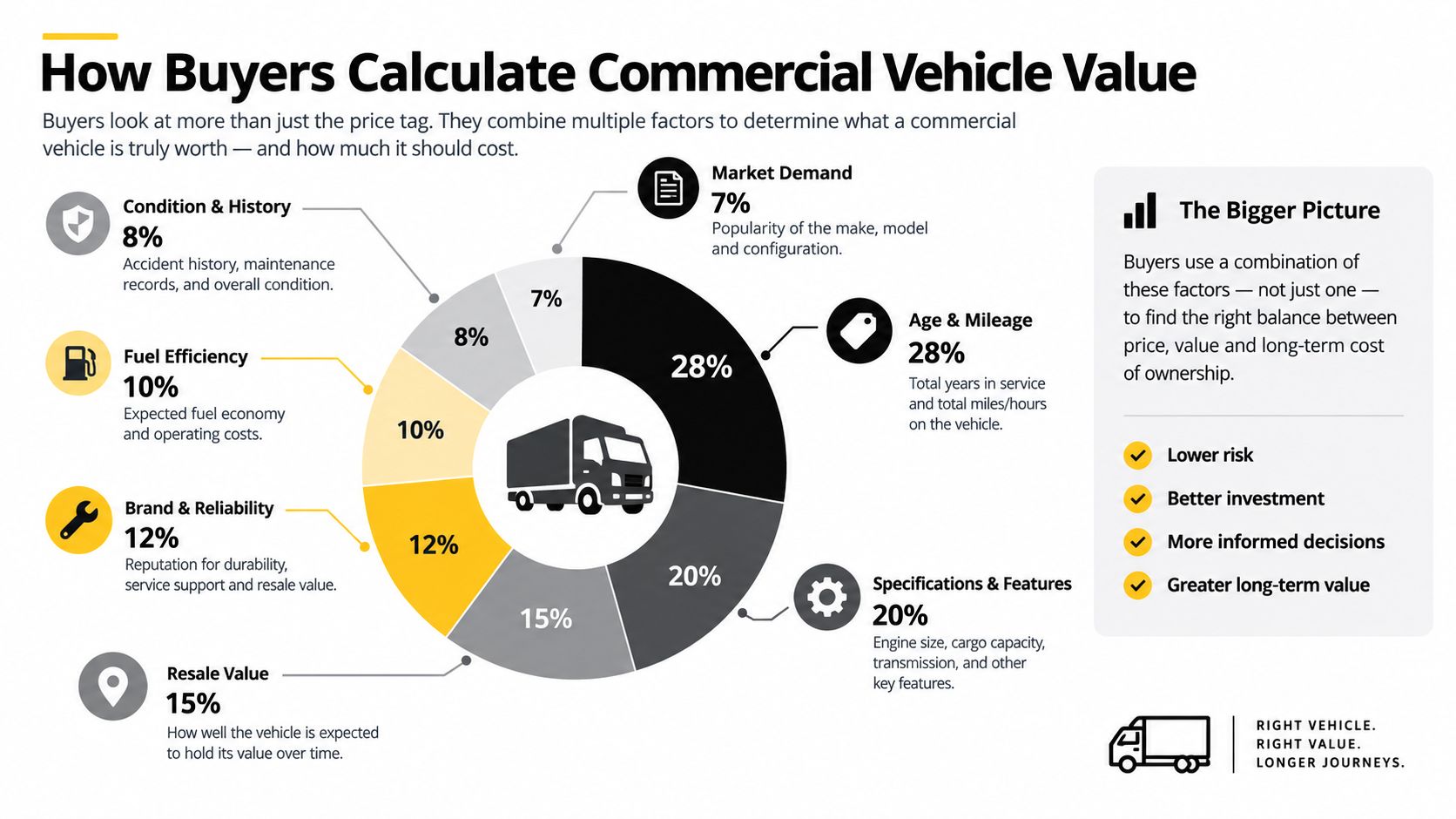
A serious valuation starts with the van’s identity, not its weight. Buyers need the registration, exact model, wheelbase, roof height, payload class, engine, gearbox, trim, mileage and ownership history. Those details determine which customers might buy it, which parts are in demand and whether the van should be priced as a complete vehicle or as salvage.
Depreciation is the first major adjustment. Newer vans lose value quickly, particularly during the early ownership period. Parkers uses a three-year and 60,000-mile benchmark, with small vans retaining around 26% of original value after that point and average residual-value losses of about £14,000 to £15,000 across the main van sectors in the first three years. The CAP HPI Red Book guidance also frames light-commercial residual values in pounds and as a percentage of list price across 12 to 60 months, with mileage calculations extending up to 200,000 miles.
That means timing matters. Two vans with similar condition can produce very different offers if one has just crossed a major age or mileage threshold. Depreciation isn’t linear, so delaying a sale during the steepest part of the curve can cost more than a seller expects.
Mileage needs mechanical context
Mileage is a warning signal, not a verdict. Fleet News reported that used van auction entries averaged 62 months old and 84,477 miles, and linked vehicle condition with mileage above 80,000 miles to cooling values in recent months. You can read the Fleet News coverage of light-commercial residual values.
A high odometer reading can suggest that the engine, turbo, clutch, gearbox or emissions equipment is approaching expensive work. But it can also describe a van that has spent its life on motorway routes, received regular servicing and remains structurally sound. Buyers will examine the evidence rather than penalise the number.
Service history makes that evidence credible. Invoices, scheduled maintenance, timing-belt records, recent tyres and proof of major repairs can support a stronger offer. Conversely, a low-mileage van with poor maintenance, warning lights, worn tyres and a neglected interior can lose value quickly because the buyer inherits uncertainty.
Condition changes the route
CAP HPI defines Average Condition as mechanically sound, needing only routine wear-and-tear items for an MOT, with possible minor repainting but no major body repair. That definition is useful because it separates ordinary commercial wear from defects that move a van into trade, salvage or dismantling valuation.
Look for:
- Mechanical health: Engine noise, smoke, overheating, clutch operation, gearbox selection and warning lights.
- Structure and body: Corrosion, chassis damage, accident repairs, missing doors, damaged loading areas and windscreen condition.
- Usable equipment: Racking, tail lifts, ply lining, roof bars, refrigeration equipment and specialist conversions.
- Evidence of care: MOT history, invoices, service stamps, spare keys and honest notes about faults.
Engine code deserves special attention. Two vans that look identical can contain different engines with different parts demand, reliability reputations and repair costs. Scrap A Vehicle’s pricing approach considers valuable components, particularly the engine code, rather than treating every van as identical metal.
Choosing the Right Selling Route for Your Van
The right selling route depends on what the van is today, not what it used to be. A clean, running van with useful history may justify a retail advert. A tired fleet vehicle may suit an auction. A non-runner, failed-MOT van or accident-damaged example usually needs a specialist buyer who can collect it and price the salvage properly.

Private retail sale
This route offers the highest potential headline price, but you’ll do the work. You’ll need accurate photographs, a detailed advert, viewings, test-drive arrangements, payment checks and the correct paperwork. It works best for a roadworthy van with a desirable specification and enough time to handle enquiries.
The main risk is overpricing. Private buyers compare similar vans closely, and they’ll notice missing history, unclear damage descriptions or a price that ignores the vehicle’s mileage. You may also wait longer for a serious buyer, especially if the van needs finance or specialist insurance.
Trade auction
Auction selling is quicker and removes much of the private-sale administration. Dealer bids reveal current trade demand, but the final result can vary according to the vehicles competing in the same sale and the fees attached to the transaction.
This route suits a running van that needs preparation, has commercial wear or isn’t attractive enough to justify private viewings. It’s less suitable for a non-runner unless the auction has buyers equipped to collect and assess damaged stock. Read the terms carefully, because listing, selling, transport or administrative charges can reduce the amount you receive.
Specialist buyer
A specialist buyer is the practical option for damaged, failed-MOT, non-running or end-of-life vans. You can describe the vehicle accurately, provide its location and arrange collection without preparing it for a forecourt. The buyer can assess salvage value, components and recycling potential rather than relying only on retail presentation.
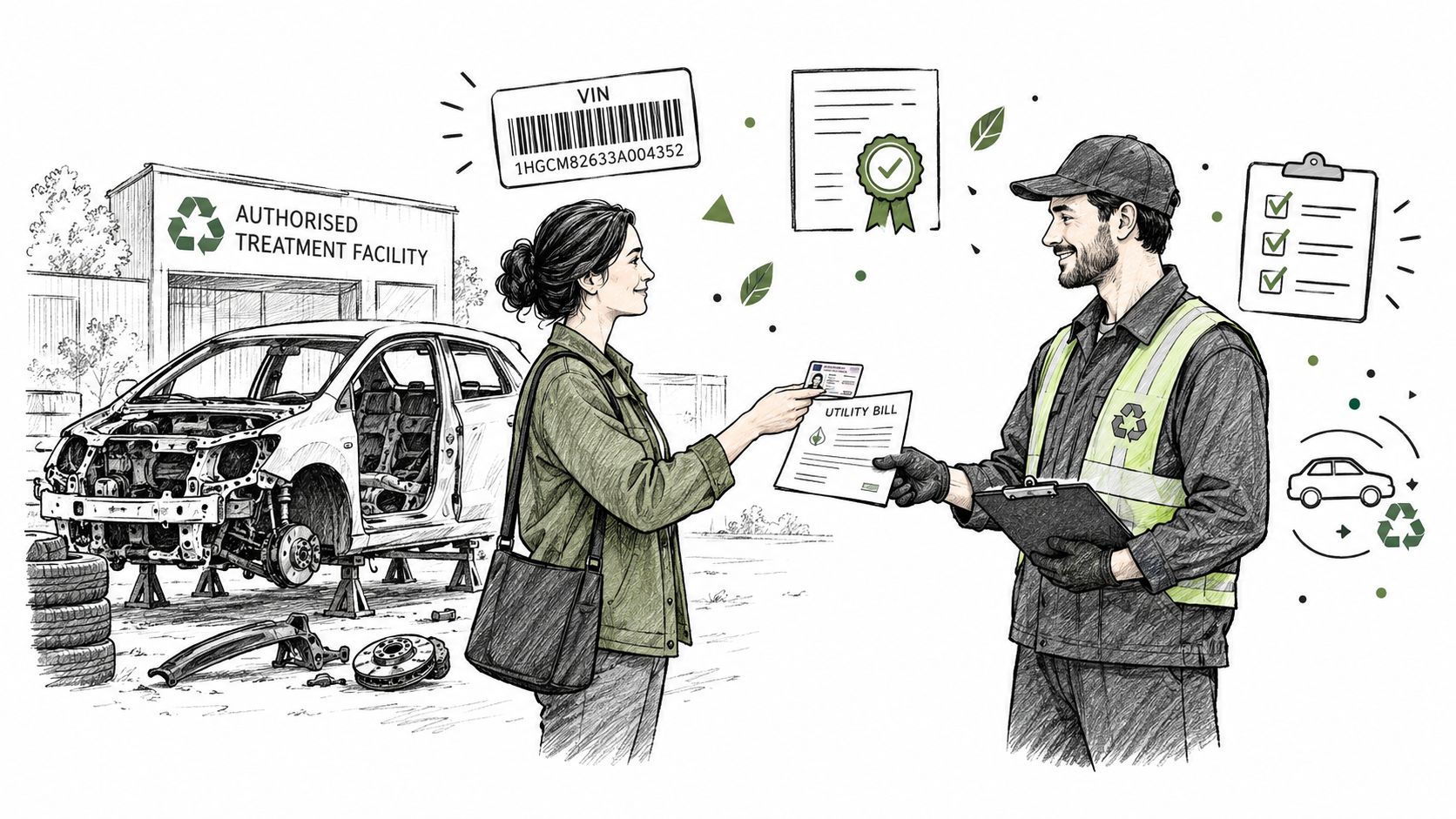
For an end-of-life vehicle, choose a compliant operator working with an Authorised Treatment Facility, or ATF. Scrap A Vehicle’s scrap my van service is one route to compare when speed, collection and proper disposal matter more than managing a private advert.
A van that needs recovery shouldn’t be marketed like a clean retail vehicle. Choose the buyer whose equipment and pricing model match the problem.
Hidden Variables That Swing Your Final Payout
Generic calculators often reduce the valuation to registration, mileage and condition. That’s a useful starting point, but it misses the variables that can move a real offer. Engine code, VAT treatment, powertrain, specification and location can change who wants the van and how they price it.
VAT is a major dividing line. A VAT-qualifying commercial vehicle can appeal to a business able to recover VAT, while a private buyer normally thinks in VAT-inclusive terms. Advertised prices may therefore appear several thousand pounds apart even when the underlying van is similar. The Motorway guide to used van prices explains why buyers need to distinguish VAT-inclusive and ex-VAT pricing when comparing commercial stock.
Ask whether the quoted figure includes VAT, whether the vehicle is VAT qualifying and whether you’re comparing retail, trade or private-sale prices. Never compare an ex-VAT dealer price directly with a private owner’s VAT-inclusive expectation.
Diesel, electric and fleet specification
The powertrain creates another split. Older diesel vans remain relevant to buyers who prioritise purchase price, range and established repair networks. Newer electric vans appeal to operators with suitable routes, charging access and compliance requirements, but their values follow a different set of questions, including battery condition, usable range and charging equipment.
Late-model fleet vans also need careful comparison. A basic fleet specification can be mechanically sound but less appealing than a higher-trim example with air conditioning, parking equipment, security upgrades or factory navigation. Payload class and body configuration can matter more than cosmetic extras for a tradesperson or delivery operator.
Model and trim retention
Parkers’ medium-van benchmarks demonstrate why the badge alone isn’t enough:
| Van model | Retention percentage |
|---|---|
| Ford Transit Custom | 33.5% |
| Vauxhall Vivaro | 26% |
| Renault Trafic Sport | 28% |
| Renault Trafic base model | 25% |
These figures use the three-year and 60,000-mile benchmark in Parkers’ medium-van residual-value comparison. The Renault Trafic Sport’s stronger retention than the base Trafic shows how trim can alter the result. In the content owner’s recent records, the biggest value swings have involved the Ford Transit, Vauxhall Vivaro, Renault Trafic and Renault Master.
Location changes the buyer pool
Regional demand can shift the answer by hundreds of pounds. CarGurus found Glasgow’s average van prices 2.4% below the national index, while Plymouth’s were 4.2% above it. For a Ford Transit, Glasgow averaged £8,620, compared with £9,437 in Cardiff. A Mercedes-Benz Sprinter averaged £12,265 in London versus £11,519 in Bradford. The figures appear in the CarGurus UK Van Index.
Scrap and salvage pricing works differently, because collection distance and component demand matter alongside local retail prices. Engine code is especially important when a specialist buyer identifies parts with strong demand.
Preparing Your Van and Paperwork for Valuation
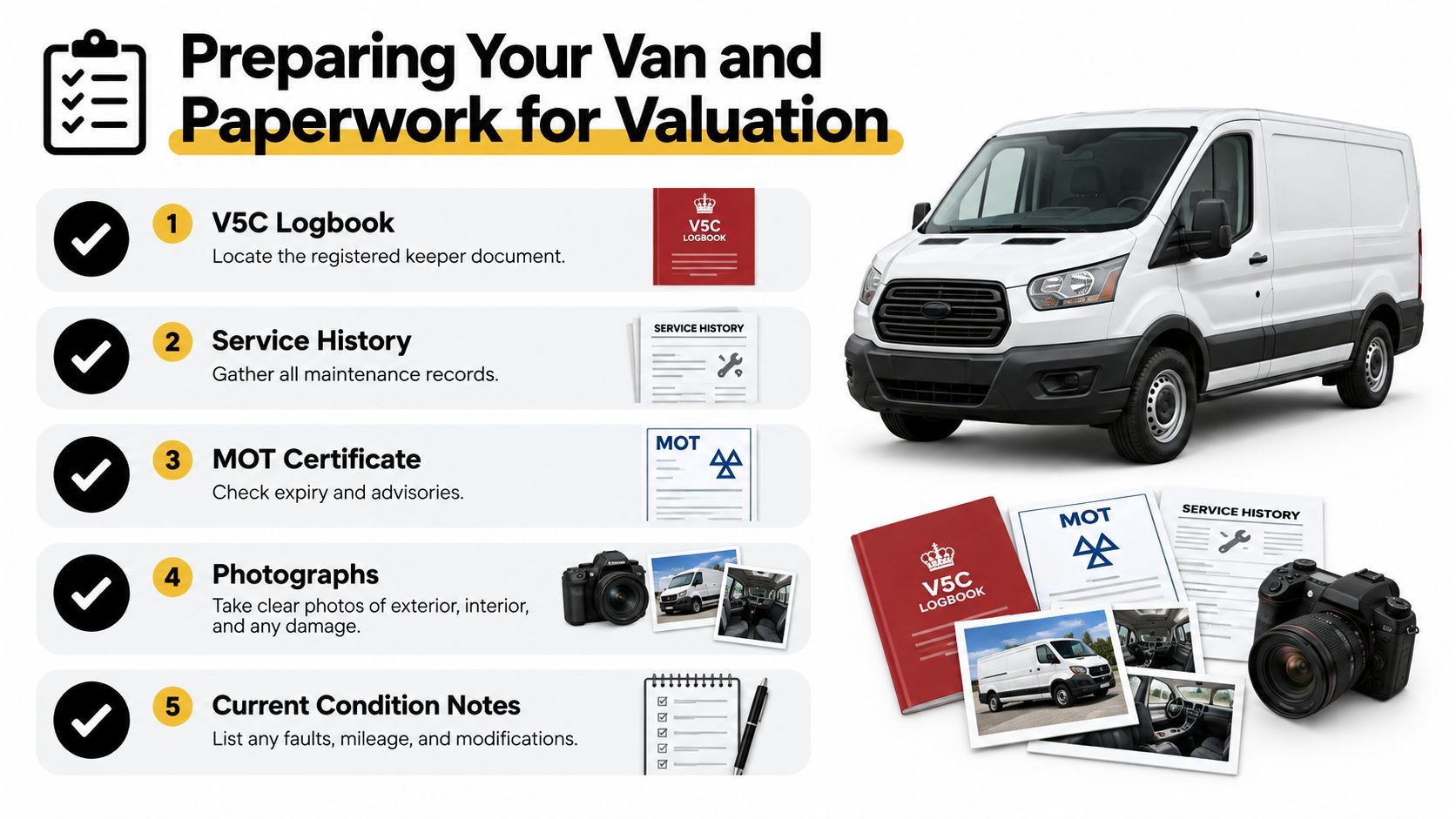
A good valuation depends on accurate information. Before requesting quotes, gather the documents and inspect the van properly. Sellers often lose money by describing a vehicle as “good condition” when it has obvious warning lights, severe corrosion or missing equipment. Honest detail protects the quote and prevents an awkward renegotiation at collection.
Gather the essentials
-
Find the V5C logbook. Confirm the registration, registered keeper details and vehicle description. If the document is missing, tell the buyer early rather than presenting it as a surprise at handover.
-
Collect service records. Include invoices, service stamps, timing-belt evidence, recent repairs and records for commercial equipment. A documented repair can support value because it reduces uncertainty about the next owner’s costs.
-
Check the MOT history. Note the expiry date, previous advisories and any recorded failures. Don’t hide a failure. Explain whether the issue has been repaired, remains outstanding or makes the van unsuitable for normal driving.
-
Photograph the whole vehicle. Take clear images of every side, the cab, load area, dashboard, tyres, engine bay and damage. Include warning lights and missing parts. Accurate photographs help a buyer quote the correct route rather than a hopeful retail figure.
-
Write current condition notes. Record mileage, starting behaviour, smoke, leaks, warning lights, clutch feel, gearbox operation, modifications and whether the van rolls freely. Mention lost keys, missing documents and recovery requirements.
Use a sensible condition standard
CAP HPI’s Average Condition definition is a useful reference point. It describes a mechanically sound vehicle needing only routine wear-and-tear items for an MOT, with possible minor repainting but no major body repair. Use that standard to classify your van rather than calling every tired work vehicle “average”.
Don’t spend heavily on cosmetic work before getting a valuation. Cleaning the cab and removing rubbish costs little, but major paintwork or mechanical repairs may not return their full cost. Ask the buyer whether a repair would increase the offer before authorising it.
Seller’s rule: Fix cheap presentation problems, disclose expensive faults and never pay for a repair without checking whether the market will reward it.
Securing Your Quote and Arranging Collection
Start with the registration and postcode, then provide the details that affect the route, including mileage, condition, whether it runs, damage, missing parts and the engine specification. An instant quote is only as reliable as the information supplied. If the van’s condition differs substantially from the description, the buyer may revise the offer after inspection.
Once you accept a quote, agree the collection location and make sure the driver can access the vehicle. Tell the collection team if the van is in a locked yard, underground car park, narrow passage or unable to steer. A non-runner may need specialist loading equipment, and hiding that fact can delay the appointment.
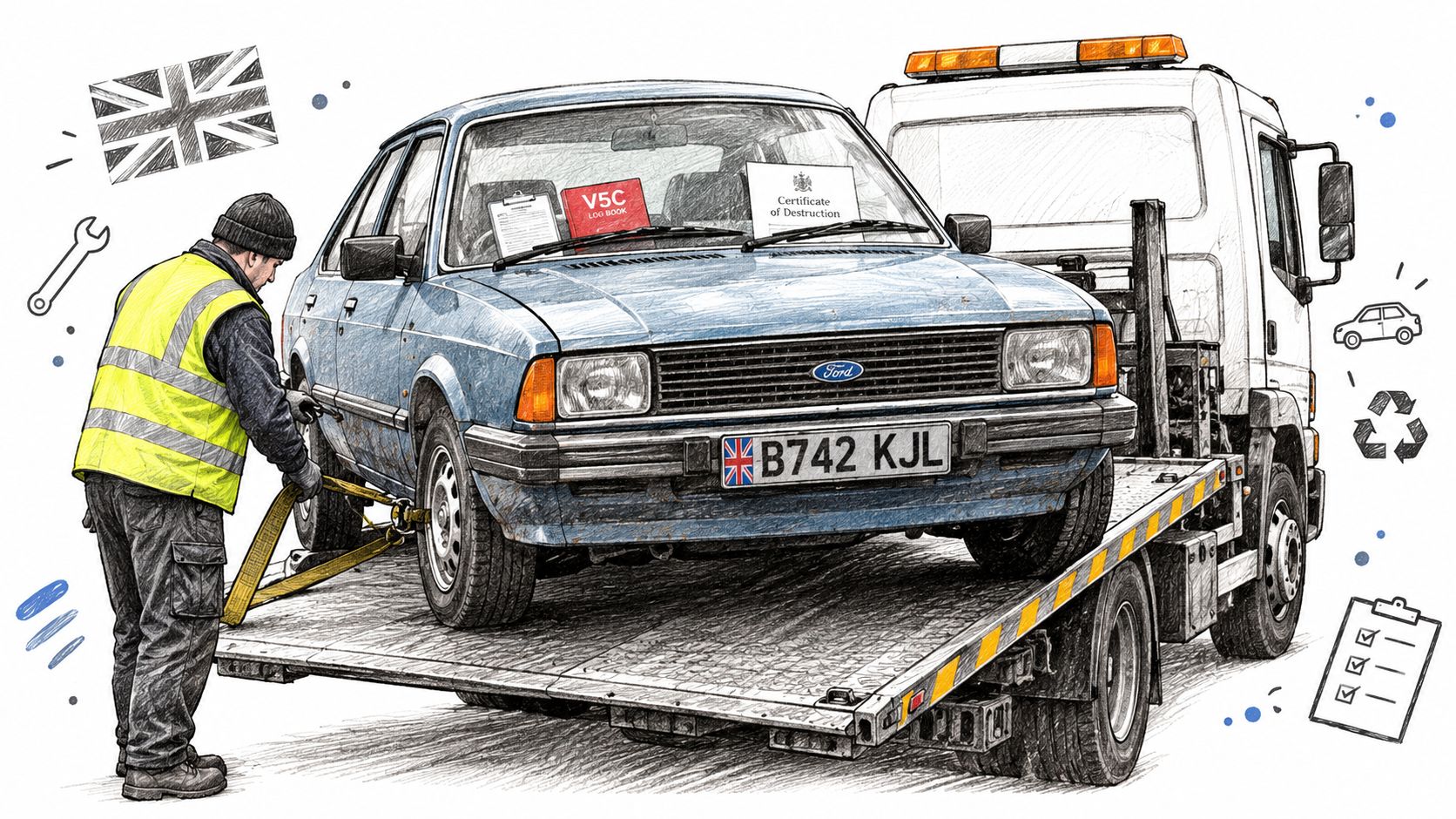
For end-of-life vehicles, use an ATF so the van is dismantled and recycled through the correct legal route. The operator should explain how DVLA notification is handled and whether a Certificate of Destruction applies. That certificate confirms the vehicle has entered the authorised destruction process and helps protect you from future liability.
On collection day, remove personal tools, paperwork, fuel cards and equipment you’re keeping. Have the keys and V5C ready, check the vehicle condition with the driver and confirm the agreed payment before the van leaves. Scrap A Vehicle provides free nationwide collection, handles relevant DVLA paperwork through its authorised partners and makes payment by bank transfer on handover, subject to the agreed collection details.
The process should be straightforward: quote, disclose, accept, book, hand over and receive payment. If an operator adds unexplained deductions, pressures you to accept a lower figure or can’t explain the disposal paperwork, stop and compare another buyer.
If you want a practical answer to “what is my van worth?”, submit its registration, postcode, mileage and condition to Scrap A Vehicle for an online valuation. Give the full engine and damage details, then compare the offer with the van’s likely retail, trade and salvage routes before accepting collection.