You’re on a forecourt, the salesman has just slid a figure across the desk, and your first thought is simple, that’s too low. That reaction is normal. In part ex car deals, the dealer isn’t just buying your old motor, they’re deciding how much of the next car’s price they can hide inside the swap, and that’s where the margin lives.
The trick is to stop treating it like one vague offer. A part exchange is a single transaction where the dealer values your current car, knocks that amount off the next car, and settles the difference. The number only looks neat on paper if you understand what it’s really based on, resale value, reconditioning cost, auction risk, scrap value, and how much negotiating power the dealer thinks you’ve got.
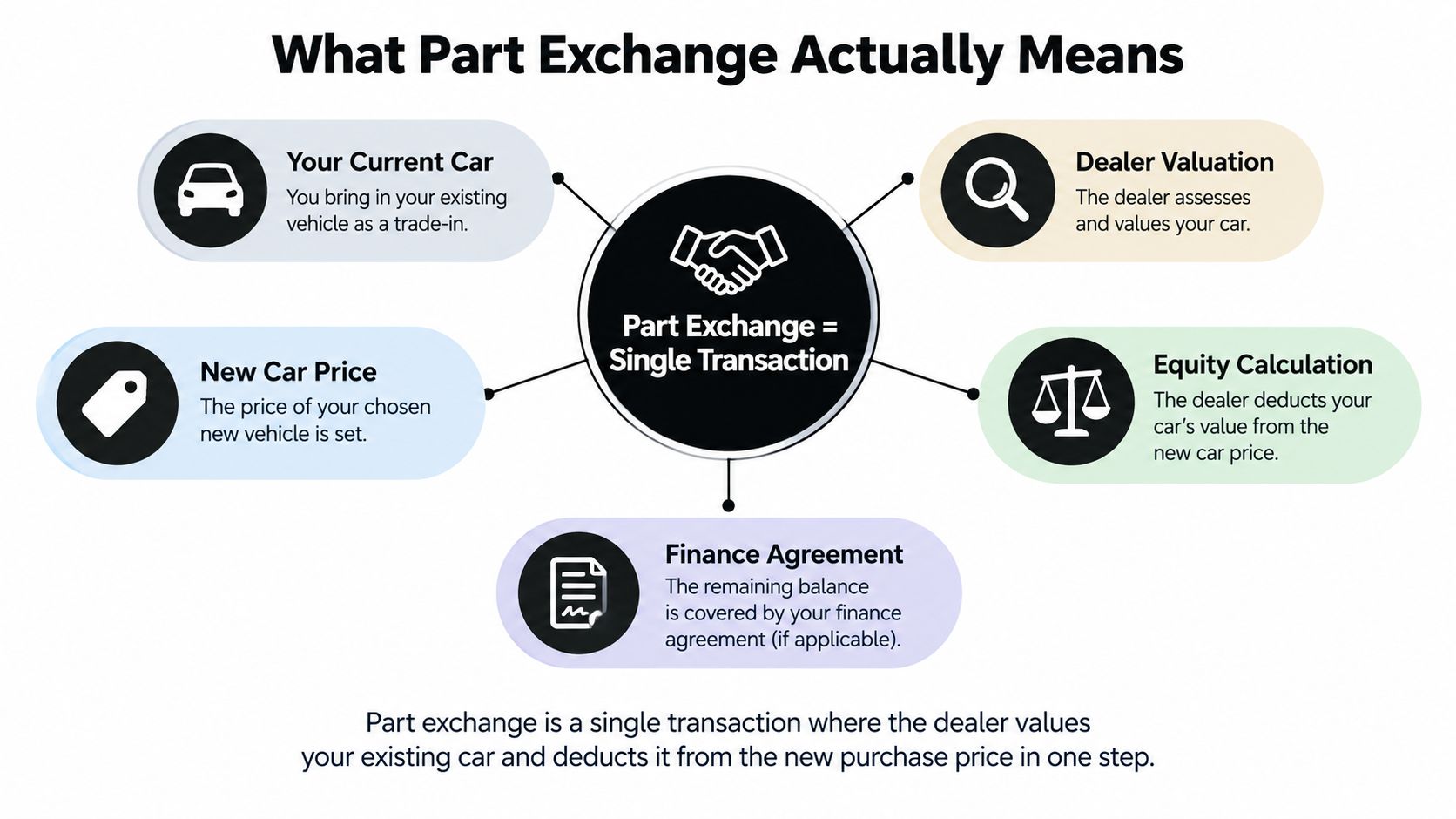
Table of Contents
- What Part Exchange Actually Means When You Buy a Car
- The Real Benefits and Hidden Costs of Trade-In Deals
- How to Arrange a Part Exchange From Quote to Collection
- Where Part Exchange Beats Selling Separately and Where It Doesn’t
- Negotiation Mistakes That Cost UK Sellers Thousands
- Comparing Your Offers Before You Sign the Deal
What Part Exchange Actually Means When You Buy a Car
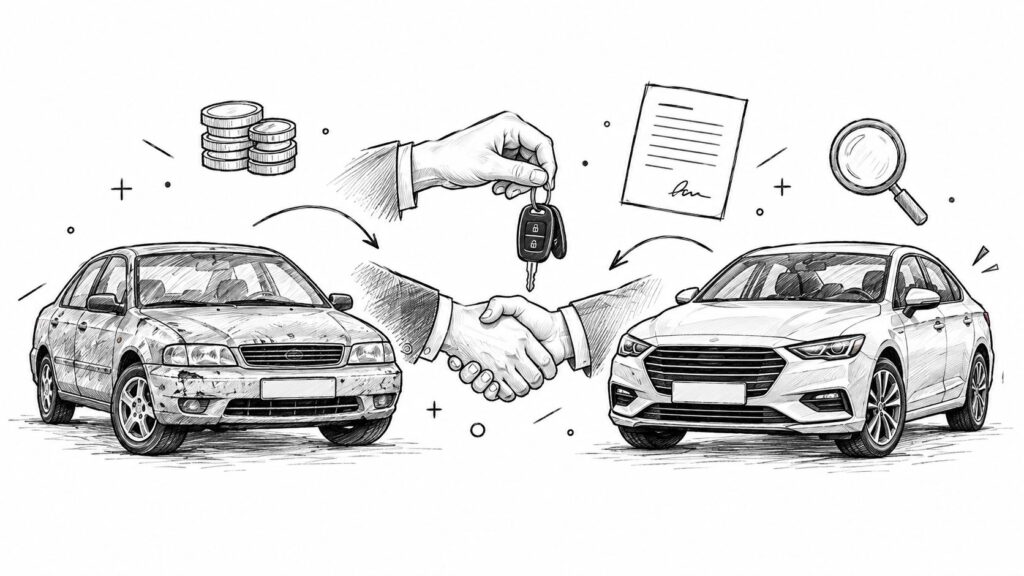
A part exchange is not a favour from the dealer, and it’s not a separate sale wrapped in polite language. It’s a bundle pricing deal. The dealer values your current car, subtracts that from the car you want, and you pay the balance, either in cash or through finance. That’s why the old car matters so much, because it acts like a deposit whether you call it one or not.
The dealer’s quote is usually lower than what you’d hope for because they’re not buying your car to keep it. They’re buying the resale risk. If the car is clean, popular, and easy to retail, the offer gets closer to forecourt value. If it’s awkward, high-mileage, or needs work, the number drops fast because the dealer is already pricing in prep, advertising, warranty exposure, and the chance it sits on the forecourt too long.
How the dealer thinks about your car
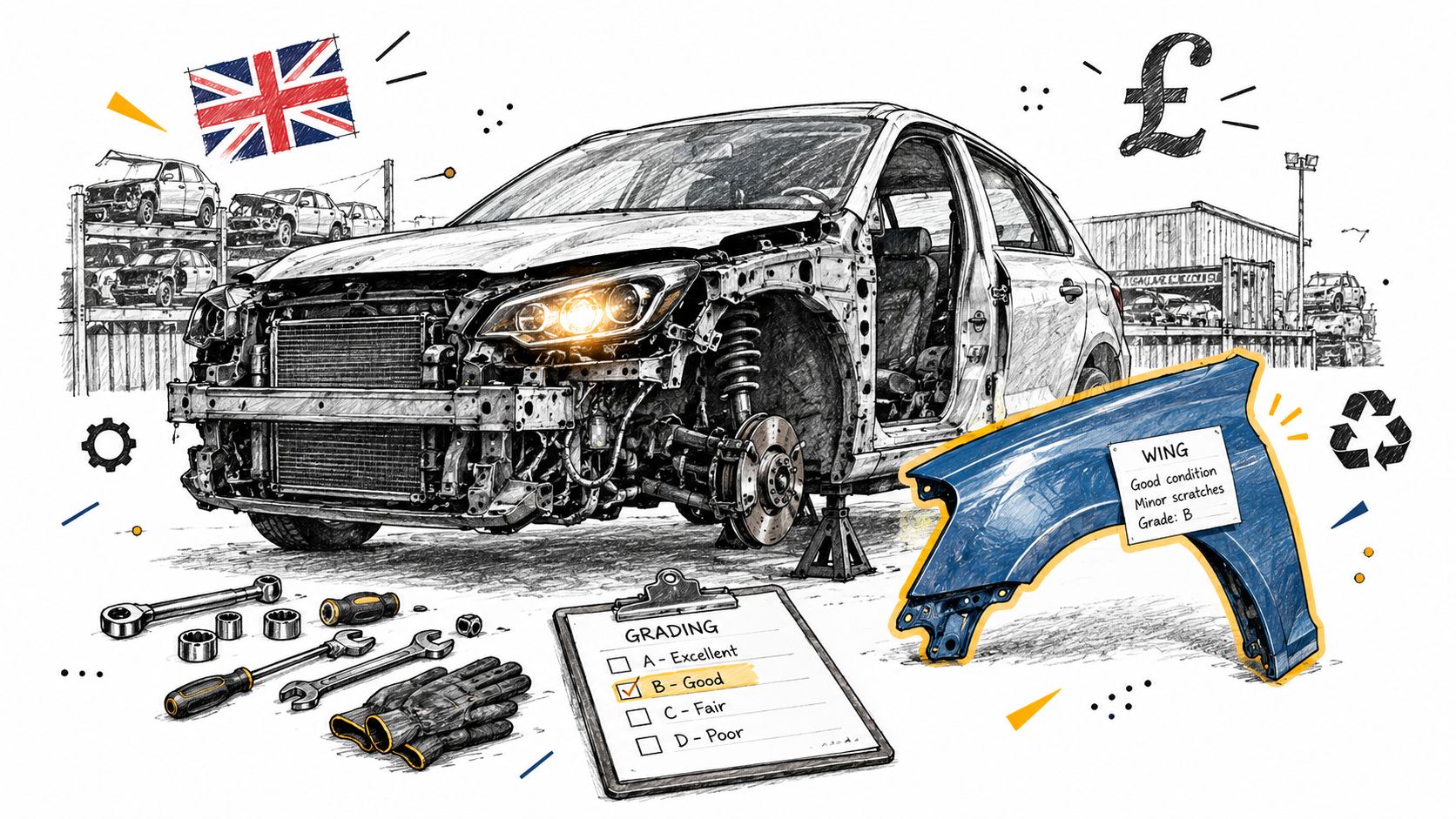
The trade-in figure is usually split across three possible outcomes. A dealer may see it as a retail car for the forecourt, an auction car they can move quickly, or a parts and scrap car if the condition is poor. That’s why make, model, trim, age, mileage, service history, and condition all matter, as noted in UK valuation guidance from Car.co.uk.
If you still owe money on the vehicle, the settlement figure is taken out of the equation first. If the car is worth more than the finance balance, the surplus can roll into the next deal. If it’s worth less, the shortfall has to be covered somehow before the handover can be cleanly completed.
Practical rule: don’t ask whether the part exchange figure is “good”. Ask what the dealer plans to do with the car, retail it, auction it, or break it. The answer tells you how hard they’ll hold the price.
The Real Benefits and Hidden Costs of Trade-In Deals
Part exchange wins on one thing above all else, simplicity. You finish one deal, not two. You don’t have to advertise the old car, answer messages from time-wasters, or stand around waiting for a stranger who promised to turn up “about six”. For a lot of drivers, that convenience is worth real money.
It also helps with financing because the trade-in value reduces the amount you need to borrow. If the replacement car costs £10,000 and the part exchange is £2,000, you pay £8,000 after the deduction, exactly as the trade-in mechanism works in practice, according to Car.co.uk’s example. You’re also only paying VAT on the difference between the cars in the way dealers structure the deal, which is why the numbers can feel cleaner than a separate sale followed by a separate purchase.
Where the money leaks away
The hidden cost is obvious once you compare it with outright selling. UK market guidance says part exchange valuations are typically below private-sale outcomes because the dealer is taking on refurbishment and resale risk, and Auto Trader also says valuations are usually lower than private sale value for that reason, as shown in its advice on part exchange for cars. On top of that, Motorway says sellers often do better outside the dealer trade-in route, which tells you the spread is real, not theoretical.
The other leak is finance. Dealers don’t always spotlight the settlement figure until late in the process, and that can make a decent-looking offer collapse fast. If the finance is heavy, the part exchange can disappear into the settlement before you’ve even discussed the new car properly.
| Cost Area | Part Exchange | Private Sale |
|---|---|---|
| Speed | One-stop transaction, quick close | Slower, depends on finding a buyer |
| Admin | Dealer handles most paperwork | You handle adverts, calls, viewings, payment checks |
| Price received | Usually lower than retail routes | Usually higher if the car is presentable |
| Finance handling | Settlement is deducted in the deal | You clear finance separately before selling |
| Risk | Lower exposure to scam buyers | More exposure to no-shows and payment issues |
How to Arrange a Part Exchange From Quote to Collection
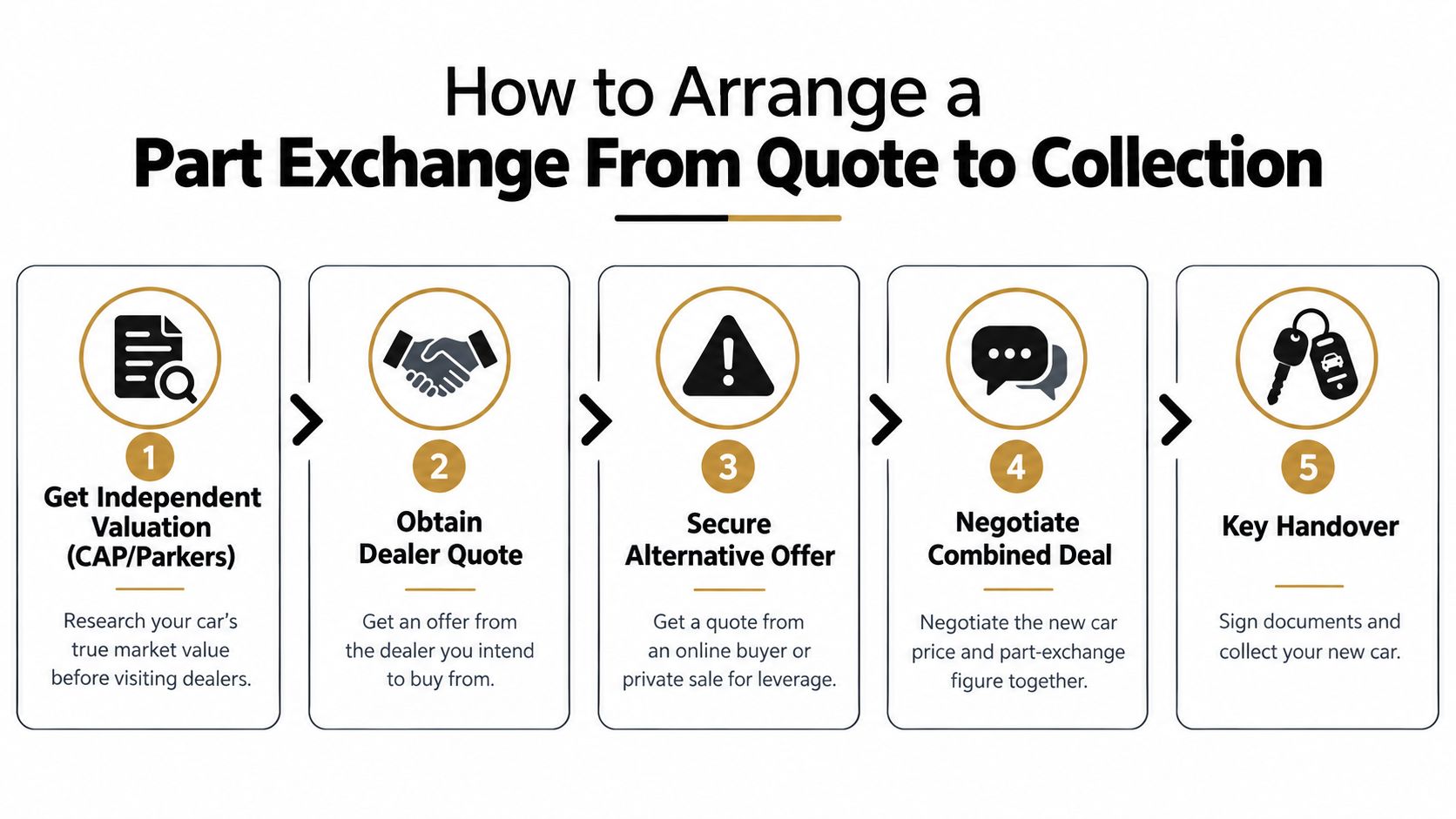
Start with an honest valuation, not a fantasy number from a mate. Use a proper benchmark, then compare dealer offers against online buyers and what the car would fetch if sold separately. The point is to anchor yourself before the dealer starts talking about the “today only” price.
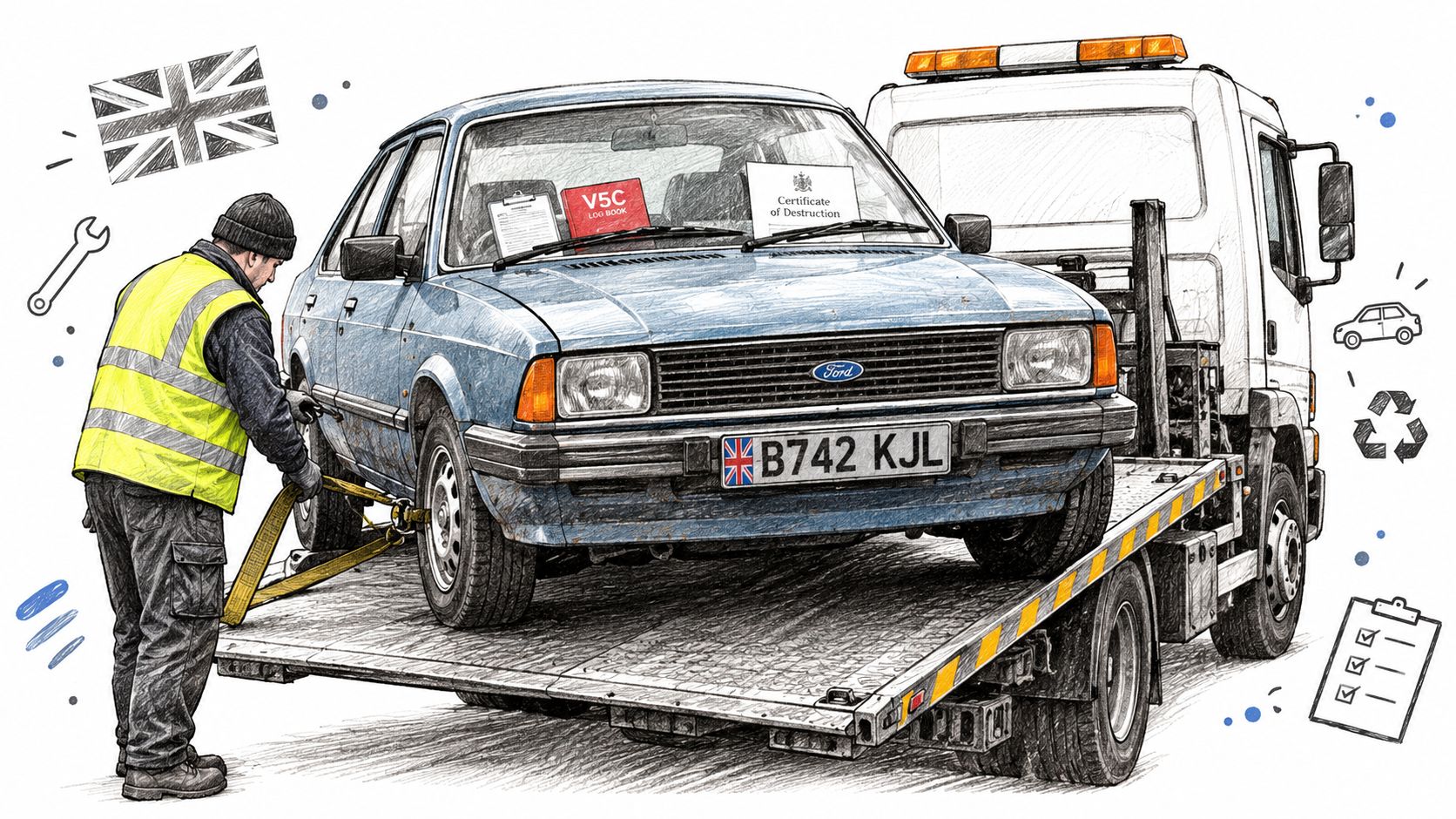
Once you’ve got a realistic starting point, time the inspection properly. Bring the V5C, service history, MOT details, and any finance settlement letter with you. If the car still has finance, the dealer needs the settlement figure so the deal can be structured without surprises.
The inspection is where weak cars get trimmed. A dealer checks bodywork, tyres, warning lights, mechanical noise, interior condition, service evidence, and anything else that affects resale. Fresh MOT evidence can help, but only if the car presents well. If a salesman starts carving value off for a minor scuff or a non-critical light, challenge the line item and make them explain it.
What should happen at handover
By the time you get to collection, the trade-in figure should already be netted off against the invoice. You should walk away with the paperwork showing the old car has gone, the balance paid or financed, and the ownership transfer handled correctly. That’s the part people skip over when they’re excited about the new car, and it’s a mistake.
For a broader walkthrough of how people handle the sale side before deciding whether to trade, see the practical guide at How to sell my car.
Practical rule: never turn up with only one number in your head. If you don’t know the car’s outside value before the dealer inspects it, you’ve already lost some leverage.
Where Part Exchange Beats Selling Separately and Where It Doesn’t
A clean, desirable car with decent history usually suits dealer part exchange. A rough car, a high-mileage car, or one with a known fault often does better through a route that values the vehicle more broadly than the forecourt does. That’s the blunt truth.
The dealer will pay for convenience and certainty, but not generously. Online buyers can be stronger on speed, though they still lean heavily on whether the car starts, drives, and matches the description. Private sale can beat all of them on gross price, but you pay for that with time, messages, tyre-kickers, and admin. Scrap and parts routes are the fallback when roadworthy value has fallen away.
| Vehicle profile | Dealer part-exchange | Online buyer | Auction | Private sale | Scrap/parts |
|---|---|---|---|---|---|
| 2018 diesel with full history | Strong convenience, fair if condition is clean | Often competitive | Good if the car is desirable | Highest if patience is there | Usually poor fit unless damaged |
| High-mileage 2014 petrol with knocking engine | Weak, dealer will trim hard | Better if it still starts and drives | Can attract buyers who accept repair risk | Harder to sell privately | Often the best route if repair cost is too high |
| 2011 Cat S write-off | Usually poor | Limited interest | Possible, but pricing is volatile | Difficult and slow | Often the most realistic route |
Negotiation Mistakes That Cost UK Sellers Thousands
The worst mistake is walking in unprepared and then accepting a lower number because the salesman sounds confident. I’ve seen this pattern over and over. A seller gets one quote, one test drive, one sudden defect list, and the price collapses because they’ve got nothing to push back with.
A real-world example shows the point. A buyer was quoted £4,200 for a 2017 Golf, accepted the dealer’s knock-down to £3,650 after the test drive, then later found both a WeBuyAnyCar quote and an Autobidder auction hammer price sat at £4,800. That’s not a small miss, that’s a bad negotiation.
The five mistakes that cause the damage
- Skipping a second quote. Without another buyer in play, you’ve got no reference point and no pressure on the dealer.
- Letting a short test drive become a value wipeout. Dealers use that drive to find negotiating room, then discount hard if you don’t challenge them.
- Ignoring service history gaps. If there’s a missing stamp or paperwork gap, the dealer will turn it into a pricing weapon.
- Accepting the first finance answer. Ask for a straight cash alternative as well, or you may miss a cleaner deal.
- Signing too early. Once the paperwork moves, your bargaining position weakens fast.
If the offer collapses mid-deal, pull a same-day second quote and say this plainly, “I’ve got another written offer at a higher figure, match it or I’m walking.” That sentence works because it shifts the burden back to the dealer instead of letting them keep the advantage.
Comparing Your Offers Before You Sign the Deal
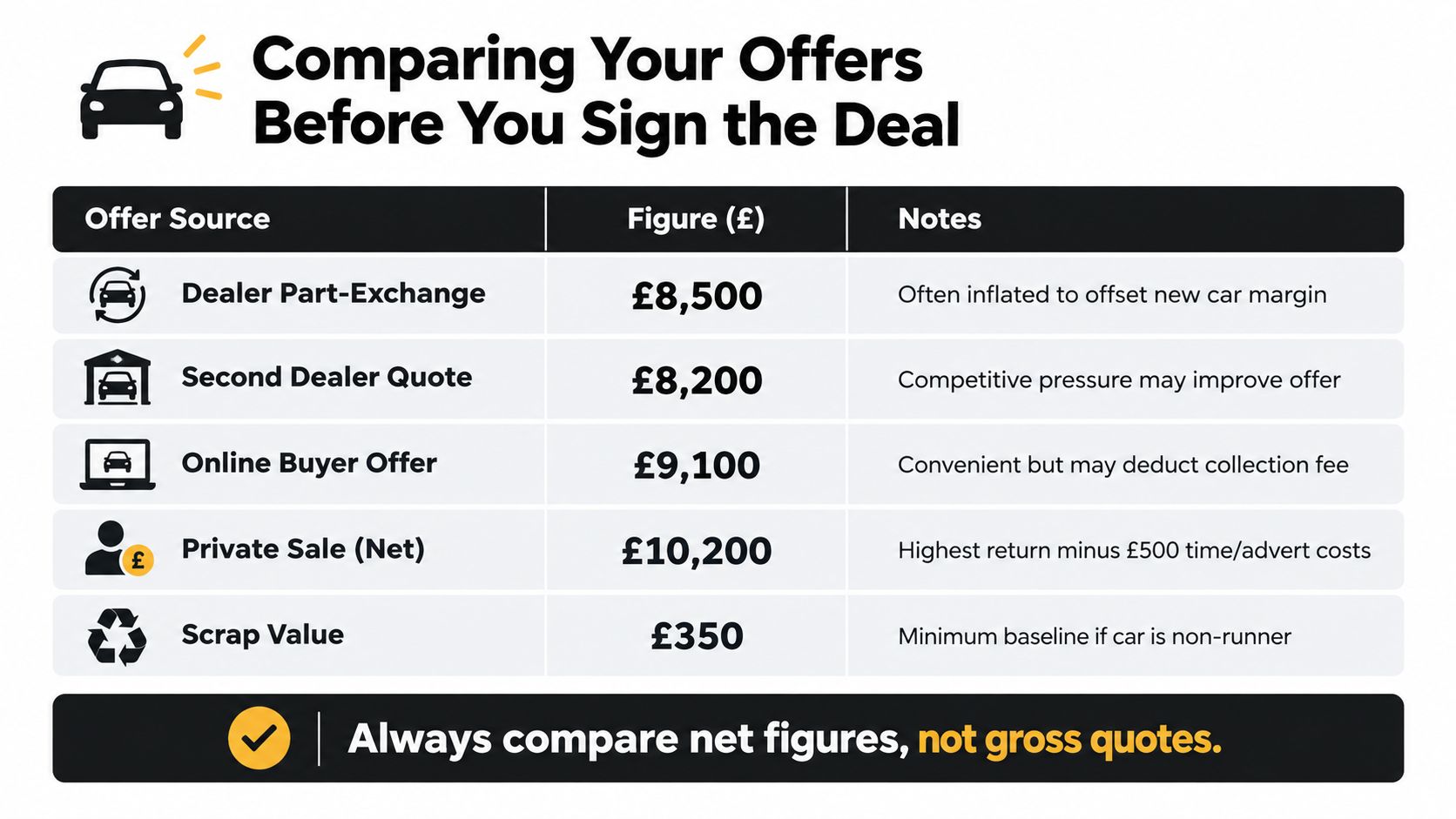
Don’t choose the headline number. Compare the net number. Dealers love to hide a weak part exchange behind a shiny discount on the replacement car, so you need every offer written down before you sign anything.
Use a simple comparison matrix
| Offer Source | Figure (£) | Notes |
|---|---|---|
| Dealer Part-Exchange | 8,500 | Often inflated to offset new car margin |
| Second Dealer Quote | 8,200 | Competitive pressure may improve offer |
| Online Buyer Offer | 9,100 | Convenient but may deduct collection fee |
| Private Sale (Net) | 10,200 | Highest return minus time and advert costs |
| Scrap Value | 350 | Minimum baseline if car is non-runner |
The disciplined way to use that table is simple. Put every quote into the same frame, then subtract any fees, finance settlement, admin time, and hassle cost you genuinely want to count. If the dealer’s “discount” on the new car is just making up for a weak trade-in, you’ll spot it immediately.
Practical rule: a deal isn’t agreed until the numbers are written, the V5C section is signed, and the bank transfer for the net balance has landed.
If your car is damaged, non-running, or not worth forcing through a dealer trade-in, get a proper valuation from Scrap A Vehicle instead of letting a showroom talk you into scrap-money. They price cars through live market data, arrange free nationwide collection, and pay by bank transfer, which makes them a smart option when part exchange has stopped making sense. Visit Scrap A Vehicle and get a straight answer on what your car is worth.