You’ve handed over the keys, received payment, and driven home believing the paperwork is finished. Then a parking notice, speeding enquiry, or tax letter arrives because the DVLA record still connects the vehicle with you. To notify DVLA that you sold your car is not an administrative extra. It’s the step that closes your responsibility as the registered keeper.
There are three legitimate routes. You can use the official GOV.UK vehicle sale service, post the relevant V5C slip, or, where the vehicle is being scrapped, ask a registered Authorised Treatment Facility to notify DVLA through its COD system. The right choice depends on the vehicle’s destination and the paperwork available.
Table of Contents
- Why Telling DVLA Matters More Than People Think
- Notifying DVLA Online Through GOV.UK
- Using the V5C Logbook When You Would Rather Post It
- Letting a Registered ATF Notify DVLA on Your Behalf
- Common Mistakes That Delay or Block Your Notification
- Records to Keep and Quick Answers to Edge Cases
Why Telling DVLA Matters More Than People Think
The buyer drives away, payment clears, and the V5C feels like a finished task. Then the DVLA record catches up with the transaction. Until the sale or disposal notification is received and processed, the registered keeper record still points to you, so correspondence linked to that record can continue to arrive at your address.
The DVLA’s selling-a-vehicle guidance says sellers must notify DVLA after selling or transferring a vehicle. The update matters because enforcement bodies normally start with the registered keeper record. A parking notice, speeding enquiry, congestion charge, or tax letter may therefore reach you even though another person had the vehicle. You may need to show when control passed and provide evidence of the handover.
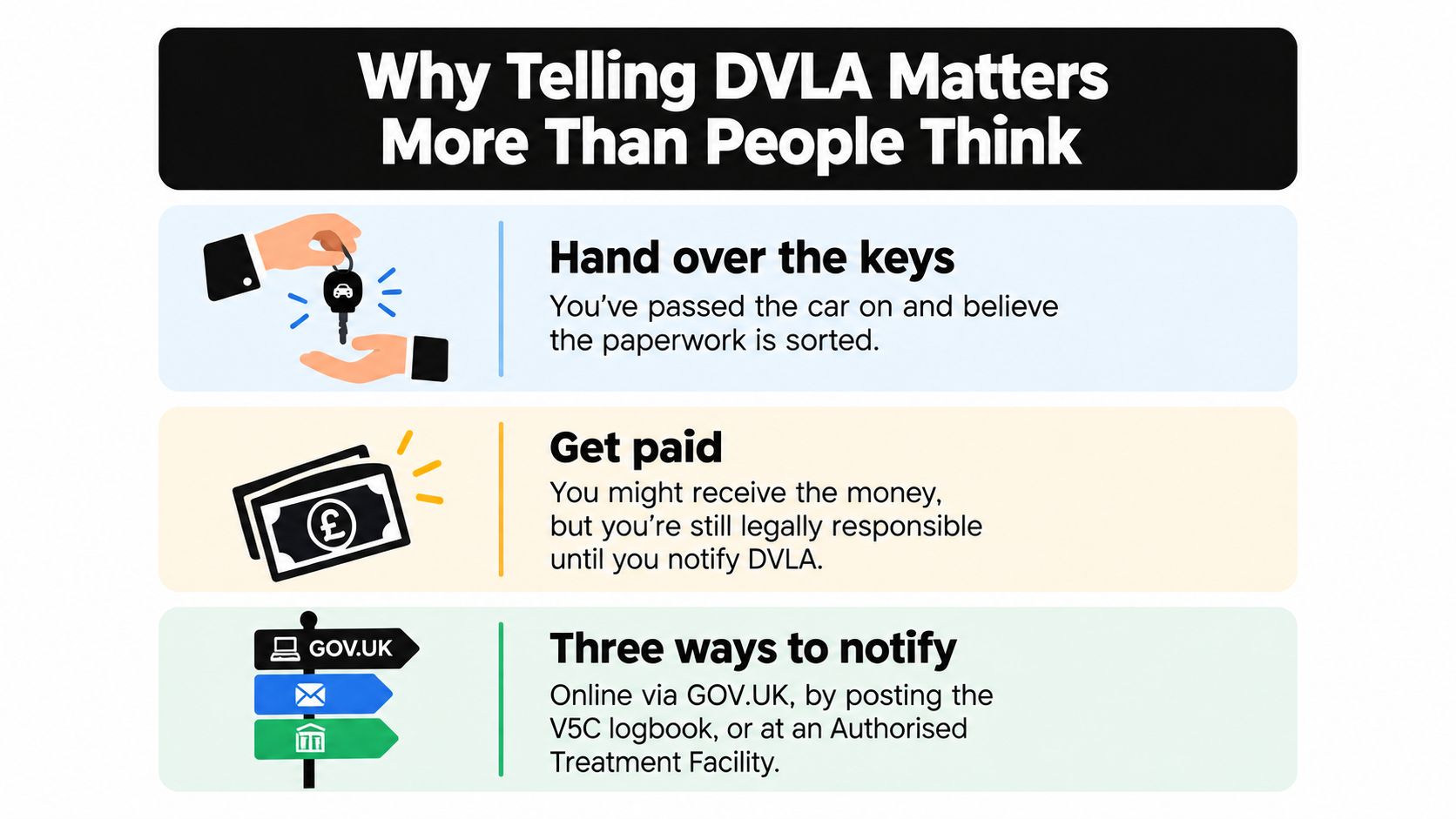
Choose the route that matches the transaction
A private sale normally belongs on the GOV.UK online service, provided you have the V5C details and the buyer’s information. Use the paper route if the online process is unavailable or the paperwork requires it. The ATF route covers a different transaction. A registered Authorised Treatment Facility can notify DVLA through its COD system when it accepts a vehicle for genuine scrapping or end-of-life processing. It is not the route for a private buyer taking ownership.
Behind the scenes, the notification updates the keeper record against the vehicle registration. That makes accuracy important. A mistyped registration, an incorrect V5C reference, or a notification submitted for the wrong vehicle can leave the original record active even though the handover took place.
The buyer must register as the new keeper, but that duty does not replace your notification. Your position is strongest when the DVLA update is logged and you retain the sale or disposal evidence. Delaying the task can leave you answering fine letters, enforcement enquiries, or questions from an insurer about who controlled the vehicle at a particular time.
Practical rule: Complete the DVLA notification as part of the handover and keep proof that it was submitted.
GOV.UK warns that failing to notify a change of keeper is a registration offence that can lead to a fine. The DVLA’s written-off vehicle guidance also states that failing to report a vehicle write-off can result in a £1,000 fine.
Notifying DVLA Online Through GOV.UK
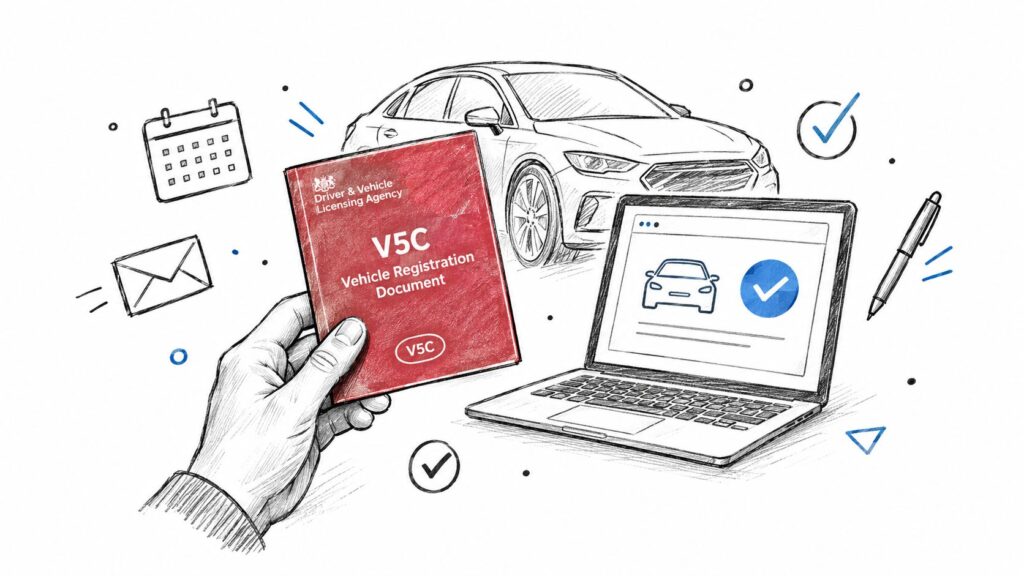
The online route is usually the cleanest option for a private sale. Have the V5C logbook in front of you before opening the GOV.UK service, especially the 11-digit document reference number printed on the V5C or associated new keeper paperwork.
Start by entering the vehicle registration mark exactly as it appears on the document. Then provide the buyer’s full name, address, and postcode, together with the date of sale. The form may also ask for the sale price. Use the information agreed at handover, rather than an estimate created later.
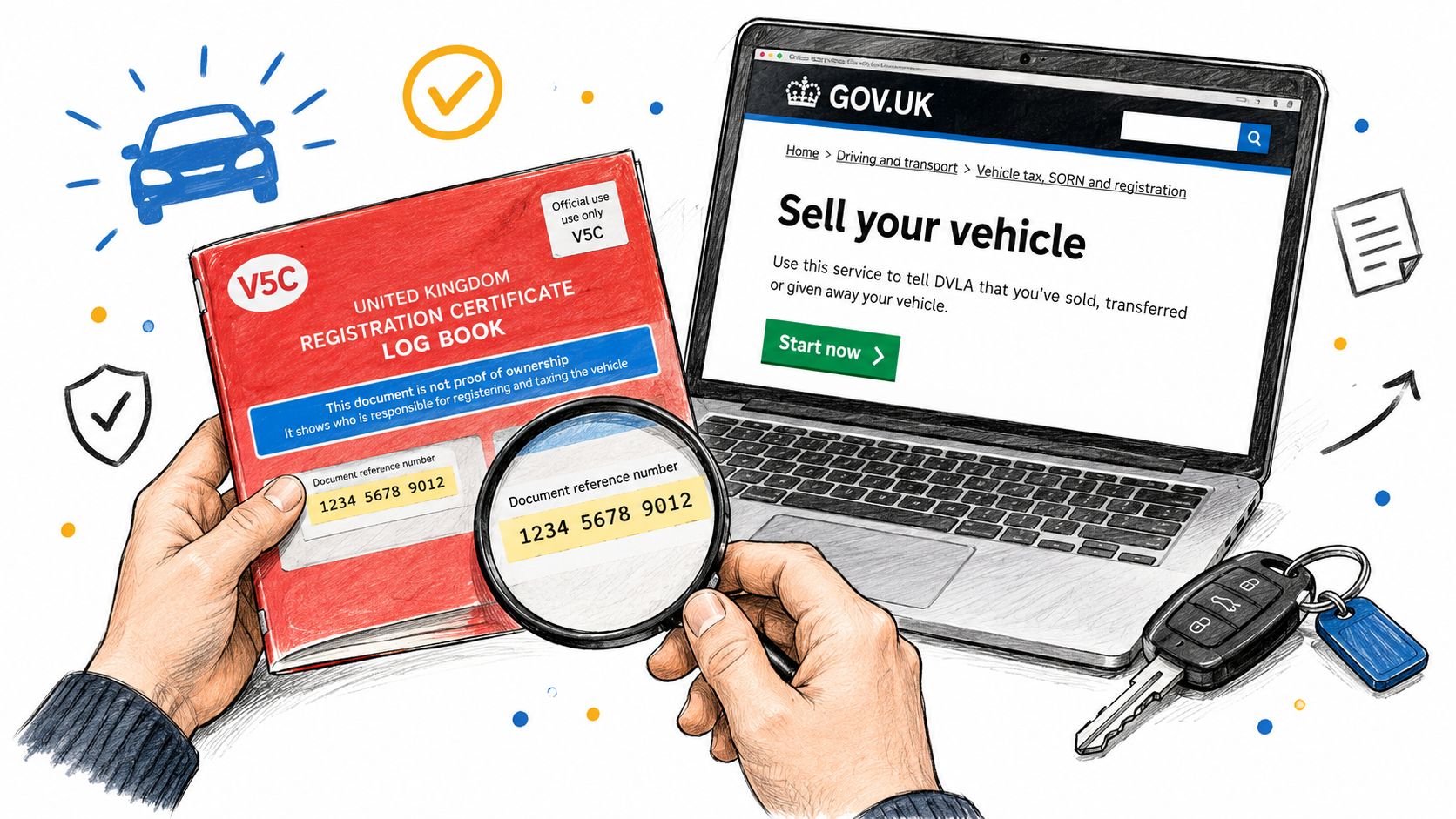
The checks that cause most failed submissions
The difficult screen is usually the exact-match check. DVLA compares the registration and vehicle identity details against its record. A single transposed character in the registration, an incorrect digit from the V5C, or a mismatch between the document and the vehicle can send the submission back instead of completing it.
Slow down before pressing submit. Compare every character with the V5C, including letters that look similar to numbers. If the registration on your quote, collection paperwork, or sale receipt differs from the V5C, resolve that discrepancy first. A correct buyer address won’t rescue a notification attached to the wrong registration.
After a successful submission, keep the confirmation screen and the email reference number DVLA sends. That reference is your practical proof that you reported the sale, so save it with the receipt and V5C records rather than relying on an email account to retain it indefinitely.
The government’s guidance confirms that the online GOV.UK service is available for reporting a vehicle sale or transfer. It’s the appropriate route for a normal sale where the vehicle remains with another keeper.
The following demonstration shows the type of online process involved:
Keep the reference while the record settles and while any sale-related correspondence could still arise. If DVLA contacts you, the reference lets you demonstrate when and how you notified the agency.
Using the V5C Logbook When You Would Rather Post It
Paper notification suits sellers who do not want to use the online service or cannot complete it. Use the V5C/2 new keeper slip, rather than sending the entire logbook. Keep the full V5C with your records unless the relevant official process says otherwise. The buyer receives the new keeper paperwork for their side of the transaction.
Remove the yellow V5C/2 slip carefully. Write the date of sale and the new keeper’s full name and address in block capitals. The slip also needs the vehicle registration number. Check every character against the logbook and the buyer’s supplied details before posting it to the DVLA address printed on the form.
Posting correctly protects the audit trail
Post the completed slip promptly. The dated slip plus your photographed copy shows who took responsibility and when, which a verbal agreement or text message cannot prove. Keep the tear-off receipt portion of the V5C/2 with that photograph and any sale paperwork.
Postal notification can take longer than the online route. Putting the envelope in the post does not confirm that the registered keeper record has already changed. Store the receipt while waiting, and respond promptly if DVLA requests clarification.
Address details need to be complete and consistent. An incomplete postcode, a missing flat number, or a registration typed incorrectly can create a manual query and leave the old keeper connected with the record for longer. Check the vehicle registration, sale date, buyer’s name, and address before sealing the envelope.
A common mistake is sending the wrong portion of the V5C. If the slip is missing, do not improvise by posting the whole logbook. Record the registration, sale date, buyer’s details, and circumstances, then use the appropriate DVLA contact route for a missing document.
If you are preparing a vehicle for disposal or sale, this guide explains selling a car through the correct paperwork process. Keep your copy of the completed slip and postal receipt until the keeper record and any related correspondence are settled.
Letting a Registered ATF Notify DVLA on Your Behalf
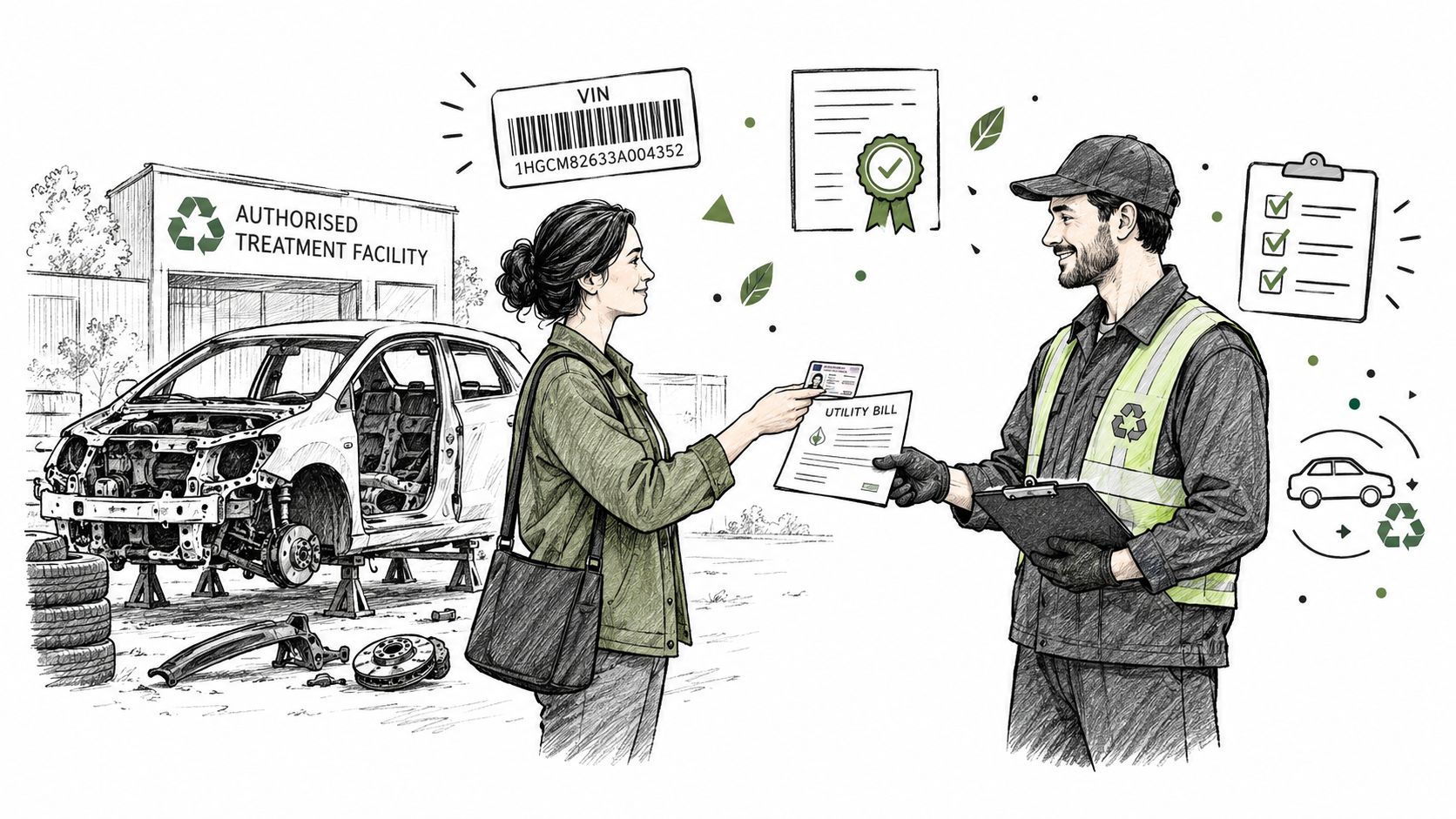
An Authorised Treatment Facility, or ATF, is permitted to handle end-of-life vehicles under the applicable vehicle treatment scheme. Its DVLA access is not the same as a private seller logging into GOV.UK. A registered ATF can use the DVLA COD, or Change of Disposal, platform, to report that a vehicle has been scrapped and remove the former keeper from the relevant record.
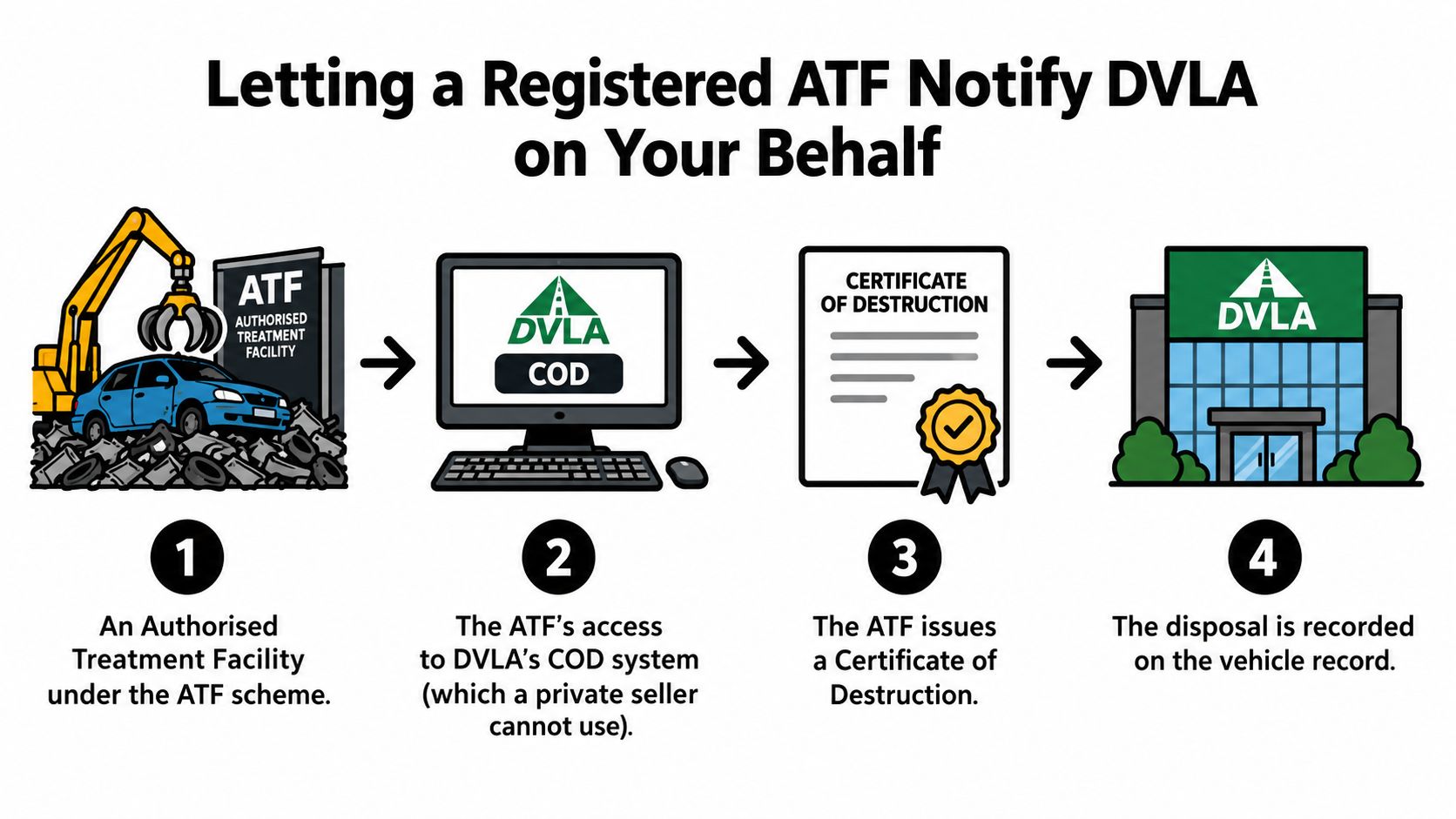
This route is useful when an owner can’t complete the online process, has lost the V5C, or wants the disposal handled as part of collection. The practical sequence is straightforward. You hand the vehicle to the ATF, provide the available V5C information, complete the disposal paperwork, and the ATF records the destruction or disposal through its authorised system.
What happens at the facility
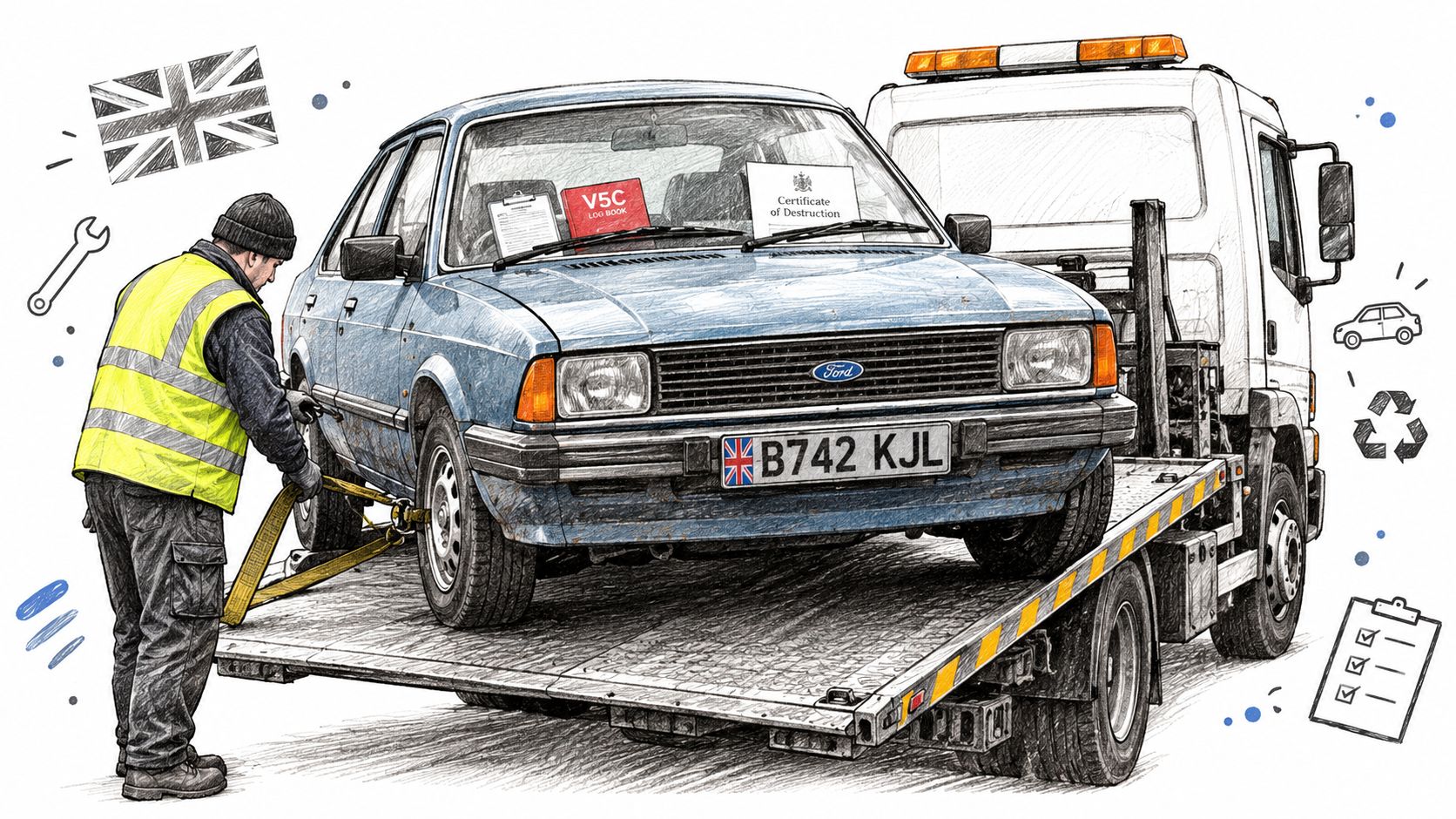
The operator checks the vehicle identity and compliance information before submitting the notification. If the vehicle is accepted for destruction, the facility processes the appropriate COD record and issues a Certificate of Destruction when the statutory conditions are met. That certificate is the evidence that the vehicle has been destroyed through the authorised route.
The DVLA’s ATF destruction guidance describes two notification methods, individual transactions and file upload. It also says that when the V5C is available, the registration certificate should be marked as cancelled and retained for 12 months before destruction. This is an ATF control, not a private seller’s shortcut.
The DVLA guidance for scrapped and written-off vehicles makes the responsibility clear. Until DVLA is notified that a vehicle has been scrapped through an ATF, the registered keeper remains responsible for taxing it or making a SORN. Once the ATF process is completed, the Certificate of Destruction provides proof that the vehicle has been destroyed and is no longer on the road.
An ATF cannot use COD to disguise a routine private sale. The vehicle must be entering the facility’s authorised scrapping or processing stream. If a buyer is taking the car for continued road use, use the GOV.UK or V5C sale route instead.
Common Mistakes That Delay or Block Your Notification
Most failed notifications come from small identity errors rather than complicated legal problems. Registration marks are especially unforgiving. If the characters entered online don’t match the V5C and DVLA record, the system can’t confidently attach the change to the correct vehicle.
The same principle applies to the buyer’s details. A wrong postcode, misspelled name, or incomplete address can force clarification. Sellers also create delays by posting the complete V5C instead of the specified slip, sending the wrong section, or leaving required fields incomplete.
| Mistake | What Goes Wrong | Fix |
|---|---|---|
| Registration typo | DVLA can’t match the submission to the vehicle record. | Compare every character with the V5C before submitting. |
| Wrong buyer details | The new keeper information may not match the submitted record. | Use the buyer’s full name and complete address. |
| Whole V5C posted | The wrong document may be sent and the seller loses their record. | Send only the specified new keeper slip for the paper route. |
| Verbal sale only | There’s no reliable notification trail showing when responsibility changed. | Record the sale date and submit the DVLA notification promptly. |
| Delayed notification | Notices can continue to be linked to the old keeper. | Treat notification as part of the handover. |
| SORN confusion | The wrong action is taken when a vehicle is off the road. | Separate a sale from a vehicle being retained off-road. |
Sale, storage, and SORN are different events
A car sold to another keeper needs a sale notification. A car taken off the road and retained by its keeper needs a Statutory Off Road Notification, or SORN. DVLA confirms in its SORN guidance that a SORN isn’t needed for a vehicle that has already been sold. The keeper must notify DVLA of the sale instead.
A registration typo is the error I’d check first when a customer says the notification “has disappeared”. Compare the quote email, V5C, collection paperwork, and vehicle plate. Don’t assume a familiar-looking character is correct.
Records to Keep and Quick Answers to Edge Cases
Create one digital folder or spreadsheet entry for every transaction. Record the date of sale, buyer’s full name and address as supplied for the transaction, agreed price, V5C reference number, online reference number where used, and the DVLA confirmation receipt. Keep photographs of the vehicle identity and completed paperwork where appropriate.
A simple private-sale record can read:
Vehicle registration: [registration]
Date of sale: [date]
Buyer: [full name]
Buyer’s address: [full address]
Agreed price: [amount]
V5C reference: [reference]
DVLA online reference: [reference]
Confirmation saved: [email or receipt location]
Answers for awkward situations
A dealer refuses to handle the paperwork. Notify DVLA yourself and retain the sale evidence. Government guidance treats notification of a sale or transfer to a motor trader as a registration responsibility, so don’t rely solely on the dealer’s promise.
The V5C was lost before the sale. Tell DVLA using the available vehicle and buyer information through the appropriate contact process. If the vehicle is being scrapped, an authorised ATF can handle the disposal notification through COD.
The vehicle remains on your drive after notification. The sale record and physical storage are separate issues. If you’re retaining the vehicle and it’s off the road, check whether SORN is required. If it has been sold, don’t use SORN as a substitute for reporting the sale.
A private buyer abroad takes the car. Keep the sale date, buyer details, registration information, and export evidence. Confirm the correct DVLA process for a vehicle leaving the UK rather than assuming an ordinary domestic sale notification covers every export situation.
You’re unsure whether DVLA updated the record. Check the confirmation email, online reference, or retained postal receipt. If those are missing, contact DVLA with the vehicle registration and sale details rather than assuming the change completed.
Before leaving the handover, run this 60-second check:
- Identity: Registration matches the V5C.
- Buyer: Full name and address are recorded.
- Date: Sale date is correct.
- Route: GOV.UK, paper V5C, or authorised ATF route is appropriate.
- Proof: Confirmation reference or postal receipt is saved.
- Status: SORN is considered only if the vehicle remains with you off-road.
If you’re disposing of an end-of-life, damaged, or non-running vehicle, Scrap A Vehicle arranges collection through licensed ATFs and handles the relevant DVLA paperwork, including Certificates of Destruction. Use the service to request a vehicle valuation and discuss the correct disposal notification route before handover.