Maybe the car has failed its MOT, maybe the repair bill is worth more than the car, or maybe it has sat on the drive on a SORN for months. Whatever the reason brought you here today, the good news is that how to scrap a car in the UK is far simpler than most people fear. Done properly, it takes only a few days from start to finish, it pays you rather than costing you a penny, and it leaves you with no loose ends to worry about later. This guide walks through every step of how to scrap a car, start to finish, so you stay legal and get a fair price. There’s no jargon. Just the order things happen in.
What you need before you start
You don’t need much to scrap a car, which surprises a lot of people. The essentials are the vehicle itself, your V5C logbook if you have it, and a form of photo ID such as a driving licence or passport, all of which most people already have to hand. That’s the normal set-up, and most jobs need nothing more. No forms to print. No appointment to make.
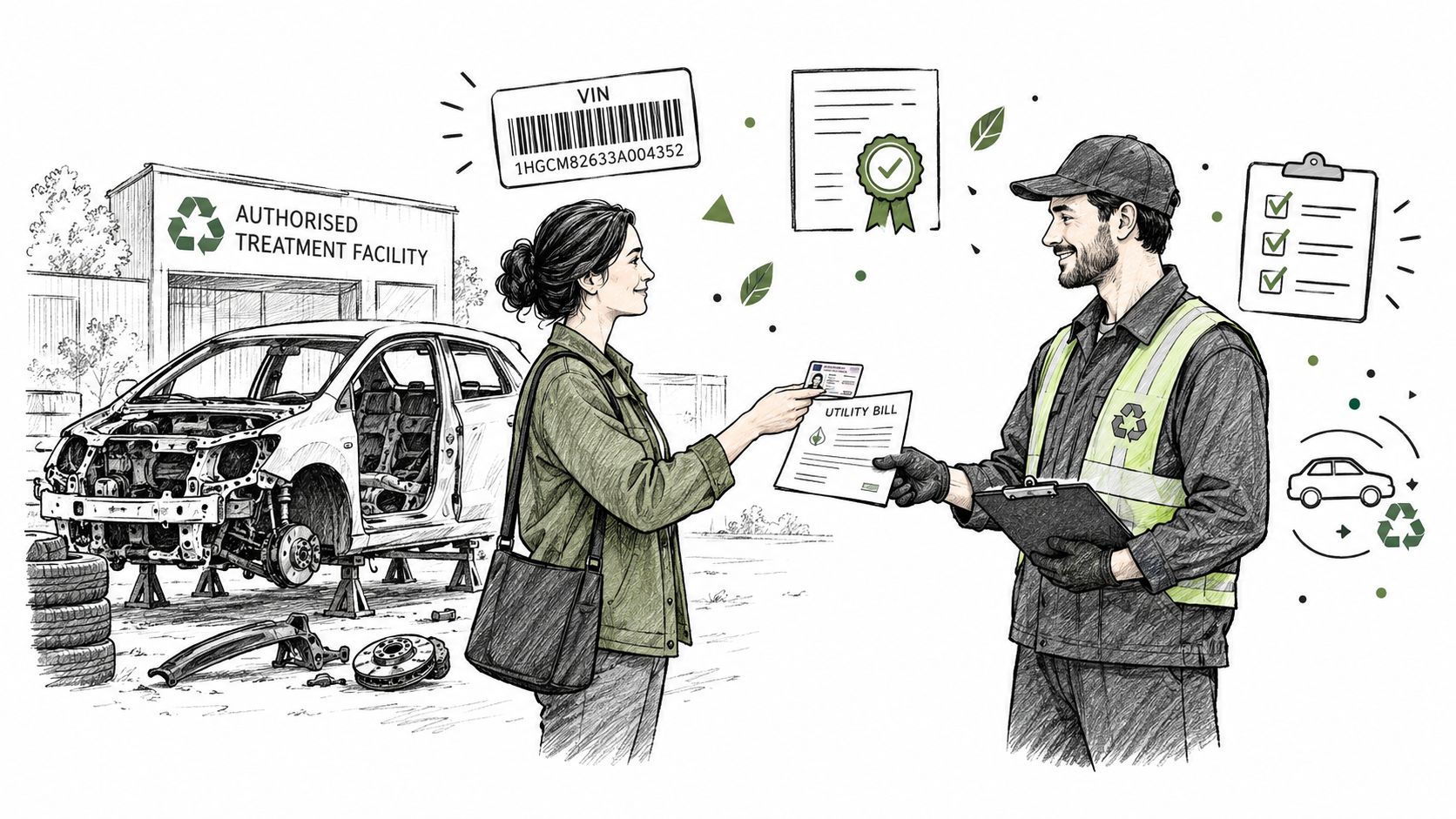
Lost the logbook? Don’t worry, you can still scrap the car. A licensed yard will ask for ID and proof of address instead, and our guide on how to scrap a car without a V5C explains exactly what to bring. It’s also worth a quick look inside for personal belongings before the car goes. If the registration is a personalised plate you want to keep, take it off first, which our guide on how to retain your number plate covers.
First, get an online scrap quote
Start by finding out what the car is worth. A good service gives you an instant, guaranteed price online from just your registration and postcode, with no obligation to go ahead. It takes a minute, and it gives you a figure to judge everything else against. Get two or three quotes if you can. It’s the easiest way to know the offer is fair.
The price comes down to three things. The weight of the car sets the baseline, the current price of steel and other metals moves that figure up or down, and any parts worth reselling can add to it. Because the metal market shifts, two quotes a month apart can differ, and our guide on scrap metal prices explains why. You can check what your car is worth or go straight to a full online quote, and our guide on how much it costs to scrap a car sets expectations on the numbers.
Always use a licensed ATF

This is the single most important rule, so it is worth saying plainly. In the UK, only a licensed Authorised Treatment Facility, the official name for an approved scrapyard, can legally scrap your car. It is also the only type of yard that can issue the document proving the car is gone.
Use anyone else and you’ve got a real problem. The car may not be recorded as scrapped, you stay liable for it, and you forfeit your tax refund. You can check a yard is licensed using the official scrap your car guidance on GOV.UK before you commit. A reputable service only works with licensed facilities, which is the safest way to know the job is done right. This one choice protects everything else. Get it right and the rest follows. If you are curious what actually happens next, our guide on what happens to scrapped cars follows the car through the recycling process.
Can you scrap a car that’s on finance?
Not until the finance is settled. While there’s money owing, the finance company legally owns the car, not you, so it isn’t yours to scrap. Trying to do so before the agreement is cleared will land you in trouble.
The fix is simple enough. Pay off or settle the agreement first, get written confirmation that the finance is closed, and then the car is finally yours to deal with as you wish. If you’re not sure of the balance, your finance provider can give you a settlement figure in a day or two.
Book free collection, or drop the car off
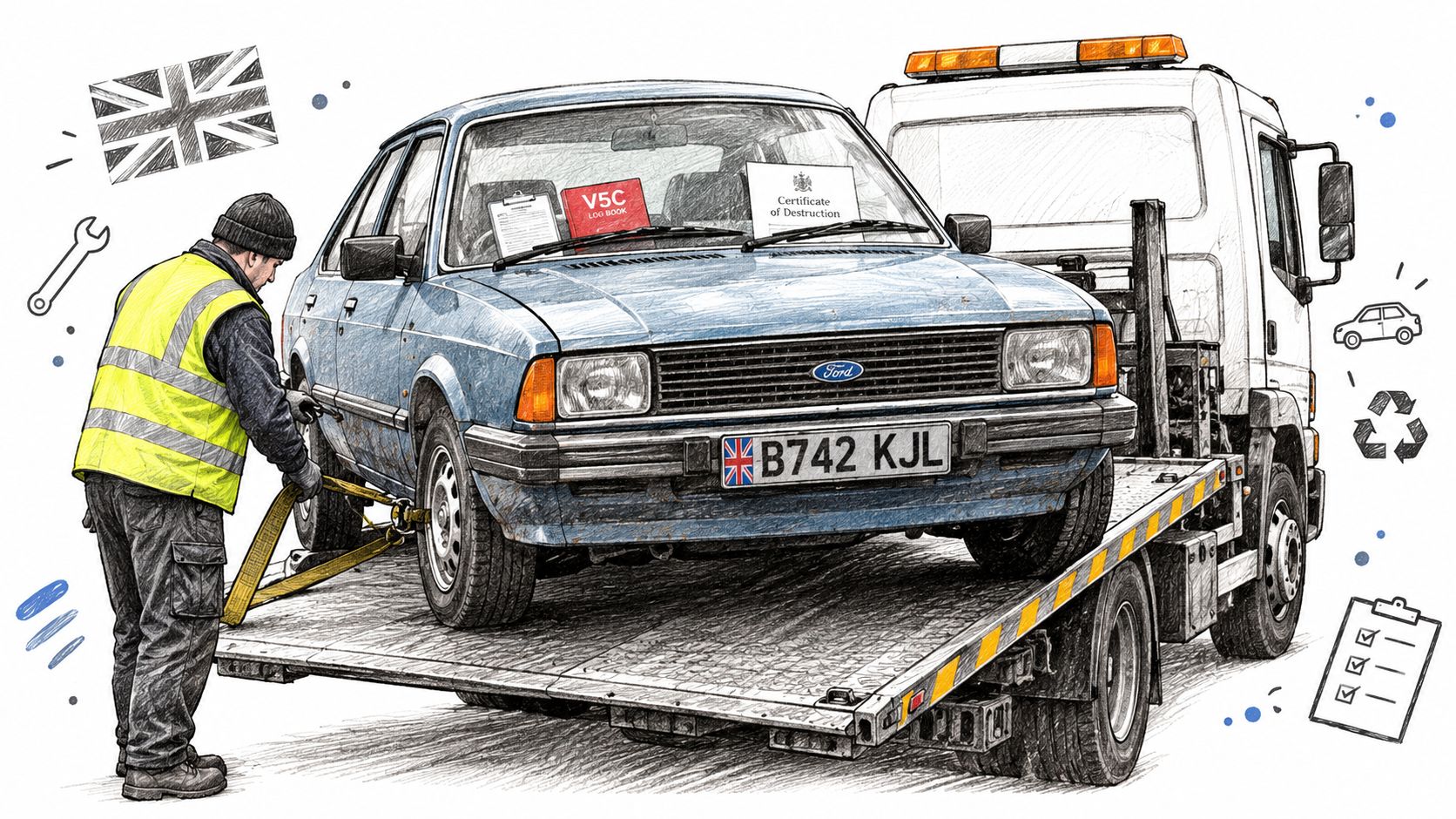
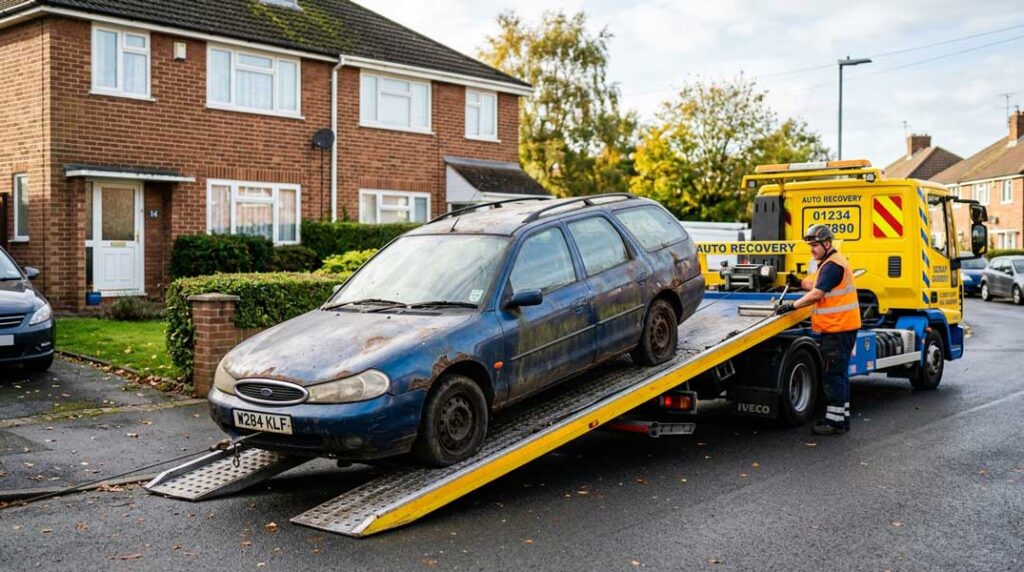
With a price agreed and a licensed yard chosen, you arrange handover. Most services offer free collection from your home, workplace or a garage, across England, Wales and Scotland. A driver comes to you at a booked time, so you don’t have to move the car at all. You just hand over the keys and the paperwork, watch it load, and that whole part is done in a matter of minutes.
If the car won’t start, collection is by far the easier route, since you avoid the cost and hassle of a tow. You can also drive it in yourself if it’s roadworthy and you would rather drop it off than wait in for a collection slot. Either way, book free collection at a time that suits you, and have your ID and logbook ready for the driver.
What if your car won’t start?
A car that won’t start is still worth scrapping, and it barely changes a thing. A non-runner holds much the same scrap value as a running one, because the price is built on weight, metal and parts rather than whether it drives. So don’t pay to fix a car just to scrap it.
Collection is the answer here. The driver simply loads the car onto the truck, so it doesn’t need to move under its own power. That’s true whether it’s stuck on the drive, sat in a garage, or stranded after a breakdown.
Get paid by bank transfer, never cash
Here is a rule that catches people out. Since the Scrap Metal Dealers Act 2013, it has been illegal to pay cash for a scrap car. Legitimate yards pay only by bank transfer or cheque, and a transfer also gives you a clean record of the sale.
So if a yard offers you notes on the doorstep, walk away. It is breaking the law, and that tells you everything about how it handles the rest. Payment usually lands at or around the point of collection. Our guide on how to scrap your car for cash explains the law and the safe way to get paid quickly and legitimately.
How to get a fair price for your car
A little effort at the quote stage is what puts more money in your pocket, and it costs you nothing but a few minutes. The metal and parts inside the car set its real worth, so the aim is simply to make sure the offer reflects that rather than accepting the first number you see.
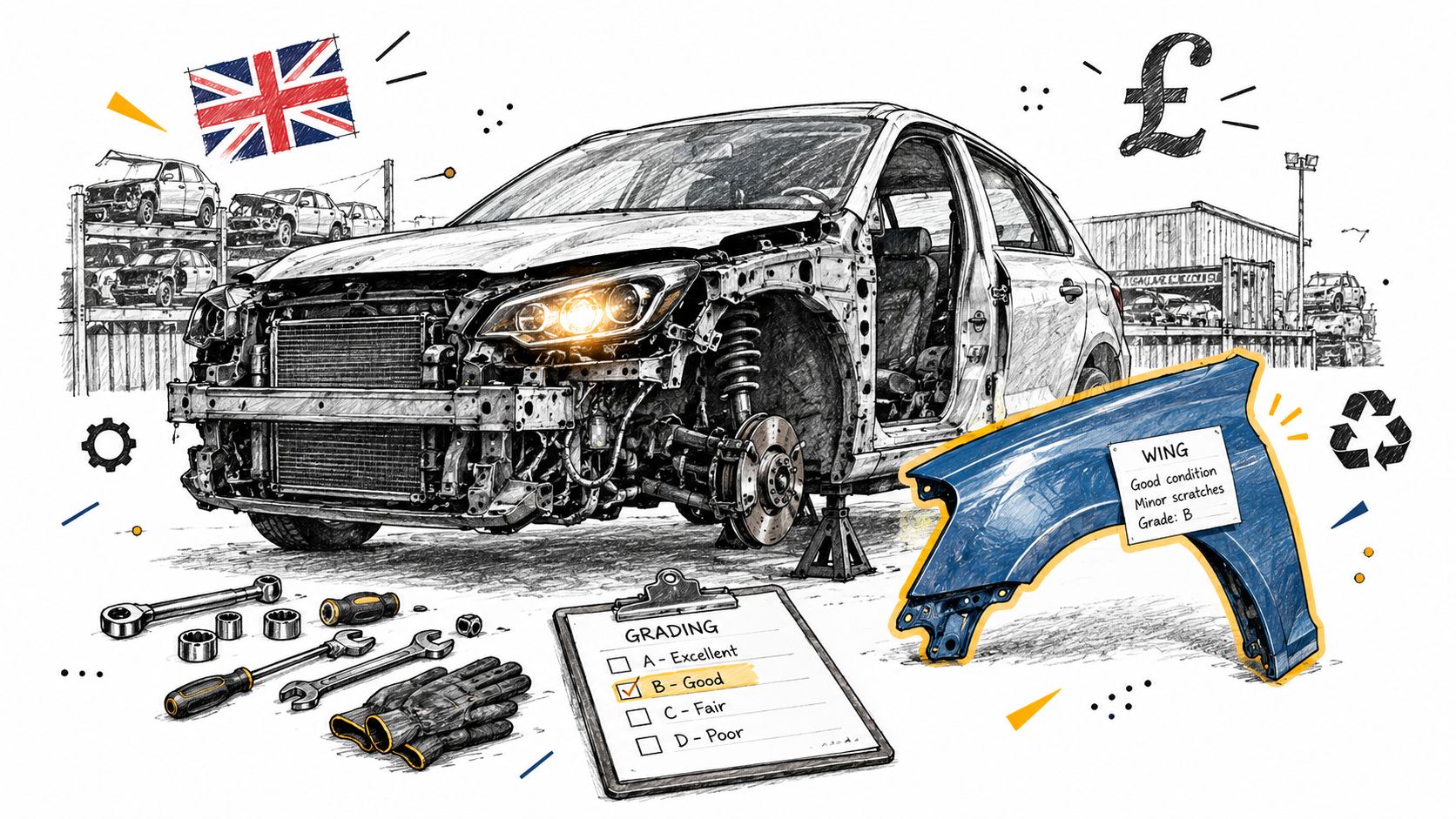
Three habits help. Get more than one quote so you have something to compare, hand the car over complete rather than stripped, because a whole car gives the yard more to recover and resell, and scrap when metal prices are steady rather than in a dip if your timing is flexible. Pulling valuable parts off first usually backfires, since a complete car is worth more to the yard than the sum of its bare panels.
Hand over the V5C and tell the DVLA
Now the paperwork, which is quick but important. Give the ATF the V5C logbook, but keep the yellow “sell, transfer or part-exchange to the motor trade” section for yourself. On older logbooks this is Section 9, and on newer ones it is Section 4. That slip is how you tell the DVLA, so do not let it go with the rest of the logbook. Keep it back. Without it, the notification is harder than it needs to be.
You must notify the DVLA that the car has gone to an ATF. The fastest way is online at GOV.UK in about two minutes, or you can post the yellow section to Swansea. Get this wrong and it matters, because you can be fined £1,000 for failing to tell the DVLA, and you stay responsible for the car until the record updates. Our guide on how to notify the DVLA of a scrapped car walks through the exact details to enter.
Get your Certificate of Destruction
The Certificate of Destruction, or CoD, is your proof. Within seven days of scrapping, the ATF must issue one, and it is an official DVLA-backed document confirming the car has been destroyed and taken off the road for good.
Keep it safe. File it somewhere you’ll find it again. It is the evidence that your legal responsibility for the vehicle has ended, which is exactly what you want if any query ever comes up later. Only a licensed ATF can issue a CoD, which is yet another reason the yard you choose at the start matters so much to how the whole thing ends. If you ever need to confirm the record, our guide on how to check if a car has been scrapped shows you how.
Cancel your insurance and claim your tax refund
Two last jobs tie everything off. Once the DVLA has been notified, it automatically cancels your road tax and refunds any full remaining months, sent by cheque to the name and address on the V5C. You don’t have to claim it separately, though the refund only covers whole months, so timing your scrap near the start of a month is wise.
Then call your insurer, because a scrapped car still showing as insured does you no good and the policy is no longer doing anything useful. Tell them the car has been scrapped and cancel the policy, as you may be due a partial refund on what you’ve already paid. With the tax refunded and the insurance closed, you’re completely done. That’s the whole process. Simpler than it first looks.
How long does scrapping a car take?
Start to finish, most people scrap a car within a few days. The online quote is instant. Collection can often be booked for the next day or two, and payment usually arrives when the car is collected. The Certificate of Destruction then follows within seven days.
The paperwork is the part you control. Notify the DVLA online the moment the car is collected and that side is sorted in minutes. Drag your feet on it and the only person who loses out is you. Your refund waits on it. So does your release from liability.
Frequently asked questions
How do I scrap my car?
Get an online quote, choose a licensed ATF, then book free collection or drop the car off. Take payment by bank transfer, hand over the V5C while keeping the yellow slip, tell the DVLA, and keep the Certificate of Destruction you receive within seven days.
Do I need the V5C logbook to scrap my car?
It helps, but you can scrap without it. A licensed yard will ask for photo ID and proof of address instead, then notify the DVLA. Applying for a replacement logbook first is optional, and our guide on scrapping without a V5C covers the detail.
Is it legal to be paid cash for a scrap car?
No. Since the Scrap Metal Dealers Act 2013, paying cash for a scrap car has been illegal in the UK. Legitimate yards pay only by bank transfer or cheque, so treat a cash offer as a clear warning sign and use a different facility.
What is a Certificate of Destruction?
It is the official DVLA-backed document confirming your car has been destroyed and removed from the road. A licensed ATF must issue one within seven days of scrapping, and it proves your legal responsibility for the vehicle has ended.
Do I get my road tax back when I scrap my car?
Yes. Once you notify the DVLA that the car has gone to an ATF, it automatically refunds any full remaining months of road tax, sent by cheque to the address on your V5C. Only complete months are refunded, so timing matters.