The car that failed its MOT is still on the drive. Two old camper vans will not move, and they are no longer allowed to stay where they are parked. Or a large scaffold lorry has broken down at the roadside, and a local farmer has agreed to let it sit on his land until someone can shift it. You want the vehicle gone, and you do not want a bill just because a firm turned up.
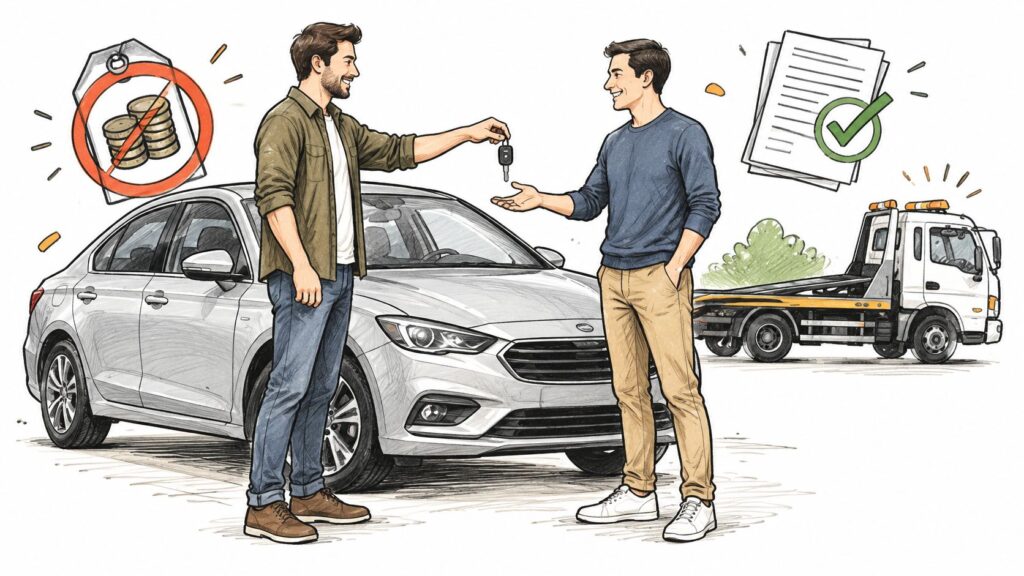
That is the usual starting point when someone searches how to sell my car for free. Free has to mean zero seller fees, payment that has cleared, and the correct DVLA evidence afterwards. A complimentary pickup on its own is not the job. A roadworthy car, a damaged car and an end-of-life vehicle do not finish with the same paperwork.
Table of Contents
- Why Selling a Car for Free Still Needs a Plan
- Choosing Between Scrap Trade and Private Sale
- How to Hand Over a Car Without Paying Fees
- Spotting Hidden Charges and Payment Scams
- Tips to Keep More Value and Stay Legal
- Book a Free Collection and Get Paid
Why Selling a Car for Free Still Needs a Plan
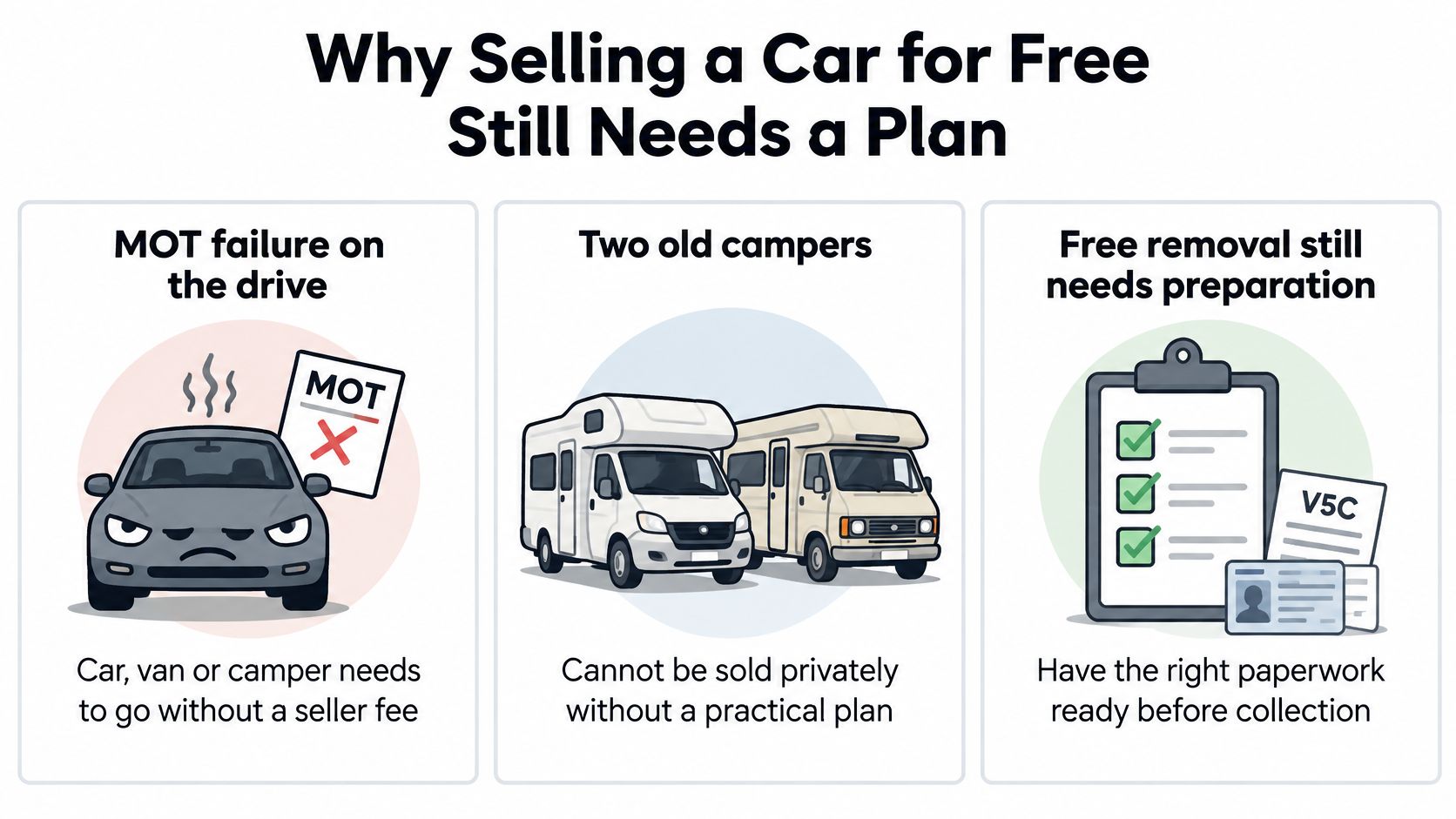
We see the same three jobs every week. An owner rings because a car, van or camper has failed its MOT and private buyers have gone quiet. Another has two old campers that will not start, and every other firm he has spoken to wants money just to remove them. A third has left a broken-down scaffold lorry on farmland after a roadside stop, because the rural spot and the size of the truck make an ordinary transporter look hopeless.
Free collection on every car included in the quote, with no customer charges at all, is what wins those jobs. We collected both campers the next day at no charge. The scaffold lorry was a difficult recovery, and we still charged nothing, while matching the strongest offer he had already been given. Speed only helps if the route fits the vehicle.
A large mixed fleet
The search covers more than tidy used cars. At the end of December 2024 the UK had 41.7 million licensed vehicles, up 1% from December 2023, including 33.967 million cars and 4.790 million light goods vehicles, with 1.394 million zero-emission vehicles licensed, according to Department for Transport vehicle licensing statistics. That spread is why one private-sale template fails. Some of these vehicles still have a retail buyer. Others are non-runners, damaged, or close to scrap.
Leaving an unwanted van where it is not allowed turns a sale into a council problem. Councils can remove abandoned vehicles and can penalise the owner. A lawful collection, with the right proof kept, is the cheaper plan.
Practical rule: Match the route to condition and paperwork before you book anyone. A free van on the drive is still the wrong outcome if you needed a sale receipt, or if you scrapped the car and never received a Certificate of Destruction.
Choosing Between Scrap Trade and Private Sale
A free collection is only part of a free sale. Check the price, whether payment clears before handover, and which DVLA evidence the buyer provides. The right route depends on the car’s condition and whether it will be resold, salvaged or destroyed.
| Route | Best when | Seller fees | Speed | Proof to keep |
|---|---|---|---|---|
| Private advert | The car is roadworthy and you can host viewings | Your time; free adverts may avoid listing fees | Often weeks | Bank receipt, sale receipt and DVLA confirmation |
| Trade or salvage buyer | The car is damaged, has failed its MOT or is a non-runner with parts value | None when collection is included | Can be quick | Written price, payment record and DVLA notification |
| Dealer part-exchange | You are buying another car | No separate fee, but a weak allowance can be hidden in the deal | Same day as the purchase | Order form showing the allowance |
| Authorised scrap collection | The car is being destroyed rather than reused | Collection can be free | Booked slot | Certificate of Destruction |
Who each route actually suits
A private advert can suit a roadworthy car with enough value to justify the work. You take the photos, arrange viewings and check that payment has cleared before handing over the keys. Used-car demand remains a reason to consider a private sale, but it does not guarantee a buyer for your specific vehicle. A newer electric car is not automatically scrap.
Part-exchange is convenient if you are already buying another vehicle. Check the allowance for your car separately from the price of the replacement. A discount on the new car can obscure a poor offer for yours.
For an MOT failure, damaged car or non-runner, compare a trade or salvage offer with what a private buyer might pay. Scrap is for a vehicle intended for destruction. Scrap A Vehicle offers a free quote with no obligation, shown before you provide contact details, and free collection across the UK. Its Sell My Car service pays more than scrap value for roadworthy cars. For salvage, the company prices usable parts as well as the vehicle’s weight, which can matter when the car still has valuable components.
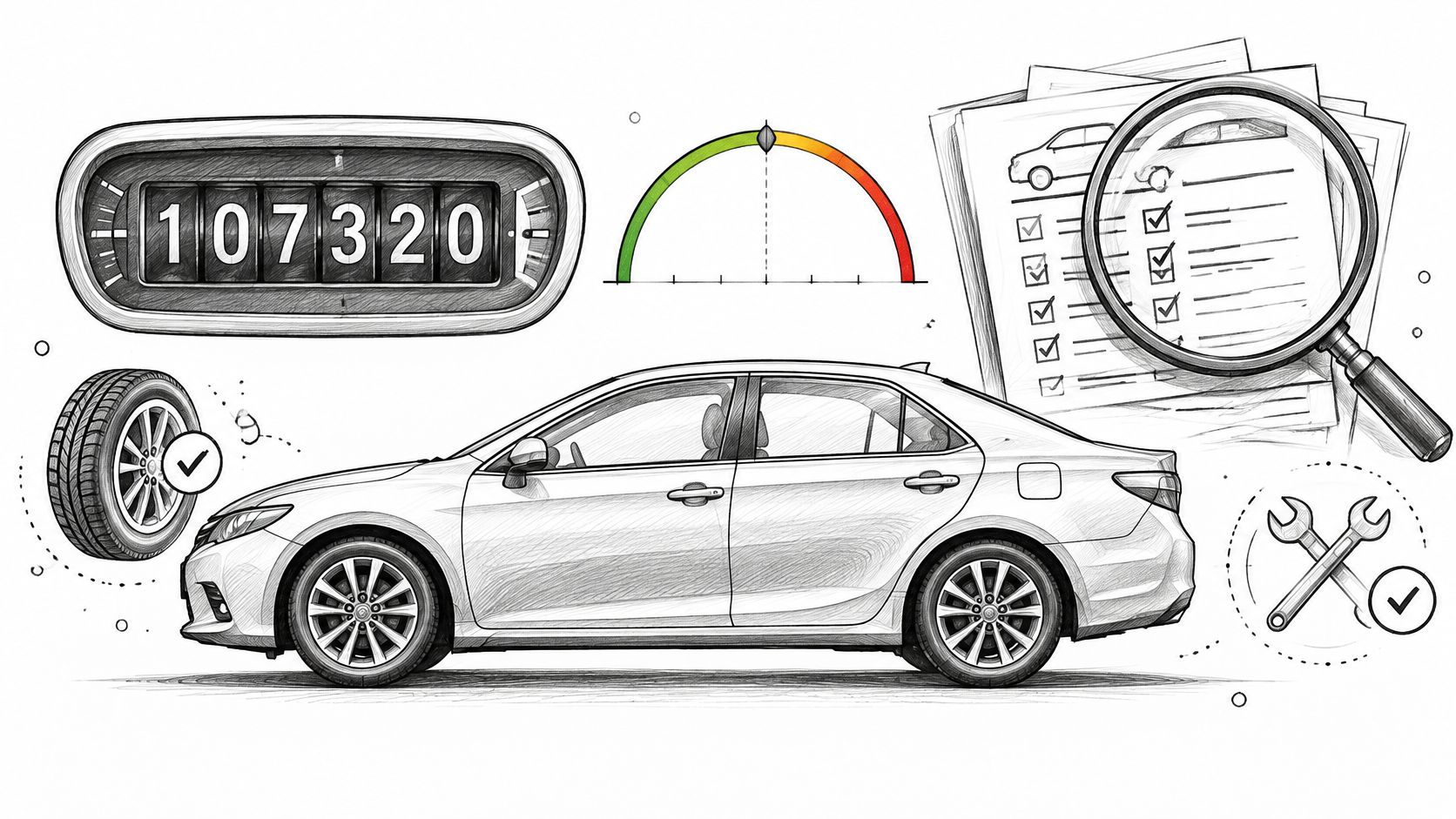
Check the paperwork outcome before agreeing. A roadworthy sale needs a sale receipt and DVLA notification. A salvage sale does not automatically mean the vehicle is destroyed. If it is scrapped, keep the Certificate of Destruction. A collection receipt alone does not prove that the DVLA record has been updated or that the vehicle has been destroyed.
How to Hand Over a Car Without Paying Fees
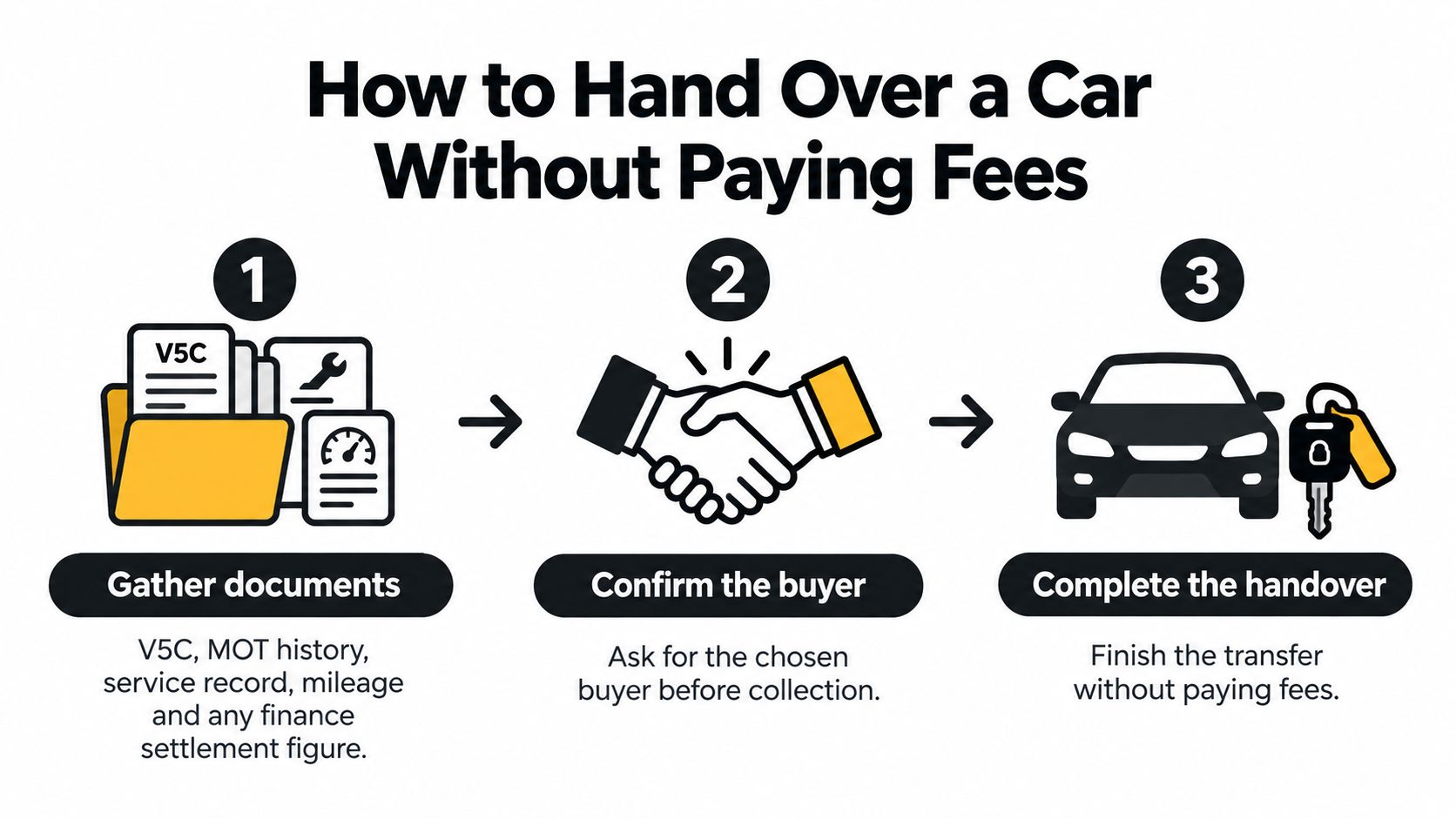
Once you have picked the buyer, run one sequence. Do not pay a call-out to discover the price.
- Gather the file first. Have the V5C, MOT history, service record, mileage and any finance settlement figure before you ask for a number. Missing papers do not always stop a quote, but they slow the handover.
- Get the price from the registration and postcode. Our quote is free, with no obligation, and you see it before you hand over contact details. The price should be fixed before a driver is booked.
- Book a slot. Morning, afternoon, or a weekend where one is open. You are reserving a recovery, not buying a call-out.
What the driver does
For scrap or salvage, recovery is from home, work or a garage. A non-runner needs a recovery truck with a winch, and that is still included. Awkward jobs stay inside the same rule. The scaffold lorry left on a farmer’s land was remote and heavy to move, and the customer paid nothing.
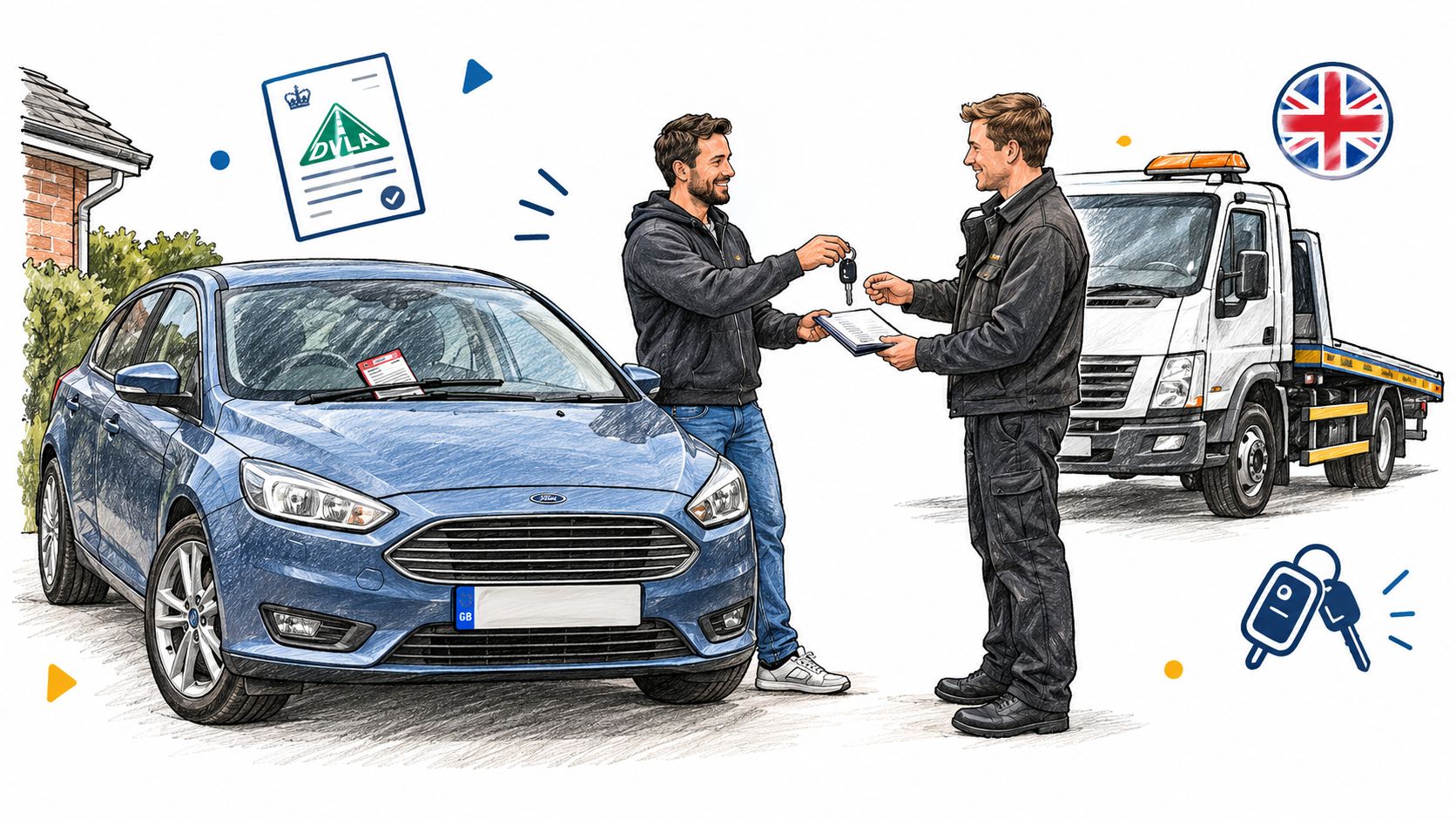
The driver collects the vehicle and handles the V5C. You remove personal items first, keep a note of the registration and mileage, and watch the bank transfer before the keys are treated as gone.
Split the ending by outcome
A roadworthy sale needs you to confirm DVLA has been told and to keep the receipt. A complete scrap is different. GOV.UK guidance on scrapped vehicles says an authorised treatment facility must issue a Certificate of Destruction within seven days for a scrapped car or light van. That certificate proves handover for scrap and helps the former keeper avoid later penalties and vehicle tax. Under the end-of-life vehicles rules, the facility cannot charge the last owner for issuing it.
A collection note is not that certificate. If the car is only being sold for reuse or salvage, you may never receive a Certificate of Destruction, because the vehicle has not been destroyed. Know which outcome you booked.
Spotting Hidden Charges and Payment Scams
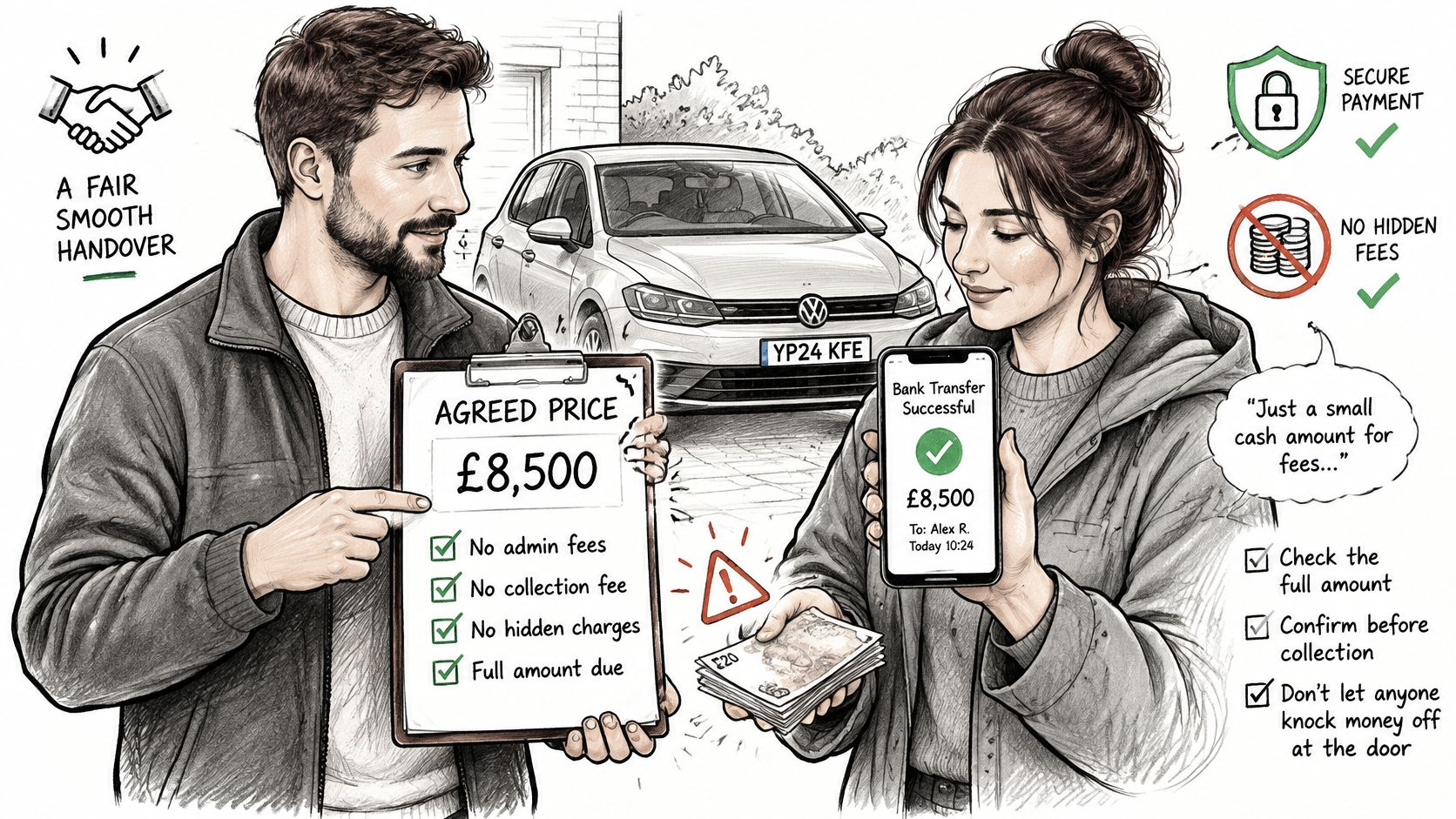
A same-day collection is safe only when the checks happen in order. Agree the price in writing before the driver arrives. Nothing should be knocked off at the door. We take no card details, so there is nothing to charge and nothing that later needs a refund. There is also no admin fee, and no haggling once the quote is accepted.
Private sales fail differently. Warwickshire Trading Standards describes buyers who distract the seller, tamper with engine parts, invent a fault, and then cut the offer by thousands of pounds. The same warning sits next to a useful market fact: CAP HPI reported an average UK used-car sale time of 40 days in August 2025. A free private advert is not an instant-cash plan. Pressure to move today is a warning, not a bonus.
A short order for any fast handover
Use this whether the car drives or not.
- Fix the price in writing. Include registration, mileage and known faults before anyone visits.
- Do not let visitors work on the car. Photograph the engine bay immediately before a viewing.
- Stay with any test drive. Check the driver is insured, and do not hand over an unaccompanied run.
- Release the keys only after cleared funds show in your own banking app. A screenshot or a pending transfer is not payment.
- Never refund an apparent overpayment until your bank confirms the original money independently.
An instant bank payment is legitimate only when you see it land. Courier stories, requests to move off the listing site, and demands to release the vehicle before funds clear are stop signals.
If you are comparing written scrap figures before you accept one, use our scrap car price comparison rather than letting a collector rewrite the number on the drive.
Tips to Keep More Value and Stay Legal
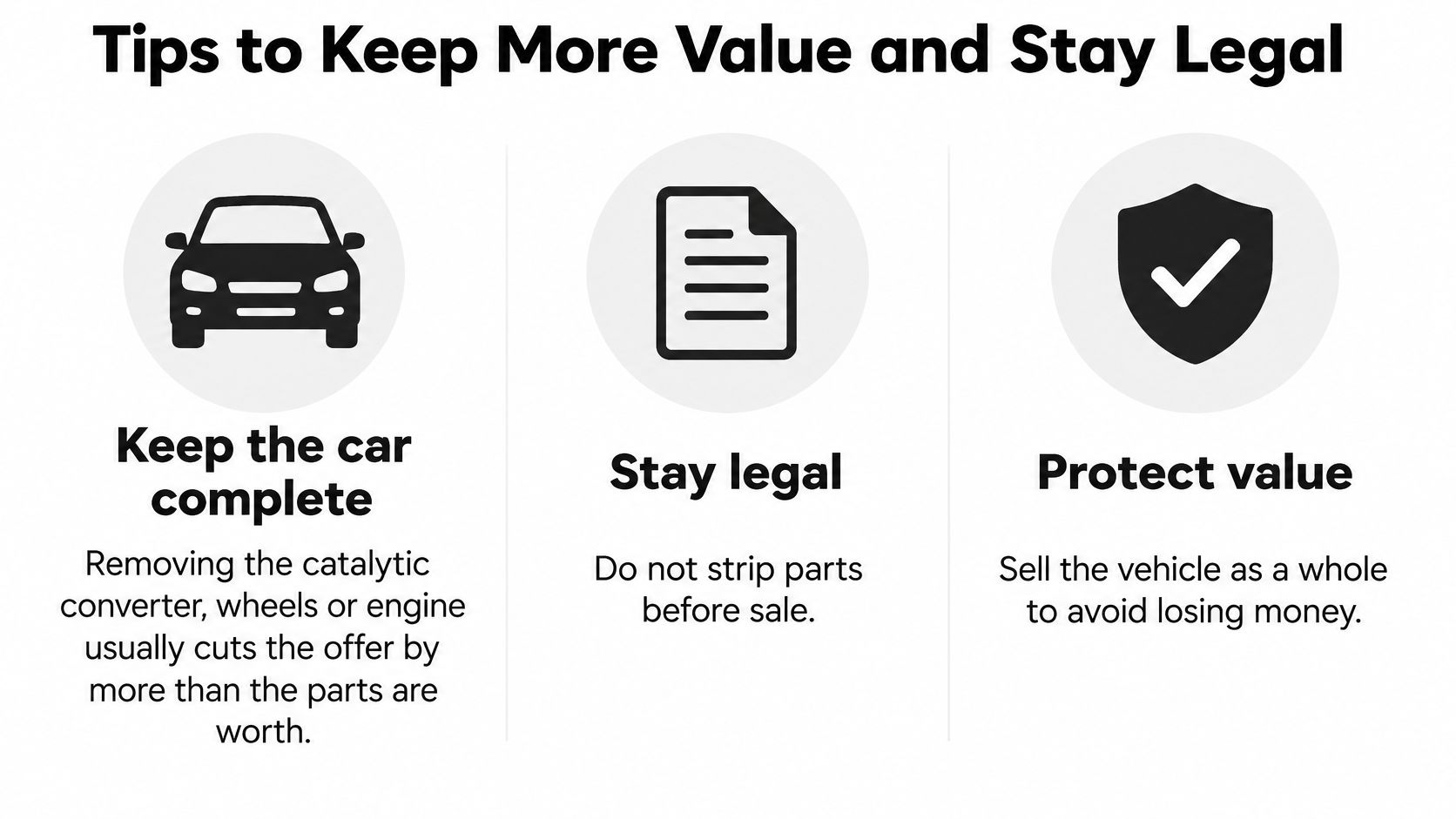
Price falls fastest when the car arrives incomplete. Removing the catalytic converter, the wheels or the engine usually cuts the offer by more than those parts are worth on their own. In most cases, selling the car complete is the better deal. Clean it, list honest faults, and leave the service history with the vehicle so a buyer can price panels, the engine and the gearbox rather than scrap weight alone.
Do not pay to be rescued from a non-runner
A car that will not start is not a reason to accept a call-out charge. The owner with two campers had already been quoted removal fees by other firms, and he was worried about a parking penalty because the vans could not stay. Both were collected the next day at no charge. That is the standard to ask for before you agree to pay anyone.
Abandonment is more expensive than a booked collection
East Riding of Yorkshire Council reported a camper-van abandonment case that ended in a £440 fine, £935.94 in costs and a £176 victim surcharge, more than £1,500 in total. The council also says owners may receive a £200 fixed penalty notice or face a larger court fine. Hoping an immobile van will be ignored is a poor bet.
If you still choose a private advert, use clear photos, answer messages yourself, meet with another adult present, and check insurance before a test drive. If someone else has already put a higher figure in writing, ask the buyer to beat it, or accept a plain answer that they cannot.
Book a Free Collection and Get Paid
Get the quote before you share contact details, then decide. A roadworthy car should be priced through the Sell My Car service, which pays more than scrap value when the car still justifies it. An MOT failure, a non-runner or a damaged car belongs on the scrap or salvage route, including awkward recoveries, still with no customer charge and free nationwide collection.
The Best Price Guarantee is simple. A written offer from another buyer is beaten by £50, or you are told that it cannot be beaten. There is no theatre around that answer.
Enter the registration and postcode, set that figure beside any written offer you already hold, and book a morning, afternoon or available weekend slot only after the price is fixed. Have the V5C and keys ready. Remove personal items. Watch the bank transfer before the driver leaves. If the car is being scrapped, keep the Certificate of Destruction when it arrives. That is how you sell or dispose of the car without a seller fee.
Scrap A Vehicle gives you a no-obligation UK quote before you share contact details, then collects the car nationwide and pays you by bank transfer with no admin fee. If you want to sell my car for free, whether it still drives or it needs a winch, start with the registration and postcode on Scrap A Vehicle. Compare the figure with any written offer you already have, and book the slot only once the price is fixed.